
Double-eyelid surgery is no longer considered
an option limited to a specific gender or age group.
Because the shape of the eyes
has a significant influence on the overall impression of the face, people of all ages and genders
choose it to create a clearer,
more refined appearance.
However, there are also quite a few cases
where the initial result
does not turn out as expected.
Some people assume this is because the swelling
has not yet gone down and simply wait,
only to eventually decide to undergo revision.
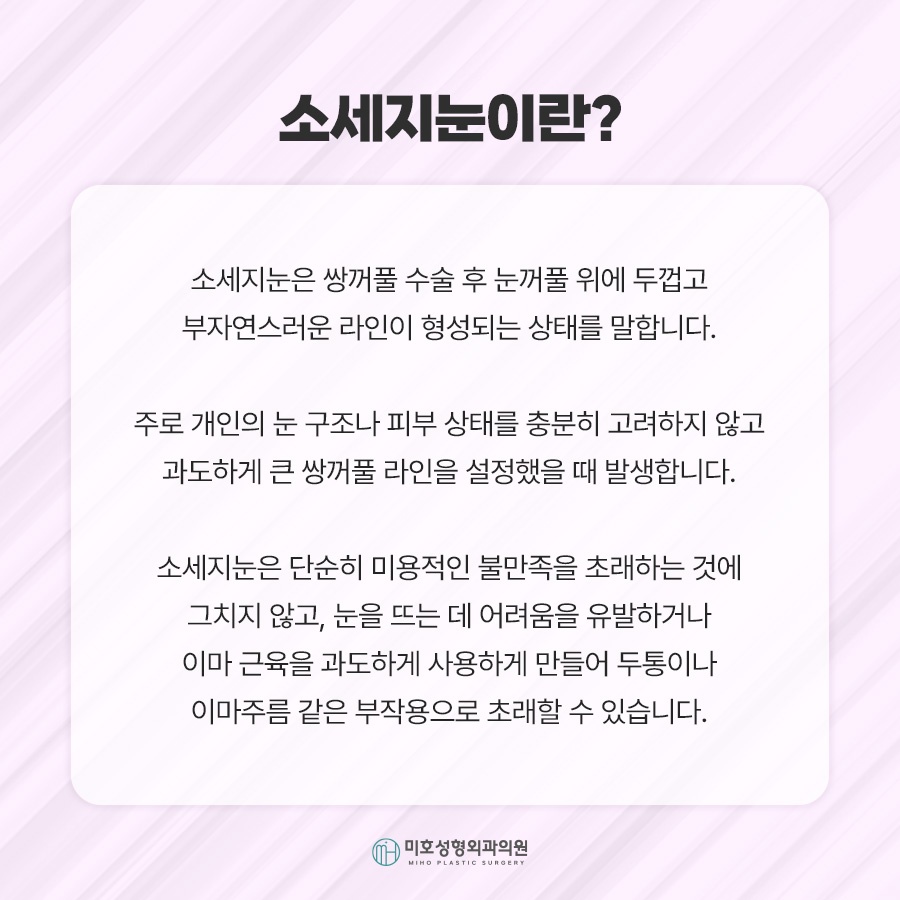
Sausage-eye revision surgery is also
one of the procedures performed after identifying the existing problem
in order to reduce unnatural features.
Revision surgery, including sausage-eye revision surgery,
refers to repeating a corrective procedure
when the patient is dissatisfied with the result
of the previous correction
or when functional or aesthetic problems remain.
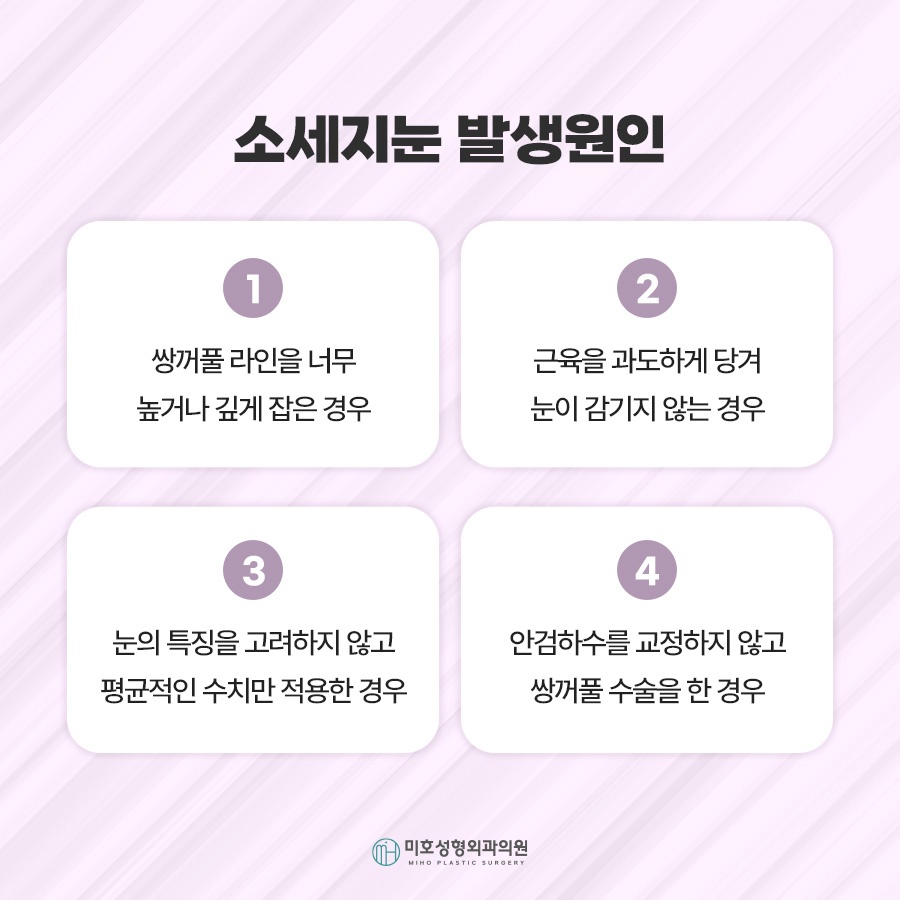
The key is to first determine
why the previously created shape
looks unnatural
and what condition the adhesions are in between
the eyelid skin, muscles, fat, and other tissues.
If the same approach is used again
without checking the cause,
a similar situation may recur.
For this reason, some believe that
more precise assessment and planning
are necessary.
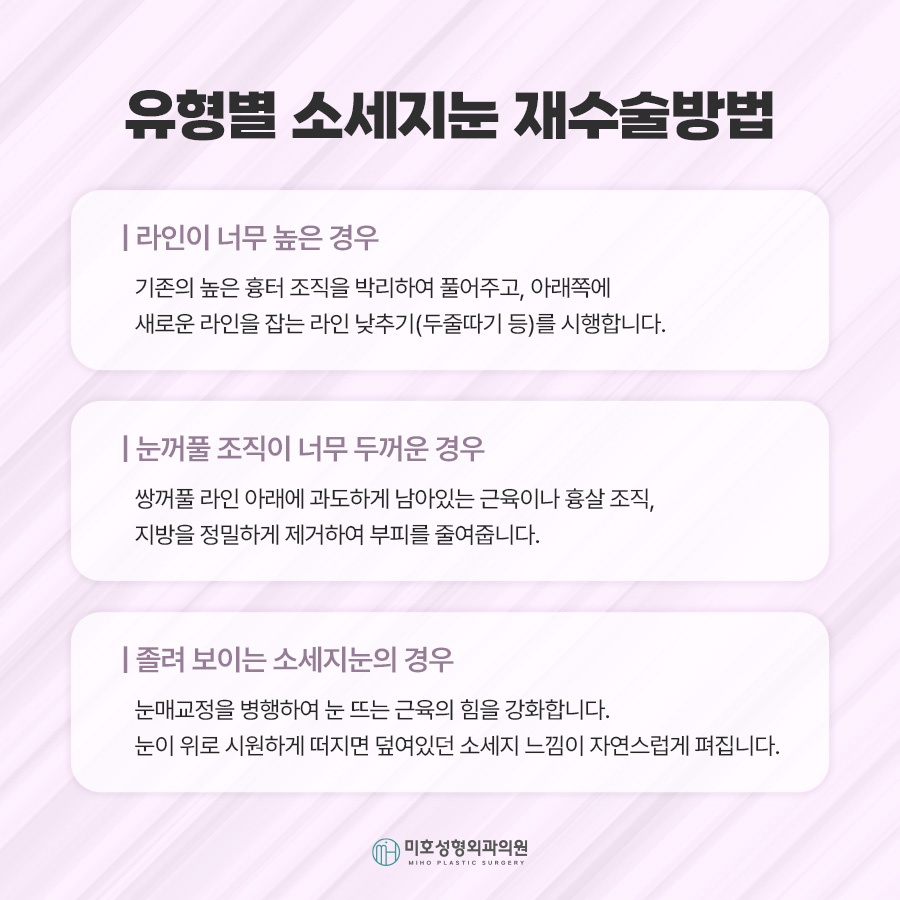
Among the various revision techniques,
sausage-eye revision surgery
is primarily performed when the tissue
beneath the crease looks thick and rolled,
giving the eyelid
a swollen appearance.
Of course, immediately after corrective surgery,
this may appear temporarily
due to swelling.
However, if the double-eyelid crease
continues to look thick and raised
even after a certain period has passed,
it may be difficult to improve through waiting alone.
Sometimes this result occurs
because the tissue around the incision line
has become firmly adhered.
Because the causes can vary in this way,
the overall situation must be assessed
and a treatment plan established.
The techniques used for this purpose
are broadly divided into two types.
If the existing crease is not excessively high,
the scarring is not severe,
and the area of adhesion is relatively limited,
a one-line excision technique may be used.
This approach focuses on the existing incision line
and organizes unnecessary tissue
to create a more natural
double-eyelid crease.
Because it is not significantly separated
from the area of the previous correction,
a relatively simple plan can be established.
However, if the eyelid condition is not stable
or there is insufficient excess skin,
this approach may be difficult to apply,
so careful consideration is necessary.
The second technique that may be used
for sausage-eye revision surgery
is two-line excision.
Although it may initially appear similar
to one-line excision
in that it releases or weakens
the previously formed high adhesion,
it differs in that it creates
a new crease in a more natural position.
In other words, after organizing the area
that causes the eyelid to look swollen
like a sausage,
the process also includes
forming a new double-eyelid crease.
However, before proceeding,
detailed aspects must be examined,
such as how much scar tissue needs to be released
and whether there is any lack of strength
when opening the eyes.
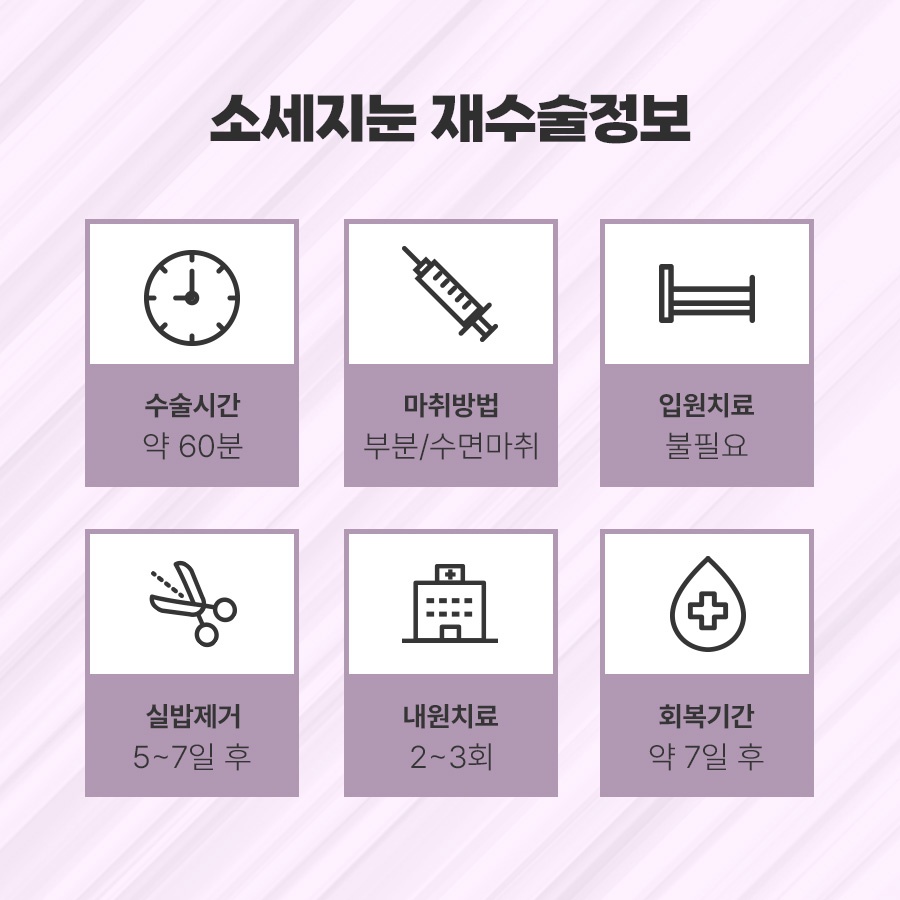
Two-line excision may help create
a more natural crease,
but it needs to be performed
with greater precision.
If the tissue adhesions are not properly released,
the existing double-eyelid crease
may become prominent again.
In addition, if the scar has become firm and established,
careful technical skill is required
to avoid disturbing it unnecessarily
and to work only on the areas
that need to be addressed.
If the drooping is severe,
it may also be necessary to determine
whether tissue excision is needed.
In other words,
it is important to specifically confirm
whether this is truly the right method
for the individual case.
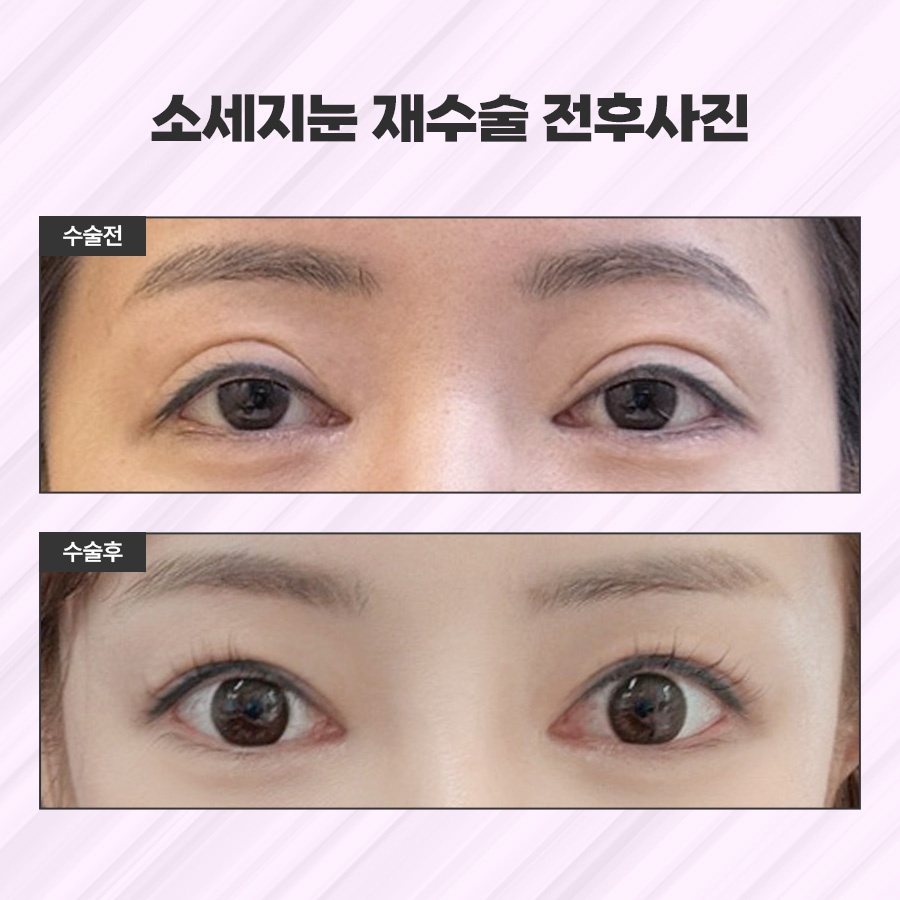
Because revision surgery is not
a procedure that can be viewed as simple,
it is difficult to say that either
one-line excision or two-line excision
is always the better method.
Rather than assuming that one particular technique
is suitable for every situation,
it is first necessary to consider
how much of the existing crease should be revised
and where the new double-eyelid crease should be created
for a more natural result,
based on each person's current eyelid condition.
Ultimately,
the result of sausage-eye revision surgery
can be said to be more strongly influenced
by the physician's careful diagnosis and judgment,
as well as the precision of the treatment design.
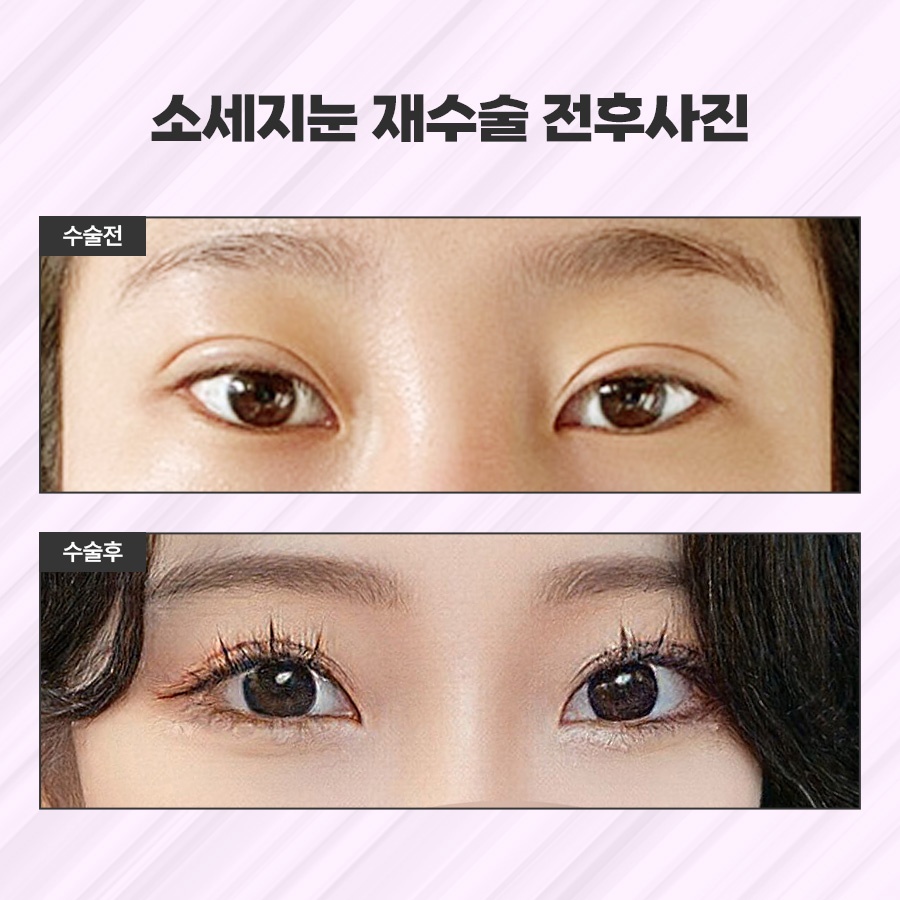
In particular, the physician's experience
and precision are even more important
for the two-line excision technique.
Unlike the initial condition,
eyelids that have already undergone
one or more incisions
may contain scarring, adhesions,
and tissue damage at the same time.
If surgery is performed too aggressively
in this situation,
the result may instead become
even more unnatural.
Therefore, it is advisable to establish
a treatment plan after examining
various aspects together
at a medical institution
that has handled many cases whenever possible.
At this time, it is recommended to examine
the movement when opening and closing the eyes,
left-right symmetry,
and whether the forehead is being used.
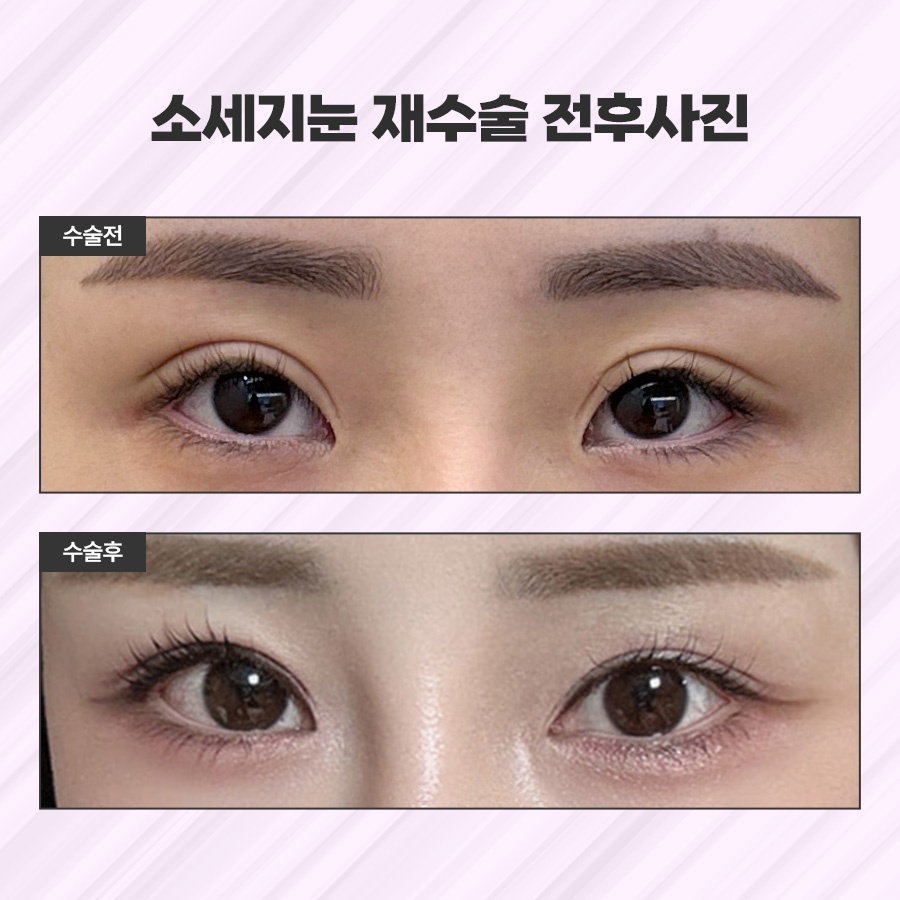
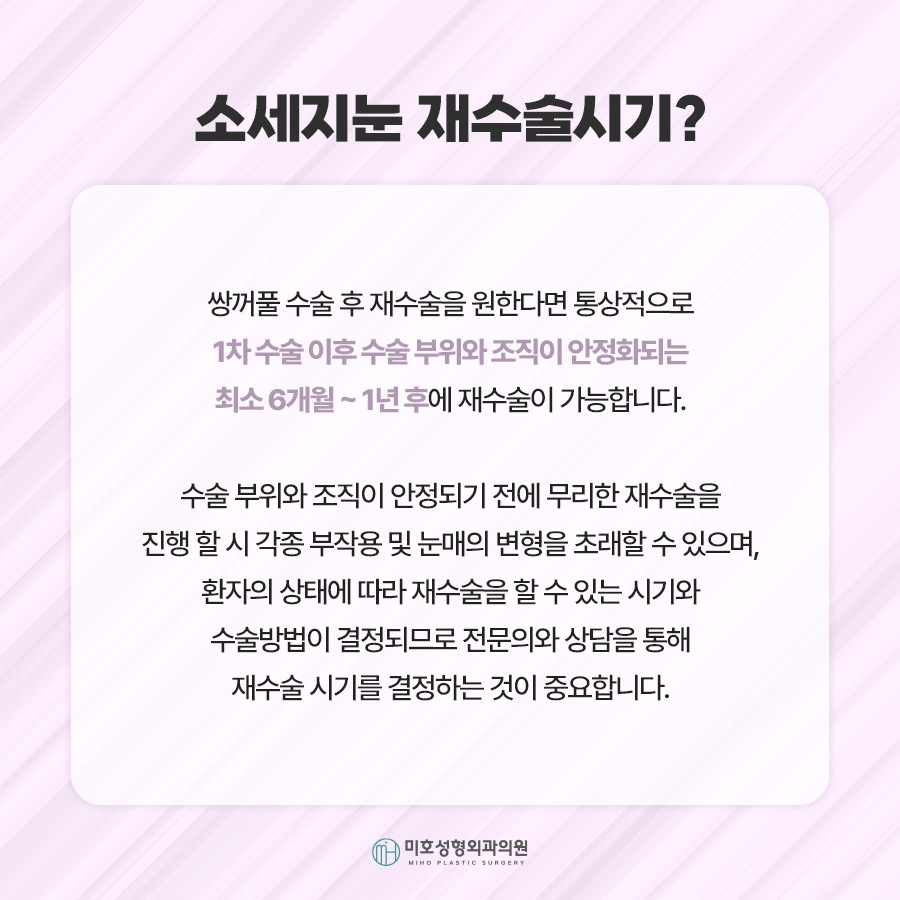
Cases requiring revision surgery
are not limited to sausage eyes.
It may also be considered when the double-eyelid crease
has loosened over time
and the eyes have become less defined again,
or when the crease has settled much larger
than originally planned,
making the overall impression feel heavy.
Conversely, it may be an option for people
who see little change even after corrective surgery
or who are dissatisfied because the crease
has become hidden like an inner double eyelid,
as well as for those experiencing stress
due to asymmetry in the height or length
of the two sides.
A clearly visible scar when the eyes are closed
and an uneven incision area
are also common reasons for revision.
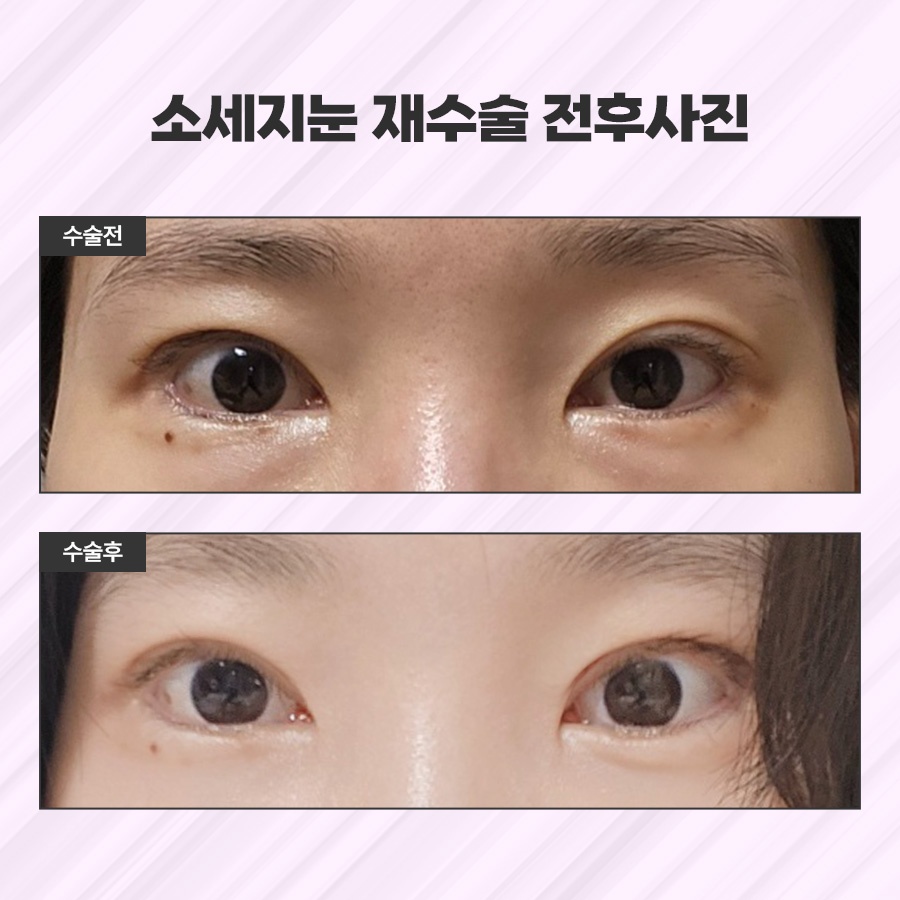
At Miho,
revision procedures are available
for various cases mentioned above,
including sausage-eye revision surgery.
Treatment plans are established
by examining the height of the previously formed crease,
adhesions, scarring,
remaining skin, and the strength used to open the eyes.
The clinic also checks together
why the current double-eyelid crease looks thick
and what condition the existing tissue is in.
It uses a central monitoring system
to monitor the current condition in real time,
and is equipped with a system that enhances
process transparency through CCTV installation,
so you may visit with greater peace of mind.



Previous image
Next image