
As interest in improving the nasal line continues to grow,
implant-free rhinoplasty is attracting attention.
Its key feature and advantage is that it uses only tissue obtained from the patient's own body,
without external implants such as silicone or Gore-Tex.
Conventional methods using artificial synthetic materials
often raise concerns about side effects,
which has gradually increased demand
for approaches using the patient's own tissue.
The concept of refining the appearance without foreign materials
has become a meaningful option
for those who prioritize safety.

Implant-free rhinoplasty is a method of
reconstructing the contours of the nasal bridge and tip
using materials obtained directly from the patient's own body.
Cartilage and dermis from various areas, such as
the inside of the nasal cavity, behind the ear, and the end of the rib,
are used, and because no artificial materials are used at all,
there is less concern about rejection reactions.
Over time, these tissues naturally blend with the surrounding body tissue,
showing a clear difference from
the foreign-body sensation that can occur with artificial implants.
The materials used and how they are combined
are determined according to the individual's nasal structure,
skin thickness, and desired degree of change.

The situations in which implant-free rhinoplasty is particularly considered
can be divided into several types.
The most representative cases include
when inflammation or contracture has developed because of a previously used artificial implant,
requiring its removal and reconstruction of the contours,
or when repeated revision procedures have thinned the skin,
increasing the risk of synthetic material becoming visible.
This also includes cases where the nasal bridge is already high or prominent,
or where a natural result without external materials
is desired from the outset.
If improvement is possible using only the patient's own tissue,
this method can be a sufficiently effective alternative.
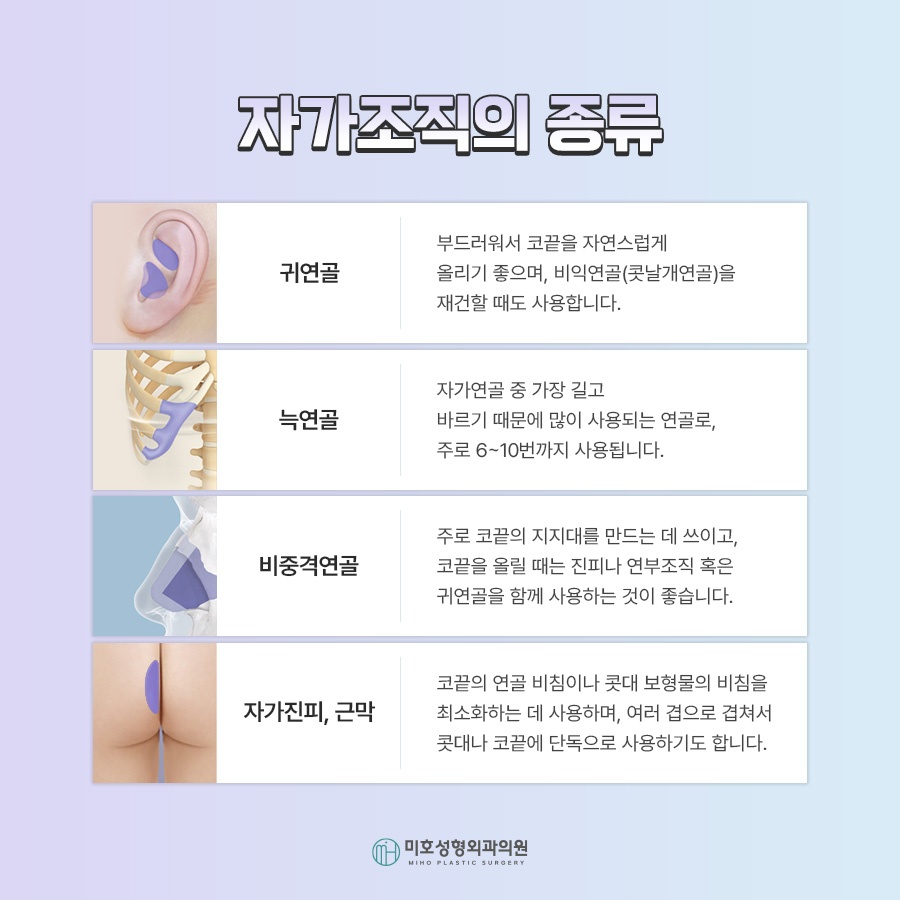
The primary source material is the nasal septal cartilage.
It is located inside the wall between the nostrils,
and can be harvested through an internal incision during the procedure,
so no additional external incision is required.
Because the tissue is firm and straight,
it is suitable for raising the columella or adjusting the length of the nose,
and is also useful for reinforcing the supporting structure.
If the septum is abnormally deviated,
its correction and reshaping can be performed at the same time,
providing a significant functional benefit as well.
Since the amount that can be harvested from one person is limited,
when a larger quantity is needed,
materials from the ear or other areas
are combined and used.

Ear cartilage harvested from behind the ear
has a rounded structure similar to the curve of the nasal cavity,
helping to create a smooth nasal tip line.
Its excellent elasticity allows the nasal tip
to be formed naturally,
and it is also used as supplementary material
when septal tissue is somewhat insufficient.
Because it is harvested from behind the ear,
another advantage is that the harvesting marks
are not noticeable from the outside.
However, because it is better suited to the nasal tip,
where curvature is required, rather than areas requiring straight-line support,
it is generally used together with septal cartilage
for implant-free rhinoplasty.
Rib cartilage may be selected
when strong support is needed or
when the amount of other materials is insufficient.
Obtained from the end of a rib,
this material is available in the greatest quantity among the options
and has excellent durability.
It is mainly used in revision cases involving contracture
or in challenging situations requiring a significant change
to the shape of the nasal tip.
However, a small scar may remain
from the minor incision used during harvesting,
and, rarely, the cartilage may bend or calcify,
so it is advisable to understand these possibilities in advance.
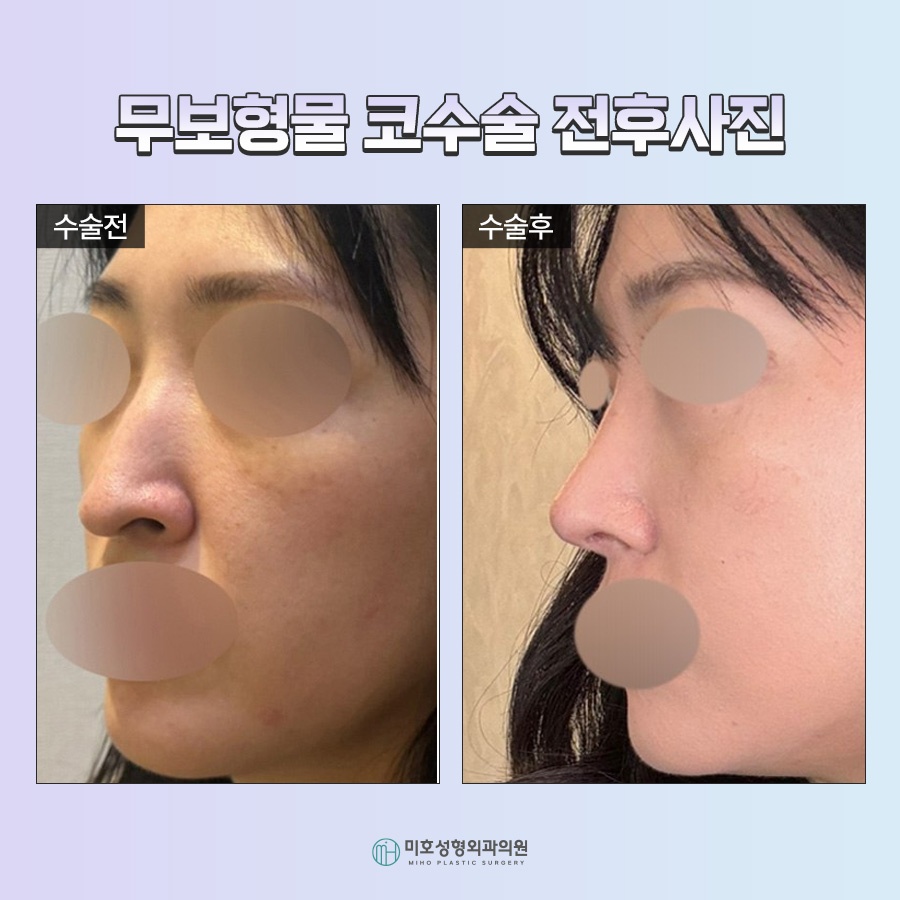
Autologous dermis is dermal-layer tissue rather than cartilage
and is generally harvested from the buttocks or behind the ear.
It is characterized by its soft skin-like texture
and is used to smoothly supplement the nasal bridge line
or fill areas where the skin has become significantly thin
after the removal of synthetic material.
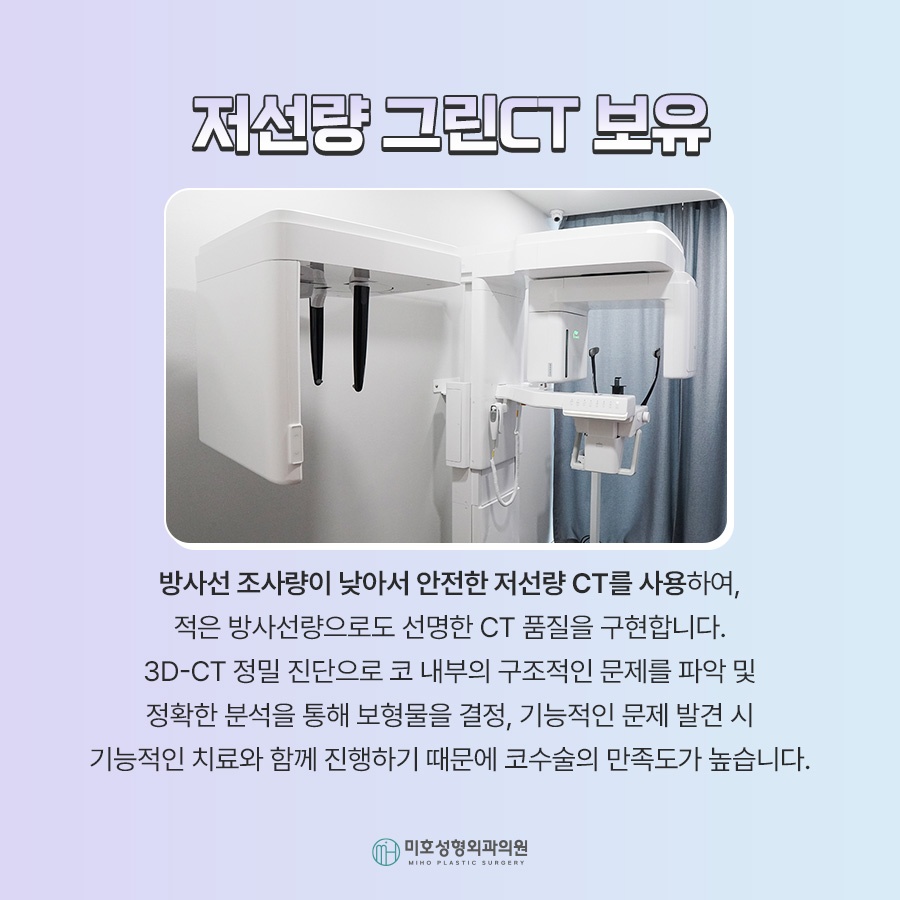
It is not detected on X-rays or CT scans
and feels natural to the touch,
clearly distinguishing it from external implants.
However, some of the dermal tissue is absorbed by the body over time,
so detailed planning of the amount to be used
must be carried out in advance.
Therefore, the result can be somewhat difficult to predict,
and it is better suited to subtle line enhancement
than to creating a high, prominent nasal bridge.
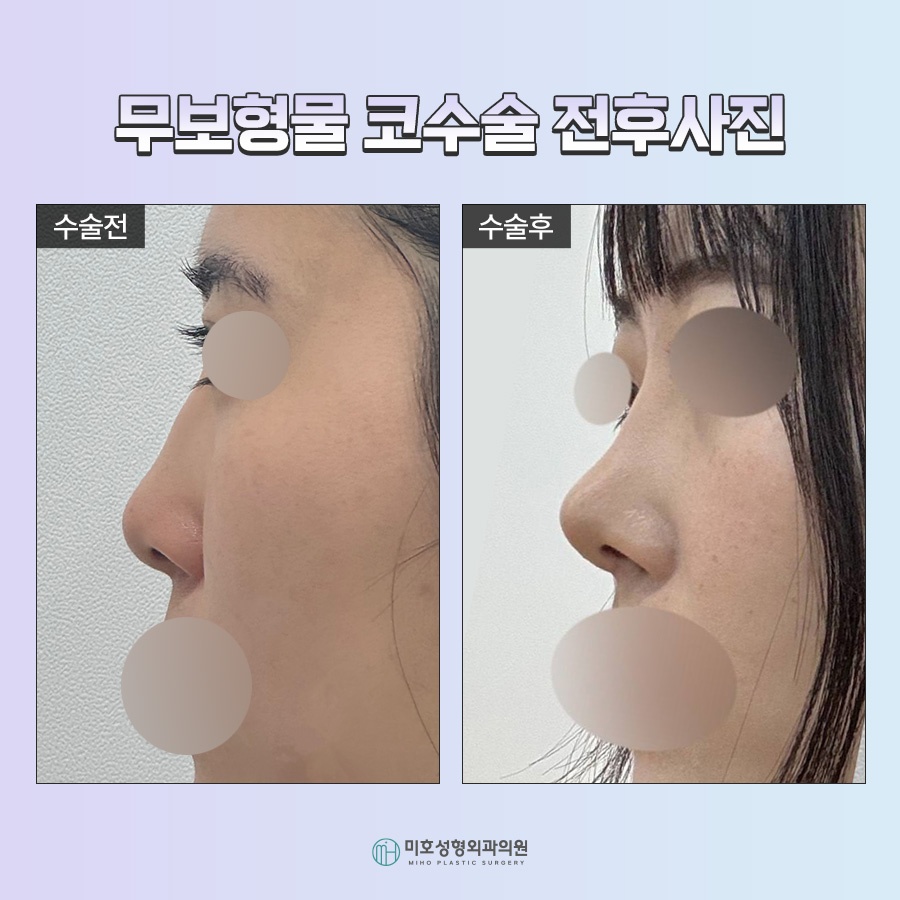
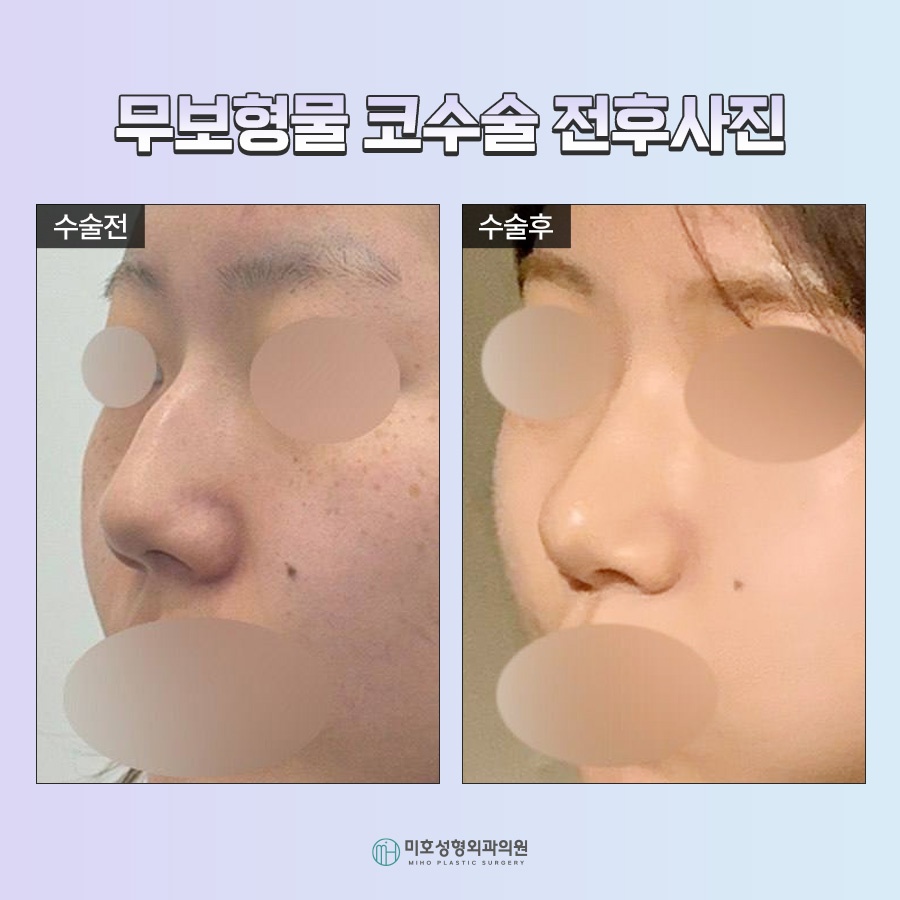
The most important characteristic of implant-free rhinoplasty,
which redesigns the nasal structure without foreign materials,
is its stable ability to adapt within the body.
Because the patient's own biological materials are used,
the likelihood of contracture or visibility of artificial material
is significantly reduced,
and the result remains stable over the long term.
Synthetic implants may cause inflammation over time
or become visible through the skin,
but autologous tissue blends with the surrounding skin
and maintains a natural shape for a longer period.
Because the inflammation rate associated with artificial materials
is statistically approximately 3–5%,
interest is increasing among those concerned about side effects.
Even when a method uses the patient's own tissue,
it is important to note that it cannot be applied identically to everyone.
The amount of cartilage and tissue strength available,
skin thickness, and structural characteristics inside the nose
vary from person to person,
so the extent of possible correction also differs.
In particular, if the area from the glabella to the entire nasal bridge is low
and the height needs to be increased substantially,
there may be limitations to achieving the desired shape and result
using only autologous tissue.
In such situations, a method that appropriately combines synthetic materials
may be more suitable,
so it is advisable to discuss the condition thoroughly with a medical professional
and make a careful decision.
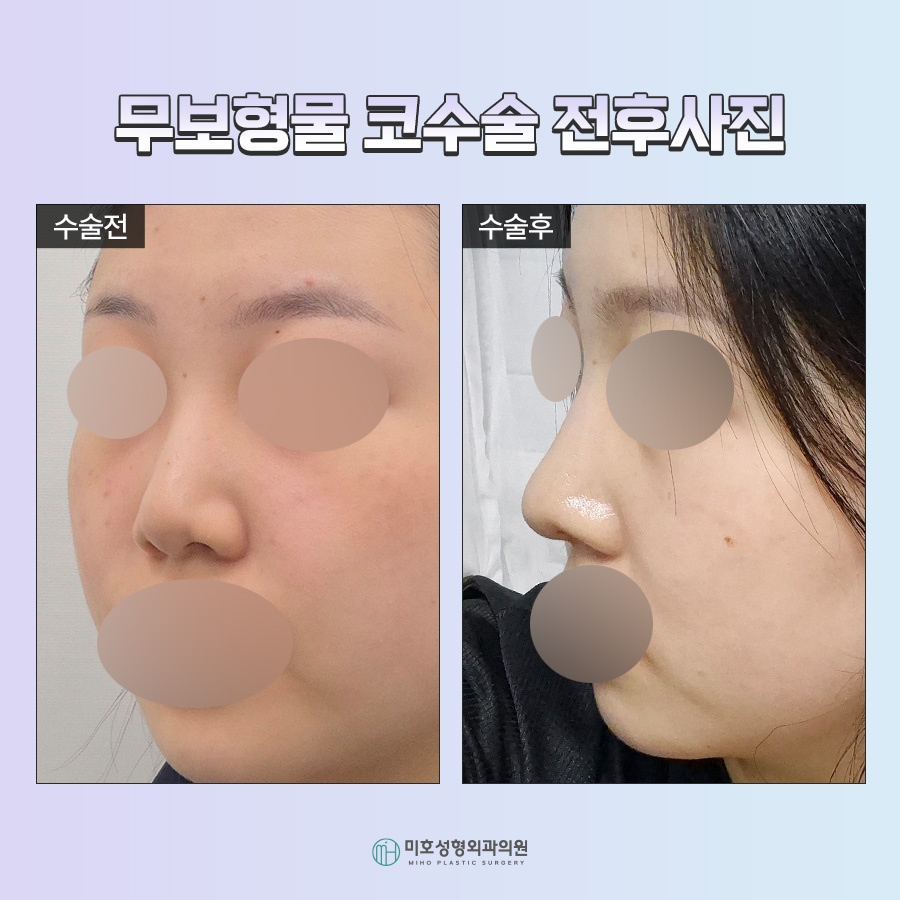
Implant-free rhinoplasty can be a good alternative
for those who want a natural-looking nose without a foreign-body sensation
or who want to reduce concerns about complications from existing artificial implants.
However, the materials to be used
are determined only after a precise analysis
that considers the individual's facial structure and skin condition,
as well as the desired extent of change.
Detailed planning, from tissue harvesting and material processing
to designing the implant placement,
has a direct impact on the result.
Understanding your own physical conditions first
is the first step toward improving your appearance.



Previous image
Next image