
When the edge of the eyelid rolls inward,
the eyelashes repeatedly come into contact with the surface of the eye.
At first, this may feel like mild foreign-body sensation,
but if the condition persists without appropriate treatment,
it begins to affect eye health.
This condition
is called entropion.
In its early stages, it may feel like nothing more than eye fatigue,
which makes it easy to overlook.
Although it does not occur only in a specific age group,
statistics from the Health Insurance Review and Assessment Service show
that the number of visits among middle-aged and older adults in their 50s and above
has been steadily increasing.
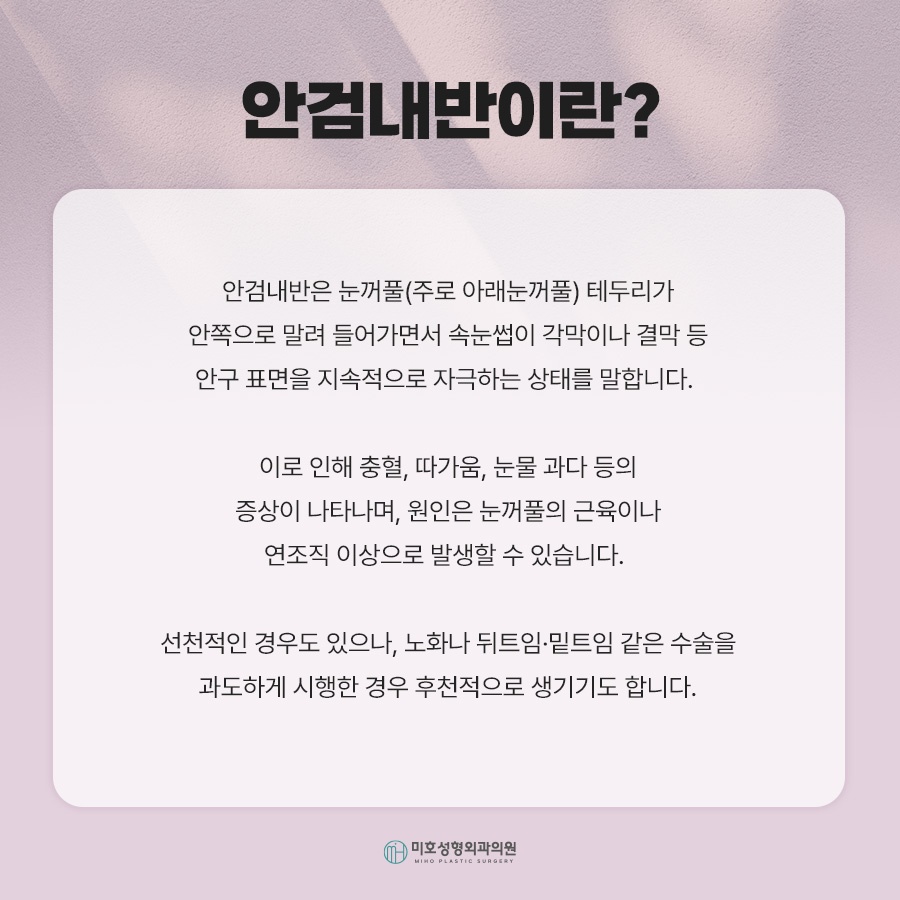
Entropion is a condition in which the eyelashes and eyelid skin
rub against the cornea and conjunctiva.
Normally, an appropriate gap is maintained between the eyelid and the eyeball,
and the eyelashes point outward,
but when this structure becomes deformed, the eyelashes touch the eyeball
and continuously irritate the surface of the eye.
It generally occurs when the muscles or ligaments that support the structure
become deformed.
Because the eyeball is touched every time a person blinks,
even when there are no clear subjective symptoms,
the irritation and strain gradually increase.
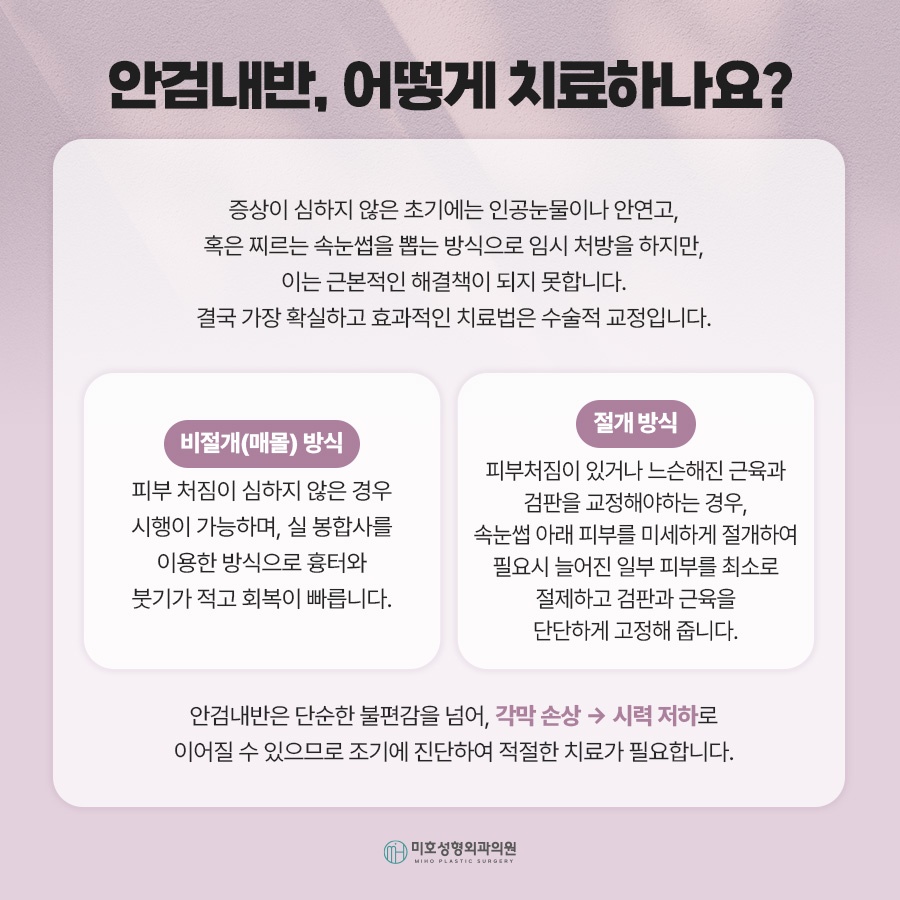
The causes of entropion can be divided into two categories.
When it occurs because the muscles did not develop evenly from birth,
it is classified as congenital and
is more commonly found in the lower eyelid.
Acquired entropion is divided into three types:
age-related tissue laxity, conjunctival scarring,
and inflammation around the eyes.
Among these, involutional entropion
is more common in middle-aged and older adults over 50
and is increasing along with the aging population.
When inflammation continues for a long time due to atopic dermatitis
or chronic conjunctivitis,
firm scar tissue may form in the mucous membrane,
resulting in cicatricial entropion.
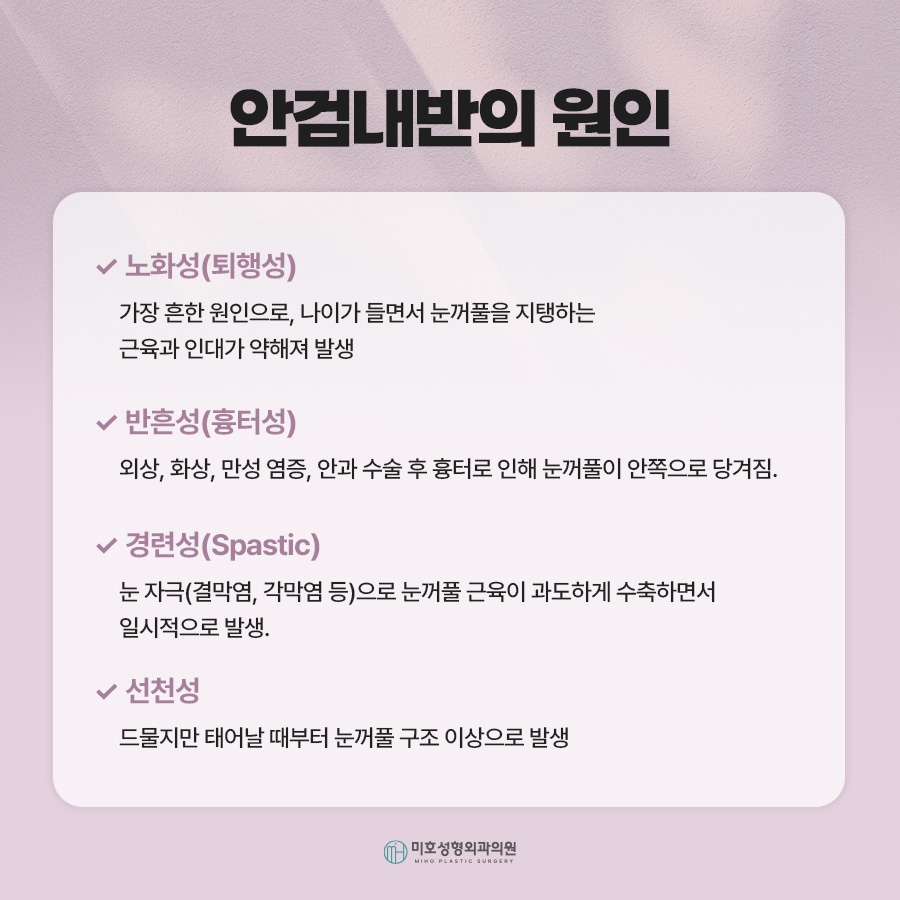
The most common symptom is
a sensation that something is in the eye.
A rough, scratchy irritation may be felt with every blink.
When the corneal surface is repeatedly irritated,
the eyes may water for no apparent reason,
and light sensitivity or redness may also occur.
If eye discharge occurs more often than usual
and redness around the eyes continues,
it may not be simple fatigue.
As the condition progresses, eyelid spasms may develop,
or it may lead to blurred vision,
so it is not a condition that should be taken lightly.
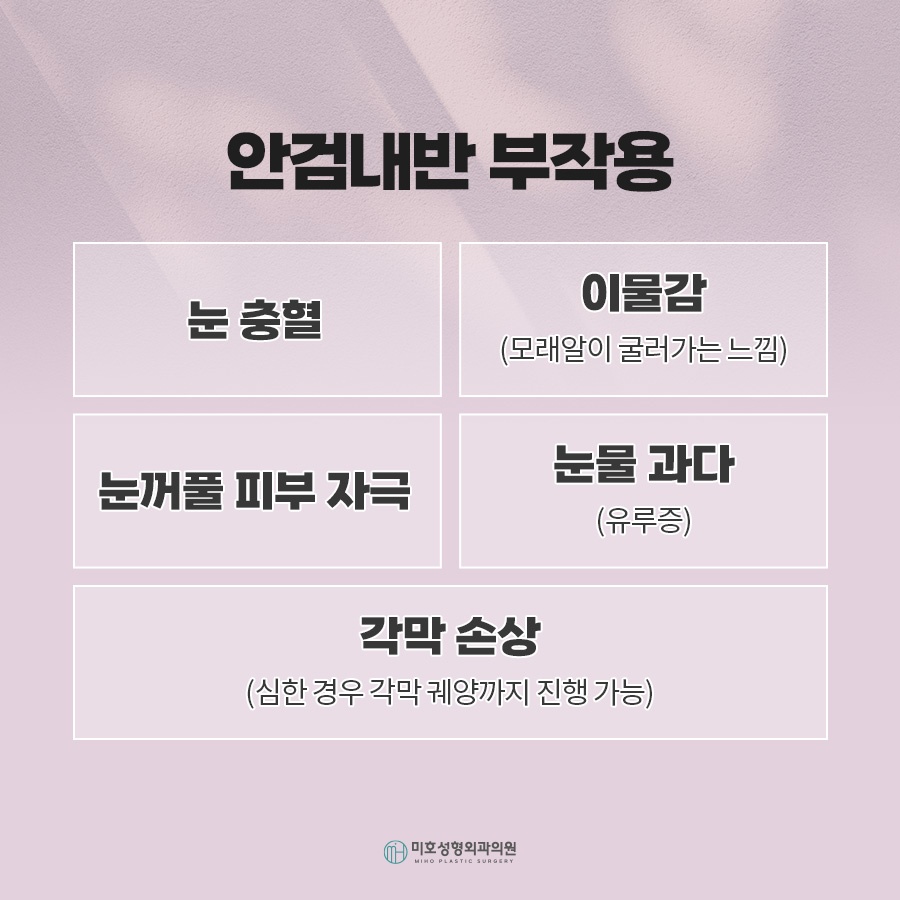
If it is left untreated,
repeated abrasions caused by the eyelashes
can accumulate damage on the surface of the eye.
Areas subject to frequent friction become vulnerable to bacteria,
increasing the risk of secondary infections such as conjunctivitis.
If the condition worsens, the cornea may become cloudy
and the problem may progress to keratitis or an ulcer.
This process can also occur in infants and young children,
who often show their discomfort by blinking frequently
or rubbing their eyes.
Because they may have difficulty describing their symptoms themselves,
caregivers need to carefully observe even minor changes
such as redness or tearing.
If the condition is left untreated for a long time, vision may also decline,
so an early examination is advisable.
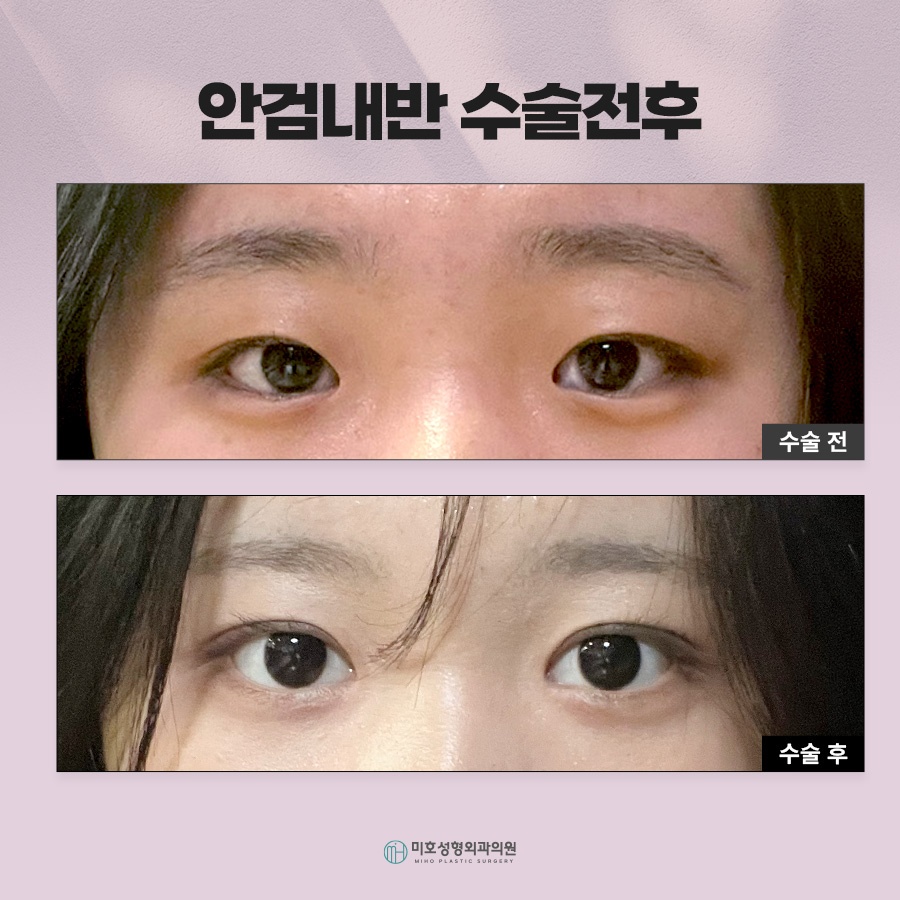
Artificial tears or medical tape
can only ease immediate discomfort
and cannot change the structural deformity itself.
If this situation continues to recur,
temporary measures alone have limitations.
In such cases,
correction surgery for entropion
is needed to improve the affected area.
Its purpose is to move the eyelid
back toward its normal position
so that the eyelashes do not touch the eyeball.
Because the appropriate method varies according to the type and severity of entropion,
careful diagnosis is needed for each individual.
The procedure is usually performed under local anesthesia,
so even older adults for whom general anesthesia may be burdensome
can undergo it without undue difficulty.
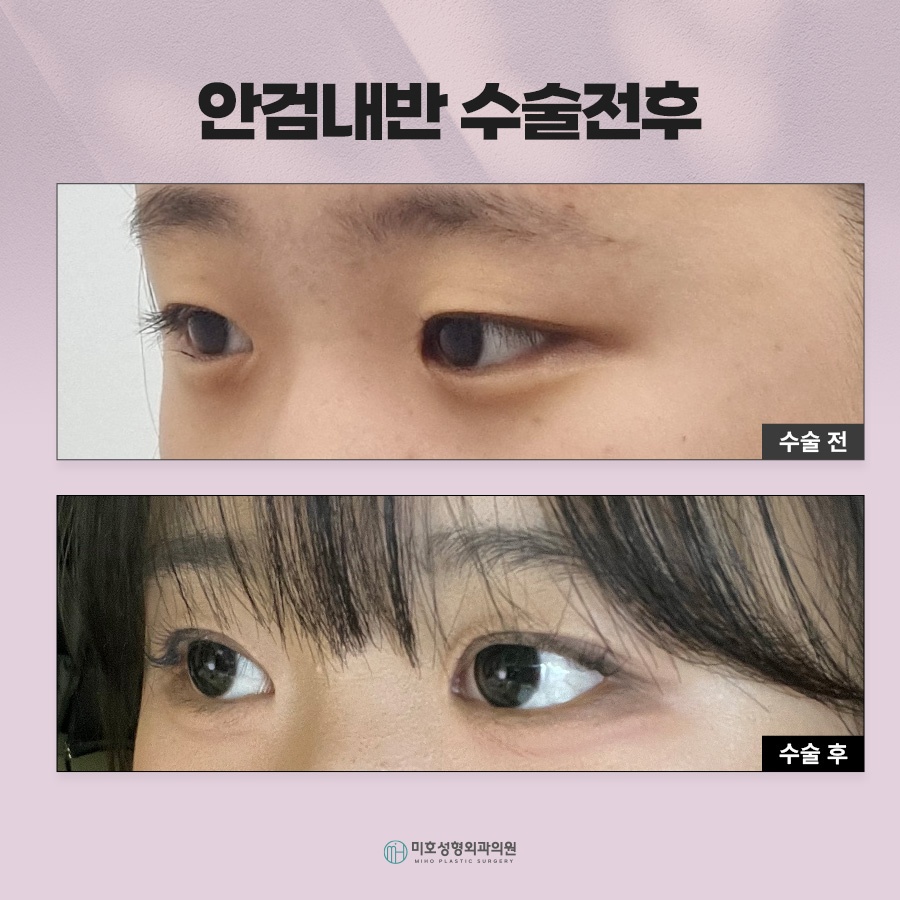
Correction methods are broadly
divided into suturing and incision methods.
The suturing method does not involve cutting the skin.
Instead, absorbable sutures are used to tie the inner tissues of the eyelid,
turning the inverted direction outward.
The sutures are passed through the inside of the eyelid
to hold back the movement of the tissues
that tend to roll inward.
It places less physical strain and raises less concern about scarring,
and the procedure is brief, allowing for quick recovery.
However, recurrence is possible over time,
so it is mainly used for mild symptoms
or as a temporary option for infants and young children.
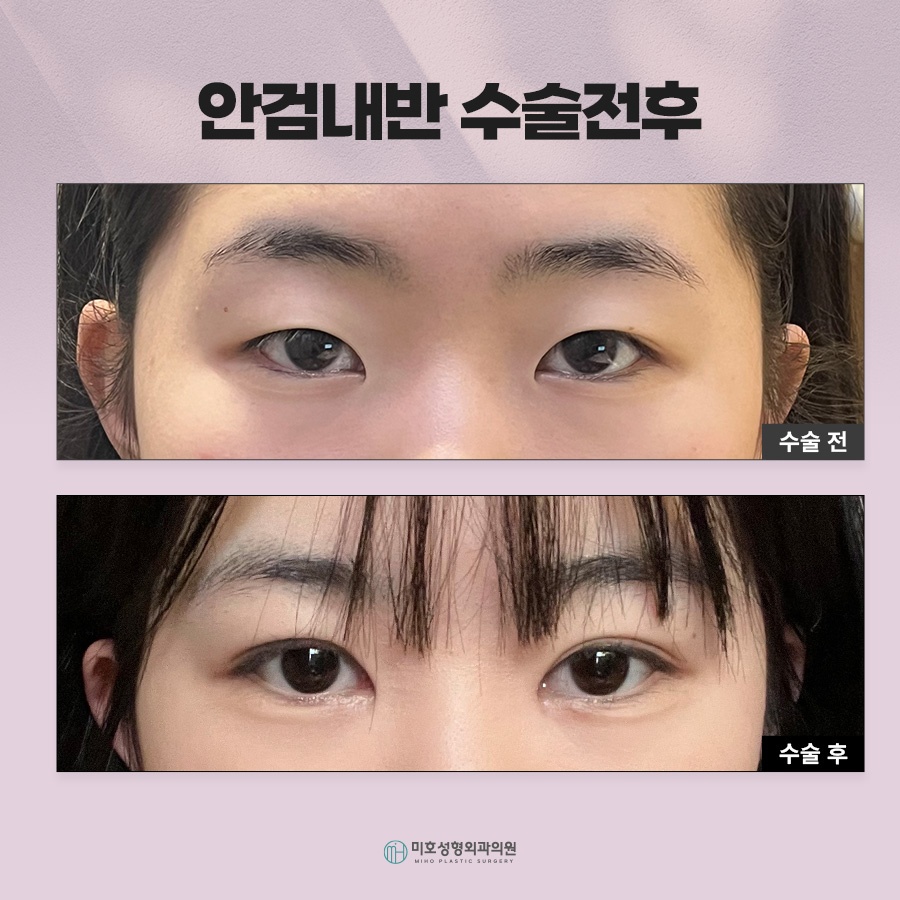
In contrast, the incision method directly opens the tissue
and repositions the internal structures,
addressing the underlying cause of entropion.
Loose or damaged areas are removed,
and the retractor muscle is reattached
and firmly secured in the proper position.
In this way, loosely stretched tissue
is supported as it was originally.
It is selected when the deformity is severe
or the risk of recurrence is high,
as in cicatricial or involutional entropion.
Because it produces a more substantial change than the suturing method
in a stable manner,
it can provide a longer-lasting result.
When horizontal laxity is pronounced,
correction of the lateral canthal area may also be performed
to improve the overall structural balance.
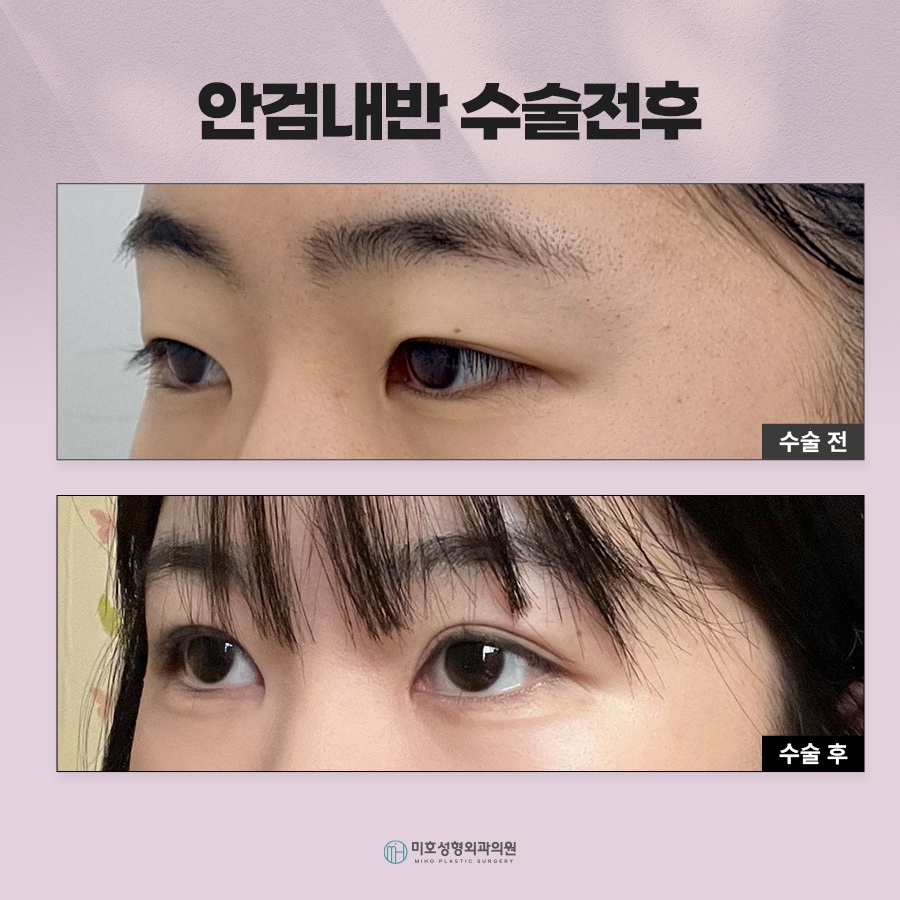
For several days after correction,
swelling and bruising may be visible,
but they usually subside over time.
During this period, it is essential to prevent physical irritation
from reaching the area around the eyes.
Prescribed eye drops or anti-inflammatory ointment
can aid recovery when applied consistently
according to the specified frequency and instructions.
It usually takes about 2 to 4 weeks
for major swelling to subside and the tissue to soften,
so excessive physical exercise,
saunas, and alcohol should be avoided during this period.
Washing the face and applying eye makeup should also be resumed gradually
according to the progress of wound healing.
Entropion is a progressive condition
in which corneal damage caused by the eyelashes
accumulates layer by layer over time.
If foreign-body sensation or redness continues to recur,
it may be a structural problem rather than simple fatigue,
so it is better not to attribute it solely to aging.
The appropriate correction approach should be determined
by considering the individual type of entropion,
the degree of mucosal laxity,
and the condition of the eye as a whole.
To protect valuable vision
and improve quality of daily life,
it is important to visit a medical institution in the early stages of symptoms
and undergo a thorough evaluation.



Previous image
Next image