
If your gaze is drawn
to one particular area
every time you look in the mirror,
it may be worth reconsidering
the balance of your features.
The nose is at the center of facial balance.
Located in the middle of the face
and being its most prominent feature,
any irregularity in its shape
can affect your overall impression.
Compared with Westerners,
East Asians generally have
lower nasal bridges,
while their nasal wings tend to
spread more widely from side to side.
If your nose looks particularly large
or feels broad and blunt,
considering male alar reduction
may be worth considering.
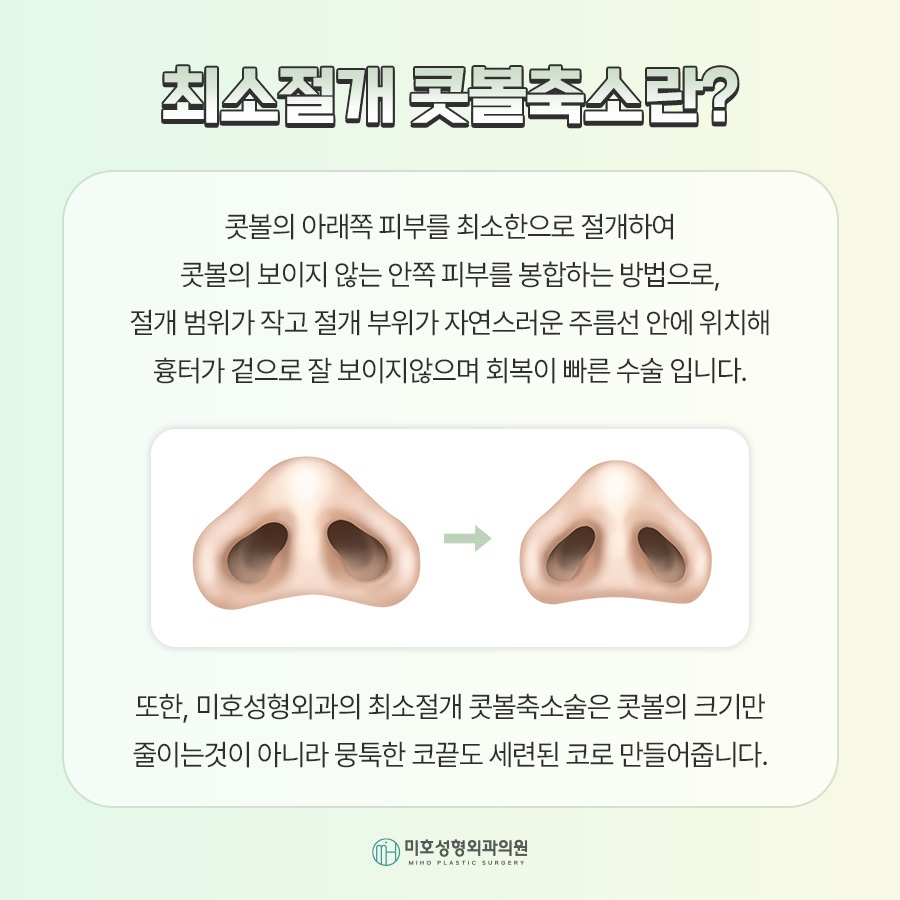
As more men pay attention to their appearance,
there has also been a natural increase
in efforts to actively improve
appearance-related concerns.
Among these procedures,
male alar reduction
has attracted attention because it can
maintain a masculine image while also
creating a cleaner and more refined impression.
Before deciding on a solution,
it is important to clearly understand
your current condition
and how it should be approached.
This article looks at
the reasons the nasal wings may appear wide,
who may be suitable candidates,
and how the procedure is performed.

- Why the Nose May Look Large
There are several reasons
a nose may look large.
The nasal bridge may be high,
or only the tip may appear blunt.
In East Asians, cases in which
the nasal wings are excessively developed
are common.
Other possibilities include
thick skin
or large cartilage.
Like the face, the nose is made up of areas
that are organically interconnected.
Rather than focusing on just one area,
it is important to consider the overall structure,
proportions, and harmony with the face
when deciding on male alar reduction.

- Different Nasal Characteristics by Sex
The shapes of women’s and men’s noses differ,
and the desired direction also varies by sex.
It is therefore necessary to understand
the characteristics of each
and proceed carefully.
Men’s skin is thicker than women’s skin,
which also means that sebum production
tends to be more active.
The bone and cartilage structures
also tend to be larger.
Differences in skin thickness can affect
recovery speed and the duration of swelling.
In terms of design, women’s procedures
tend to create finer lines
and emphasize curved contours,
whereas men’s designs generally feature
comparatively stronger, straighter lines.
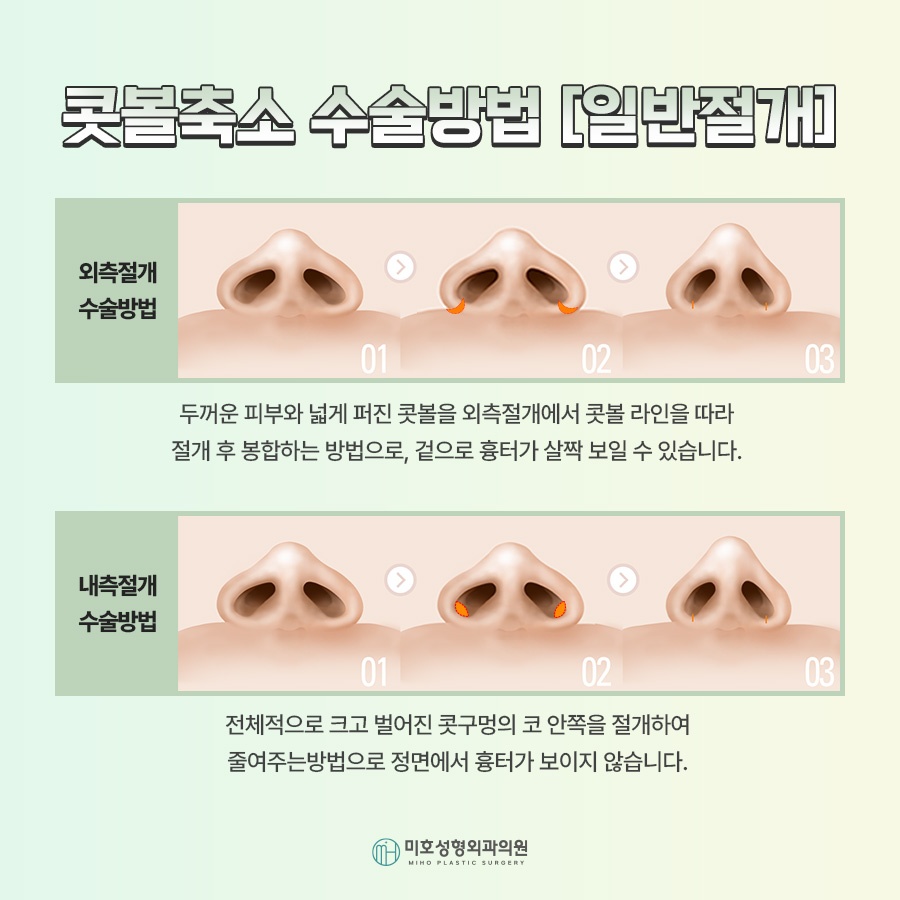
Recently, there has been a preference
for natural-looking changes.
Rather than excessively raising the tip
or reducing the nasal wings,
the design is based on harmony and proportions
with the other facial features
to create a natural appearance.
If male alar reduction is performed hastily
without considering these factors,
satisfaction may instead decrease,
potentially leading to a revision procedure.
When researching a medical institution
and the physician in charge,
it is important to thoroughly investigate
whether they can explain the differences
in design according to sex
and provide a customized solution accordingly.
- Which Method Is Right for Me?
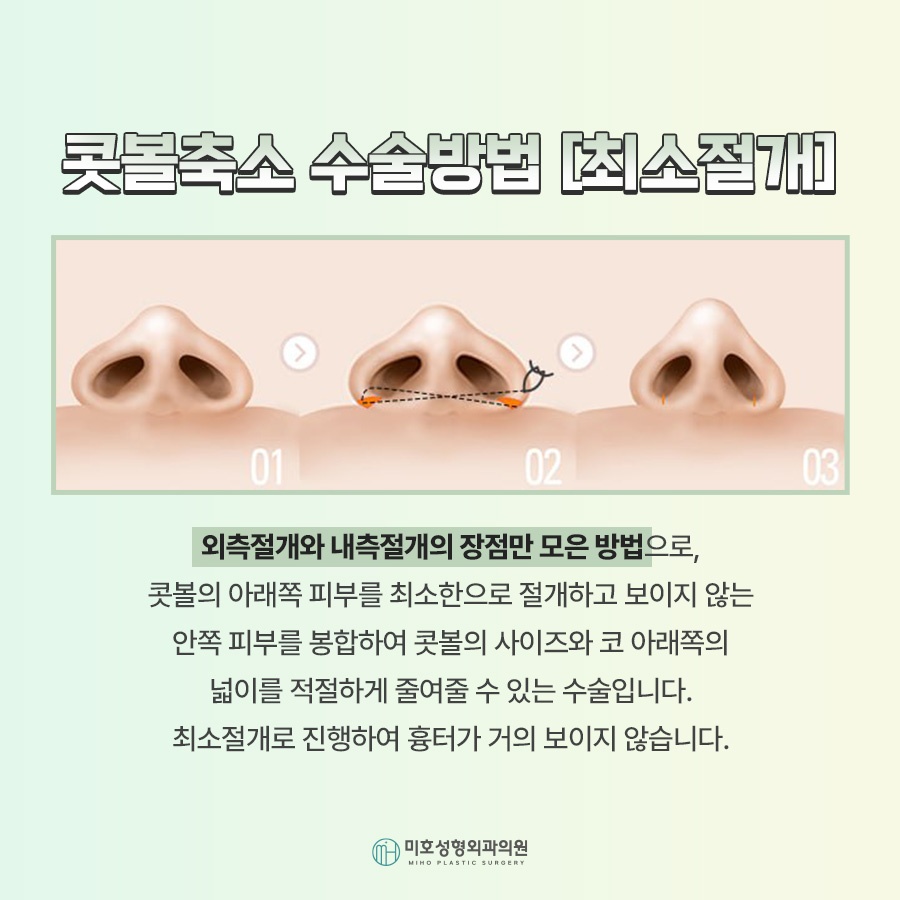
Alar reduction procedures are broadly divided
into incision and non-incision methods.
Incision methods are further divided
into lateral and medial approaches.
Because the nose is in the center of the face,
many people prefer the non-incision method,
which is less likely to leave visible scarring.
However, depending on your condition,
the non-incision method may not be possible.
Since each method has different advantages
and disadvantages, it is necessary to consider
and assess the options from multiple perspectives.
Among incision methods, the lateral approach
involves making a partial incision
on the outside of the nasal wing
and then suturing it.
The medial approach involves removing
a small amount of tissue from inside the nostril
and completing the procedure there.
The incision method is used when
the skin is thick
and the width of the nasal wings
needs to be reduced significantly.
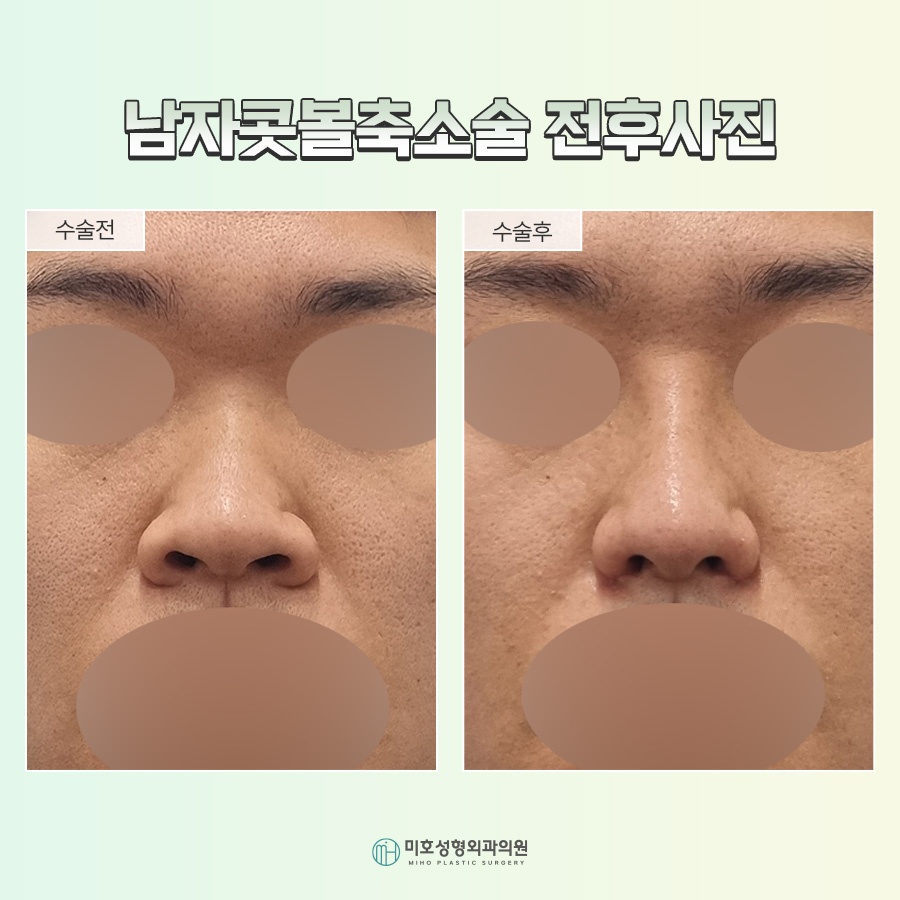
Because an incision line remains,
scar care is necessary,
and the rate at which the marks fade
differs depending on the individual’s healing response
and constitution.
Although some marks may remain,
this method can produce a relatively clear
difference between before and after,
and its shape change is permanent.
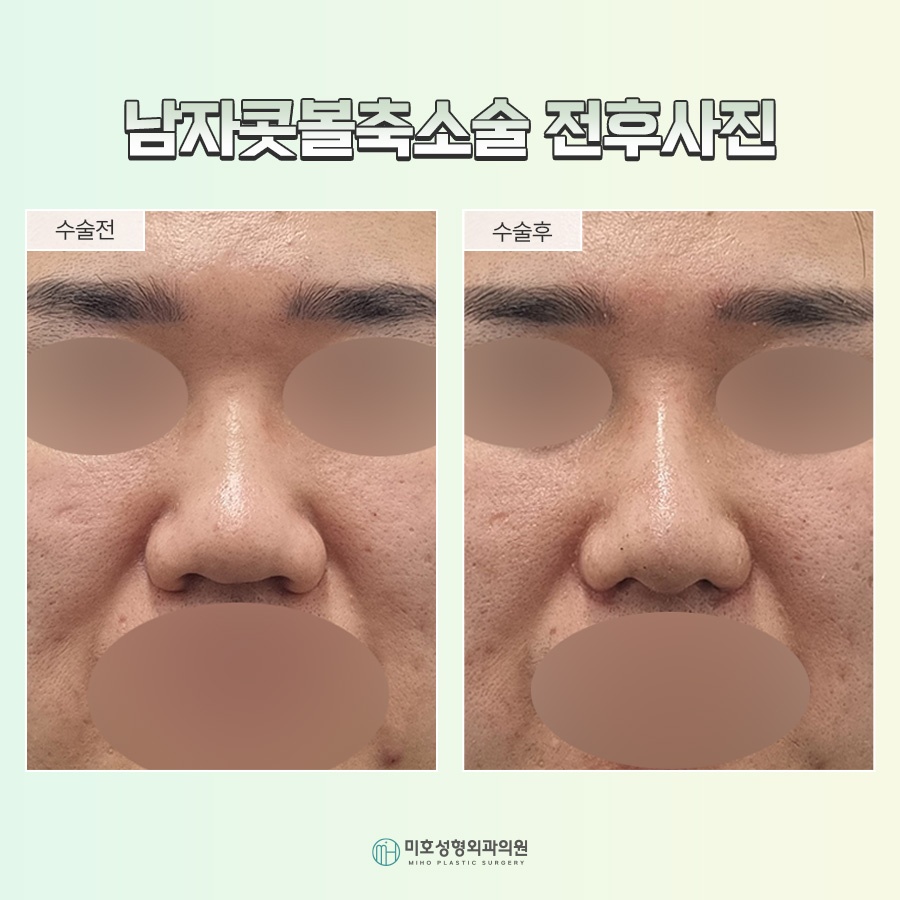
If only a small reduction is desired
or the skin is thin,
male alar reduction may be performed
using a non-incision method.
Threads may be inserted to draw
the nasal wings toward the center
and tied once the desired width is reached.
Alternatively, Botox may be administered
to limit muscle movement
and prevent the nasal wings from spreading outward.
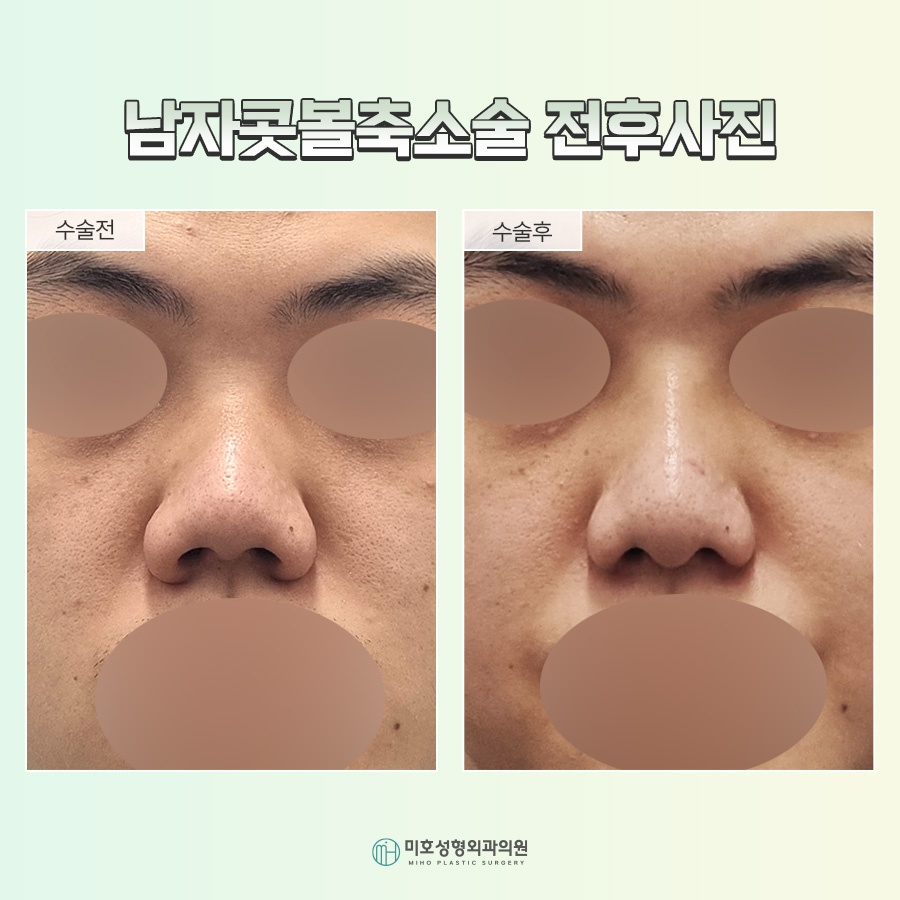
Because there is no incision,
visible marks are not left,
and bruising and swelling are generally minimal.
The recovery period is very short,
so daily activities can be resumed immediately.
However, in the case of Botox,
the nose returns to its original state
after only a few months,
and compensatory muscles may develop.
Even when threads are used,
the results are not permanent,
and the degree of change is more limited
than with the incision method.
It is not possible to definitively say
that one of the two methods is better
or that the other is unsuitable.
The solution should be selected based on
the current shape of your nose,
skin thickness,
the appearance you want,
and your preferred method.
- Post-Procedure Care After Alar Reduction
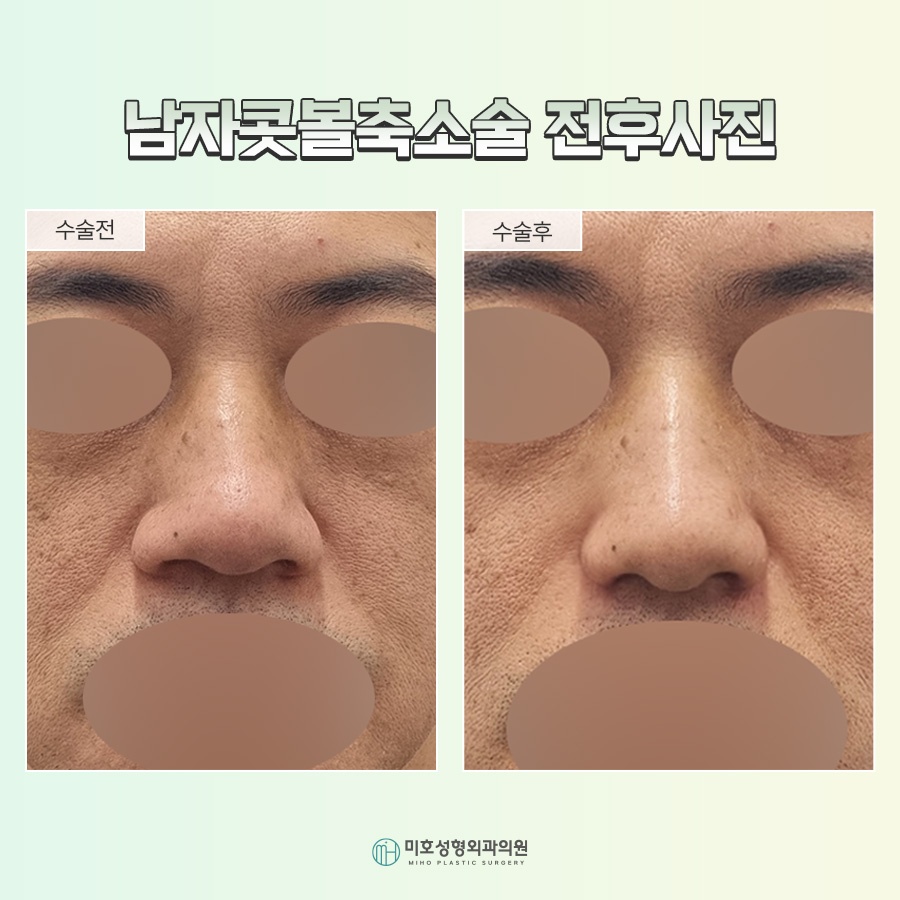
If the reduction was performed using an incision method,
swelling and bruising may occur for one to two weeks,
and the final shape develops over three to six months.
Apply ointment and take medication
according to the instructions provided
by the medical institution.
For a certain period, avoid irritating
the incision area
or exposing it to direct sunlight.
Smoking and drinking alcohol can delay recovery
and cause inflammation, so avoiding them is recommended.
Because there is a risk that the wound may open,
it is also advisable to avoid making exaggerated facial expressions
for a while.
Strenuous exercise, swimming pools,
and saunas should also be avoided
until the stitches are removed.
- Consultation Checklist
If you are considering male alar reduction,
we recommend checking several items
before attending a consultation.
Does the physician have a strong understanding
of male nasal shapes?
Do they provide a customized design
that considers your image and facial features?
Do they explain the advantages and disadvantages
of each solution without omitting important details?
If you have previously had a nasal filler
or threads inserted,
you must inform the medical staff
for a safe procedure.
Even if a concern seems minor to others,
if it bothers you every time you look in the mirror
and causes you stress,
it is certainly not a small matter.
We hope that, together with a medical professional you can trust,
you will achieve a better version of your appearance.




Previous image
Next image