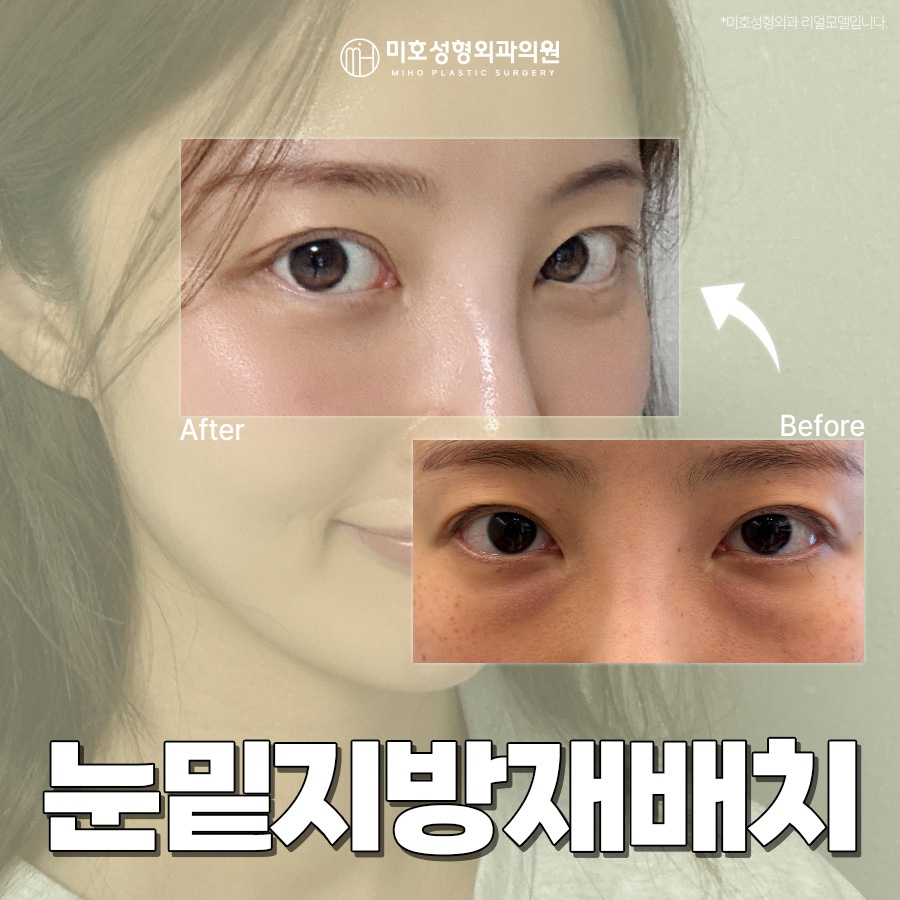
Even when concealer is applied carefully,
shadows under the eyes can remain,
and the contrast becomes more pronounced under bright lighting.
Even after getting enough sleep,
being told that you look tired
can make a small change stay on your mind for a long time.
Under-eye fat repositioning tends to attract attention as an approach that
looks at the cause of uneven contours
rather than simply covering the color.
Rather than imagining a major change from the beginning,
it is important first to examine
where the bulging area and the hollow line meet.
Once this standard is established,
it is less likely to lead unnecessarily toward an excessive approach.
It is also helpful to consider early on
whether the area can be concealed with makeup
and whether it changes with facial expressions.

People looking into under-eye fat repositioning
often initially think they simply have dark circles.
In reality, pigmentation, bulging,
hollowness, and thin skin can overlap
to create a tired appearance.
If color is the main cause,
makeup can conceal it to some extent,
but shadows created by differences in surface height
are likely to show again even after being covered.
Therefore, rather than judging only by the dark appearance,
it is necessary to consider the location of the shadows
that appear when light falls on the area.
If you want the eye area to look brighter,
color and contours should be considered separately.
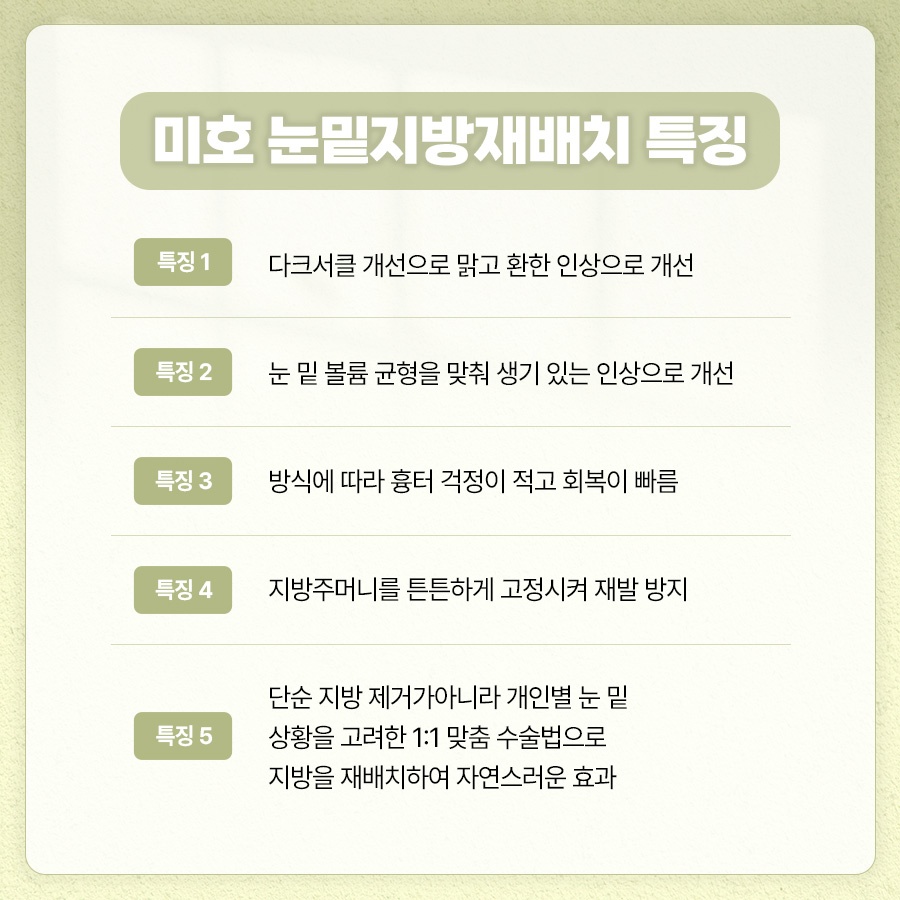
Under-eye fat repositioning requires
careful consideration of the features of the lower face
that change depending on the time of day and facial expressions.
The area may look puffy in the morning,
while hollowness becomes more noticeable in the afternoon,
or the boundary may become more pronounced when smiling.
If the shadow when the face is expressionless
differs from the crease that forms while smiling,
it may be difficult to dismiss the appearance as simple fatigue.
Rather than using a single photograph as the only reference,
it can be helpful to compare the differences
from the front, at an angle, in bright places,
and in dark places.
These records can also be useful
when organizing the direction that may be needed.

There are several possible reasons
why the lower face may look tired.
When fat pushes forward,
it creates a shadow beneath it,
and if the tear trough is relatively deep,
the line may look even darker.
Thin skin that allows the color of blood vessels to show through,
or a rough surface caused by fine lines,
can create a similar appearance.
When the causes differ,
the approach should differ as well.
It is important to first distinguish
which factor is most significant among color,
bulging, and hollowness.
Although the outward appearance may be similar,
the underlying structure may be quite different.
Approaching them in the same way without understanding this difference
can easily leave an impression that does not match expectations.
For this reason, separating the causes during the preliminary stage
becomes the basis for the overall approach.
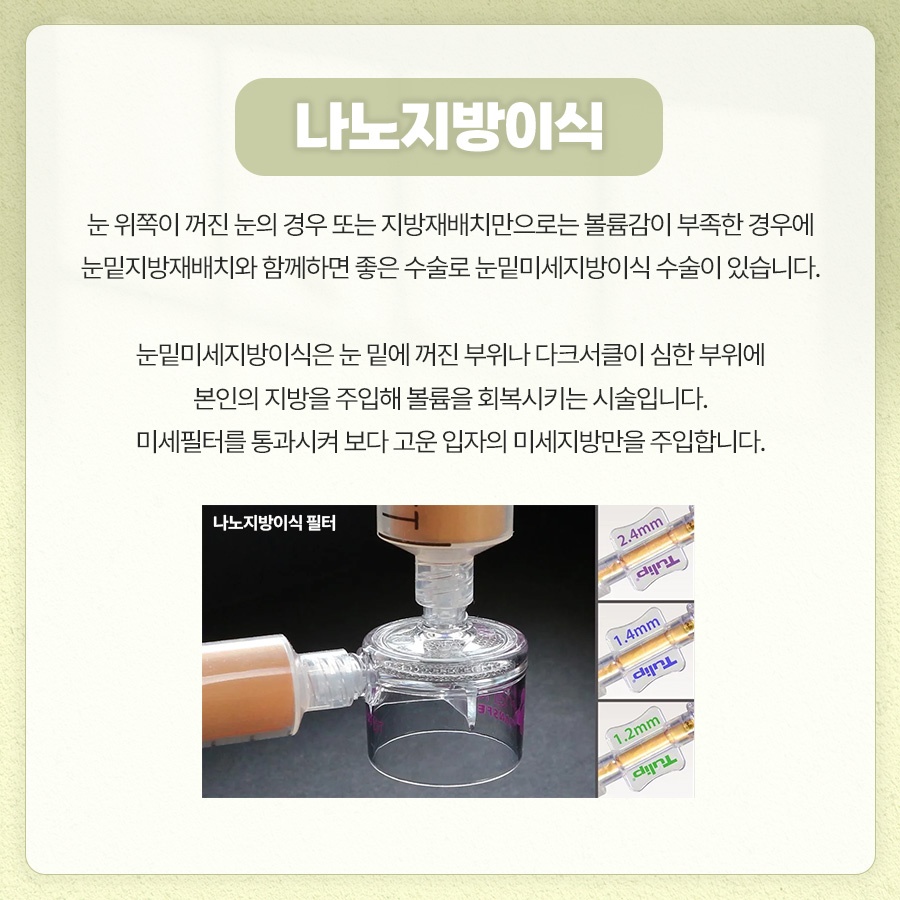
It is insufficient to understand under-eye fat repositioning
simply as a concept of unconditionally removing bulging areas.
Even slight hollowness in the lower face
can make the area look more gaunt than lively.
The key is to create a smooth transition in height
between the tissue that appears excessive
and the areas that appear lacking in volume.
Rather than aiming for an overly flat appearance,
it is more appropriate to seek a refined look
in which the center of the face transitions naturally.
If only the eye area changes,
it may not harmonize with the overall appearance,
so the flow of the midface should also be considered.
There is a reason to examine
the front cheekbone and central cheek area as well.
Even if the lower face becomes smooth,
if the support beneath it is weak,
the boundary may become prominent again.
The center of the face connects like a single surface,
so even a small difference in height can easily show.
Especially if cheek volume has decreased after weight loss,
or if the midface is naturally relatively flat,
there are limitations to looking at only one area.
Comparing the line where the eye area and cheek meet
makes it easier to establish a natural standard.
It is also advisable not to overlook
the changes visible from an angle at this stage.
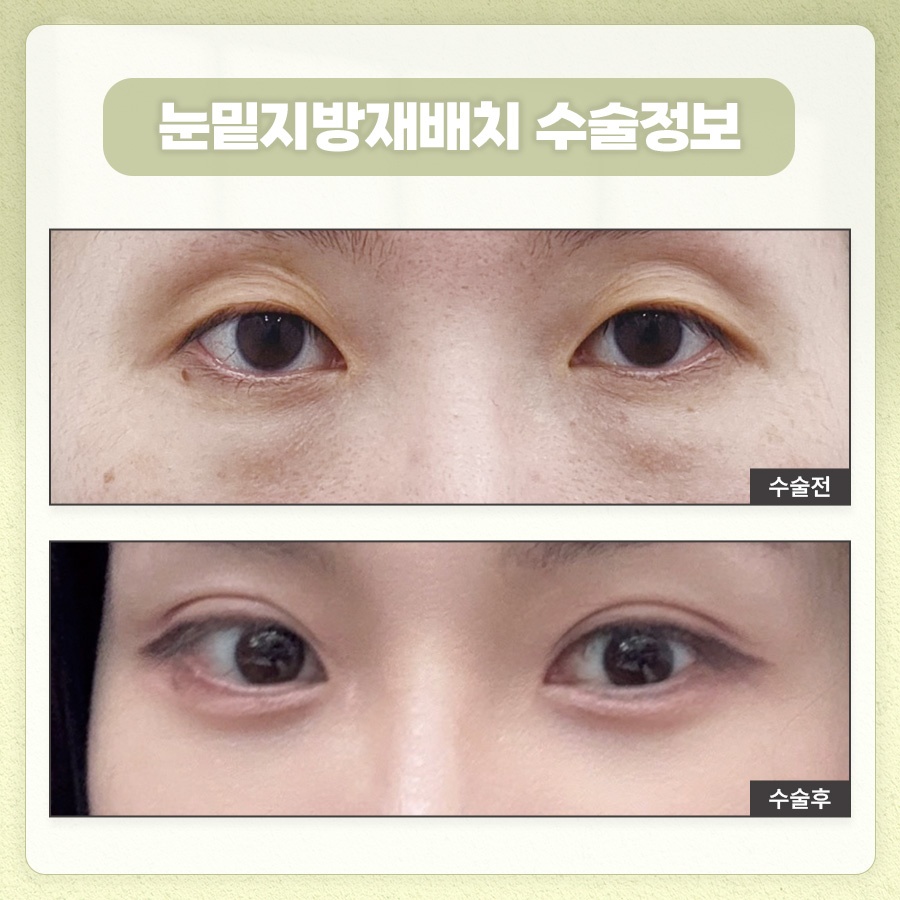
Temporary swelling and structural changes
also need to be distinguished.
The lower face may look more swollen
on the day after eating salty food
or on a day when you have not had enough sleep.
If you frequently rub the area because of allergies,
the skin may become sensitive and the color may look dull as well.
In contrast, persistent bulging
or shadows that appear in the same location every time
are difficult to view as being caused solely by temporary condition.
Taking photographs several days apart
can help identify patterns.
It is also necessary to distinguish
lifestyle-related factors from structural features.
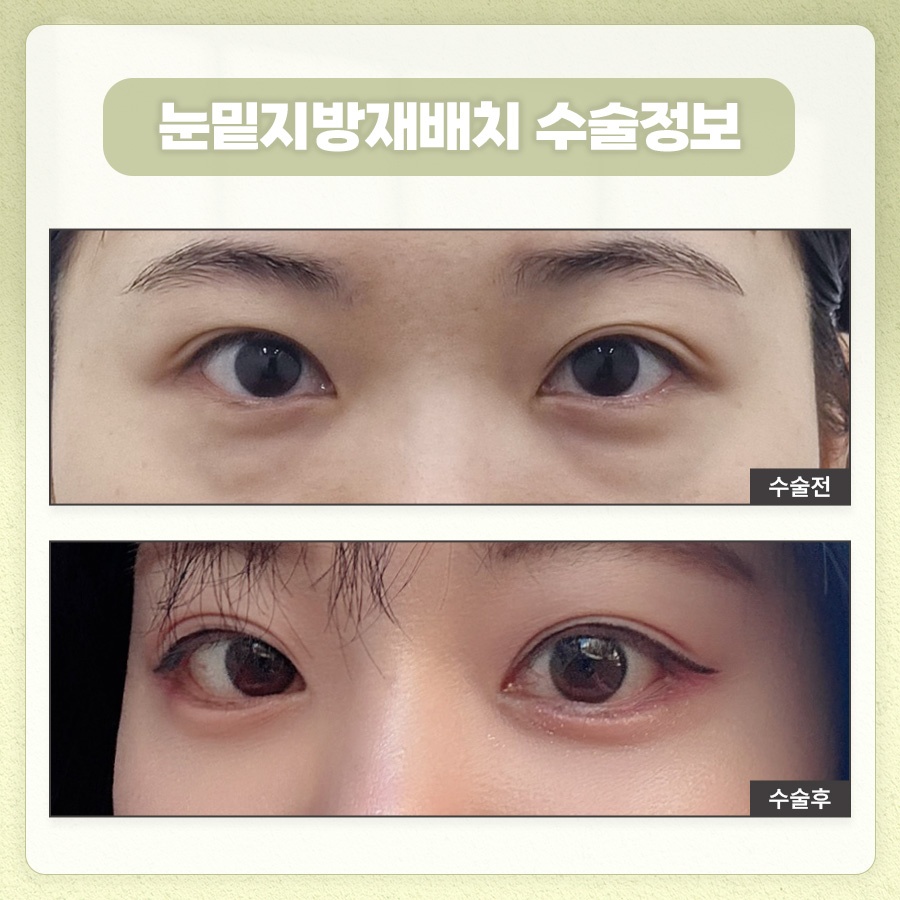
When considering under-eye fat repositioning,
it is better to focus first on a natural connection
rather than a dramatic change.
If the eye area becomes excessively flat,
it may look bland rather than bright,
and even if some shadow remains,
satisfaction may be higher if the entire face looks softer.
The difference between the two sides, skin thickness,
the depth of the tear trough,
and movement when smiling
should all be considered to avoid excessive changes.
Rather than simply following before-and-after photos,
it is important to calmly consider the range of possibilities
within your own facial structure.
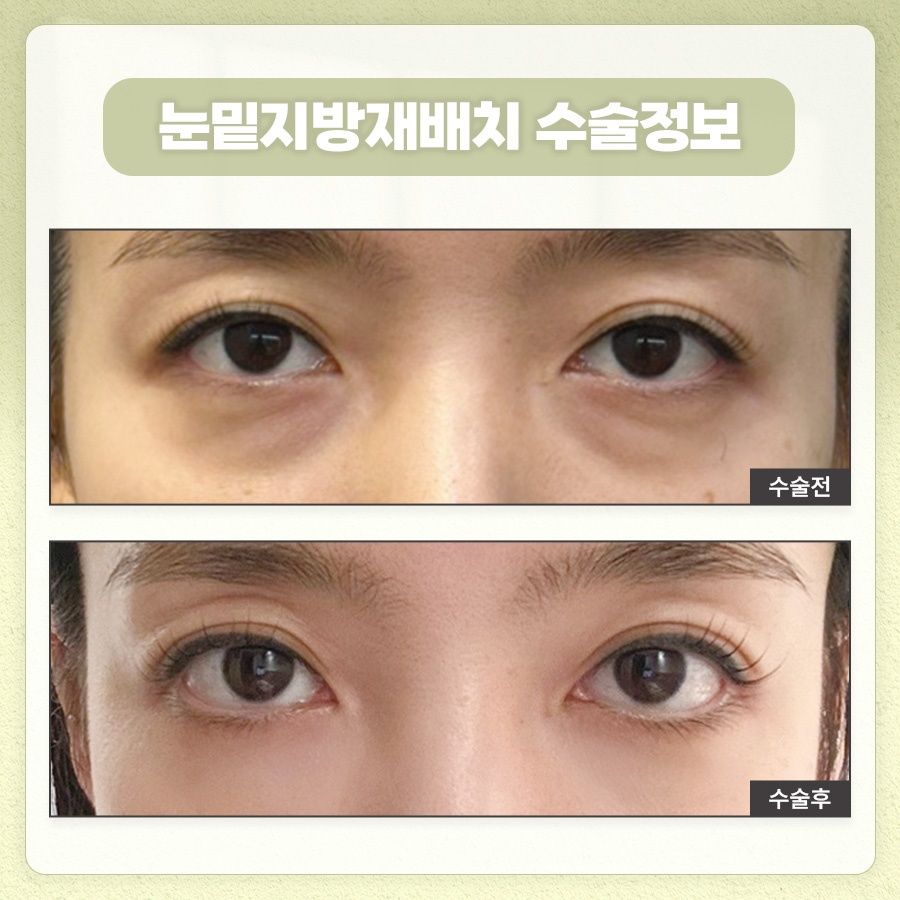
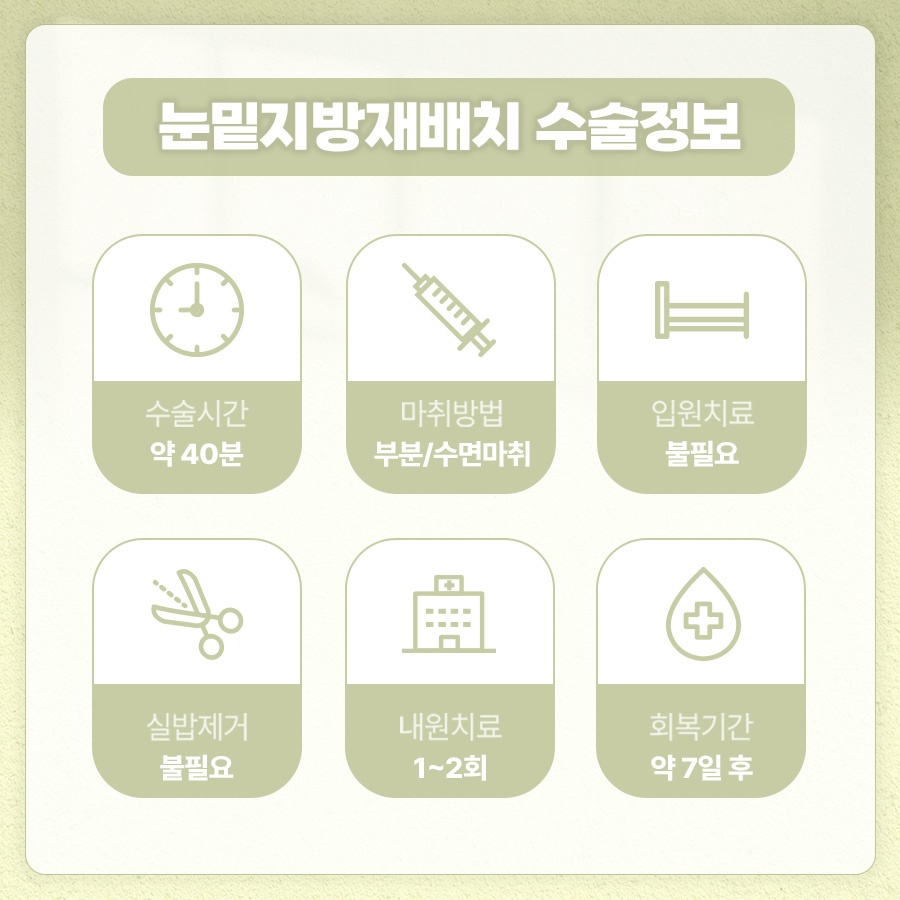
The recovery process differs from person to person.
In the early stages, bruising, swelling,
or tightness around the eyes may be felt,
and the two sides may temporarily look different.
During this period, rather than making a quick judgment about the result,
it is better to allow time for the tissue to stabilize
and observe the progress.
It is advisable to avoid keeping your head lowered for a long time
or rubbing the lower face forcefully
early on.
Getting enough rest, maintaining cleanliness,
and moderating strenuous exercise
can help support a more comfortable recovery.
The timing for resuming contact lens use
and color makeup should also be adjusted
according to the instructions provided.
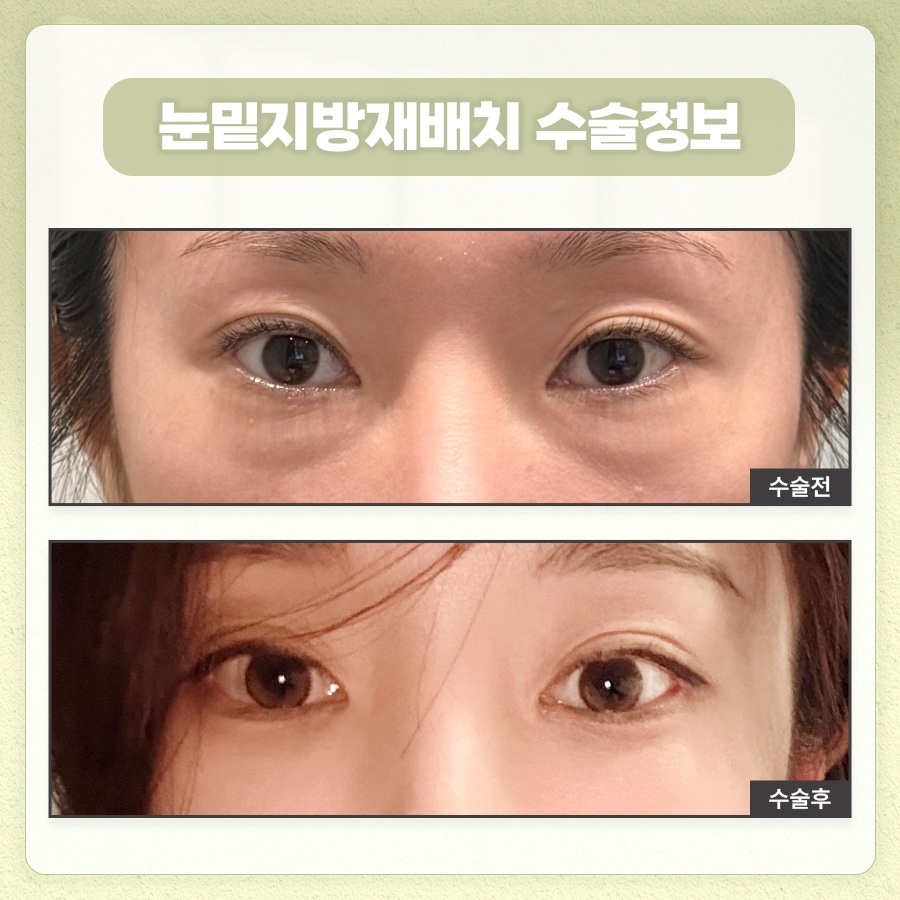
Under-eye fat repositioning is an option people may look into
when bulging and shadows under the eyes
are both a concern.
However, rather than judging only by the outward appearance of looking dark,
bulging, hollowness, skin thickness,
and the connection with the midface
should all be considered together.
Finding the height and flow that suit your own face
is more important than simply reducing as much as possible.
Calmly comparing the possible changes
and the points requiring caution
may be more helpful in choosing a natural direction
while reducing a tired appearance.
Rather than putting excessive expectations first,
looking at your current conditions first
can lead to a more satisfying choice.



Previous image
Next image