
Many people were concerned because the area under their eyes looked puffy and they were often told by people around them that they looked tired.
They thought it was simply dark circles, but it could also have been shadowing caused by protruding fat.
This was something that could be addressed through under-eye fat repositioning.
Before attempting a change, it was important to check whether this solution was suitable for you and then make a decision.
This article examined the causes of under-eye hollowness, fat, and wrinkles individually and also looked at ways to address them.

First, we looked generally at what under-eye fat repositioning involved.
When the fat beneath the eyes protruded due to aging or congenital factors, the tear trough below it appeared relatively darker.
The resulting difference in levels created shadows, making the area look like dark circles and giving a tired appearance.
This method did not simply remove the protruding fat; some of it was moved toward the hollow area to even out the difference in levels.
This was why the term “repositioning,” rather than removal, was used.

The reason for repositioning the fat around the area instead of removing it was that if the fat was simply removed, the area could become even more hollow and the area affected by dark circles could become wider.
Although the bulge would disappear, the face could actually look more tired, so the hollow area was naturally filled.
At this clinic, the appropriate method—under-eye fat repositioning or lower blepharoplasty—was selected depending on the cause of the dark circles.
The main causes of darkening under the eyes included aging of the skin and orbital septum, protrusion of orbital fat, and loosening of the ligaments and soft tissue.

The skin around the eyes was particularly thin compared with other areas and had underdeveloped sebaceous glands, making it especially vulnerable to wrinkles and hollowness.
As skin elasticity decreased with age, the capillaries showed through and the area appeared darker.
In addition, continuous movement of the orbicularis oculi muscle caused fine lines, making the face look older.
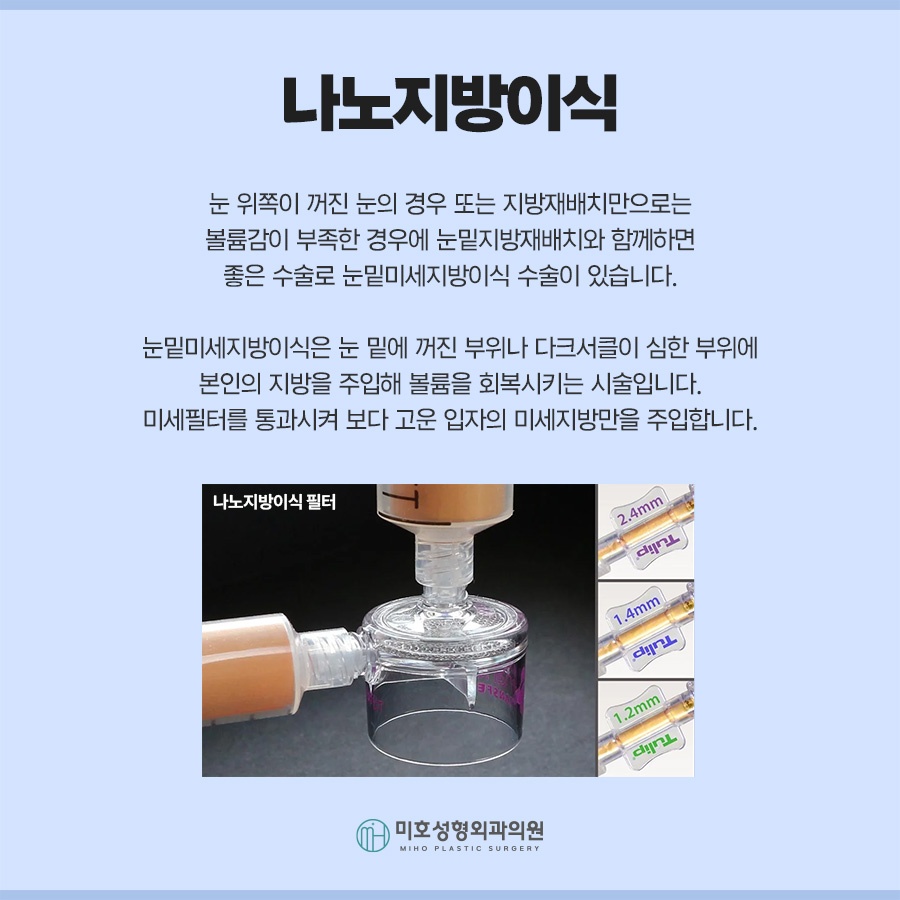
If there was no protruding fat and only the skin tone appeared dark, improvement could be attempted with nano-fat grafting or fat repositioning.
If fine lines had developed, a skin booster or similar treatment was needed. If the person was relatively young or sagging was not severe, radiofrequency or ultrasound lifting was applied.
Like sagging skin, the septum surrounding the orbital fat also weakened, causing the fat inside to protrude.
This applied to cases in which there had been no dark circles when the person was young, but the appearance around the eyes changed upon reaching middle or older age.
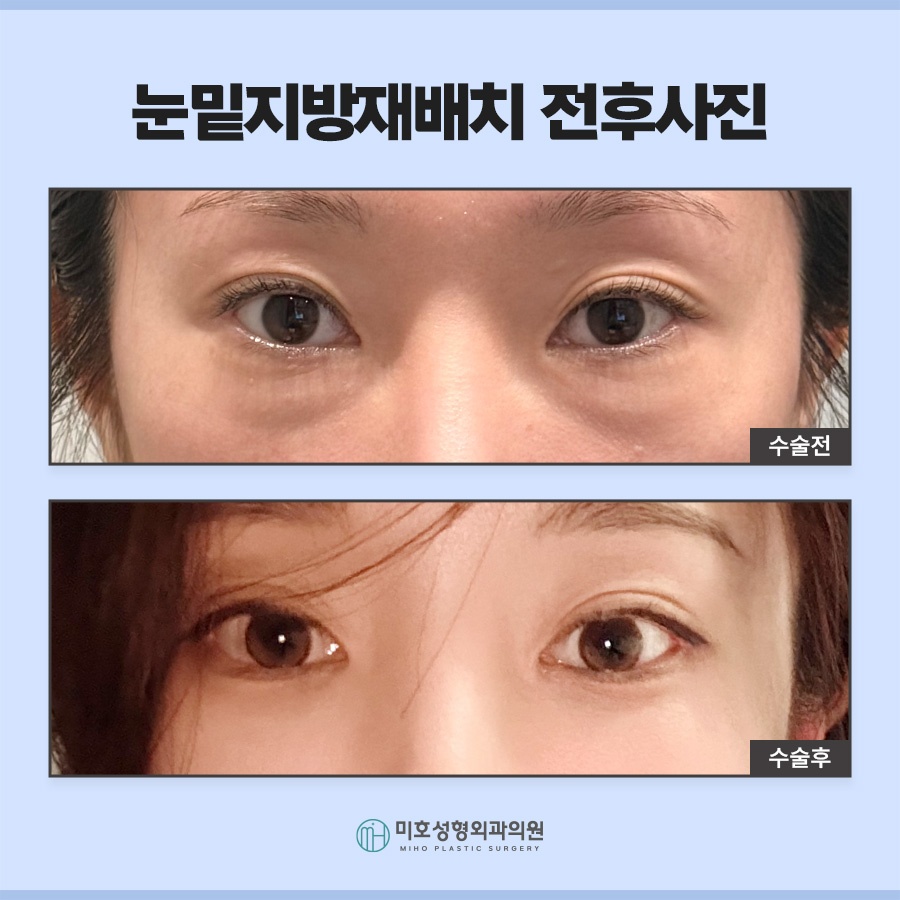
At this point, tightening the weakened septum could reposition the displaced orbital fat.
The area where the orbital fat had protruded became flatter, and the shadows that had formed beneath it were also improved.
If the amount of fat itself was large, under-eye fat repositioning alone was insufficient.
Part of the fat was removed to resolve the bulging appearance.
If there was both protrusion and deep shadowing, along with distortion of the tear trough, the orbital fat was released from the septum and brought out to fill areas that needed volume.
If the fat protruded but the amount was small, leaving the lower eyelid more sunken than the orbital rim of the maxilla, nano-fat grafting was performed or volume was supplemented with filler.
The pattern of aging differed depending on the degree of maxillary development and the condition of the soft tissue in the midface.
This could also be addressed by grafting fat or using filler to supplement volume in the front cheek area.
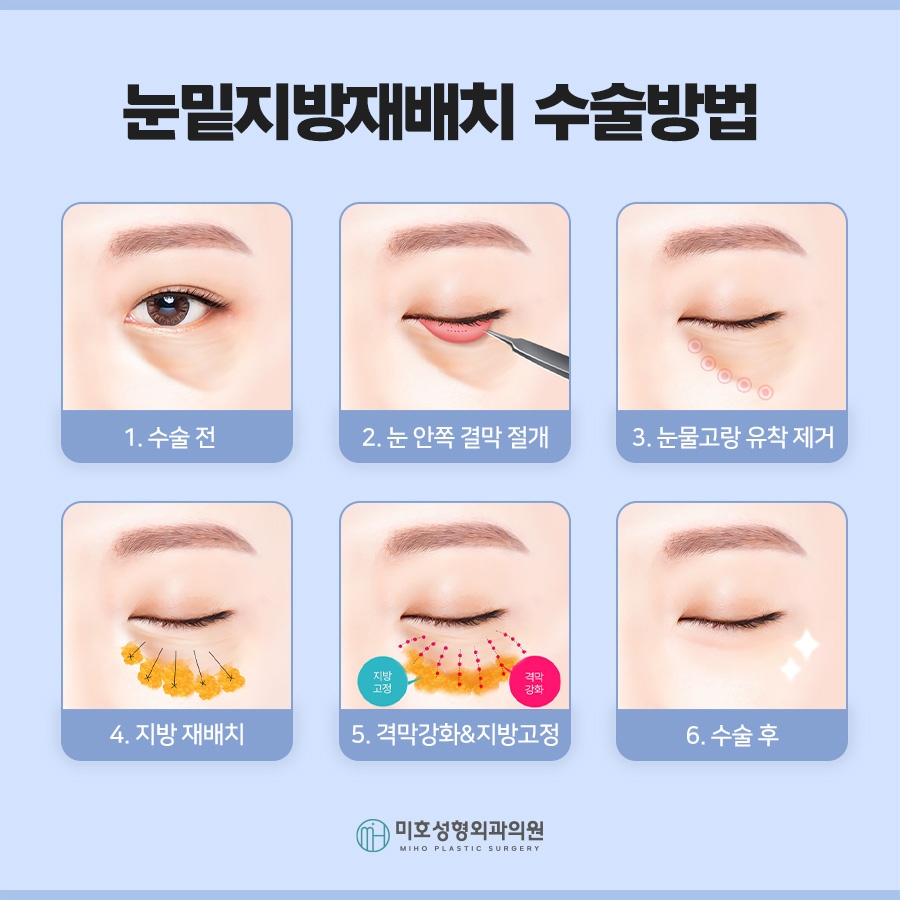
The incision methods for under-eye fat repositioning were broadly divided into two types.
An incision was made either in the conjunctiva, the inner mucous membrane of the eye, or in the skin beneath the eye.
In the case of a conjunctival incision, the inner eye area was precisely incised, adhesions of the tear-trough ligaments were released, and the fat was repositioned.
At this clinic, the septum was strengthened and the fat was secured in its proper position to help prevent recurrence.
Because the incision was made in an area that was not externally visible, the concern about scarring was relatively low.
This method could be performed when skin sagging was not severe.
In contrast, a skin incision was used for lower blepharoplasty. This was a solution applied when the area under the eyes was not only hollow or protruding, but also accompanied by sagging and wrinkles.
The area beneath the eyes was designed to match the shape of the eyes, an incision was made directly below the eyelashes, and the fat was removed or repositioned.
This also included processes such as strengthening the septum and securing the fat.
Because the skin was lifted during suturing, the loose skin could be trimmed.
Areas that had been uneven due to wrinkles and fat could be finished smoothly.
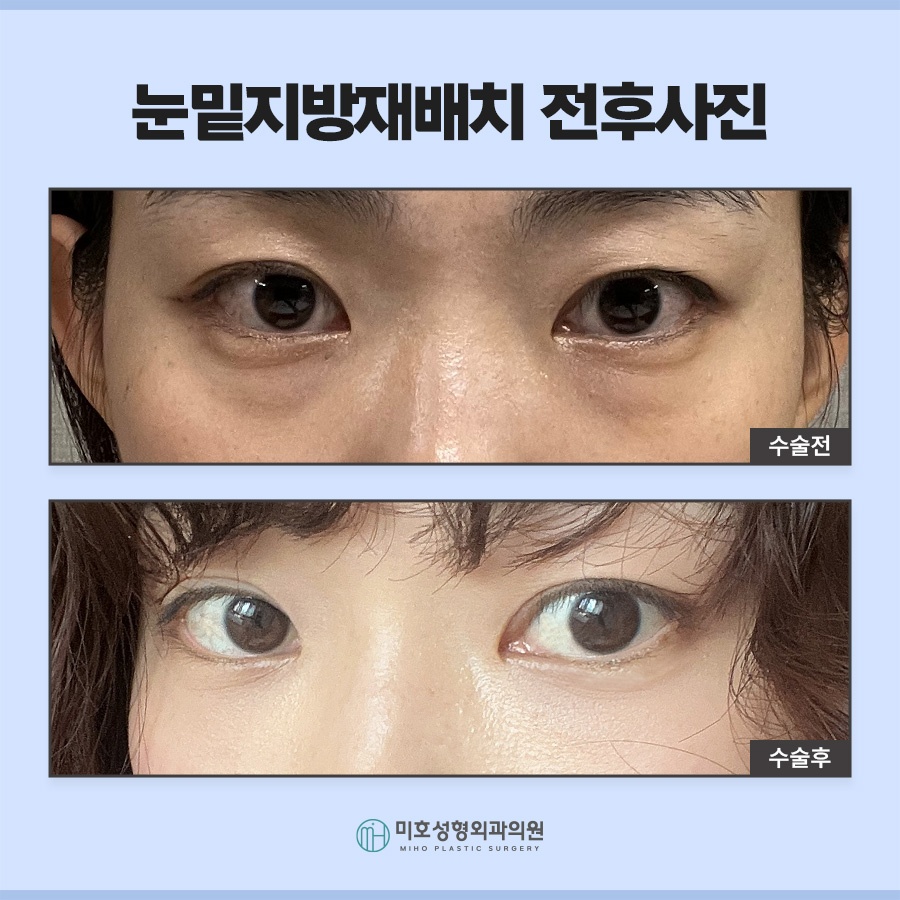
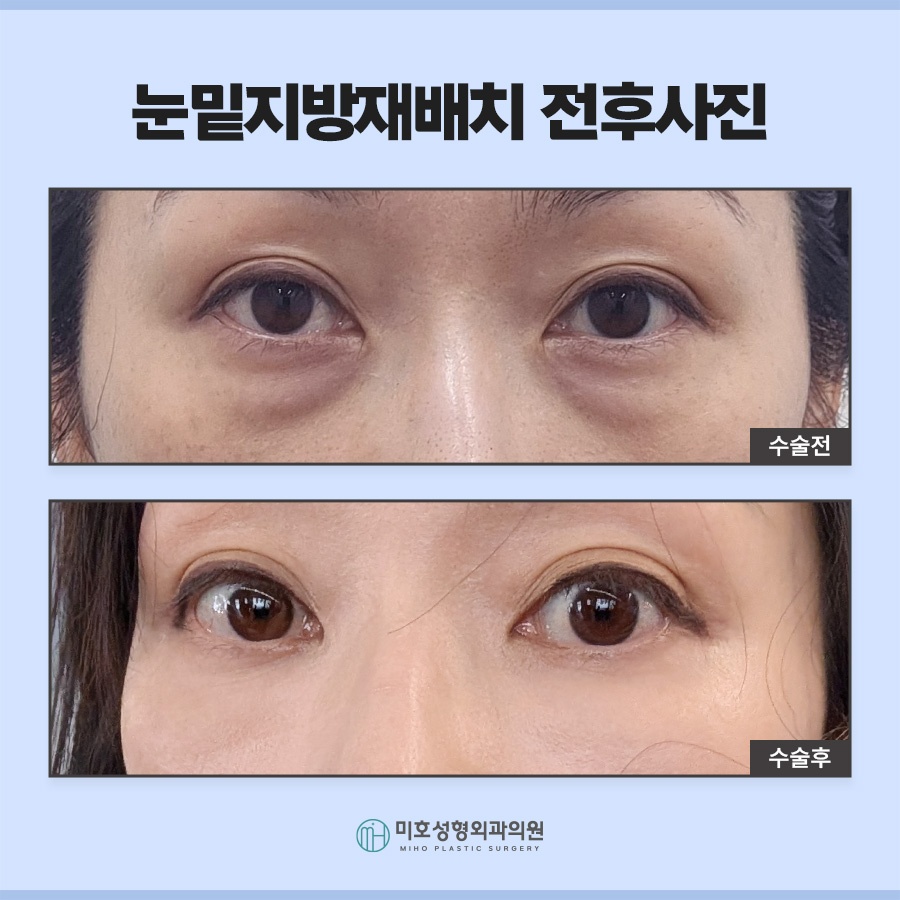
When the dark circles were caused by fat and shadowing, the concern could be addressed to a considerable extent through the procedure alone.
However, if melanin pigmentation had accumulated or the type involved visible blood vessels, additional care might be needed.
To lighten the pigmentation and address blood vessels visible through the skin, laser treatment, toning, skin boosters, or vascular treatment might need to be combined.
If sagging and wrinkles were also present due to aging, thread lifting, ultrasound lifting, or radiofrequency lifting might also need to be performed in combination.
As shown above, even dark circles could have different causes, so the most important thing was to identify which type matched your current condition and make a selection accordingly.
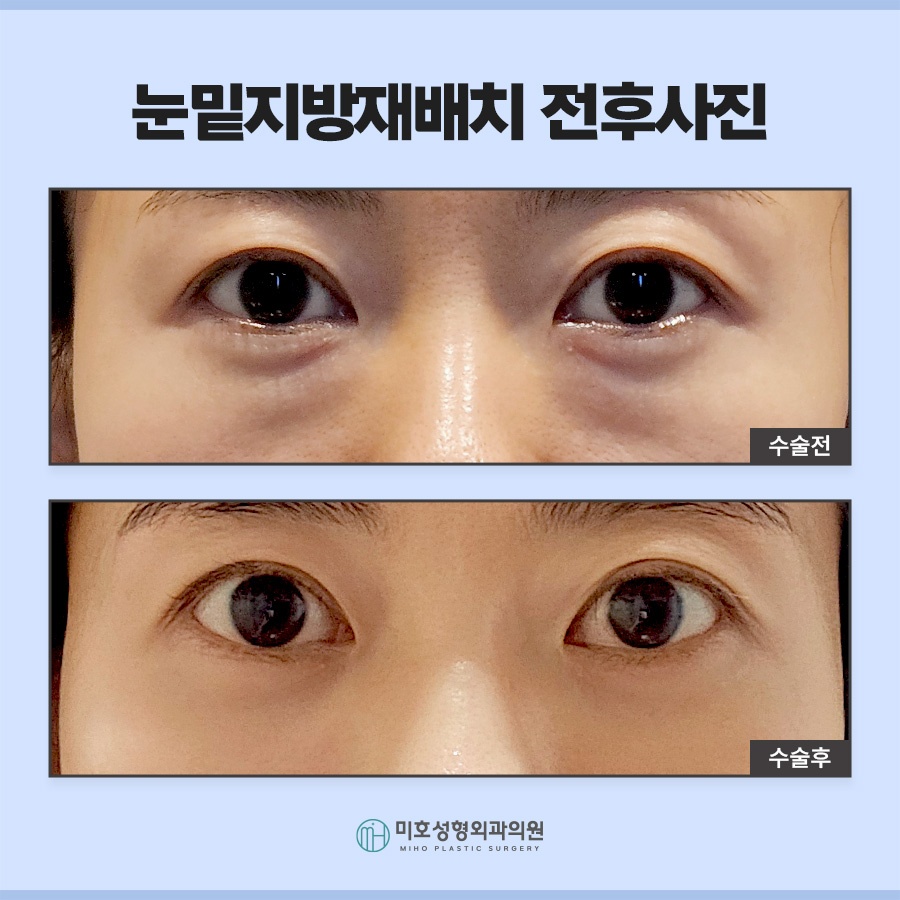
Swelling and bruising lasted about one to two weeks, and the area under the eyes could temporarily appear darker during the recovery process.
However, this gradually improved, so it was important to follow the instructions provided by the medical institution during care.
Cold compresses could be applied for about the first three days, followed by warm compresses.
Excessive removal of the fat simply because the protrusion was bothersome was not recommended.
This was because it could make the hollowness more severe than before or cause asymmetry.
Undergo under-eye fat repositioning based on a clear diagnosis and the judgment of an experienced physician, and we hoped that you would achieve a more youthful-looking appearance.



Previous image
Next image