
After taking photos,
there may be moments when your profile looks unusually flat
or your facial center seems lacking definition from the front,
and it continues to bother you.
Rather than seeking a dramatically different appearance,
many people want a slightly more defined yet comfortable impression.
Implant-free rhinoplasty is an approach that may come to mind
when considering a method that does not involve inserting artificial materials.
However, rather than deciding based on the name alone,
it is important to first calmly compare your current appearance
with the look you want to achieve.
Organizing which areas you would like to improve
can help when creating a plan.

Implant-free rhinoplasty is not simply
about raising the height of the nose.
For a natural result, the angle of the starting point and tip of the bridge,
the flow connecting the columella and philtrum,
skin thickness, and cartilage strength
must all be considered together.
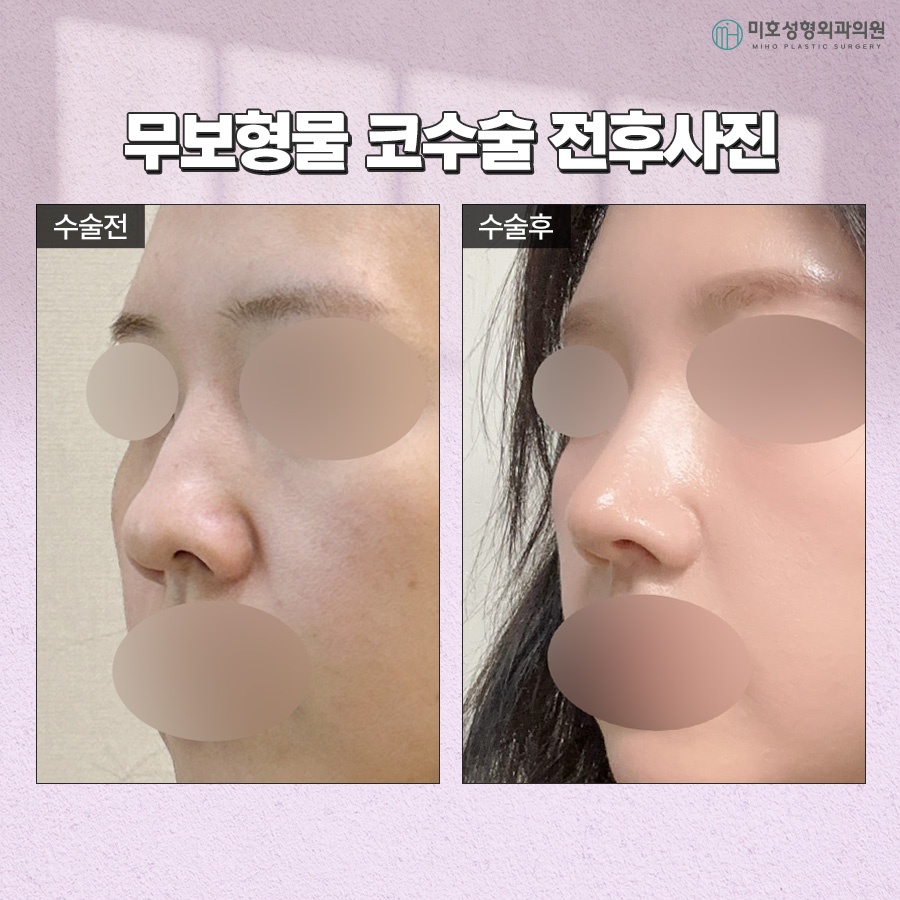
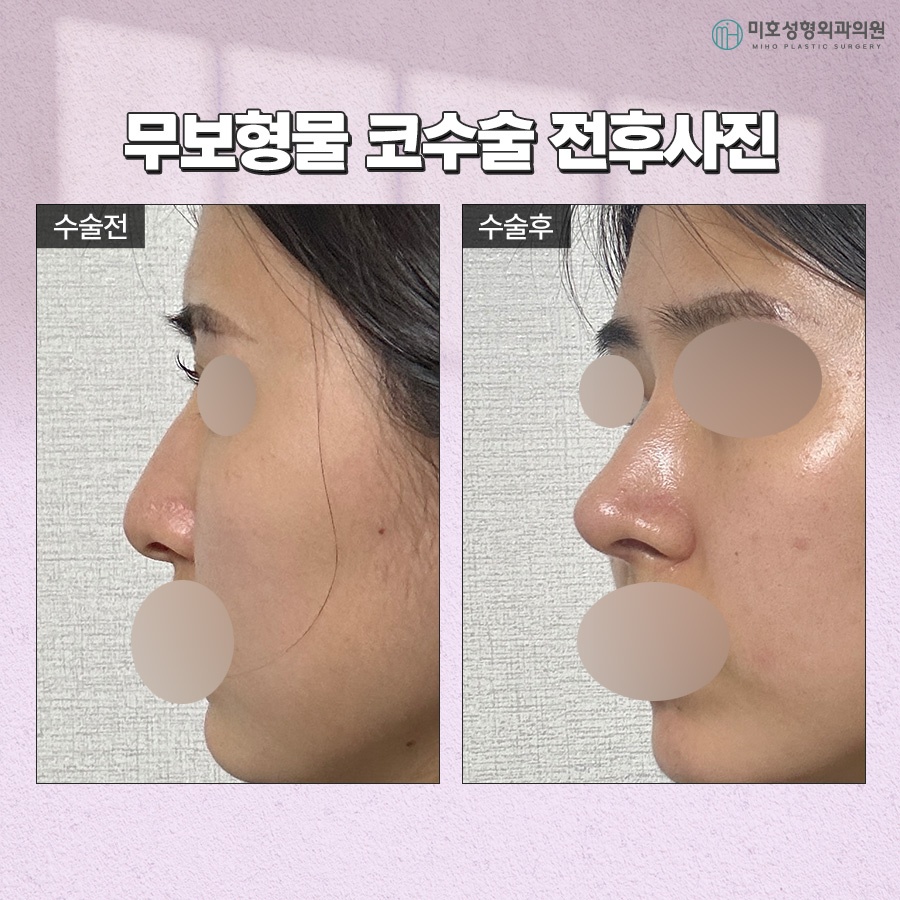
As shown in the reference materials,
methods that use autologous tissue
may create different impressions
depending on the nature of the material.
Because the impression from the front
can differ from the profile,
it is preferable to examine the proportions
of the entire face rather than using just one view as the standard.

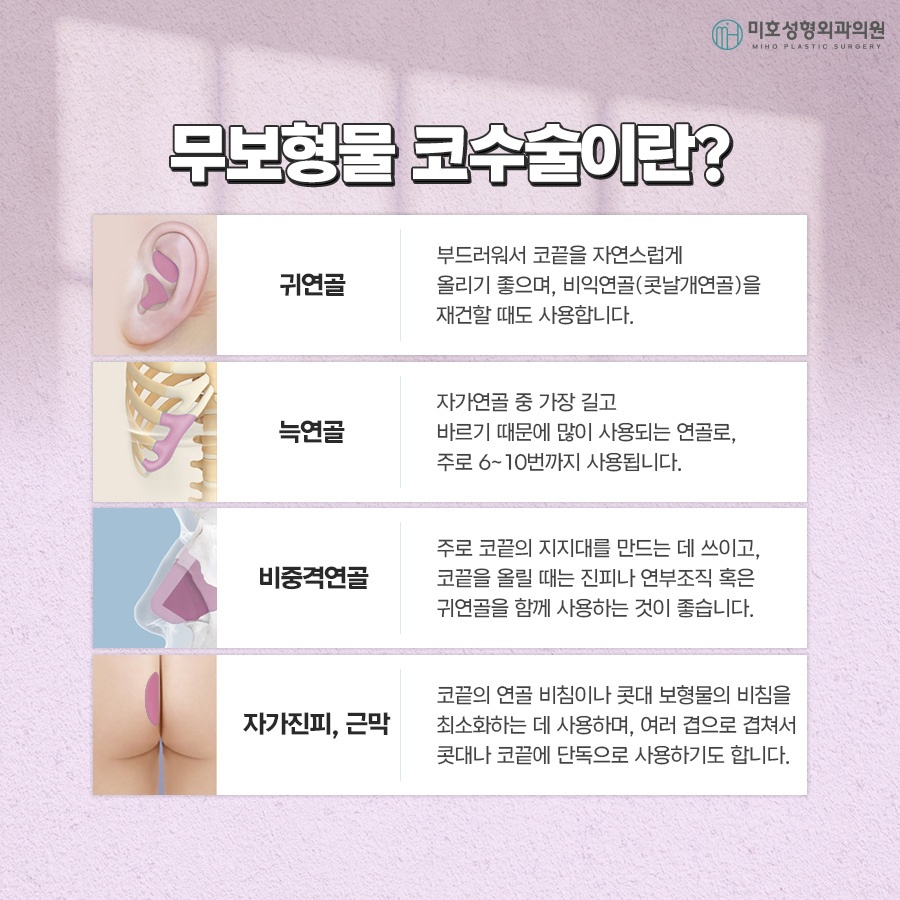
The materials most often discussed for
implant-free rhinoplasty are autologous cartilage and autologous dermis.
Autologous cartilage is used to support the tip
or refine its shape,
while autologous dermis may be considered when the skin is thin
to help reduce concern about a pronounced contour.
Ear cartilage, septal cartilage, and rib cartilage
differ in their firmness and the amount that can be obtained.
Therefore, it is difficult to say that one material
is suitable for everyone.
It is important to assess the materials separately
according to the purpose of each area.
The nose, located at the center of the face,
is an area where even small differences
can affect the overall impression.
If the bridge is defined but the tip lacks support,
the profile may not look smooth.
Conversely, if only the tip is emphasized,
the balance from the front may feel awkward.
The amount of nostril show and differences between the two sides
also affect the finished appearance.
Therefore, rather than making a high and glamorous shape
the sole goal, it is necessary to consider the flow
that continues through the forehead,
lips, and jawline.
Even small changes in angle can appear
larger than expected in photographs.

There are various reasons people become interested
in an approach that does not use implants.
Some feel concerned about artificial materials,
while others want a more natural feel and movement.
However, autologous tissue does not easily suit
every set of conditions.
The amount that can be harvested, elasticity,
and supporting strength vary from person to person,
and the recovery burden at the donor site
must also be considered.
In particular, if the skin is thin or the tip is relatively weak,
it is important to carefully assess
how the necessary support will be created.
This step can also serve as a basis
for reducing unrealistic expectations.
When researching implant-free rhinoplasty,
one point that is easy to overlook is
how the lines settle over time.
At first, swelling may make the height
or angle look different,
and the tissue then goes through a period
of stabilizing as time passes.
Therefore, rather than judging the outcome
based only on its initial appearance,
it is better to follow the recommended care instructions
and calmly observe the progress.
It is better to avoid strongly pressing on the nose
or sleeping face down,
and keep in mind that being cautious with alcohol
and strenuous exercise during the early period
may have a positive effect on stabilization.
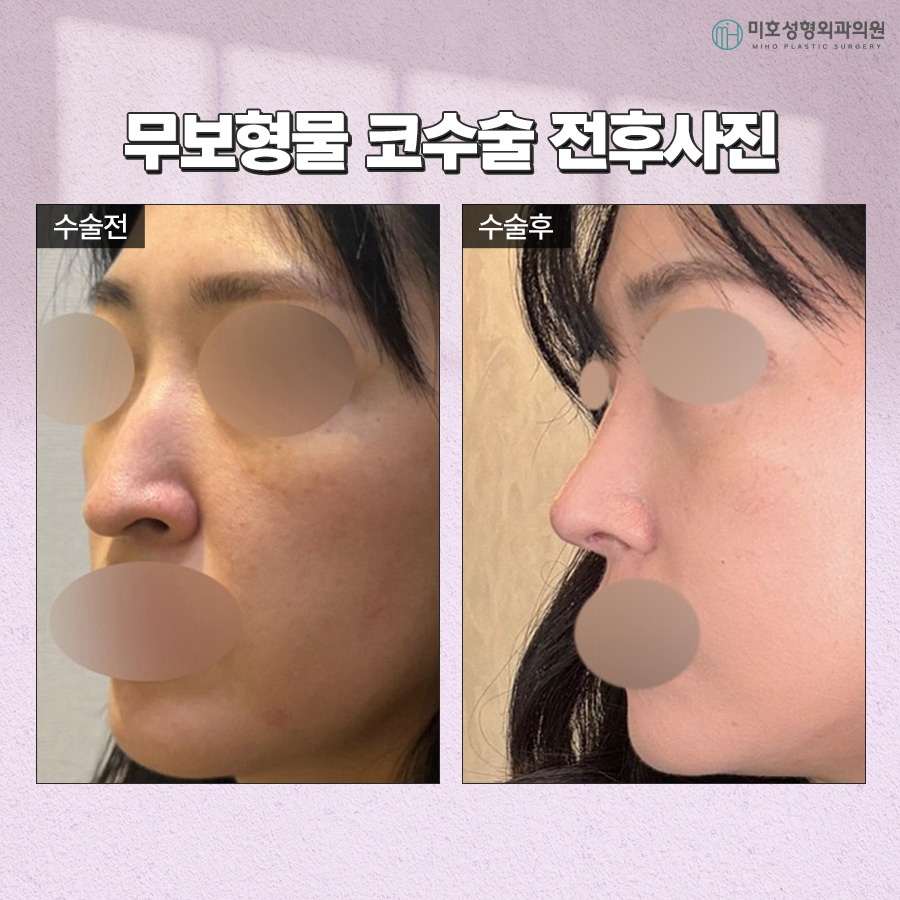
As explained in the photographs, distinguishing
between the characteristics of autologous cartilage
and autologous dermis makes it easier to understand
which areas are being improved.
If the tip feels noticeably weak and droops,
support structures become more important.
If the outer surface is thin and contour visibility is a concern,
the smoothness of the surface should also be considered.
It is also helpful to examine in advance
that each material has different firmness
and patterns of absorption over time.
Rather than insisting on a single method,
it is necessary to find a combination
that suits the individual’s condition.
Understanding these differences
makes the selection criteria clearer.
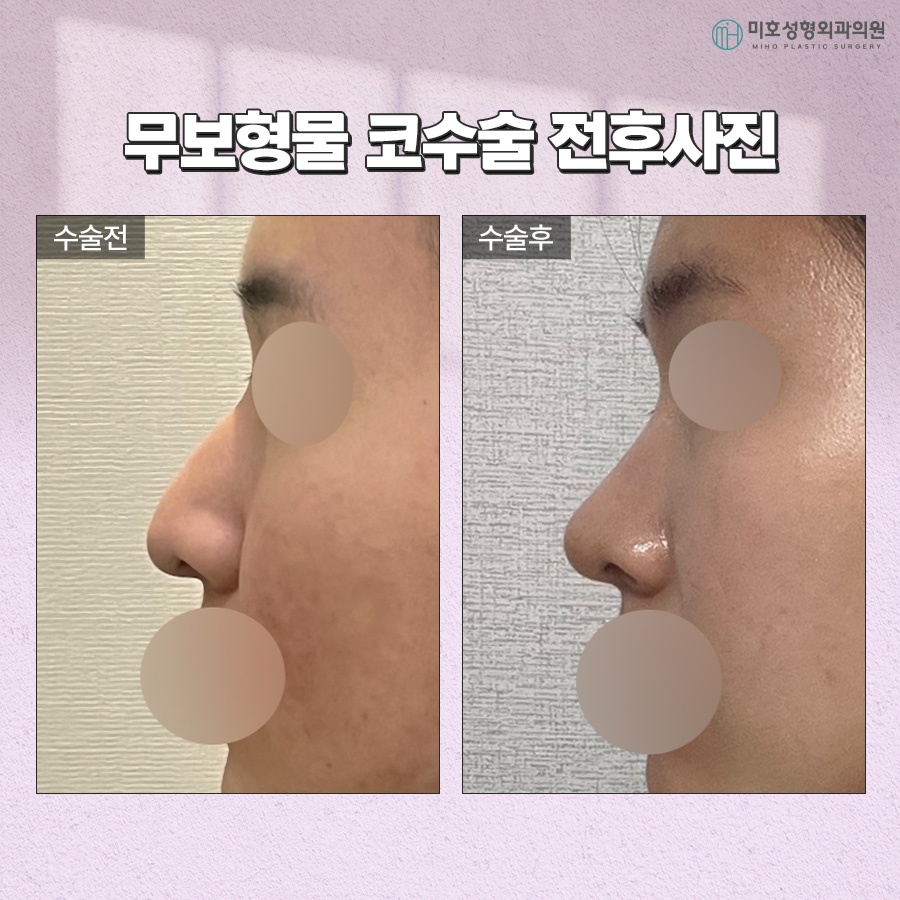
Implant-free rhinoplasty is often considered
by people seeking a natural appearance,
but the standard for what feels natural
differs from person to person.
For some, it means a subtle change,
while for others, it means enough definition
to bring dimension to the profile.
The important point is to find lines
that do not look awkward within your own proportions,
rather than focusing on excessive height.
If you simply follow a glamorous shape,
your natural strengths may easily be obscured,
so it is helpful to organize in advance
what concerns you notice in the mirror and in photographs.
Concerns about the nose often involve
more than cosmetic considerations alone.
If you have had a previous procedure,
if asymmetry is particularly noticeable,
or if the amount of nostril show concerns you,
there are more factors to examine.
If you have experienced discomfort such as nasal congestion
or allergies in everyday life,
these should also be assessed separately
from the aesthetic plan.
If you compare only before-and-after photos,
it is easy to overlook what range of change
may be applicable to you.
Therefore, a realistic view of your current condition
and its limitations is essential.
It is also important to consider the gap
between the image you want and your actual circumstances.
Before deciding on implant-free rhinoplasty,
it is necessary to carefully review the overall plan
rather than viewing the absence of an implant
as its only advantage.
Autologous tissue can help create a natural feel,
but the same approach is not suitable
for everyone.
The strength of the current tip, skin thickness,
facial proportions, and desired degree of change
must all be considered together
to approach a harmonious outcome.
Rather than rushing, carefully confirming
what is possible and what its limitations are
is the starting point for improving satisfaction.
Ultimately, the important standard is not a trend,
but finding an approach that suits you.
Careful attention to small differences
can lead to a more natural change.



Previous image
Next image