
We unconsciously observe the shape of another person’s eyes
to gauge their mood.
This is because we can use the eyes to see
whether they are frowning in irritation,
smiling with their eyes because they are in a good mood,
focusing on the conversation,
or lost in thought.
We also sometimes guess a person’s personality
by looking at the shape of their eyes.
Generally, larger, more defined eyes
are known to create a favorable impression.
That is why these days, people with eyes that look dull
or have a sharp-looking eye shape
sometimes choose eye-shape correction surgery.
Today, among these procedures, I would like to introduce
monolid eye-shape correction,
which creates an especially natural result
and is highly preferred among men.

[Contents]
-
What is the definition and goal of monolid eye-shape correction?
-
What is the difference between incisional and non-incisional procedures?
-
Is it better to remove an inner double-eyelid crease as well?
-
How long does it take?
-
Who can benefit from it?

"1. What is the definition and goal of monolid eye-shape correction?"
The goal of eye-shape correction is to enlarge the eyes
and make their shape look more defined.
A method is generally used to shorten and adjust
the levator palpebrae superioris and Müller’s muscle,
which perform the action of opening the eyes,
thereby increasing their tension.
In addition, procedures such as lateral or medial canthoplasty
or repositioning of lower-eyelid fat
are often performed together
to create a natural eye shape
or highlight an individual’s character and style.
This is because it is important not simply to enlarge the eyes,
but to correct their shape
so that it looks both natural and stylish.
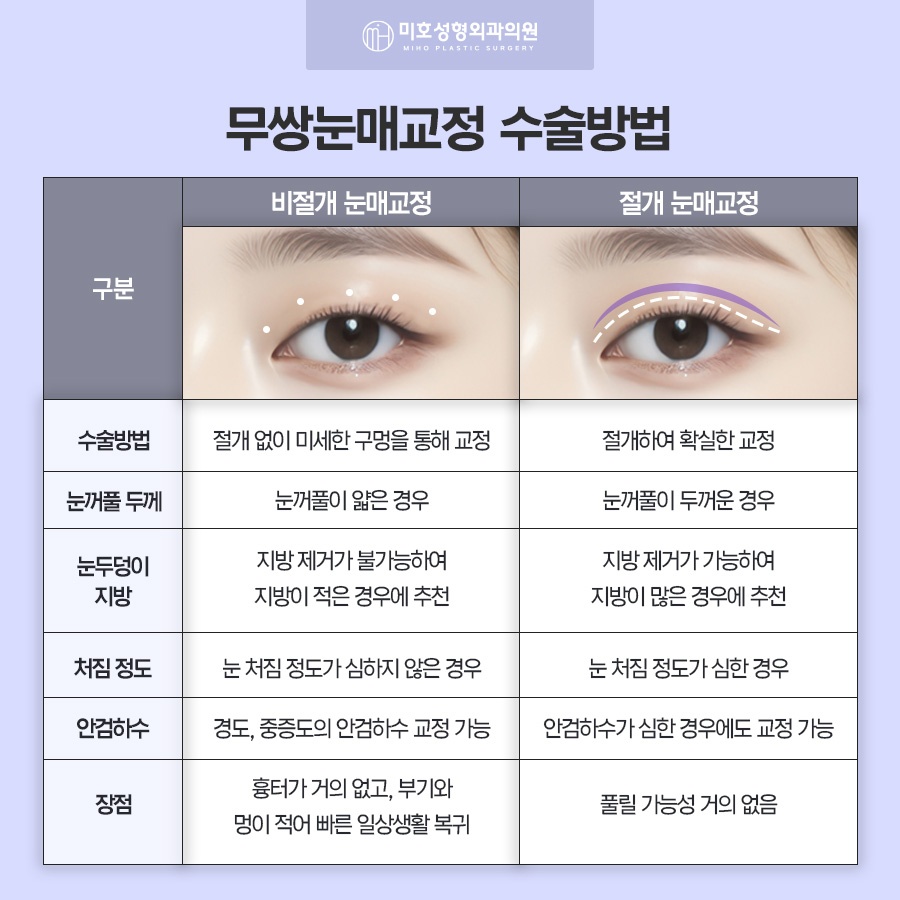
When eye-shape correction surgery was first introduced,
adjusting the length of the levator palpebrae superioris
often caused adhesions to form in the skin tissue,
which frequently resulted in a double-eyelid crease.
However, techniques have advanced significantly,
making it possible to avoid skin adhesions.
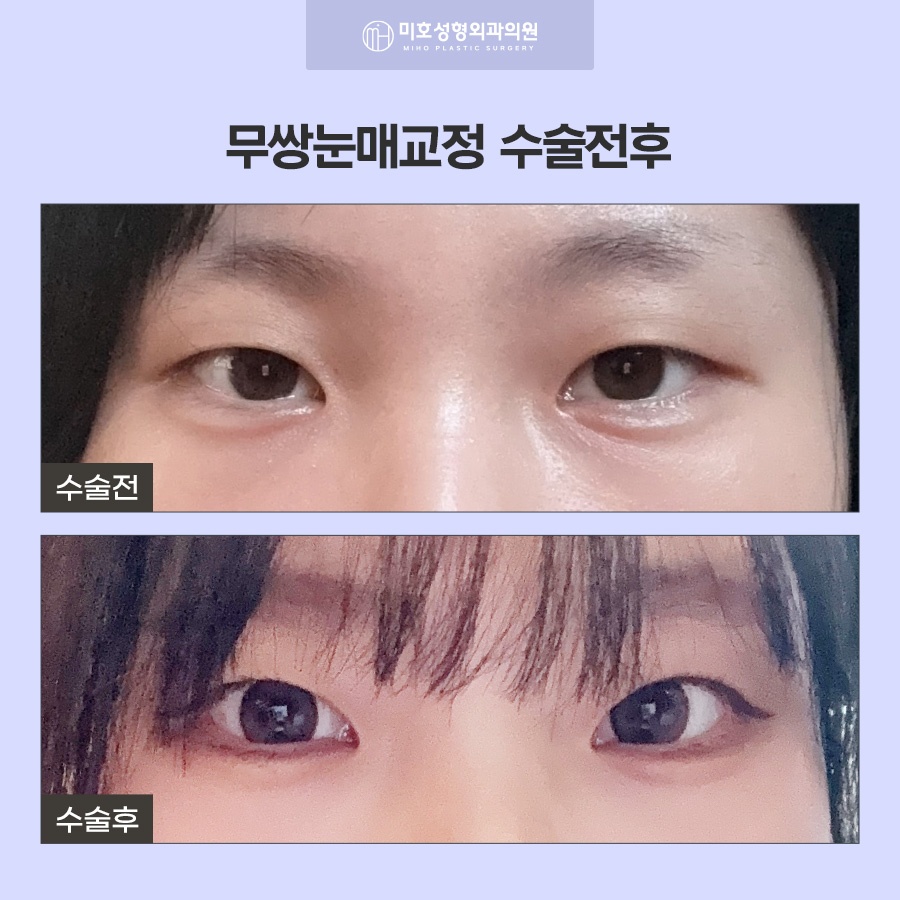
As a result, more people are now correcting their eye shape
while maintaining a natural monolid appearance.
If you find a skilled medical professional,
you may even be able to choose between
a completely crease-free monolid design
and a monolid design with a subtle inner double-eyelid crease,
depending on your preference.

"2. What is the difference between incisional and non-incisional procedures?"
- Non-incisional eye-shape correction
If your eyelids are thin and light
and do not require fat removal,
the non-incisional method may be appropriate.
A hole is made in the conjunctiva on the inner side of the eyelid,
a suitable instrument is inserted beneath the skin,
and the muscle is sutured.
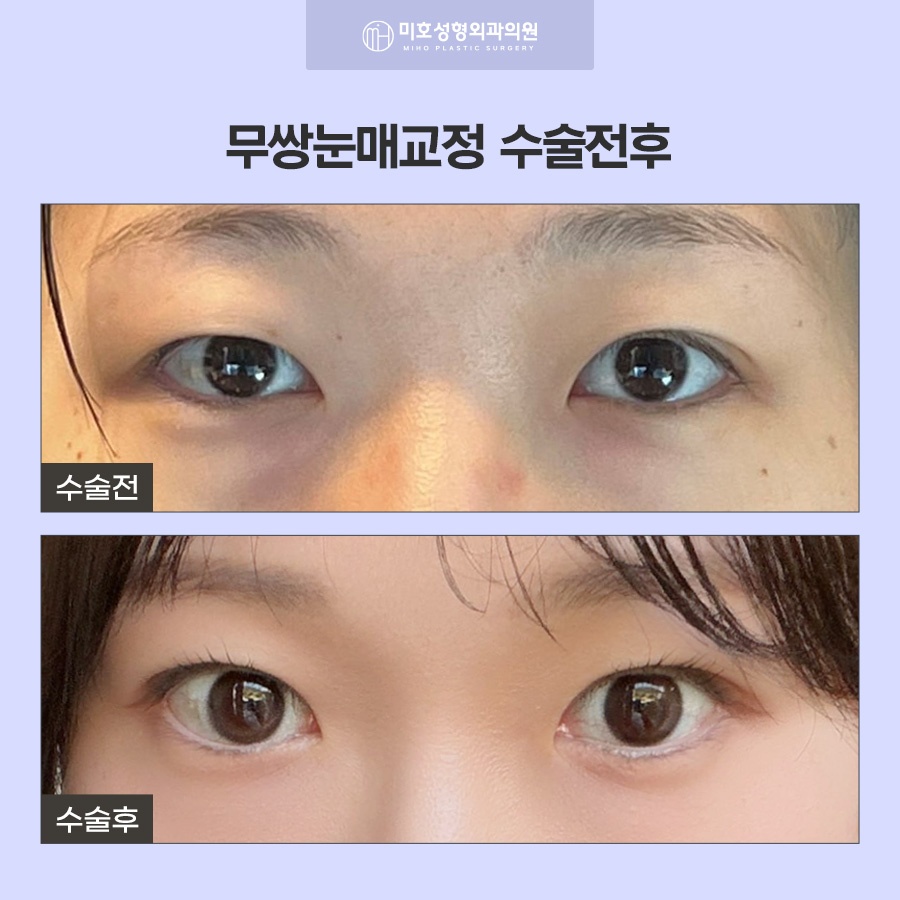
Because of this, one advantage is that
there is no visible wound on the outer skin.
Since blood loss is also generally very limited,
there is a very low likelihood of swelling or bruising,
and the eye shape can become natural relatively quickly.
Even without creating an incision,
the strength of the muscle that lifts the eyelid
can be adjusted sufficiently,
so patient satisfaction is also generally high.
- Incisional eye-shape correction
If your eyelids are relatively thick and heavy,
it is advisable to remove unnecessary tissue,
such as fat, to reduce their volume and weight.
This allows the levator palpebrae superioris or Müller’s muscle
to lift the eyelid higher with less force,
making the eyes look larger and more defined.
The medical professional will make an incision
just above the eyelashes so that the suture line is not easily visible,
remove unnecessary tissue,
shorten the muscle to increase its tension,
and then perform fine suturing.
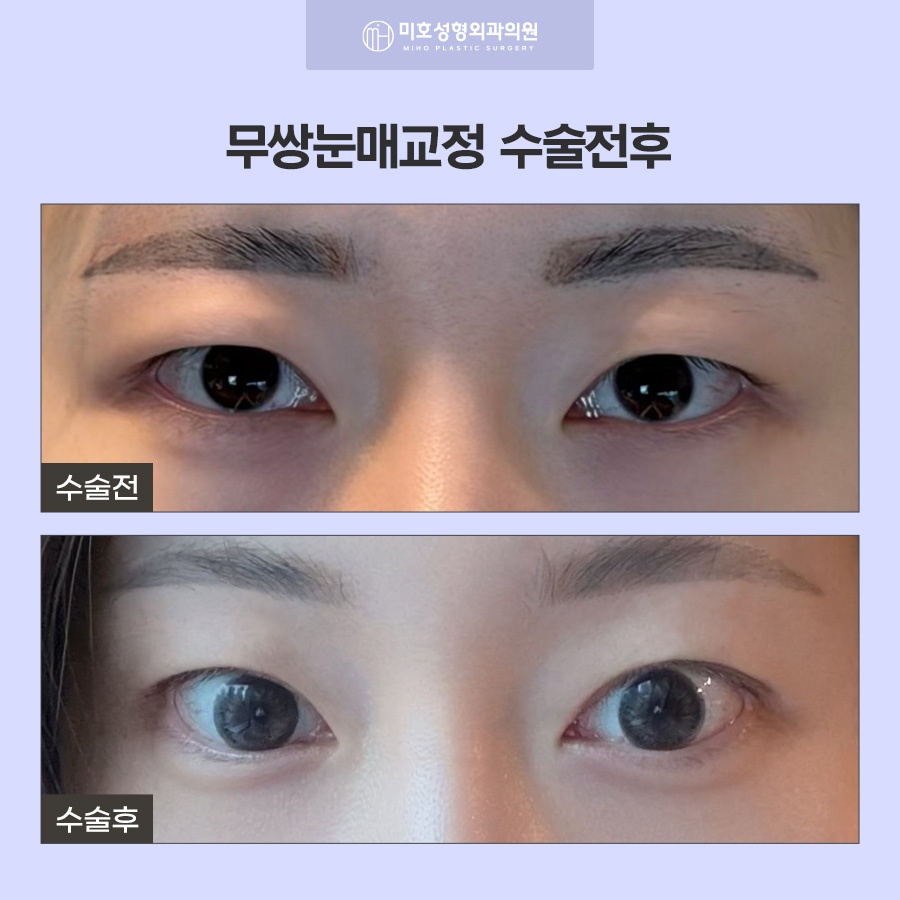
In addition, when performing monolid eye-shape correction,
care is taken to prevent skin adhesions
and thus avoid the formation of a double-eyelid crease.
Although swelling takes longer to subside
because there is more bleeding than with the non-incisional method,
the eye shape changes dramatically,
which can make the procedure feel worthwhile.
"3. Is it better to remove an inner double-eyelid crease as well?"
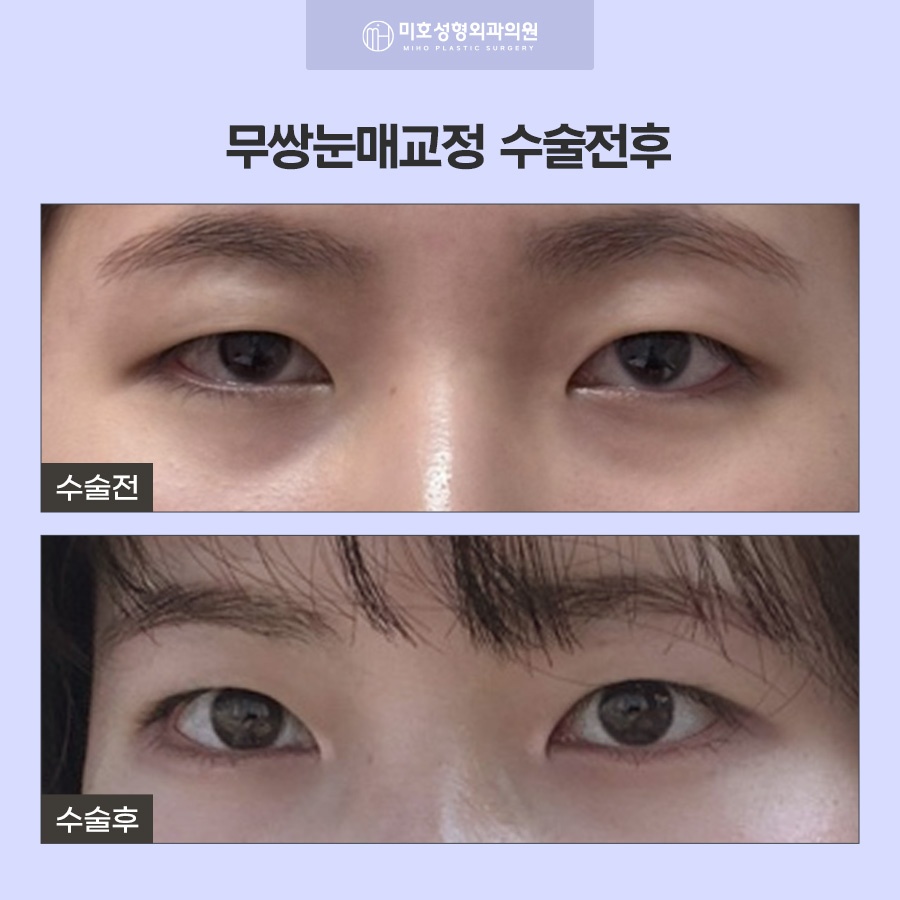
An inner double-eyelid crease is generally
lower, shallower, and less distinct
than a typical double-eyelid crease.
The crease becomes visible when you blink,
but when your eyes are fully open,
only a crease near the outer corner is visible,
which gives it a very natural appearance.
It can also soften the eye shape,
making it easier to create a gentle, friendly impression,
while making the eyes look deeper and more expressive.
For this reason, more patients these days are requesting
to maintain a monolid eye shape
while creating a natural inner double-eyelid crease,
or to preserve their existing inner crease as it is.
A completely monolid design without an inner double-eyelid crease
can be advantageous for expressing a masculine appearance.
Eyelids without even a very thin crease
make the eye shape look smooth and defined,
which can emphasize masculinity.
Some men also feel that eyes with a double-eyelid crease
look overly affected,
whereas monolid eyes look simple and natural,
without creating a sense of discomfort.
It is advisable to consider various factors together,
including the shape of the face, facial features,
and the size and shape of the eyes,
when choosing between an inner crease and a completely monolid design.
It is also necessary to make an effort
to reflect each patient’s individual aesthetic sense and preferences.
"4. How long does it take?"
If you have decided to undergo eye-shape correction,
you will need to set a specific schedule.
Today, I will also share the estimated procedure and recovery times
that may be useful when planning your schedule.
📌 Non-incisional
Procedure time: 30 minutes
Suture removal: None
Reduction in swelling: 3–7 days
📌 Incisional
Procedure time: 30–60 minutes
Suture removal: After 5–7 days
Reduction in swelling: 2 weeks on average
However, please also keep in mind that the time required for swelling to subside
is strongly affected by factors such as individual constitution and lifestyle environment.
"5. Who can benefit from it?"
✔️ People whose pupils are more than half covered
✔️ People whose eyes look sleepy or tired
✔️ People who develop forehead wrinkles when opening their eyes
✔️ People with severe headaches caused by ptosis
✔️ People who want large eyes without a double-eyelid crease
People who fall into any of the five categories above
may feel considerable satisfaction
from undergoing monolid eye-shape correction.
Not only can the function of opening the eyes be strengthened,
but the appearance can also be enhanced,
so many people report that their quality of life has improved.
If your small eyes often make your impression look indistinct,
causing disadvantages in social situations
or frequently leading to a loss of confidence,
use eye-shape correction without a double-eyelid crease
to create a simple, defined impression.



Previous image
Next image