
Concerns about the shape of the nose
are not simply about height;
they involve examining the balance
and harmony of the entire face
together.
Those who feel concerned about using
implants or want a natural change
often consider non-implant rhinoplasty.
The same approach is not suitable
for everyone. The method may vary
depending on the current condition of the nose,
skin thickness, and the desired direction.
The important point is not to avoid
implants unconditionally,
but to fully understand what is possible
under the current conditions,
as well as the advantages and disadvantages.

The reasons for looking into
non-implant rhinoplasty vary
from person to person.
Those reasons may include feeling
psychologically uncomfortable about implants,
wanting a line that does not look artificial,
or wanting to create a new shape
after removing an existing implant.
When the starting point differs,
the direction of improvement also differs.
During the consultation, it is necessary
to clearly organize why this method is desired
and what degree of change is expected.
It is advisable to establish a plan
through sufficient communication
with the medical staff.

If you are considering a method
for improving the nasal line without implants,
it is helpful to understand the types
and characteristics of autologous tissue.
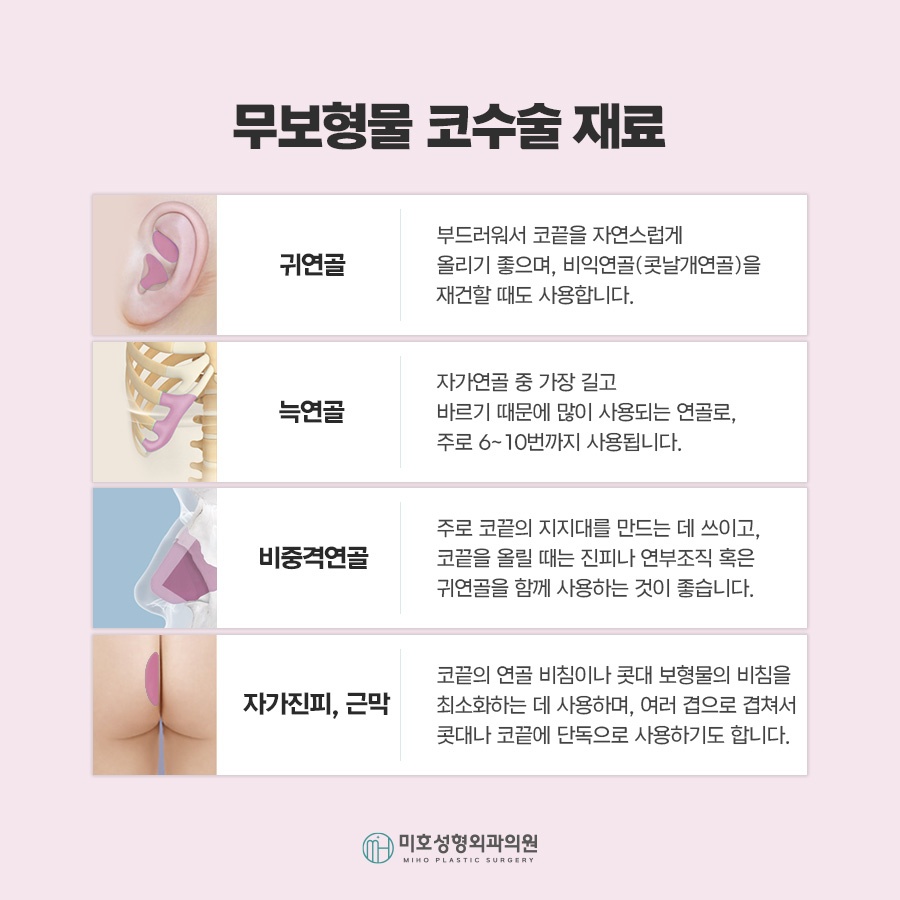
Representative materials used
in non-implant rhinoplasty include
ear cartilage, rib cartilage,
septal cartilage, and donor cartilage.
Ear cartilage and septal cartilage
are relatively soft and are often used
to refine the shape of the nasal tip naturally.
Rib cartilage is considered when
an adequate amount and firm support
are needed, and is primarily used
when structural reinforcement is required.
Donor cartilage has the advantage
of reducing the burden of tissue harvesting.
Each material has different advantages,
disadvantages, and points to consider,
so it is important to make a choice
that suits the current condition.
Ear cartilage and septal cartilage
are advantageous for expressing natural curves,
but the available amount may be limited.
Rib cartilage tends to be advantageous
for maintaining its shape,
but its suitability must be assessed
for each individual.
Donor cartilage can reduce the burden
of an additional harvesting procedure,
but whether it can be used must be
carefully evaluated.
Rather than insisting on just one material,
it is necessary to analyze the condition
of the nose and the desired goal.
When deciding how to improve the nose,
it is important to find a balance
that suits the person’s original image
and facial features,
rather than simply increasing its height.
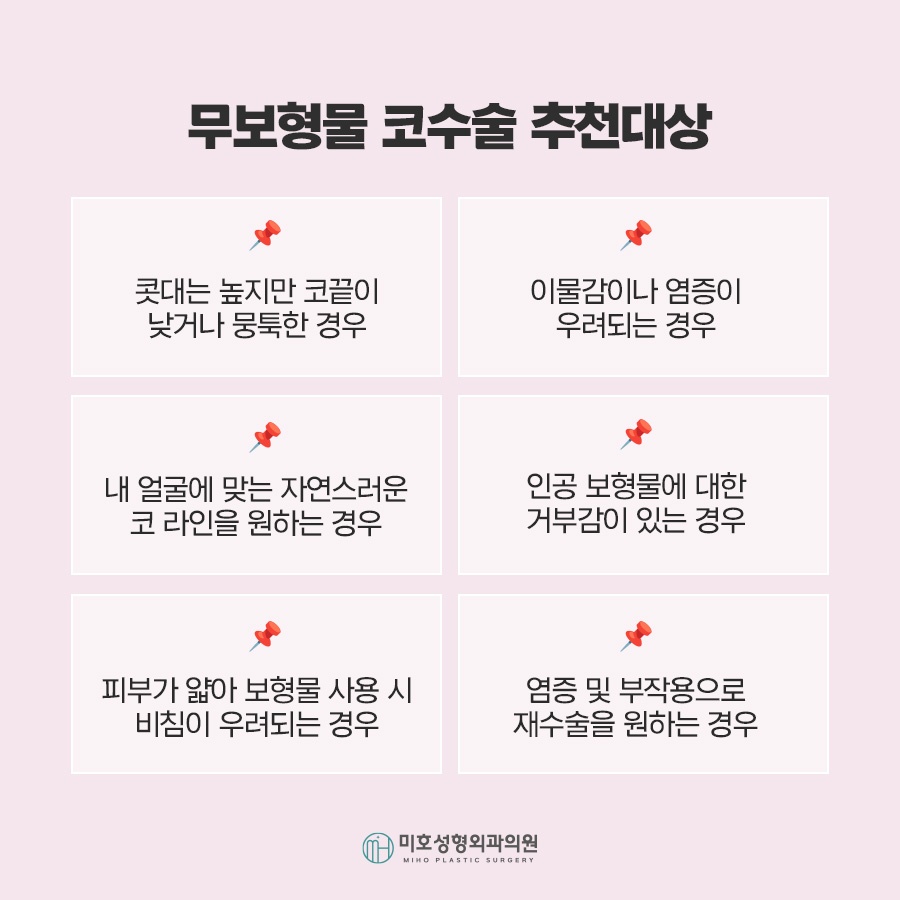
Non-implant rhinoplasty is often performed
with the aim of creating a natural line
by using the individual’s own tissue
or suitable materials instead of an implant.
However, if a clearly noticeable change
is desired, there may be limits
to what can be achieved using autologous tissue alone.
Conversely, if a moderate change
and a natural-looking image are important,
it may be a suitable option.
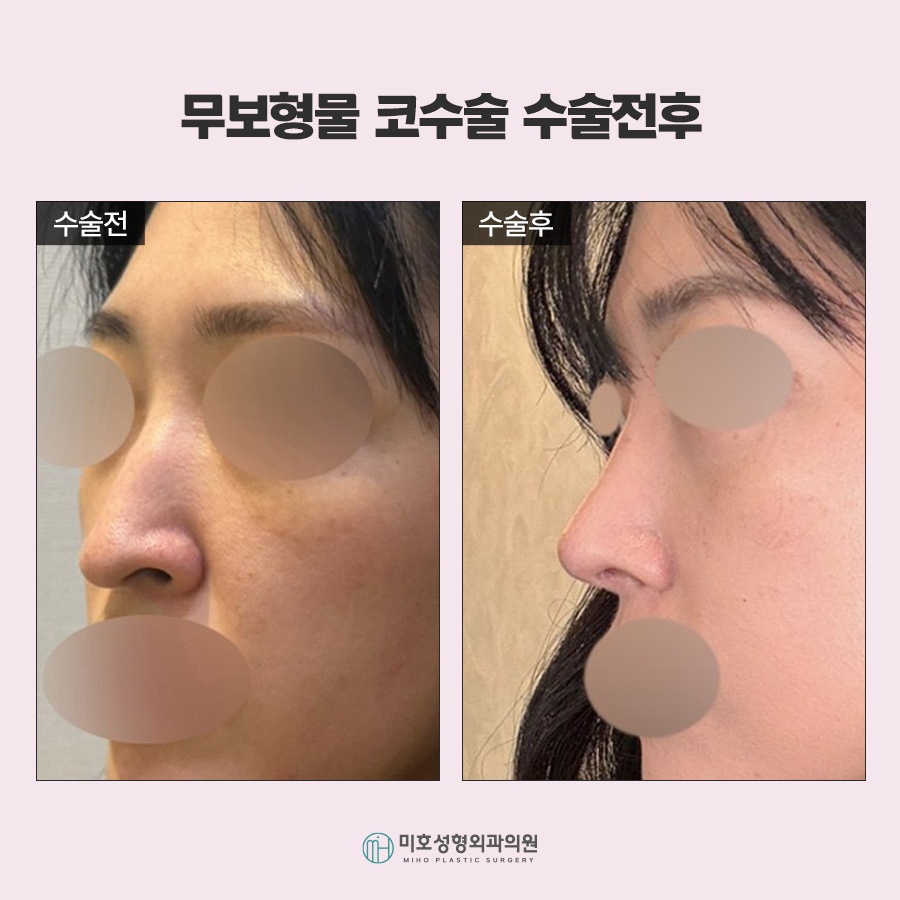
Finding a balance between the desired image
and the current appearance through consultation
with the medical staff is an important criterion
for achieving a satisfactory result.
This method has the advantage
of allowing for a natural-looking change,
but it is not suitable for everyone.
It may be considered by those
who feel strongly concerned about implants,
want a subtle line that does not look obvious,
or desire a delicate improvement
focused on the nasal tip.
On the other hand, there may be limitations
for those who want to raise the bridge
significantly or desire a very glamorous image.
In addition, the approach may vary
depending on skin thickness,
the condition of the soft tissue,
and the amount of autologous tissue
that can be harvested.
Therefore, it is necessary to objectively
check your individual conditions.
If you are considering non-implant rhinoplasty,
it is helpful to check the procedure
and care methods in advance.
In general, the shape and structure of the nose
and the condition of the tissue are assessed
during the consultation.
After deciding on the materials to be used
and the direction of improvement,
a detailed design is established.
The balance between the nasal tip
and the bridge is then adjusted
according to the individual’s condition.
The procedure time varies depending
on the scope of application
and the materials used.
Unlike methods that use artificial implants,
it is important to recognize that
tissue harvesting is included in the process.
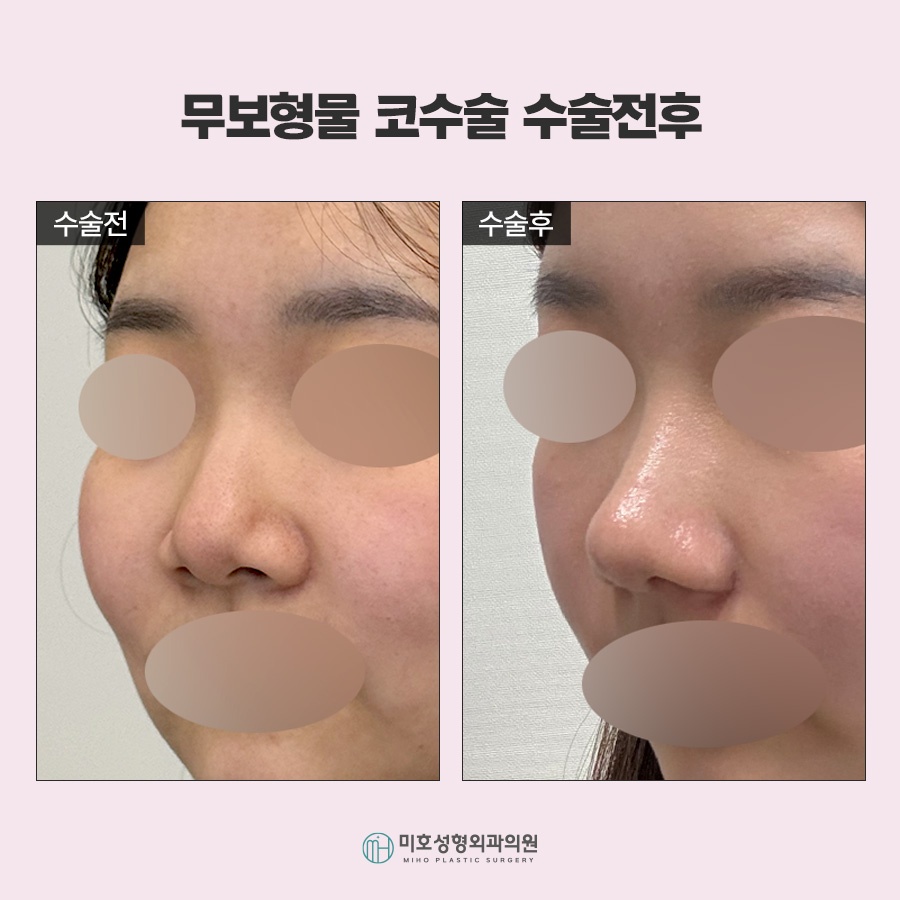
Afterward, it is important to understand
the care instructions provided
by the medical staff.
Immediately after the procedure,
it is necessary to minimize irritation
and maintain a stable environment for recovery.
You should also monitor the progress
for a certain period of time.
The procedure generally takes
approximately 1–2 hours,
and the care methods are similar
to those for other procedures.
Until the incision sites have healed,
it is important to keep them clean
so they do not become contaminated.
Special care should also be taken
to prevent impact or pressure.
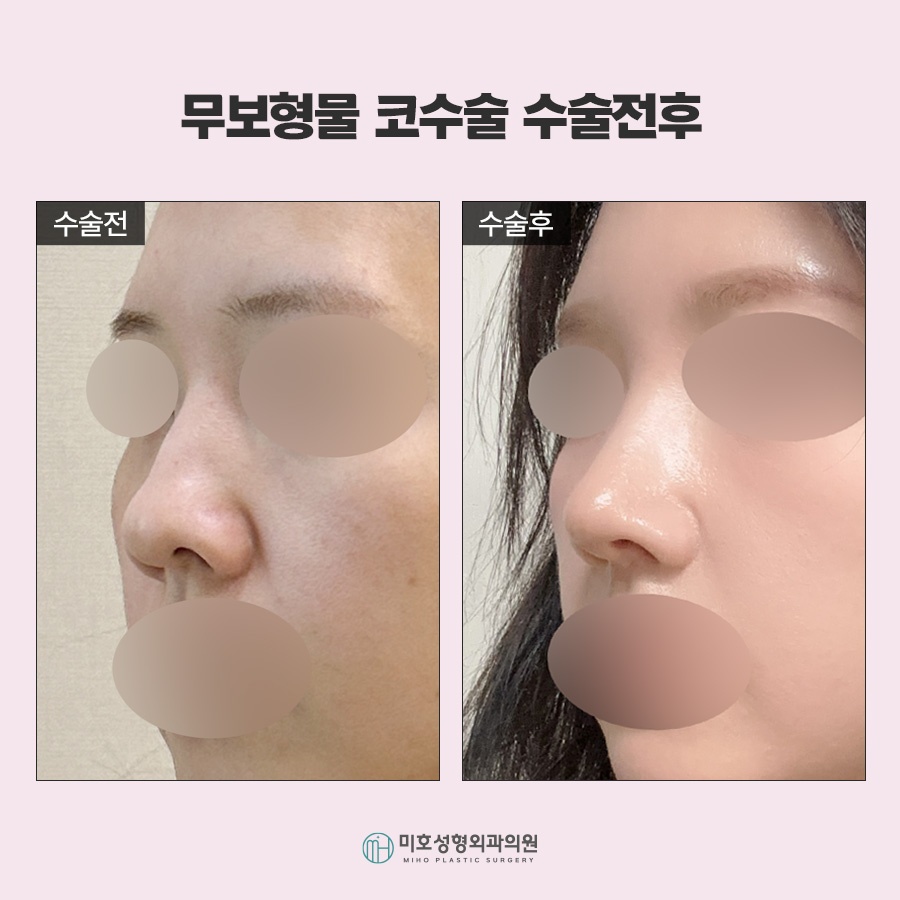
If the bridge has been raised,
wearing sunglasses or eyeglasses
is prohibited for at least four weeks.
Strenuous exercise, swimming pools,
and saunas should also be avoided
for the time being.
Alcohol and smoking can slow recovery
and cause inflammation,
so they should also be avoided
for four weeks.
If swelling and pain do not subside
and instead gradually worsen,
you should visit a medical institution
without delay.
Swelling and bruising may be severe initially,
but they will gradually improve
if you follow the care instructions,
such as alternating cold and warm compresses
and sleeping propped up.
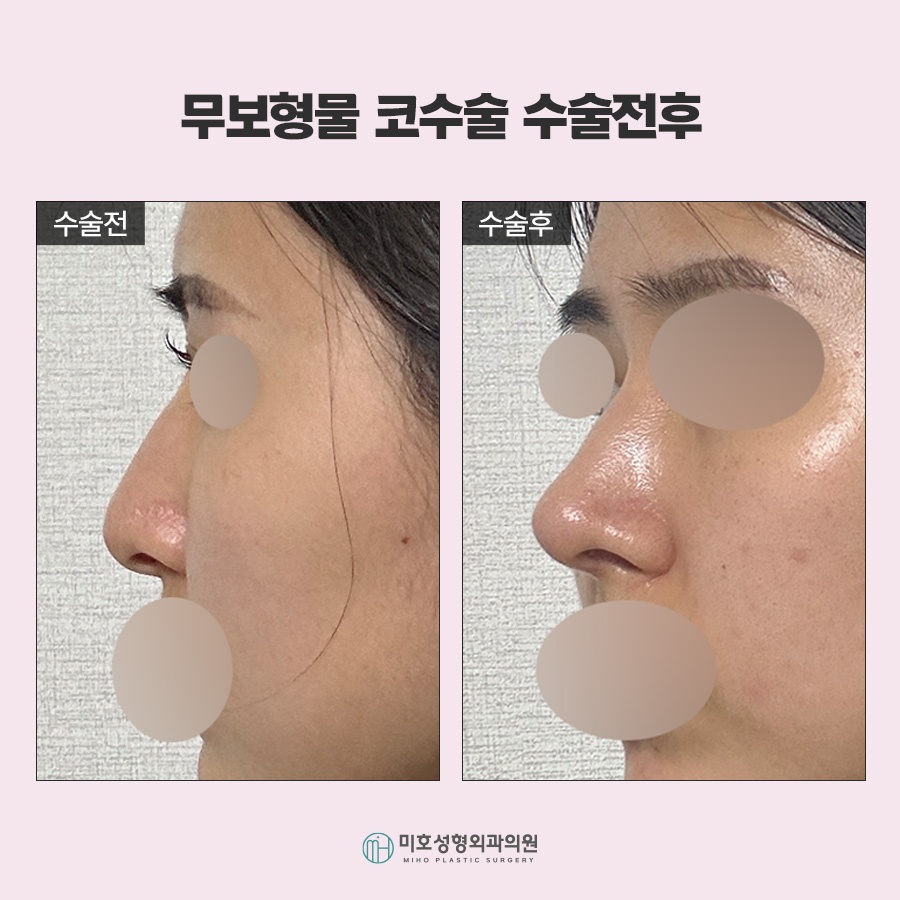
Non-implant rhinoplasty should not be chosen
simply because it does not use an implant.
It is important to determine whether
it suits your nasal structure
and the image you want.
For those who want a natural line,
it may be a suitable method,
but those expecting a major change
need sufficient consultation and consideration.
The important point is not a uniform standard,
but a customized solution
that takes balance and current conditions
into account.
When choosing a medical institution,
please check not only the price,
but also the medical staff’s experience,
the consultation process,
and the aftercare system.


Previous image
Next image