
When the line beneath the nose appears
heavily lowered when smiling,
or the center of the face looks blunt in profile,
even small differences can remain noticeable for a long time.
This is different from having wide nostrils,
so it can be easy to feel unsure about what to examine.
Nasal ala lifting considers both the drooping alar edges
and the degree of exposure
to help balance the lower line.
Rather than imagining a major change from the outset,
the first step is to examine the causes
that make the center of the face look constricted.
When selecting photos, instead of using only one front-facing image,
including a smiling image and an angled view
can make the areas of concern much clearer.

When looking into nasal ala lifting,
first examine the position and flow
of the lower border rather than the height of the nasal tip.
Even with the same nostril width,
one side may descend in a rounded shape
while the other droops more thinly;
the patterns can vary considerably.
Even when there is little difference from the front,
the area above the lower opening may appear covered
in angled photos.
In such cases, a completely different plan
from reducing the width may be needed.
It is necessary to check where the alar line bends
and at what angle it meets the philtrum
to create room for reducing an unnatural appearance.

Nasal ala lifting is distinct from the concept
of reducing width, as in nostril reduction.
For some people, width is the issue,
but in many cases the nose looks long or heavy
because the lower border droops.
If the width is reduced indiscriminately in this situation,
a constricted impression may remain.
The key is to lift the necessary areas
and refine the obscured contours somewhat more clearly.
However, if the area is lifted excessively,
exposure can increase and create a lighter appearance,
so using the overall proportions as a reference is more appropriate.
Even subtle adjustments can change
the overall impression of the face more distinctly than expected.
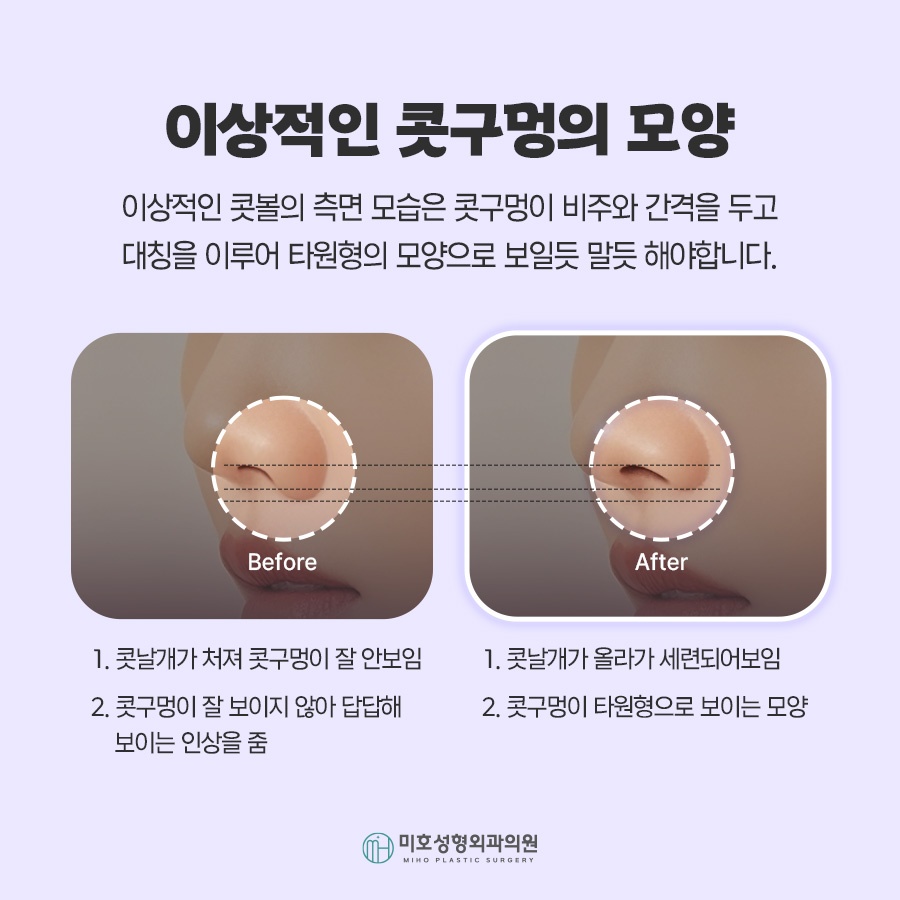
As the name suggests, alar lifting
refers to arranging the drooping line
of the alar area upward.
However, it is not simply a matter
of pulling up one area.
The process requires examining the vertical length
of the opening,
the balance between the nasal tip and columella,
and even the length of the space above the lips
as connected elements.
Especially when the philtrum is relatively short,
even a slight change can make the expression
appear noticeably more sensitive.
Conversely, when the midface is relatively long,
the weight of the lower line stands out,
so the range of adjustment also differs.
Ultimately, the key is to examine the overall flow together
rather than focusing on a single position.
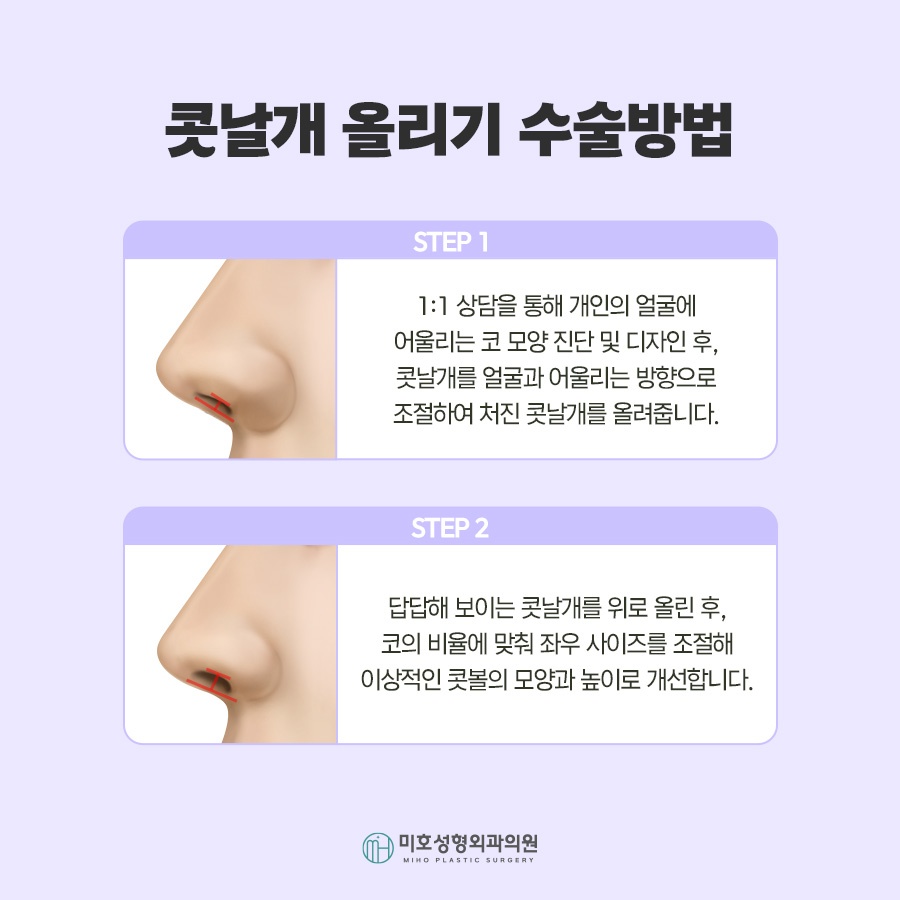
People considering nasal ala lifting
often feel more uncomfortable in an expressive face
or when their head is slightly lowered
than in a straight-on view.
Even if it looks fine normally,
the lower line can appear noticeably lower
when an expression forms.
Therefore, rather than judging from one neutral photo,
it is better to compare a smiling image,
movement while speaking,
and differences between the left and right sides.
After this process, it becomes clearer
whether the concern is simply about nostril width
or whether drooping of the lower line is the main issue.
It can also help to note the moments in daily life
when the concern frequently draws attention.
Concerns about scarring
are also common.
Incision lines are often planned along the border area
to make them less noticeable,
but the degree to which they remain visible
varies depending on skin thickness and individual skin characteristics.
Redness or tightness may be felt initially,
and the area may gradually fade over time.
It is more prudent to avoid ultraviolet exposure,
strong friction,
and excessive facial movements during the early period.
Care habits can also affect the resulting appearance.
Care is likewise needed not to overdo it
when washing the face or applying makeup.
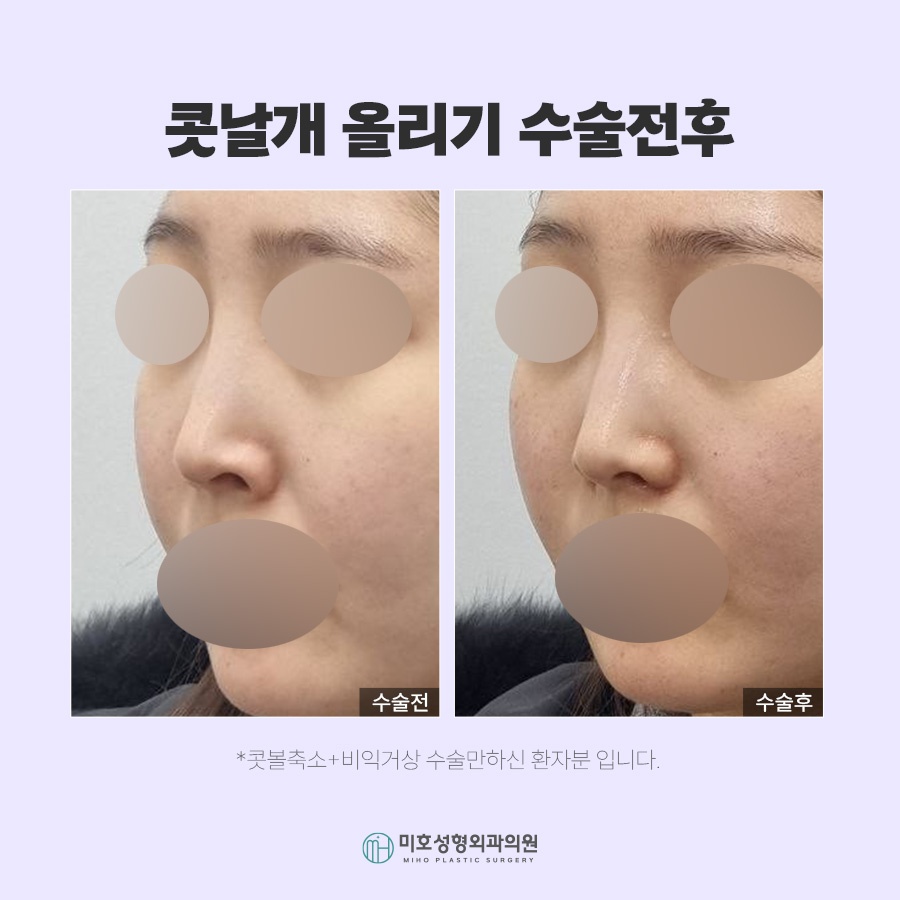
It is easy to think that lifting the area more
will make it look more refined,
but in the alar area,
even subtle differences can greatly change
the degree of exposure.
If it becomes too high,
the nasal tip may appear turned upward,
or the lighter impression may become more pronounced.
Conversely, if the degree of change is insufficient,
the drooping may remain,
leaving the original concern unresolved.
Therefore, position should take priority over amount.
It is necessary to consider the starting and ending points
of the lower line,
the curve of the border,
and the smooth flow of the entire face
together.
It is easier to avoid an excessive direction
when the desired impression is broken down into specific elements.
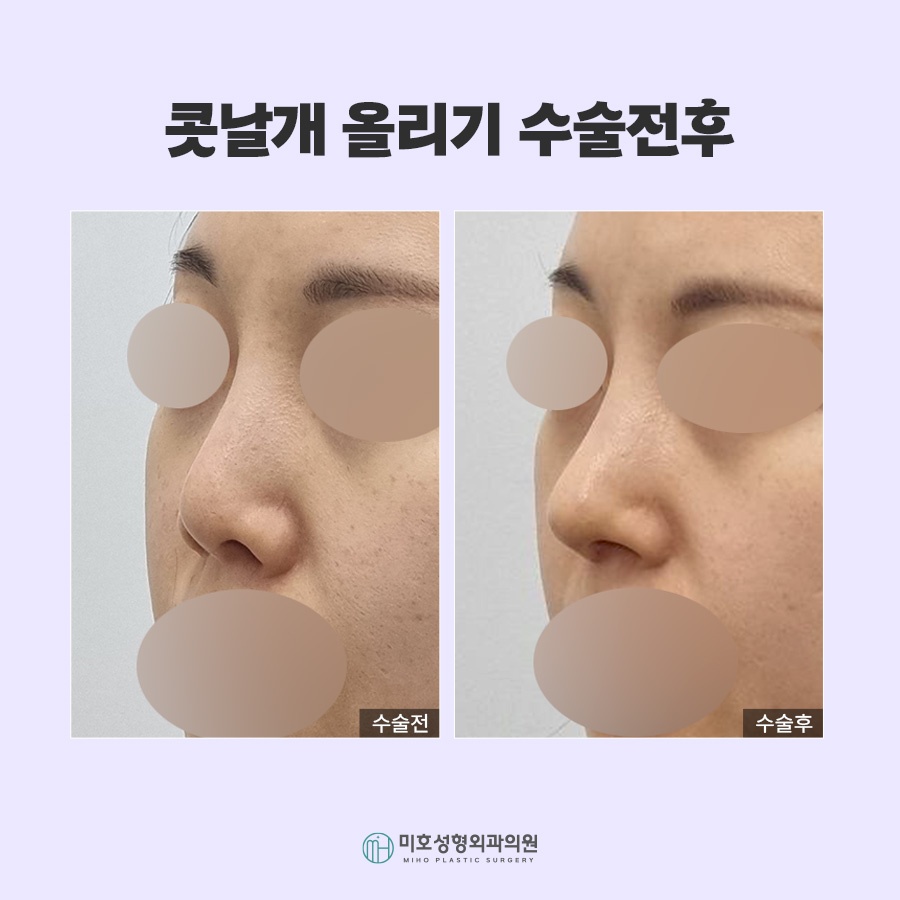
Checking differences between the left and right sides
is also essential when considering nasal ala lifting.
Most faces are not completely symmetrical,
and the alar positions can also differ from side to side.
Identifying in advance whether one side appears noticeably lower,
whether the difference increases when smiling,
and which direction is especially bothersome in photos
can clarify the criteria for making a decision.
Rather than trying to make both sides exactly identical,
it is more realistic to aim for an overall natural balance.
Ignoring these differences can make
subtle asymmetry more noticeable.
Setting a balance standard from the beginning
can also make expectations about the result more measured.
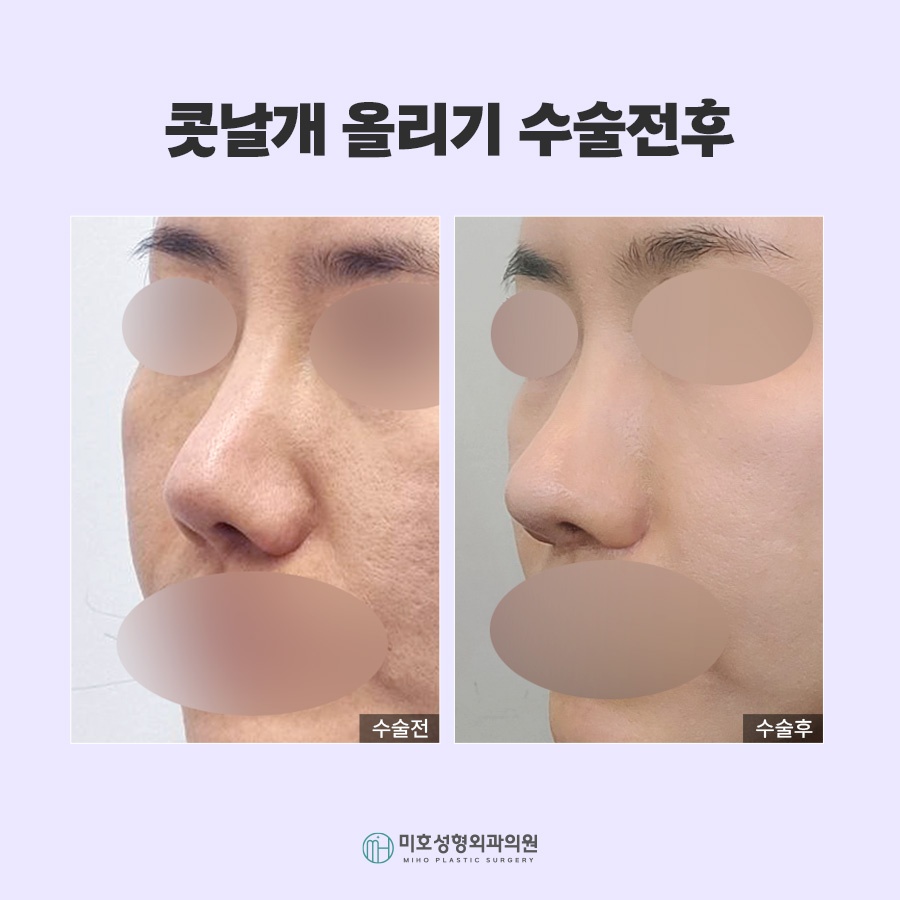
During recovery, swelling or soreness
may appear to varying degrees from person to person.
At first, the lower line may feel unfamiliar,
or a sensation of tightness may remain
when making facial expressions.
It is better to avoid rubbing hard while washing
or repeatedly touching the area around the nose
during the early period.
Exercise and alcohol should be limited for a certain period,
and starting makeup according to the instructions
can also help reduce discomfort.
Rather than comparing the changes too quickly,
it is appropriate to allow sufficient time
for the lines to settle.
If mild discomfort continues,
it is better to monitor the progress
and manage it without overexertion.

Nasal ala lifting is considered
when the nose looks heavy or long
because of a downward-drooping alar line
rather than the nostrils themselves.
However, the same approach
does not suit everyone.
It is appropriate to compare
the shape of the openings,
skin thickness,
philtrum length,
the angle of the nasal tip,
and differences between the left and right sides.
What matters is not lifting the area as much as possible,
but finding a position that suits the natural face.
Rather than deciding based only on the term “alar lifting,”
calmly separating the causes of the current concern
can make it easier to establish
a more natural basis for choice.



Previous image
Next image