Entropion surgery: When tearing and irritation keep recurring

Even with just a little wind,
your eyes may continue to tear,
or develop a stinging sensation while reading,
making it difficult to concentrate.
Some people assume that a foreign object has entered the eye
and wash it several times, yet the discomfort
quickly returns.
They may also complain that increasing their blinking
does not make their eyes feel refreshed.
Entropion surgery is considered when the cause of the eyelashes touching the eye
is related to the direction of the eyelid.
Rather than focusing first on symptoms such as visible redness,
it is appropriate to examine
which way the eyelid margin turns
when the eyes are opened and closed.
Reasons for seeking entropion surgery
include changes such as increased tearing,
a sensation like sand rolling around in the eye,
and sensitivity to light.
Ointments or artificial tears may
provide temporary comfort.
The issue, however, is that if the eyelashes
repeatedly brush against the surface,
protection may inevitably be difficult
to maintain for long.
Recording whether the discomfort appears on only one side,
whether it worsens when blinking,
and whether there is a difference between morning and evening
can make it easier to distinguish the pattern.
The position of the eyelid margin should also be examined
before attributing the symptoms to cosmetics.

Entropion surgery aims to return
the inward-turned eyelid
closer to its proper direction.
It mainly occurs in the lower eyelid,
but cases affecting the upper eyelid are also not uncommon,
depending on the effects of scars or inflammation.
The background can vary, including
loosening of the tissues with age,
changes in the balance of muscle strength,
or a shortened inner surface.
Therefore, even when the outward appearance is similar,
identifying the cause of the turning
makes it easier to determine the appropriate extent of correction.
It is also advisable to check separately
whether the condition is present to the same degree on both sides.

When the eyelashes touch the surface of the eye,
redness and tearing may be accompanied by
dryness and a burning sensation.
Repeated rubbing can
make the sensitivity even worse.
If the contact continues for a long time,
minor injuries can develop on the transparent front surface of the eye,
accompanied by pain or blurred vision.
If sensitivity to light becomes severe or discharge
suddenly increases significantly,
it is better not to dismiss it as simple fatigue.
The key is to examine whether the contact
continues, rather than focusing only on the intensity of the discomfort.

When examining the condition in advance,
careful attention is paid to the direction of the eyelid margin
and the location where it makes contact.
It is also checked whether the turning becomes more pronounced
after tightly closing and opening the eyes,
and whether the eyelid returns to its original position
when the cheek is pulled downward.
During the examination, looking downward
and blinking forcefully may also be used.
Assessing tissue looseness, the presence of scars,
and signs of irritation on the corneal surface together
can clarify the cause.
It is also helpful to provide complete information about
the eye drops normally used,
when the symptoms began,
and any previous injuries or inflammatory conditions.
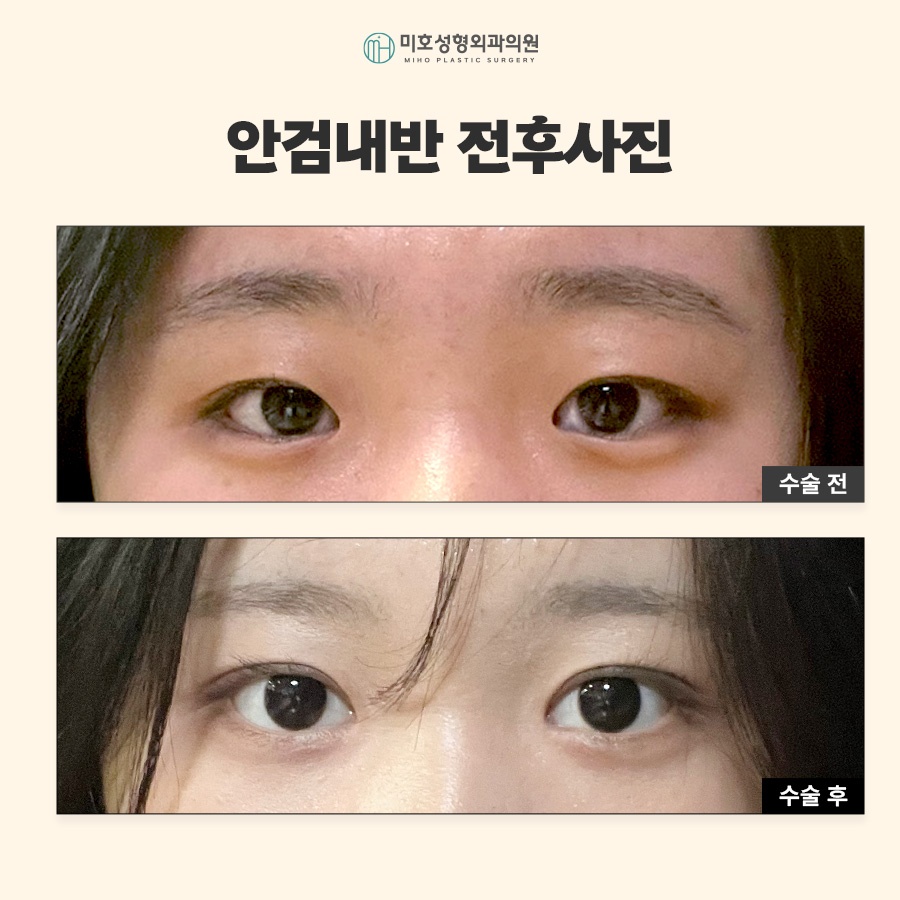
The method used for entropion surgery
is not the same in every case.
If the tissues have loosened horizontally due to aging,
additional support may be provided,
while an approach to regulate the force may be used
when the muscles push the eyelid upward.
If scarring has shortened the inner surface,
replacing the deficient tissue may also be considered.
However, pulling strongly on only one area
may leave room for the eyelid margin to turn outward
or for the balance between the two sides to look unnatural.
The key is to identify the tissue layer causing the problem
and correct only as much as necessary.
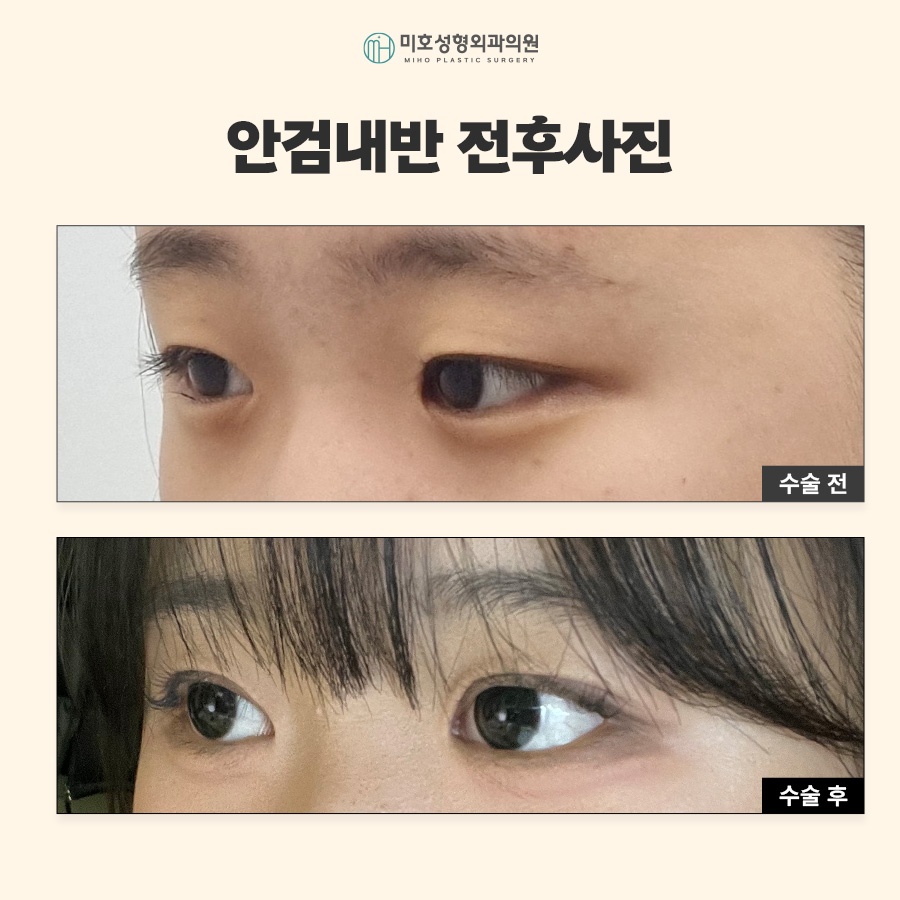
Some people think that plucking the eyelashes
will resolve the problem.
Although it reduces friction temporarily,
the same irritation is highly likely to recur
when the eyelashes grow back.
Pulling the lower eyelid down with tape
or applying a lubricant is likewise
closer to a temporary measure to protect the surface.
Repeatedly removing only the eyelashes
can also make the surrounding skin more sensitive,
so it is better to avoid excessive self-care.
Reducing the habit of rubbing the eyes
and avoiding dry environments
can help relieve the discomfort.
However, if the eyelid margin itself continues to turn inward,
it is difficult to keep it in its original position
through lifestyle measures alone.
Symptom relief and structural correction
should not be regarded as the same thing.
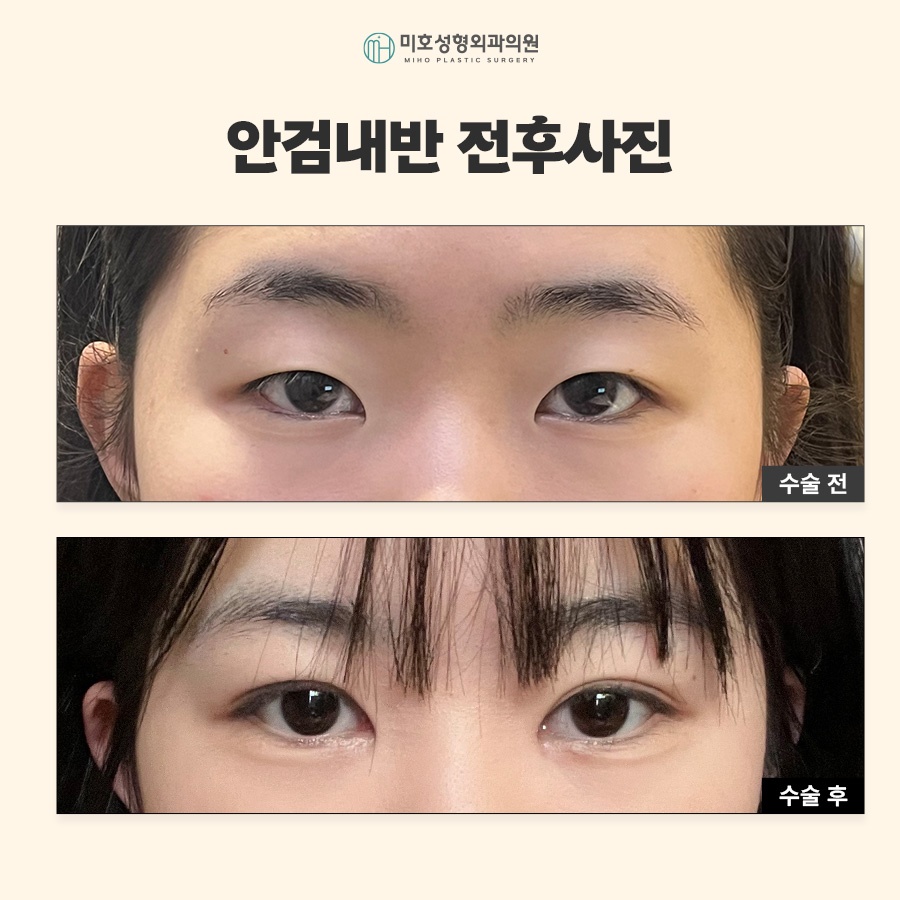
After entropion surgery,
swelling, bruising, and a feeling of tightness
may occur for several days.
In the early stages, the eyes may tear more
or the two sides may temporarily appear different.
Careful management is needed,
including avoiding vigorous rubbing of the area while washing the face
and keeping the area around the wound clean.
It is advisable to limit positions that involve bending the head forward for long periods,
strenuous exercise, and alcohol for a while.
Contact lenses and eye makeup
should be resumed according to the timing provided in your instructions.
The speed at which redness subsides
varies according to each person’s recovery tendencies.
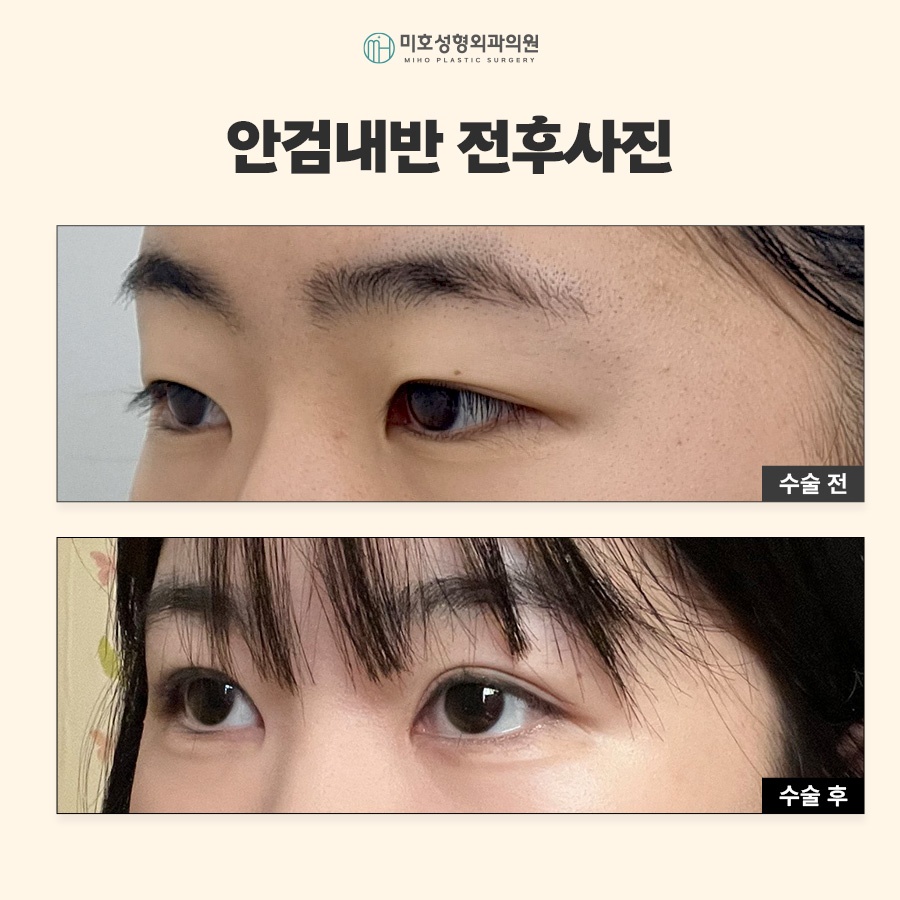
The form that appears in young children
has a different underlying background from that in adults.
The skin and muscles of the lower eyelid often push the eyelashes
inward,
and some cases improve as the child grows.
Because children may have difficulty describing their symptoms,
frequent eye rubbing or avoiding bright light
may be considered meaningful clues.
On the other hand, if the irritation is severe enough to make it difficult to open the eyes
or repeated corneal damage is seen,
it is difficult to regard it as something that can simply be left to age.
When inward turning suddenly develops in an adult,
the tissues should be examined broadly for laxity,
scarring, and inflammation.
Rather than applying the same approach based on age alone,
it is important to consider the current degree of contact
and how long it has continued.
Entropion surgery is not a method focused only
on changing outward appearance.
Its significance lies in reducing the situation
where the eyelid margin turns inward and the eyelashes scratch the surface,
helping restore more comfortable blinking.
If tearing, redness, or a foreign-body sensation
has continued for a long time,
the cause should not be attributed to dryness alone.
The appropriate approach varies according to
the location of the turning, tissue strength, and presence of scars.
Organizing everything from the initial discomfort
to changes in daily life in specific detail
can help in understanding the current condition.
Not taking repeated irritation lightly
is the starting point for protecting the surface of the eye.


Previous image
Next image