These days, many people are considering lower eyelid cosmetic surgery, especially lower blepharoplasty, to look younger.
Lower blepharoplasty is a procedure that repositions or removes the fat under the eyes and tightens sagging skin to create a younger, more refreshed appearance.
However, after this surgery, some patients may experience a side effect called “ectropion.”
Today, let’s take a closer look at ectropion that can occur after lower blepharoplasty,
and also summarize prevention and treatment methods.
⸻
What Is Lower Blepharoplasty?
Lower blepharoplasty is performed to improve under-eye sagging or bulging fat (commonly referred to as dark circles or under-eye fat).
The surgical method varies depending on the patient’s under-eye condition, but it generally involves the following steps.
• Incision through the skin or an approach through the conjunctiva
• Removal or repositioning of excess fat
• Removal of excess skin
• Tightening of the muscles and skin tissue
Through this process, a smoother and firmer under-eye contour can be achieved.
⸻
What Is Ectropion?
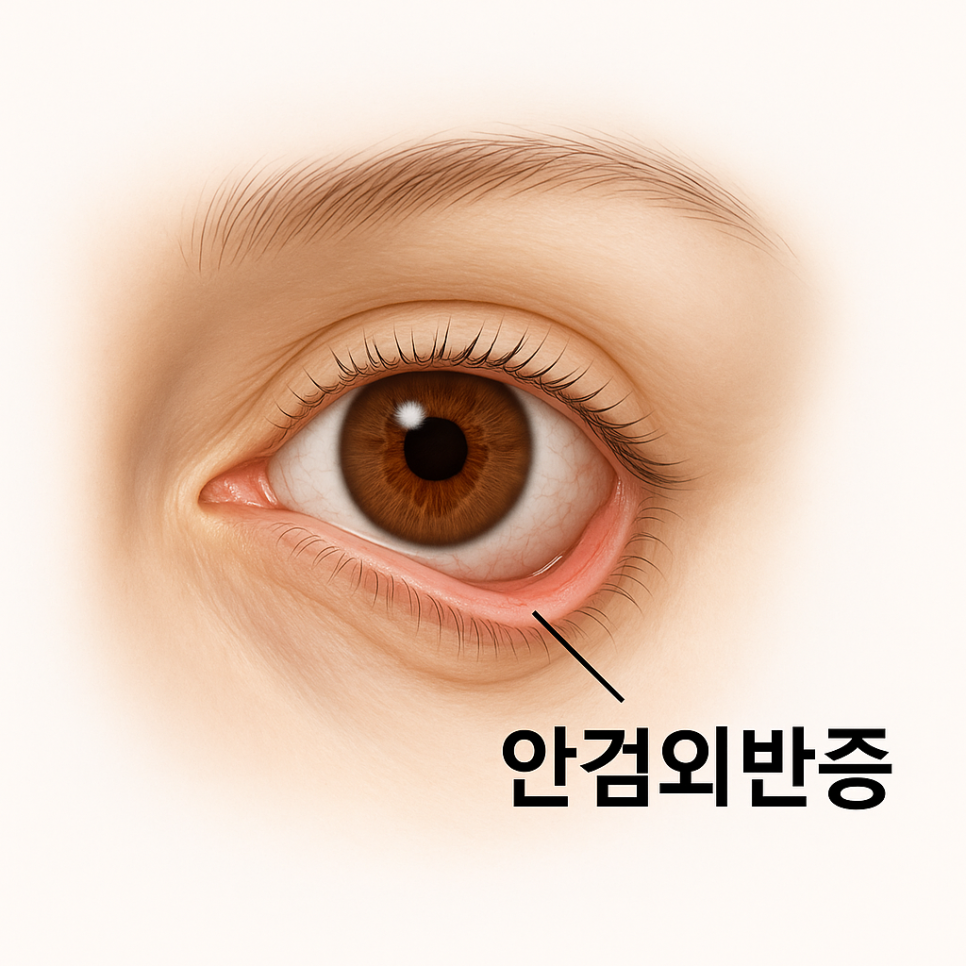
Ectropion refers to a condition in which the lower eyelid is pulled downward
or turns outward after lower blepharoplasty.
In simple terms, it means the under-eye area sags and can no longer properly cover the eyeball.
When ectropion occurs, the following symptoms may appear.
• Tearing or excessive tear flow
• Dry, irritated eyes
• Foreign body sensation, redness
• Increased risk of keratitis due to eye exposure
• An unnatural appearance aesthetically
⸻
Why Does Ectropion Occur?
There are various causes of ectropion after lower blepharoplasty. The main ones are:
- Excessive skin removal
If too much skin is removed, the pulling force becomes too strong and the eyelid may sag downward.
- Damage to the lower eyelid support structures (ligaments, muscles)
If the eyelid support structures are weakened during surgery, the eyelid may not hold its position and can drop downward.
- Postoperative inflammation or scar formation
As tissue contracts tightly, it may cause ectropion.
- Individual constitution and aging
The risk of ectropion is also higher in people with naturally low skin elasticity or in older adults.
⸻
How Is Ectropion Treated?
The treatment for ectropion depends on how severe the symptoms are.
• Mild cases
If detected early, it may improve with artificial tears, massage around the eyes, or fixation using silicone tape.
• Moderate to severe cases
If it does not improve with medication or physical therapy, additional surgery (reconstructive surgery) may be needed.
A common approach is to lift the eyelid through skin grafting or a midface lift.
• Timing of surgery
Usually, right after surgery, swelling or inflammation may make the eyelid appear temporarily everted,
so it is common to decide on corrective surgery after observing the condition for at least 3 to 6 months.
⸻
How Can Ectropion Be Prevented?
If you are considering lower blepharoplasty, you should also pay attention to preventing ectropion.
• Receive a thorough consultation before surgery to accurately assess your under-eye condition and degree of skin elasticity
• Minimize the amount of skin removed and, if necessary, combine the procedure with support structure reinforcement surgery (canthoplasty)
• Manage the early postoperative period carefully (cold compresses, swelling control, prevention of inflammation, etc.)
• Choose a specialist with extensive experience and delicate surgical skill
⸻
Lower blepharoplasty is known as a relatively simple procedure with a quick recovery,
but if it is performed aggressively without considering side effects such as ectropion, it can instead reduce quality of life.
Therefore, sufficient consultation and careful planning before surgery are more important than anything else.
Even if ectropion has already developed, it can still be improved sufficiently if you consult a specialist promptly and receive appropriate treatment,
so there is no need to worry too much.

*This post is not an announcement from a hospital and is intended to provide medical knowledge and related information.
*All procedures and surgeries may be applied differently depending on the individual, and their effects, side effects, and complications may also vary.