What’s the difference between a mouth-corner procedure and mouth-corner surgery?
Many of you may have heard that even the direction of the corners of the mouth can completely change one’s impression.
If the corners of the mouth are naturally lifted, the face gives a more smiling impression; on the other hand, if the corners of the mouth are lowered, even a neutral expression can look somewhat gloomy.
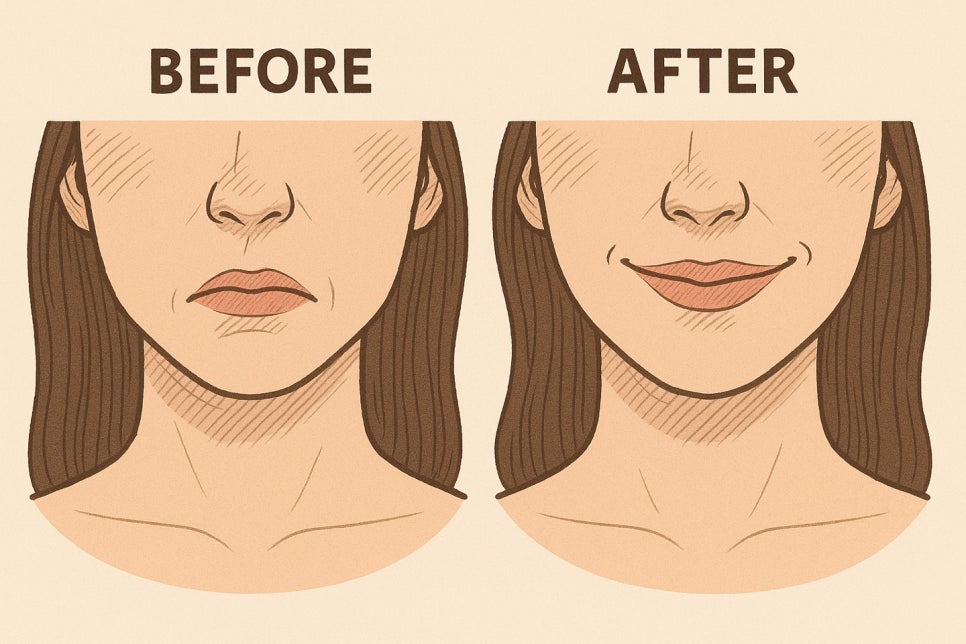
That is why more and more people are looking into mouth-corner correction these days,
and one common concern at this point is which method is more suitable: a procedure or surgery.
Today, let’s briefly organize the differences between the two methods and the features of each.
⸻
What is a mouth-corner procedure?
A mouth-corner procedure is a method of lifting the corners of the mouth upward without incision by using Botox, fillers, or thread lifting.
The following methods are commonly used:
• Botox: induces a slight upward appearance of the mouth corners by paralyzing the muscles that pull the corners of the mouth downward
• Filler: adds volume around the corners of the mouth to naturally lift the mouth-corner line
• Thread lifting: a method that directly pulls the skin at the corners of the mouth using lifting threads
Advantages
• Non-incisional, so recovery is fast
• Short procedure time and relatively low burden
• Quick return to daily life
Disadvantages
• The effect is temporary (usually 3–6 months)
• If the corners of the mouth are significantly sagging, the change may be limited
• Repeated procedures may be needed
⸻
What is mouth-corner surgery?
Mouth-corner surgery is a method in which the skin on the outer side of the lips is incised to structurally move the corners of the mouth upward.
Rather than simply adjusting the facial muscles, it changes the positions of the skin and muscles themselves, allowing for a more definite improvement.
Advantages
• Noticeable change possible with a single surgery
• The effect is semi-permanent
• In addition to the mouth corners, it may also improve the shape of the mouth and the proportions of the lips
Disadvantages
• Because an incision is required, a recovery period is needed (swelling, bruising, etc.)
• There is a possibility of scarring (it usually fades over time)
• Since the result is permanent, careful design is necessary
⸻
Which method is better for me?
| Item | Mouth-corner procedure | Mouth-corner surgery |
|---|
| Recovery period | Short (almost none) | Around 2 weeks |
| Duration of effect | 3–6 months | Semi-permanent |
| Suitable candidates | Mild sagging at the mouth corners / slight improvement | Congenital sagging / those who want a definite change |
| Cost | Relatively inexpensive | More expensive |
Mouth-corner correction is not simply about “lifting” the corners; it is a delicate process that also considers the overall balance of the face and the flow of facial expressions.
Therefore, which method is more suitable for your face is best decided through consultation with a specialist.
If you want to start lightly, begin with a procedure,
and if you want a more definite change and longer-lasting results, it may be worth considering surgery.
⸻
This article was written for the purpose of providing information to those considering improvements to the corners of the mouth.
The appropriate method may vary depending on the individual’s condition, so consultation with a medical professional is recommended.

*This post is not intended to announce hospital news; it is a post intended to provide medical knowledge and related information
*All procedures and surgeries may be applied differently depending on the individual, and effects, side effects, complications, etc. may also vary