Hello. I’m Kim Hyeongtaek, Director of Kwon Plastic Surgery.
Changes in appearance after surgery often come with not only great expectations, but also worries.
Especially in the early stages after surgery, swelling and changes in shape
can make the outcome look different from what was expected, leaving many people anxious.
In the clinic, I often meet patients who express such anxiety,
and each time, I hope to offer more than just a medical explanation
and help them feel a little more at ease.
Today, I’d like to share some thoughts that may be helpful for people who are struggling emotionally
due to temporary changes after surgery.
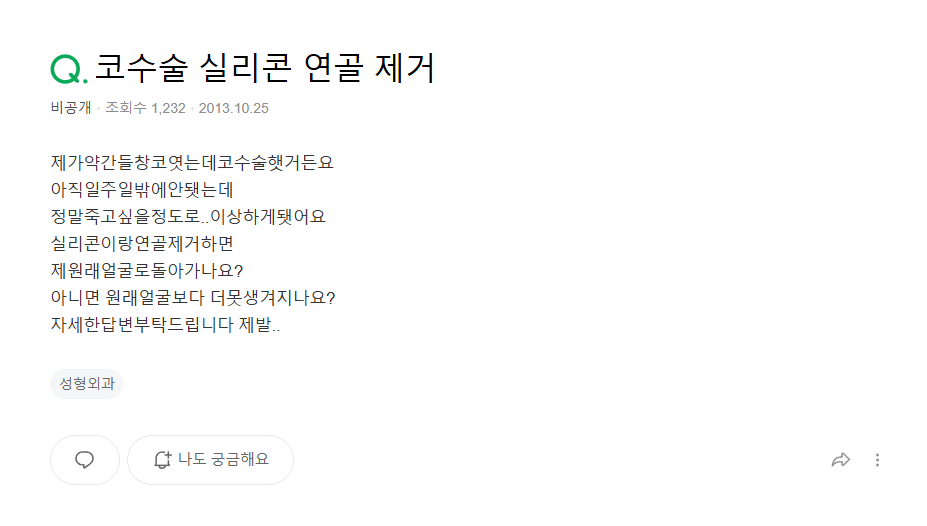
Q. My nasal bridge was actually fine to begin with,
but the tip of my nose was a little upturned, so I always felt self-conscious about having a snub nose.
So I made up my mind and had snub-nose surgery.
But now, one week after the surgery,
I feel bad every time I look in the mirror.
I told them several times to make it look natural,
but when I look at myself after the surgery,
it feels so unfamiliar and strange that I honestly feel like I could die.
Of course, it may still be due to swelling,
but I keep thinking about whether it is really just swelling,
or whether the surgery truly failed.
So these days, I’m considering removing the nose silicone implant.
If I remove the cartilage as well,
will I go back to my original face?
But on the other hand, I’m scared that if I remove it recklessly,
my face might look even stranger,
and I’m becoming more and more anxious that even if I have revision rhinoplasty,
I might end up uglier than before.
Every day, I avoid looking in the mirror,
and I’m afraid to go বাইরে?
Has anyone had the same experience?
Can I really get my face back?
I sincerely ask for your advice.
#nose silicone removal #snub-nose surgery #revision rhinoplasty #rhinoplasty review #swelling after rhinoplasty #Kwon Plastic Surgery
Hello. This is Kim Hyeongtaek, a plastic surgery consultant at Hidak-Naver Knowledge iN.
If you had snub-nose surgery and it has only been about one week since the operation,
this is still a period when the nose shape has not fully settled.
Therefore, it is necessary to wait and observe the progress over time.
Because the swelling and shape are still unstable at this stage,
if you continue to wait a little longer and the results of the snub-nose surgery still
feel odd, I recommend discussing revision rhinoplasty or nose silicone removal
in detail with the doctor who performed your surgery.
Also, even if you have revision rhinoplasty or remove the nose silicone,
it is not possible to guarantee that you will 100% return to your original appearance.
Therefore, rather than deciding to remove it recklessly, it is better to observe the surgical progress a little longer
and receive an accurate diagnosis and consultation.
To help swelling subside more quickly and support recovery,
keeping your head slightly elevated and applying warm compresses consistently
may be helpful.
I sincerely wish you a good result.
Thank you.
Source
https://kin.naver.com/qna/detail.naver?d1id=7&dirId=70110&docId=183266139&page=1#answer3
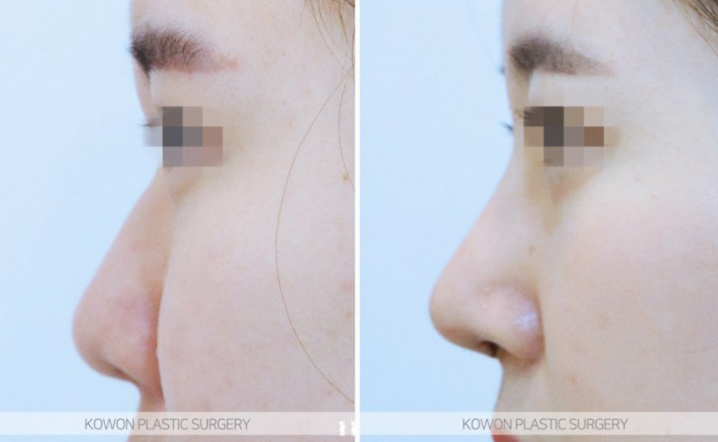
Many people who are dissatisfied with their rhinoplasty come to our plastic surgery clinic after having the threads removed.
The problem is that once inserted, the threads often have barbs or ridges,
so removing them one by one is quite difficult,
and in most cases, removal is only possible through surgery.
During this process, the internal tissue of the nose can be placed under strain,
which increases the difficulty and risk of the procedure,
and naturally, the surgical cost also has no choice but to rise.
From the accounts of people who received nose thread-lifting procedures such as Hina, Misseu, or Bayko,
a common approach is to first see the results from the thread procedure
and then consider full rhinoplasty later.
However, the inside of the nose is a sensitive area in the human body,
and because the space is also limited, the procedure may look simple,
but thread removal can become a very difficult process.
Therefore, if you are considering thread-lifting rhinoplasty,
careful judgment from the very beginning is necessary.
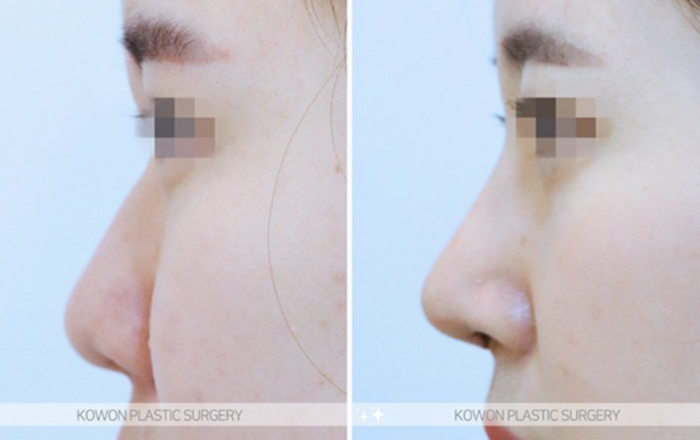
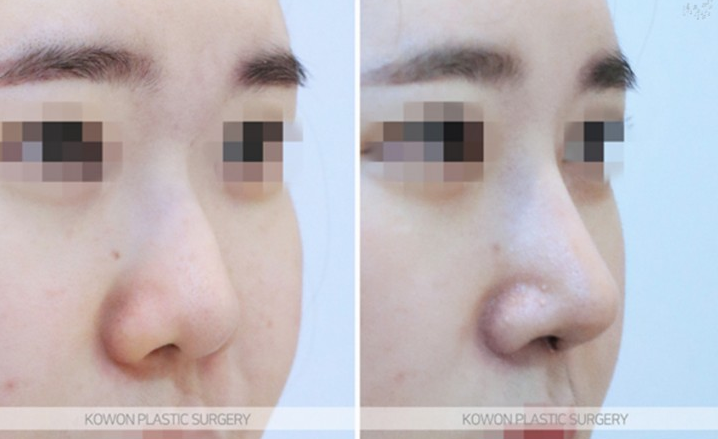
In this patient’s case, looking at the photos before the Hi코 procedure,
the nasal tip had sagged in the front and side views,
and the bridge between the eyebrows was also low, making the overall impression somewhat unnatural.
In the photo taken from below,
the lower part of the nose clearly looked bunched up, as if tied with thread.
At Kwon Plastic Surgery in Seoul for revision rhinoplasty,
after delicately removing these threads,
we used septal cartilage to make the nasal tip shape more natural,
and slightly raised the height to improve it into a more harmonious proportion.
Reserve a consultation at Kwon!
If you’d like to see more diverse cases, click the link below!