About a month after nose surgery, many patients become most concerned about changes in swelling, the feel of the nose, and whether there is any asymmetry. In particular, if the tip does not feel firm or its shape seems to change easily, people may worry that something is wrong.
Today, I’ll explain the symptoms commonly experienced at the one-month post-surgery swelling stage and what they mean, based on a real inquiry case.
Q.
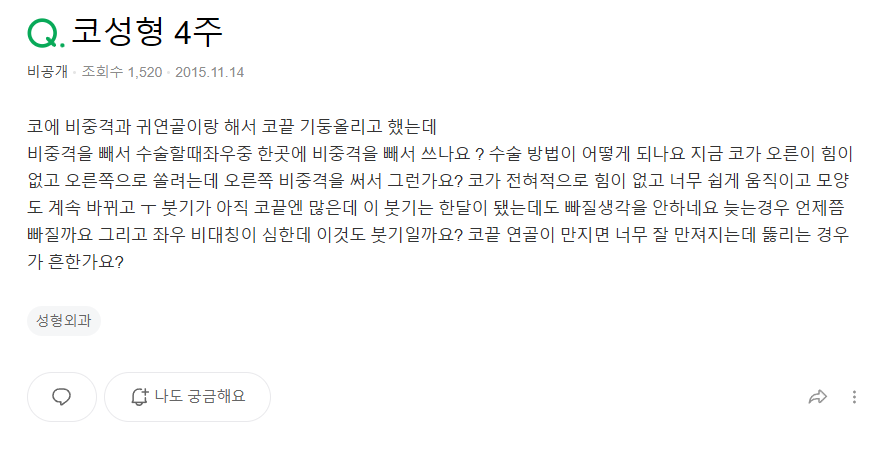
I had surgery to raise the nasal tip support using septal cartilage and ear cartilage. When septal cartilage is used, is it taken from only one side during surgery? I’m curious about the surgical method. I still have swelling, but my nose is leaning to the right, it feels weak, and its shape changes easily.
I’m worried whether it is because of swelling. If it is one-month post-surgery swelling after nose surgery, how much swelling is normally left? I also want to know whether the asymmetry is due to the one-month swelling after nose surgery. And the cartilage at the tip of my nose is very easy to feel—does exposure happen often?
#one-monthpostnosesurgeryswelling #KowonPlasticSurgery
A.
Hello. I’m Kim Hyung-taek, a plastic surgery specialist consulting for Hidoc-Naver Knowledge iN.
The cartilage called the septum exists only once inside the nose. It is not a structure that exists separately on both sides; rather, part of the septal cartilage in the center is harvested and fixed to the tip end to build the nasal tip support. Because of this, after surgery the nasal tip generally becomes firmer than before, and its shape does not change easily.
At the one-month post-surgery swelling stage after nose surgery, most of the major swelling has already gone down, and there is usually not much swelling left to decrease further after this point. At this stage, left-right asymmetry may be caused by swelling, but there is also a possibility of actual structural asymmetry, so consultation with the doctor who performed the surgery is necessary.
Even if the nasal tip cartilage can be felt, it does not mean the tip will become exposed, so there is no need to worry too much. I hope you get a good result.

Hello. This is Kowon, a Nonhyeon plastic surgery clinic known for good nose surgery. Recently, interest in autologous rib cartilage nose surgery has been increasing. Autologous rib cartilage is a method that uses your own tissue without artificial implants, so it tends to be stable and maintain results well, and it is especially often chosen for nose revision surgery or during the process of improving a short nose.
It is also a method that can be used to address nostril asymmetry that may appear after previous surgery. Today, I will introduce a case improved using this method.
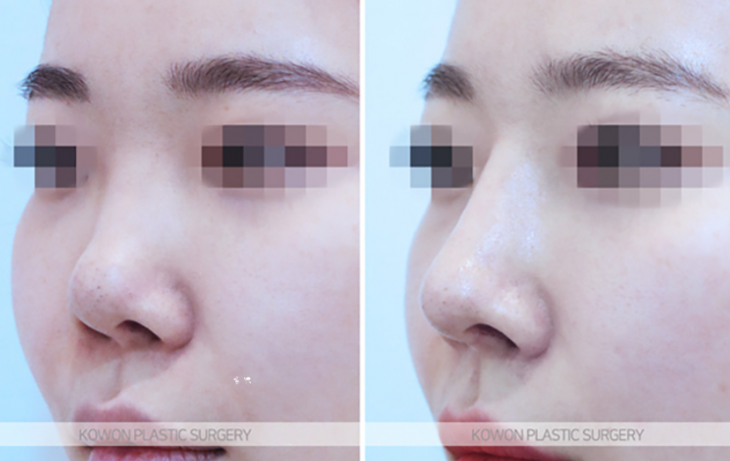 This image was used with the model’s consent.
This patient visited us because, after undergoing rhinoplasty 7 years ago using silicone, ear cartilage, and donated rib cartilage, and then having another revision one year ago, the desired result still was not sufficiently achieved.
The bridge line was uneven, and in particular the nose tip looked short, making the overall impression seem dull. They had been worried about these issues for a long time, and eventually came to Nonhyeon Plastic Surgery Clinic.
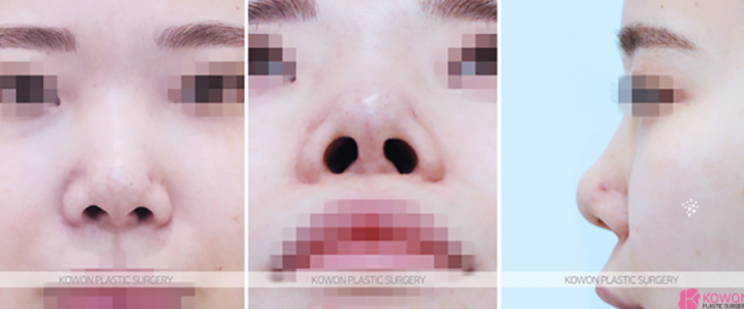 This image was used with the model’s consent.
After a detailed examination, there was a bump in the middle of the nasal bridge, making the overall line look unnatural, and the left-right balance of the nostrils was also not natural. For this third revision, the patient wanted a more refined and clean image.
Accordingly, we decided to recontour the hump using osteotomy and redesign the nasal structure with the patient’s own autologous rib cartilage instead of the donated tissue previously used.
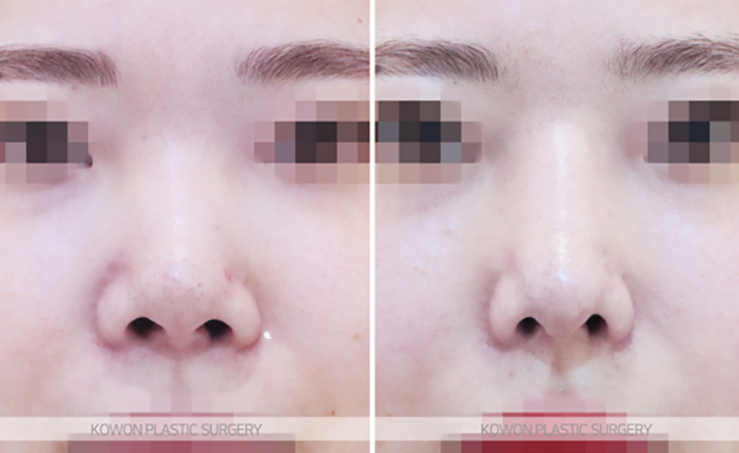 This image was used with the model’s consent.
In the immediate post-revision result, the center line of the nasal bridge is stably aligned from the front, and the previously uneven areas have become smoother. The nose tip, which had looked short, was lengthened through short-nose correction, and the nasolabial angle was adjusted to an ideal shape.
As the overall impression became clearer, it changed to a brighter mood.
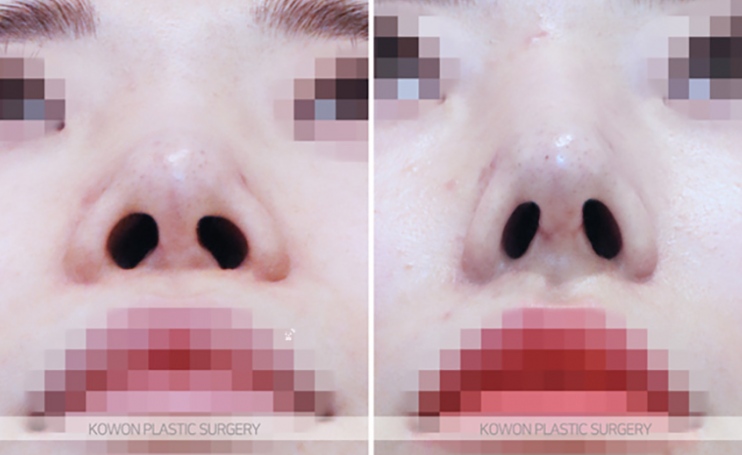 This image was used with the model’s consent.
In the angle comparison below, the nostrils that had looked wide and round are now settled into a more refined shape.
In particular, the left-right imbalance was eased, making the balance of the entire face look more natural. The patient wanted the nose tip to stand out well, and that part was also faithfully reflected in the result.
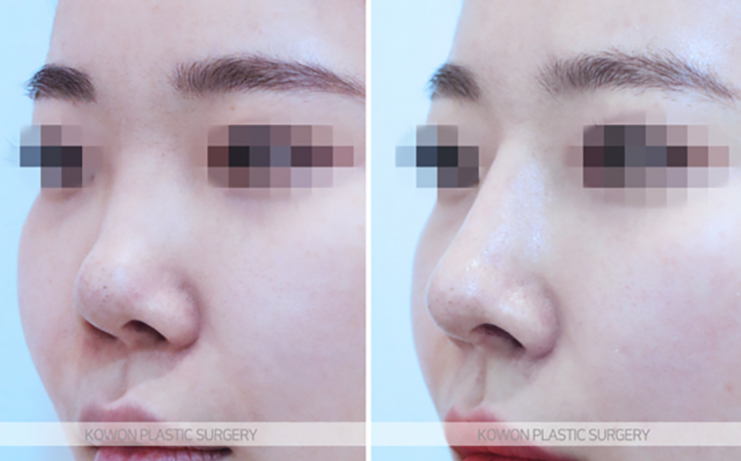 This image was used with the model’s consent.
From the 45-degree side view, the line from the glabella to the nose tip became smoother, and the overall contour was adjusted to look more natural. Because autologous rib cartilage has the characteristic of being partially absorbed over time, it is common to design it slightly higher than the desired height at first.
Thanks to this process, the result settles into a stable and natural appearance as time passes.
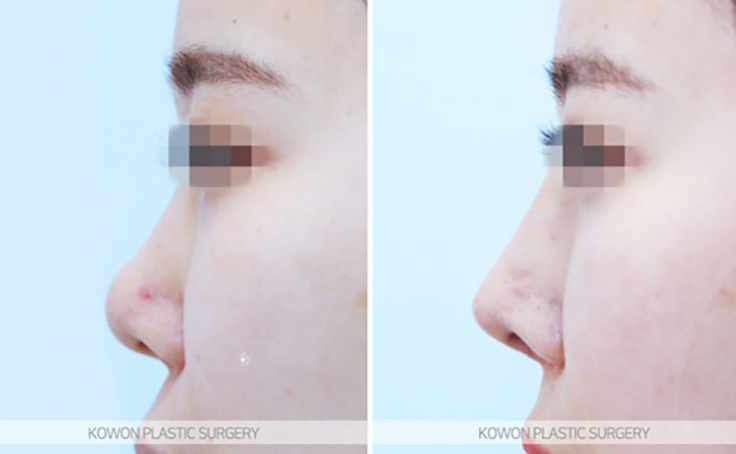 This image was used with the model’s consent.
One month after surgery, the shape is already being maintained stably. After about 6 months, as the absorption process continues, it is expected to be completed with an even more natural contour. This case was meaningful in that, despite being the third revision, it successfully addressed both the short nose and nostril asymmetry at the same time.
Today, we introduced a case in which complex structural issues were organized through autologous rib cartilage rhinoplasty. If you have similar concerns, we recommend consulting while considering not only aesthetic changes but also structural stability. Kowon Plastic Surgery Clinic will continue to create natural nose lines with balanced design.