Q. If You’re Considering Revision Rhinoplasty, Be Sure to Avoid This "Time"

There are quite a few people who worry about inflammation or the timing of revision surgery after rhinoplasty. Especially if you have already had surgery more than once, concerns about recovery time and when to have revision surgery can naturally become greater.
In this Q&A, we will organize the question of when it is appropriate to consider revision rhinoplasty based on a real concern.
Q.
Hello.
As of recently, it has been about 7 months since I had nose surgery. After the initial surgery, I developed an inflammatory symptom with fluid collecting around the bridge of my nose, so I underwent another surgery 2 months after the operation. Since then, time has passed, and I am now considering revision rhinoplasty again.
It is generally said that revision surgery is possible after about 6 months, but I am wondering how long it is best to wait if I want to proceed under the most ideal conditions. I have also heard opinions that people of Asian descent need more time to recover than Westerners, and some recommend waiting more than a year. In reality, what timing is the most appropriate choice?
Also, because I have a history of inflammation, I am curious whether it is possible that at the current 7-month mark, the swelling still has not completely gone down.
#RevisionRhinoplasty #KwonOnePlasticSurgery
A.
Hello. In general, the timing for revision rhinoplasty is often discussed as being about 6 months or later, based on the average time it takes for the tissue in the surgical area to stabilize. This refers to the minimum time needed for the tissue environment to recover to a state similar to before surgery, and there can be differences depending on each individual’s recovery speed.
In particular, if inflammation has occurred, more time may be needed for tissue recovery and stabilization, so some cases are planned with a longer interval before revision rhinoplasty. That is why, in situations with a history of inflammation, opinions recommending more than a year are sometimes mentioned.
If it has been 7 months, it is highly likely that most of the general swelling has gone down. However, apart from swelling, the tissue may still be in the process of becoming firm and then gradually softening, and this can only be judged by checking the actual feel and internal condition together. Since you experienced inflammation, it seems understandable that you may also feel a great deal of psychological burden. Giving it 충분한 time and planning revision rhinoplasty at a point when the condition is the most comfortable and stable may also help with the outcome.
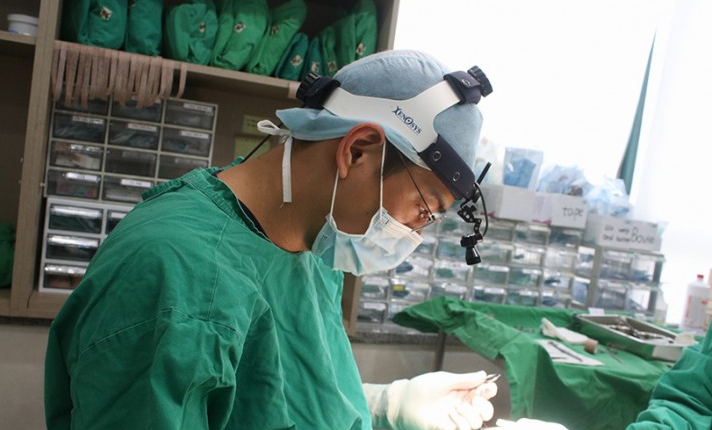 This image was used with the model’s consent.
Hello, I am Kim Hyung-taek, the CEO and head surgeon of Kwon One Plastic Surgery, dedicated to healthy beauty. Today, I would like to introduce a case of revision nose surgery using autologous costal cartilage. This case was especially important in terms of the process and judgment because the patient had undergone surgery several times before.
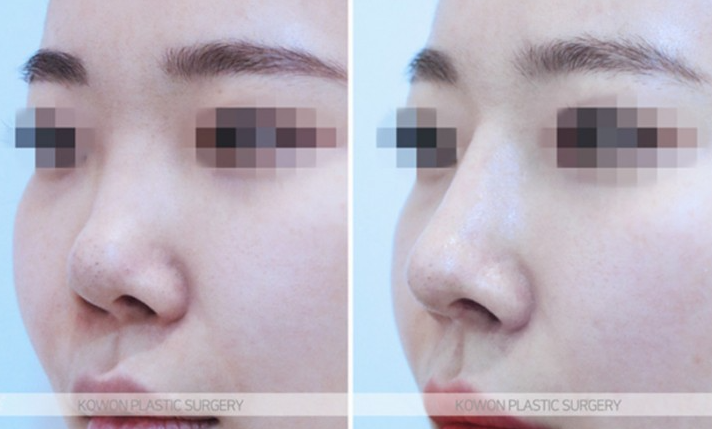 This image was used with the model’s consent.
Before visiting the clinic, the patient had already undergone two nose surgeries and was considering a third operation because the results were unsatisfactory. About 7 years ago, the patient had surgery using ear cartilage, silicone, and donated costal cartilage, and later also underwent reconstructive surgery. However, the changes were far from what had been expected, so the patient began considering revision rhinoplasty.
Even though the initial surgery addressed the dorsal hump, the surface was not smooth, and overall the nose appeared shorter.
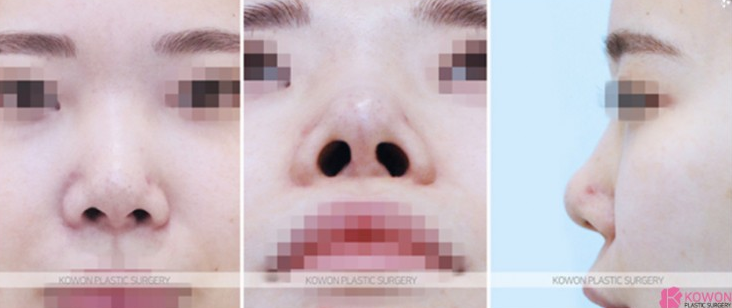 This image was used with the model’s consent.
When viewed from the front and from below, there were irregularities remaining in the middle of the nasal bridge, so the line was not even, and from the lower view, the left-right balance of the nostril shape was also uneven.
Considering that this was the third surgery and the history of using donated costal cartilage, we planned revision rhinoplasty using autologous costal cartilage this time.
 This image was used with the model’s consent.
Because the patient wanted a somewhat sharper and more striking image, we performed osteotomy to refine the bridge and hump area so that the overall width would look narrower. Instead of the existing material, we used rib cartilage particles to create a natural line for the bridge.
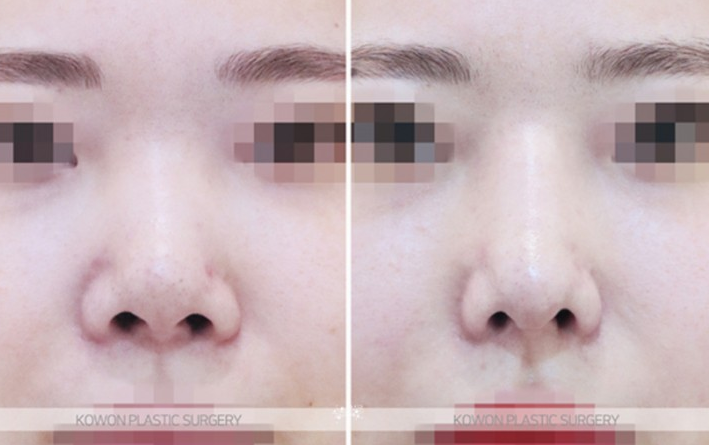 This image was used with the model’s consent.
After the revision surgery, the front view clearly shows that the width of the nasal bridge has been more neatly refined than before. The tip was also made more defined, changing the overall impression to a thinner and more polished look.
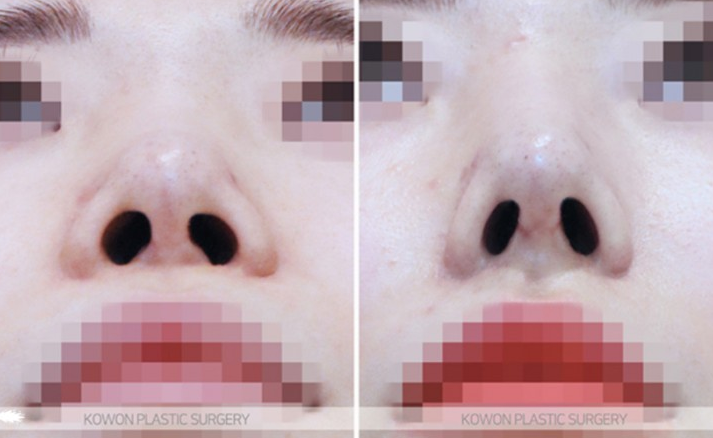 This image was used with the model’s consent.
The bridge starting between the eyes now continues straight in a line, creating a more linear profile. The hollow-looking area in the middle of the bridge has also been improved, and from the side, the nasolabial angle has been adjusted more naturally.
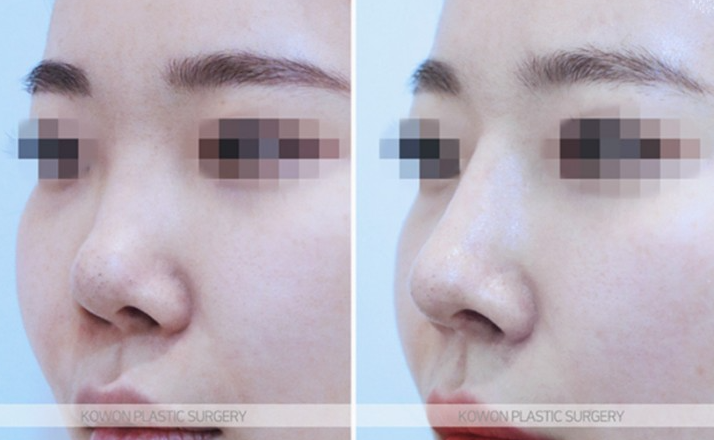 This image was used with the model’s consent.
In the case of surgery using autologous costal cartilage, some resorption may occur over time, so the initial design is made with a somewhat more defined line in consideration of that. It is important to understand and plan for this characteristic.
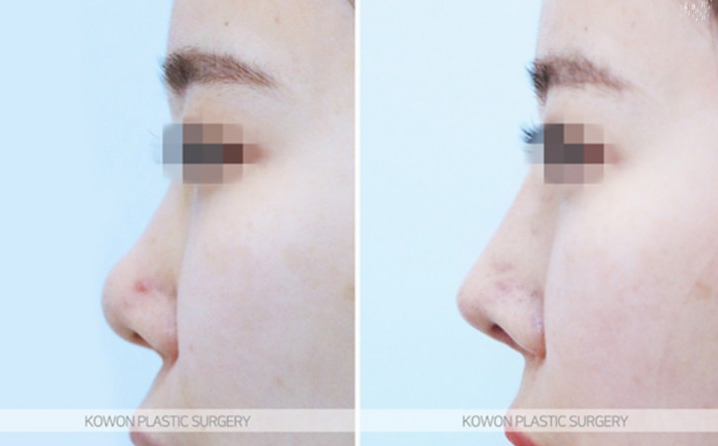 This image was used with the model’s consent.
This is a comparison photo of before surgery and one month after surgery. As resorption progresses over the next 6 months or so, it will settle into a much softer and more natural appearance than it is now.
Today, we looked at the process of change through a revision rhinoplasty case using autologous costal cartilage. If you have had repeated surgeries, it may be helpful to keep in mind that an approach that carefully considers the structure and tissue condition is especially important.
A post worth reading for reference when considering revision nose surgery
"Q. When revision rhinoplasty or nasal reconstruction surgery is needed, and tips for choosing a well-known clinic for revision rhinoplasty"