
�
Q. I am having trouble with swelling of the nasal mucosa inside my nose after nasal surgery.
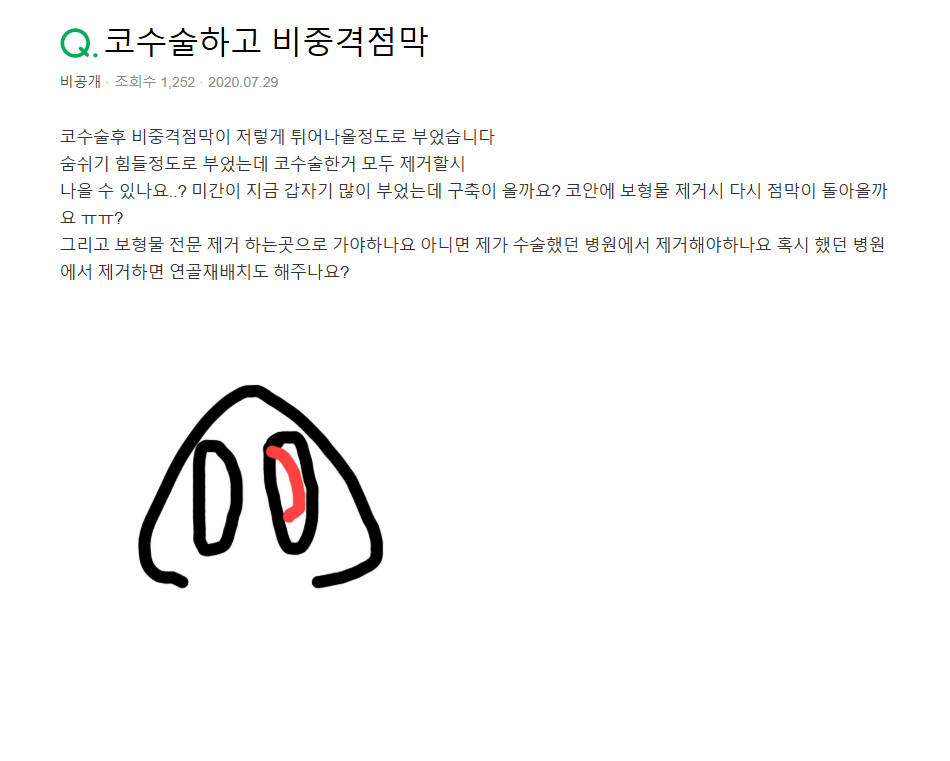
Since I had nasal surgery, I have had symptoms of severe swelling of the nasal mucosa inside my nose.
As shown in the photo I uploaded, the mucosa is so swollen that it is visibly protruding, and it currently feels so uncomfortable that even breathing is difficult.
Could this be a side effect of rhinoplasty?
In this case, I am wondering whether removing all of the implants or inserted structures used during the surgery could relieve the mucosal swelling.
In particular, the swelling has recently become suddenly severe even around the glabella area, so I am worried that it may be progressing to contracture.
I would also like to know whether the severe mucosal swelling like this can subside again if all of the implants inside the nose are removed.
If removal needs to be considered, I am also wondering whether I should look for a hospital that specializes in implant removal, or whether it is better to have it removed at the hospital where I had the original surgery.
Another question I have is, if the removal is performed at the hospital where I had the surgery,
I would like to know whether they do only simple removal, or whether they also perform cartilage repositioning and internal structural cleanup.
I would like to hear advice from anyone who has had a similar experience, or about the order in which I should look into hospitals.
A. Hello. This is Kim Hyeong-taek, consulting physician for HiDoc-Naver Knowledge iN.
If your nasal mucosa is severely swollen after nasal surgery and breathing is difficult, I imagine you have been very uncomfortable and in a lot of pain.
Just from your description, I am concerned that daily life has not been easy for you.
Based on the photo and explanation you posted, your current symptoms appear to be a situation in which the cause of the side effect from rhinoplasty and the appropriate response may vary depending on how much time has passed since the surgery.
If you are within the early recovery period of 1 to 2 weeks after surgery, the swelling of the nasal mucosa may be caused by blood or fluid accumulating in the septal area.
In such cases, it is a priority to visit the hospital where you had the surgery and receive treatment for the swollen septal area.
On the other hand, even if more than one month has passed since surgery,
if the septum continues to block one nasal cavity and breathing remains uncomfortable,
you should also consider the possibility that this is not just part of the normal recovery process but a structural issue.
In that case as well, you need to visit the hospital where you had the surgery, have your current condition checked accurately, and receive a diagnosis of the cause along with advice on how to resolve it.
Removing all of the implants inserted into the nose does not automatically resolve septal deviation or breathing problems.
If the septum is significantly bent to one side, there may be cases in which revision rhinoplasty is necessary.
In other words, rather than trying to solve the problem by implant removal alone,
the most important step is first identifying the exact cause of the current symptoms.
To do this, I strongly recommend visiting the hospital where the surgery was performed and receiving a thorough explanation and consultation.
I sincerely hope the cause is properly identified so that your discomfort is relieved and you achieve a good outcome.
Source: https://kin.naver.com/qna/detail.nhn?d1id=7&dirId=70110&docId=363877664&page=1#answer1
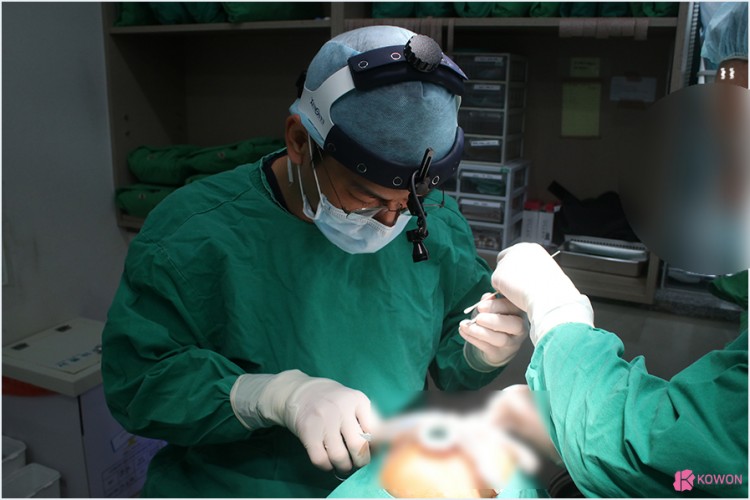
This image was used with the model's consent.
For a wide nasal bridge surgery, we refine the structure that has spread to the sides through nasal bridge osteotomy, and use septal cartilage as a rhinoplasty implant to create a more stable and natural shape.
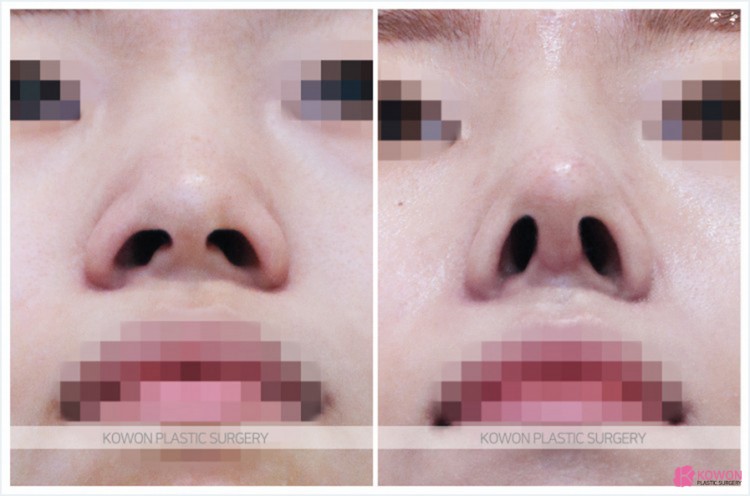
This image was used with the model's consent.
The female patient in this case had a low nasal bridge between the eyebrows and a noticeable bulbous nose shape.
Overall, the nose was flat and low, so the face did not look three-dimensional and gave a somewhat pressed impression.
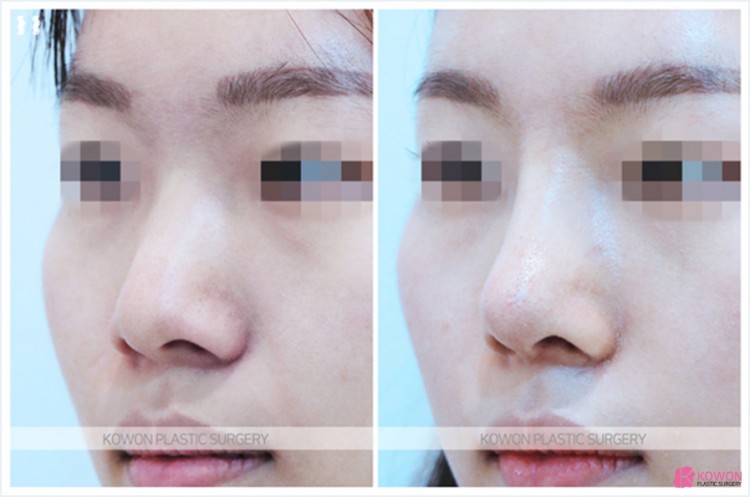
This image was used with the model's consent.
From the side view, the nasal bridge had spread forward and the bridge height was also not sufficient.
Considering the patient's nasal shape, this was judged to be a case that required surgery involving nasal bridge osteotomy.
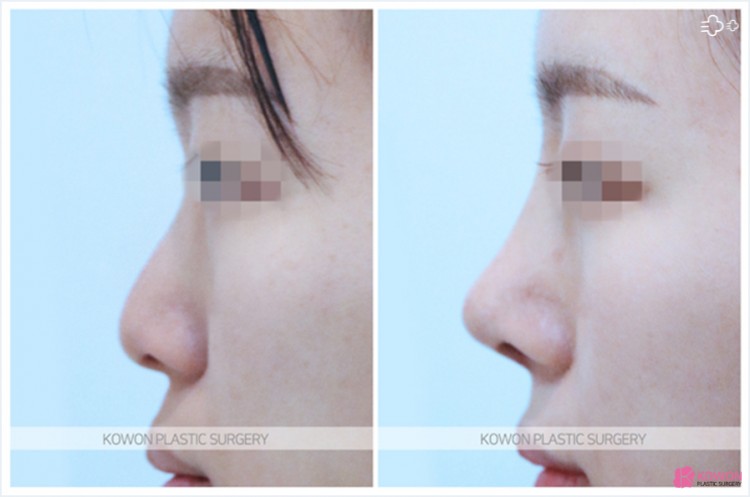
This image was used with the model's consent.
The surgery was performed in a way that restructured the overall nasal framework using septal cartilage extension and a rhinoplasty implant.
By using both septal cartilage and silicone, we designed the nose to reduce the spread-out appearance and make the nasal bridge look slimmer and more refined.
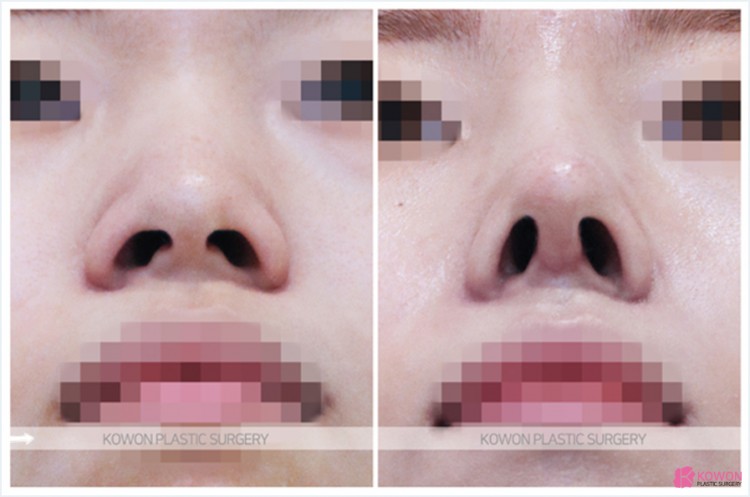
This image was used with the model's consent.
In the bottom view, you can see that the flat and wide-looking nostrils changed to appear vertically longer.
Nasal design is carried out based on the direction that best suits the individual's facial image.
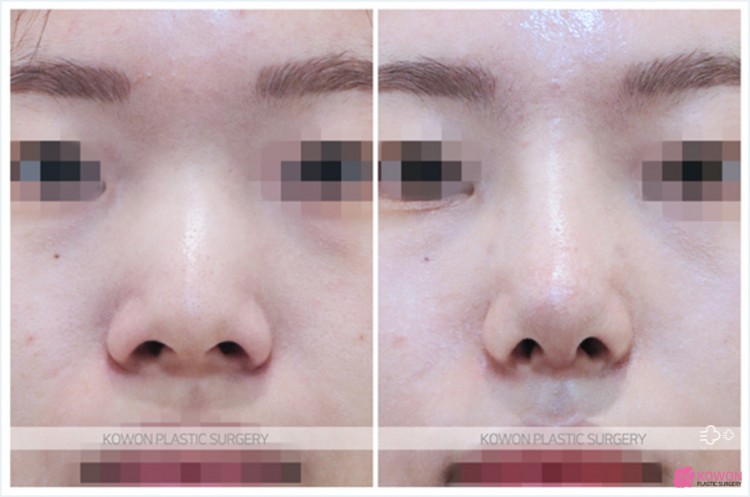
This image was used with the model's consent.
The previously uneven-looking nasal bridge line was refined, and as the tip of the nose was raised naturally, it added a more feminine and bright impression.
Also, as the nasal tip was lifted, the nasolabial angle between the lip and the nose was improved, so it was possible to expect an effect of easing the impression of protrusion around the mouth area.
When trying to improve the nose more beautifully, you may consider various surgical methods,
but what matters is surgery without unnecessary side effects of rhinoplasty, with only what is needed rather than excessive correction.
At Kwonone, we prioritize harmony with each individual's face shape and pursue the best results with minimal surgery.
�