Because the nose is located at the center of the face and influences the overall impression, even a small difference can greatly change the image. In particular, even if the nose looks fine from the side, many people become concerned when it looks large or blunt from the front.
For students and men considering surgery after the growth period, this kind of concern is a natural flow. In this article, I will calmly look at the causes of a nose appearing large, along with how surgery can improve it.
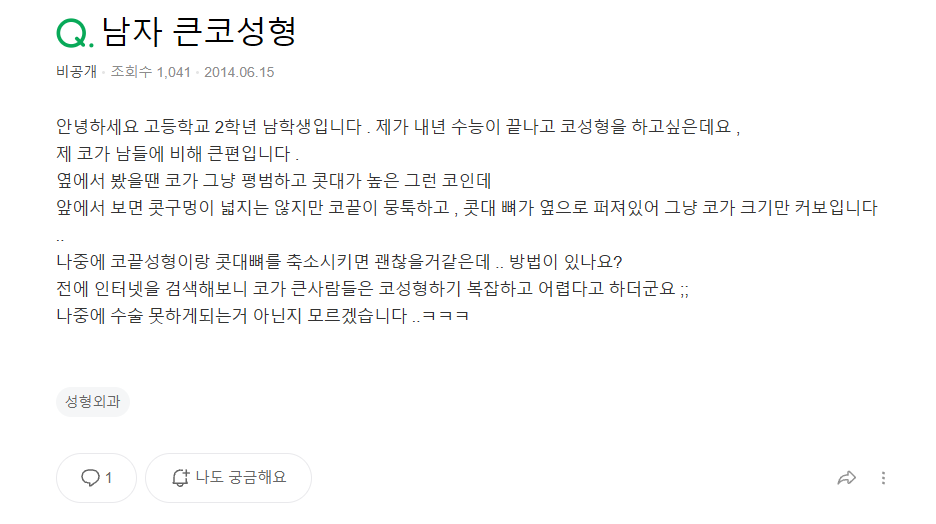
Q.
Hello. I’m a second-year high school male student, and I’m thinking about rhinoplasty after next year’s college entrance exam, so I’m asking a question. My nose is generally large. From the side, it looks like an ordinary nose with a bridge, but from the front, the nasal bridge bone spreads outward on both sides and the tip is blunt, making the nose look even larger.
Would it improve if I reduce the nasal bridge bone together with tip surgery? I looked it up and saw comments saying that people with large noses have a difficult time with surgery, so I’m worried. I’m also wondering whether surgery itself might become difficult later on.
A.
Hello. This is Kim Hyung-taek, a plastic surgery consultant for HiDoc-Naver Knowledge iN. When the nasal bridge bone is wide to both sides, improvement is possible by reducing the width through osteotomy, and a blunt nasal tip can also be sufficiently refined through surgical correction. It is true that there are structural limitations when the nose is large, but that does not mean it cannot be addressed.
If the plan is made while considering the balance of the entire face, a natural change can be fully expected even in male rhinoplasty before and after cases, so there is no need to worry too much. For now, it would be best to focus on preparing for the college entrance exam and then think it through calmly later.
#male rhinoplasty before and after #Kowon Plastic Surgery Clinic
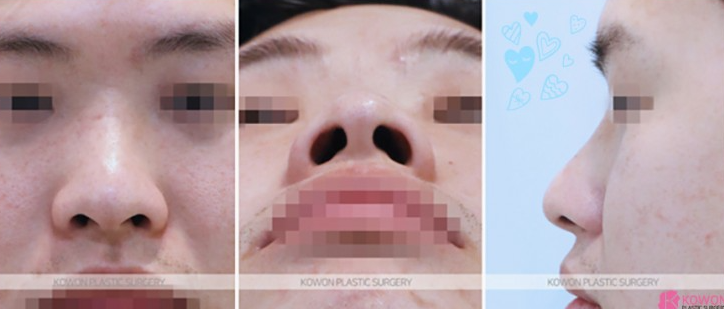 This image was used with the model’s consent.
This is a photo taken before bulbous nose surgery, and the front, bottom, and side views can each be seen. In East Asians, the starting point of the nasal bridge is lower than in Westerners, so if the contours are not distinct, the nose can appear spread to the sides and the overall impression may seem blurred.
This patient also had an indistinct starting point and line of the nasal bridge, giving the face an overall flat appearance.
 This image was used with the model’s consent.
To complete a natural and refined nose, it is important to consider the nose’s overall shape, not just increase its height. A rounded, large, and generally blunt nasal tip is commonly called a bulbous nose. In this patient as well, thick skin and nostrils spread to both sides emphasized a rough impression.
In particular, the area between the eyebrows was low and the bridge length was short, making the center of the face appear somewhat weak.
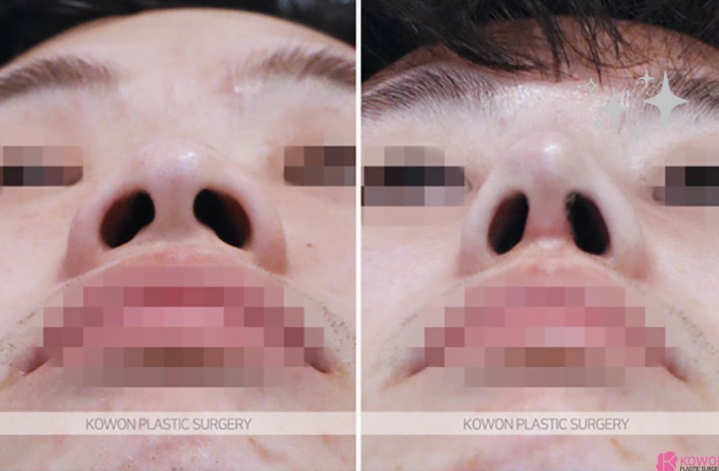 This image was used with the model’s consent.
If you compare the before-and-after photos of bulbous nose surgery taken from below, the changes become even more noticeable.
The nostril shape, which had looked large and dull, became more stable as the bridge and tip were refined, and the tip was raised, creating a clearer and more masculine impression. The overall image was also improved to look more three-dimensional.
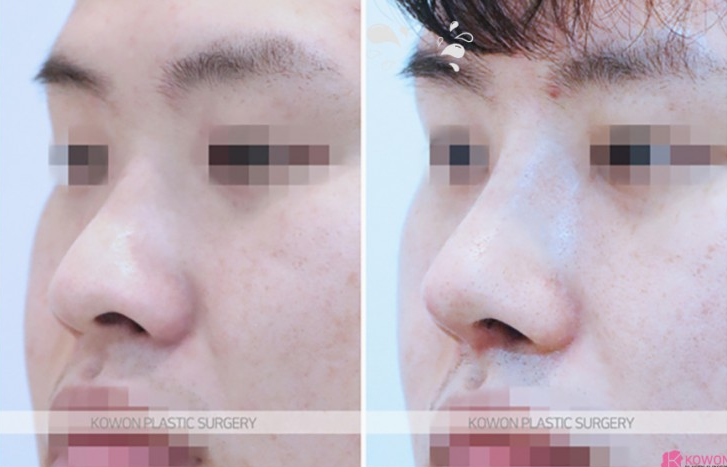 This image was used with the model’s consent.
During the surgery, 4 mm silicone was used to secure the bridge height, and ear cartilage and septal cartilage were used together to create the tip line. In addition, the depressor muscle of the tip was removed to prevent drooping, and the hump in the middle of the bridge was also refined to create a smoother line.
In addition, tip cartilage suturing and a non-incisional alar reduction procedure were performed together to naturally reduce the width of the nose, which had appeared wide.
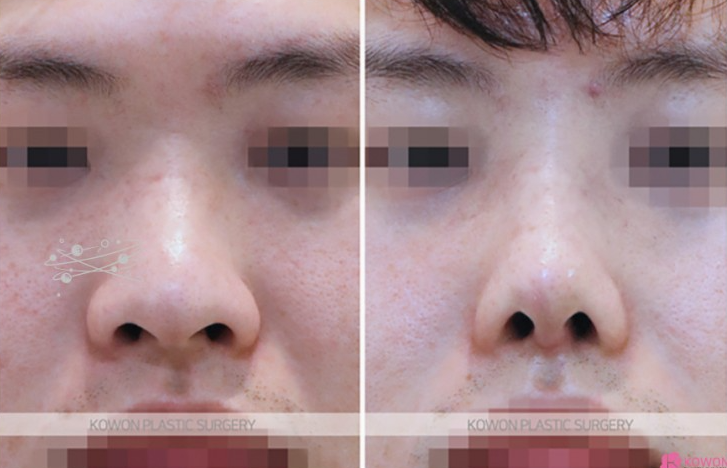 This image was used with the model’s consent.
From the front, the nose that had appeared spread out to both sides before surgery is now drawn toward the center, making the change in impression clearly noticeable. The bridge has been brought out naturally, giving a more balanced space between the eyes, and the overall image has been improved to look more refined.
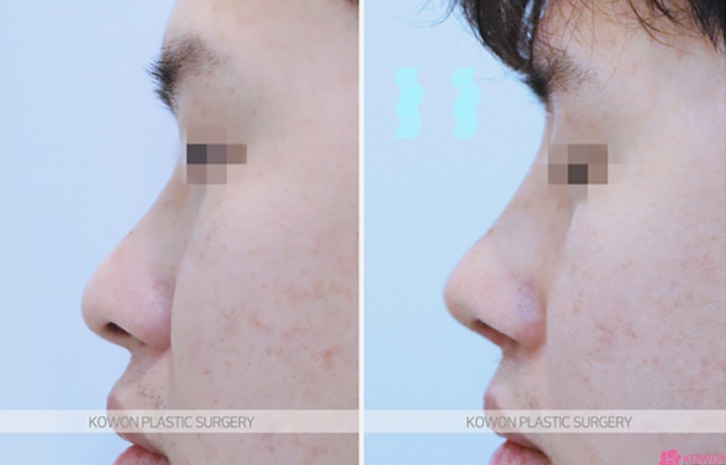 This image was used with the model’s consent.
In male short bulbous-nose surgery with thick skin, how stably the tip can be extended is an important factor. When skin tension is strong, the nose length may seem short again after surgery, but this can be sufficiently compensated for by appropriately reinforcing the cartilage.
This case can be seen as one that improved both the bulbous nose shape and the wide nostrils at the same time, enhancing both the balance and three-dimensionality of the entire face.