Among people considering revision nose surgery, there are many cases where the first operation brought some change, but the result was different from what they had expected, leaving them disappointed. In particular, if the nose is long and appears wider when smiling, or if the tip droops downward, it is necessary to look beyond simply adjusting the height and instead review the overall proportions and structure again.
Because revision surgery must take into account both the traces of the previous operation and the current condition of the nose, a more careful approach is important. In this article, we will organize the directions in which correction plans may be made when a long nose and a wide-looking nose appear together.

Q.
I am considering revision nose surgery. After the first surgery, there was some improvement, but because osteotomy was not performed, the nose looks wide. My skin is thick, so especially when I smile, the tip looks spread out, and although it is not a true hooked nose in everyday life, the tip drops downward when I smile.
My nose is also generally long. The bridge was originally quite high, and in 2010 I had tip surgery using septal cartilage and ear cartilage. I want to improve it through revision surgery so that it looks as small as possible, but I am wondering whether correcting the long nose should come first or whether reducing nostril show is more important.
A.
Looking at the current shape, there is a tendency toward a long nose, and the impression of a wide nose may make the nose look larger than it actually is. If you want a nose that looks small and short, it may be considered to adjust the muscle that pulls the tip downward, then lift the tip appropriately, and, if necessary, combine this with osteotomy to refine the lines. This process should not be about simply increasing height, but about achieving balance so that the result approaches a natural-looking nose surgery outcome.
The phenomenon of the tip dropping when smiling is often related to muscle action, and if this is addressed, improvement in a more natural-looking nose surgery direction may be expected. Even when the long-nose appearance is emphasized, the impression can change through length adjustment and angle adjustment. However, which part should be corrected first must be determined after structural analysis, and it is difficult to decide based on only one factor.
In revision surgery, a natural-looking nose surgery approach that considers the overall proportion is more important than excessive change. Nostril show, tip angle, length, and width are all connected, so they must be designed in a harmonious way. Ultimately, it is desirable to create a natural-looking nose surgery plan that fits the proportions of the face.
#NaturalLookingNoseSurgery
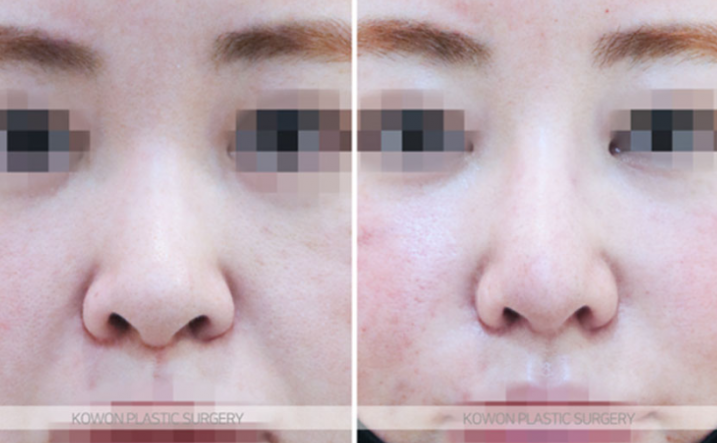 This image was used with the model’s consent.
Hello. This is a place that carefully analyzes and designs a wide range of nose shapes. Today, we will focus on cases of nose surgery after double jaw surgery and organize the questions that are often raised when considering female rhinoplasty.
Many people worry about changes in nose shape after double jaw surgery. When the position of the jaw changes, even the structure supporting the nose can undergo subtle changes. As a result, the nose may appear upturned or wider from side to side, and if the support of the septal cartilage becomes weak, tip surgery may also be helpful.
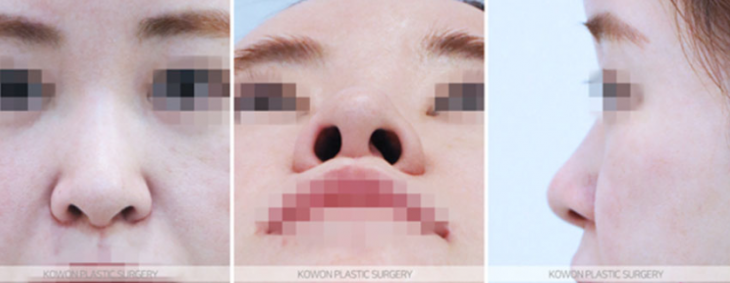 This image was used with the model’s consent.
This woman had previously undergone a method of tip surgery known as tip cartilage binding, so the problems of severe tip retraction or spreading were not significant. However, looking at the overall structure, there was left-right asymmetry, and because the bridge was low, the area between the eyebrows appeared sunken from the front.
This type of shape is relatively common in female rhinoplasty.
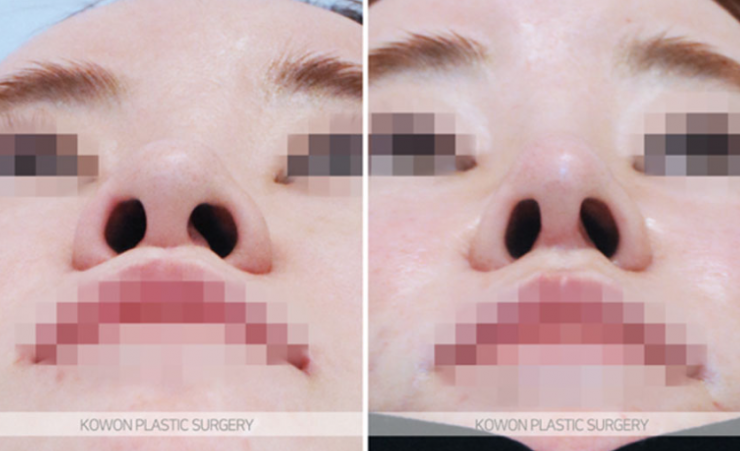 This image was used with the model’s consent.
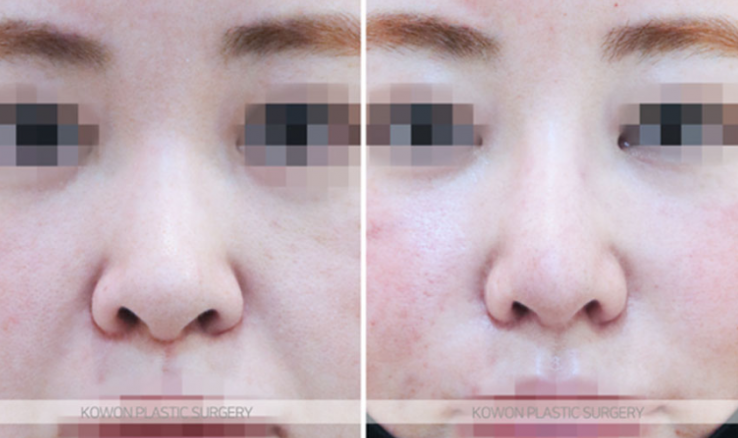
Looking at the before-and-after photos compared below for autologous rib cartilage rhinoplasty, you can see that the wide and rounded nostrils were refined, and as the low and blunt tip was lifted, the overall image became sharper.
This kind of change is one of the characteristics that can appear when tip surgery and autologous rib material are used together.
 This image was used with the model’s consent.
In this case, the patient did not want to use an implant, so instead of silicone, a method using rib particles and rib cartilage was chosen. This is also an approach often considered by people looking for a place that specializes in revision nose surgery.
Rib particles have a relatively low absorption rate, so the shape is easier to predict, and because there is little change over time, they are sometimes used as an alternative material in female rhinoplasty.
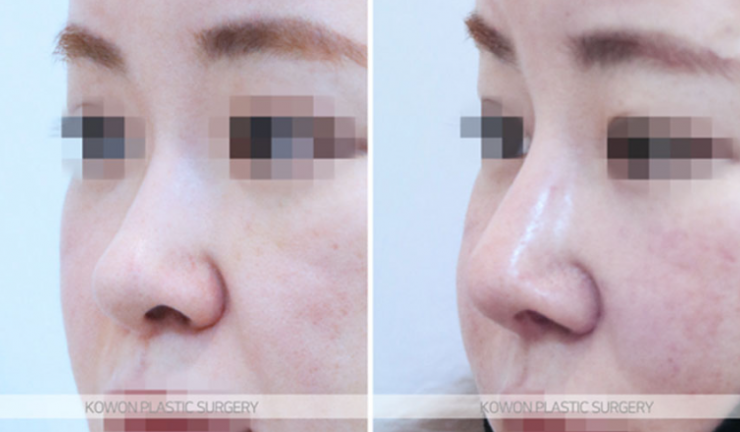
 This image was used with the model’s consent.
To supplement the part where the previous tip cartilage binding had not been sufficiently effective, the nose was reopened, the cartilage was refined, and the position and structure were stably reshaped through tip surgery.
Because it is important for the nostrils to form a natural oval shape, the form was adjusted based on that standard.
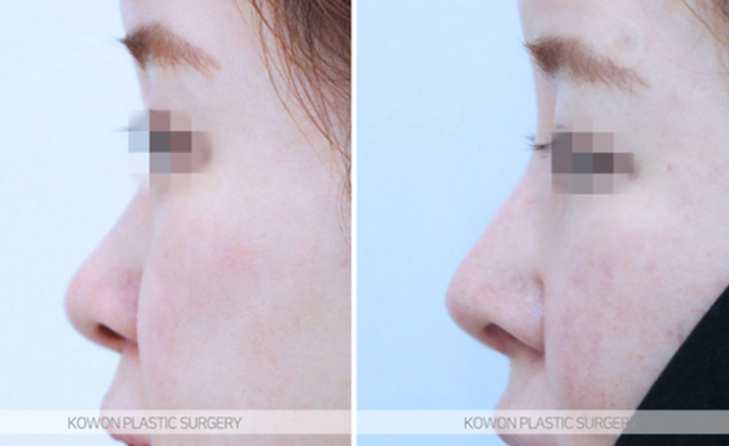
 This image was used with the model’s consent.
For the bridge, autologous rib particles were used instead of silicone, and for the tip, a supporting structure was built with rib cartilage. Since this is immediately after autologous rib cartilage rhinoplasty, some swelling remains, but the overall line looks soft and stable.
This design process is also an important point for people looking for a place that specializes in revision nose surgery.
 This image was used with the model’s consent.
The impression of the mouth looking relatively protruded due to the low bridge was also eased. This concludes our look at nose surgery after double jaw surgery and cases of autologous rib cartilage rhinoplasty.
When considering female rhinoplasty or revision surgery, it is important to carefully analyze the current structure and set a direction that takes balance into account.