
Because a wide alar base or a shape where the nostrils are highly visible can affect facial impression, many people worry about it. In particular, if the nose appears upturned or the alar base looks spread out, it can give the impression that the nose looks larger.
For this reason, many people look for ways to refine the alar base or want to reduce nostril exposure. In this post, we will look at improving the alar shape along with the changes before and after alar reduction surgery.

Q.
I am currently looking into nostril reduction surgery. When I look at photos, the alar base seems lifted upward and the alar wings also appear to spread out, so I want to improve that. I have consulted several places, and I was told that in my case, if the surgery is done with an external incision method, it may leave noticeable marks or make the nostrils look unnatural, so it is not recommended. But this has been a long-standing complex for me since childhood, so I am very worried.
Is there a way to improve nostril exposure in a case like mine? (It does not have to be exactly like the photo, but I would like it to be refined somewhat naturally.) I want the nostril exposure to be reduced a little and the upturned-nose feeling to be eased. I was told the external incision method leaves very noticeable marks, so I am also considering a method that makes an incision at the trapezoid-shaped area I marked—would that look unnatural? Also, I am worried that after nostril reduction surgery, the philtrum may look longer.
From what I have found, I heard that the internal incision method is not very effective. I would like to know whether the effect is truly so small that it is barely noticeable. Please answer these three questions.
A.
In your case, it seems you are considering a nasal width reduction approach to reduce the part where the alar base appears wide. In actual before-and-after cases of alar reduction surgery, there are examples where reducing the alar width also eases nostril exposure. However, the results can vary depending on the structure and skin thickness.
The trapezoid-shaped incision method mentioned in your question is also one of the methods described in nasal width reduction surgery. In general, when looking at before-and-after results of alar reduction surgery, there are many cases where the philtrum does not appear significantly longer. However, because the impression can change depending on the individual nasal structure, the preoperative design process is important.
The internal incision method can also be effective within a certain range. In before-and-after cases of alar reduction surgery, there are also examples where the alar width is refined with internal incision alone. Of course, the amount of reduction can vary depending on the structure of the alar base, but as seen in before-and-after results, if applied appropriately, it can also produce a natural change.
 This image was used with the model’s consent.
This is a case in which nasal width reduction was performed to refine an alar base that looked widely spread. In this post, we will compare the before-and-after photos and look mainly at what changes occurred during the process.
 This image was used with the model’s consent.
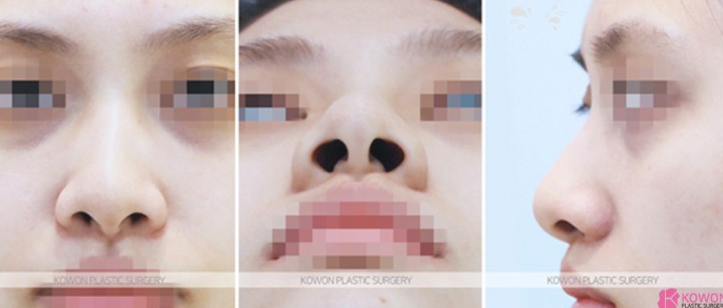
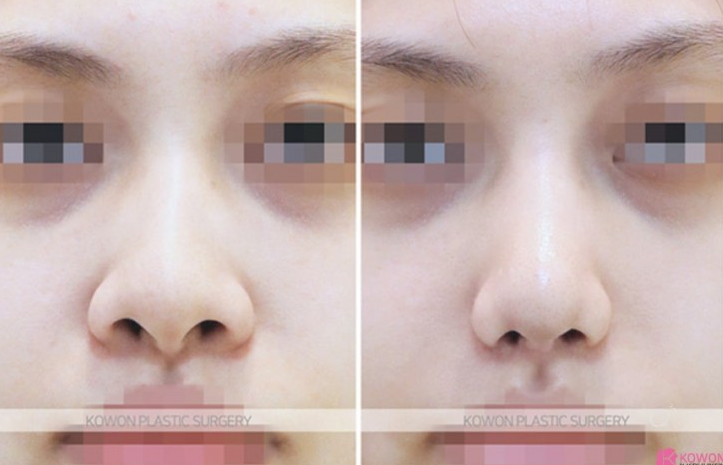
When viewed from the front, the alar wings were spread widely to both sides, and the nasal tip cartilage was also separated, making the nose look larger overall and giving a dull impression. The shape of the nostrils was also relatively noticeable, and there was a slight crooked appearance as well, which had been a source of concern. Because of these structural features, nasal width reduction was considered.
 This image was used with the model’s consent.
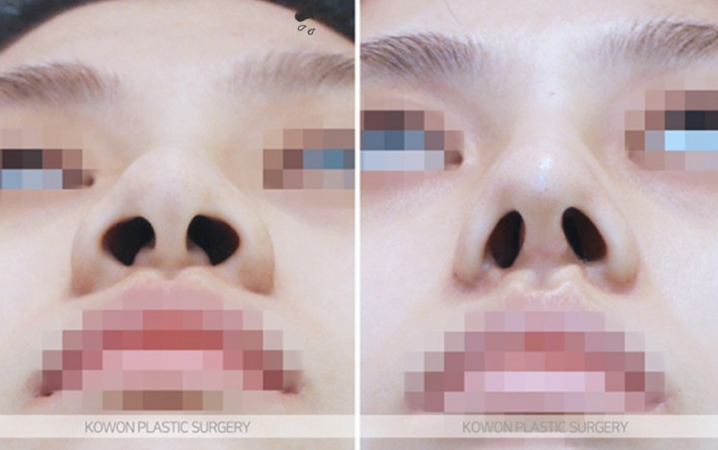
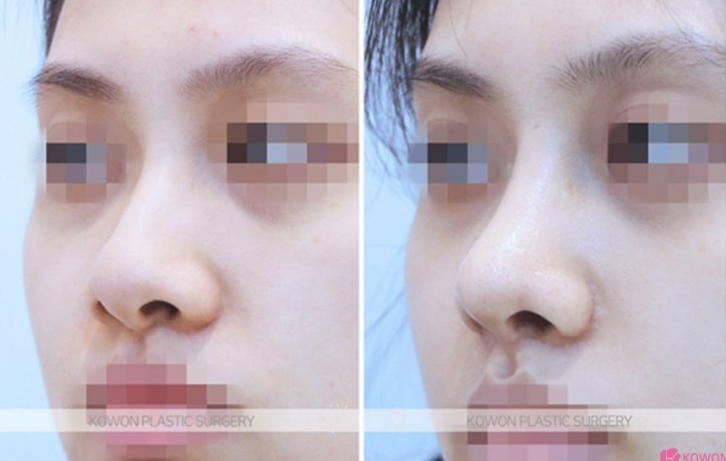
This is a before-and-after comparison photo taken from below. The left side shows the pre-surgery appearance, and the right side shows the post-surgery appearance, with the nasal tip cartilage refined and the alar base adjusted so the change can be seen together. When viewed from below, the difference in the nose shape is relatively clear.
 This image was used with the model’s consent.
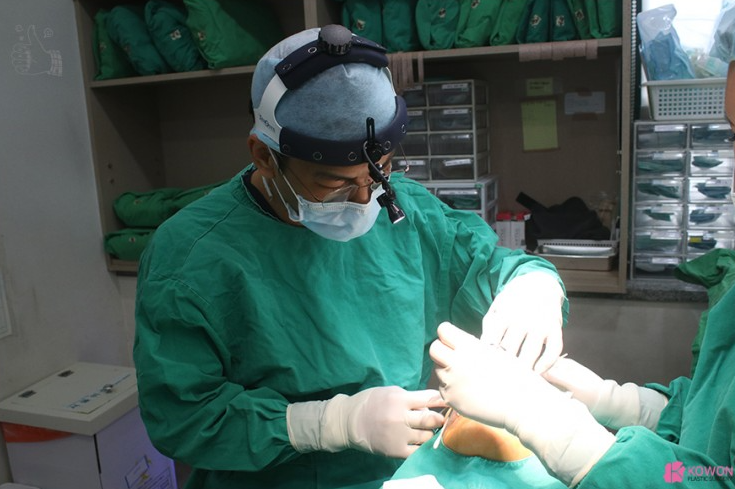
The broadly spread nasal tip was refined into a more neat and sharper shape. The nostril shape also became more balanced than before, and the impression changed from flat and dull to a clearer look. Another feature is that the somewhat strong-looking image from before changed into a softer impression.
 This image was used with the model’s consent.
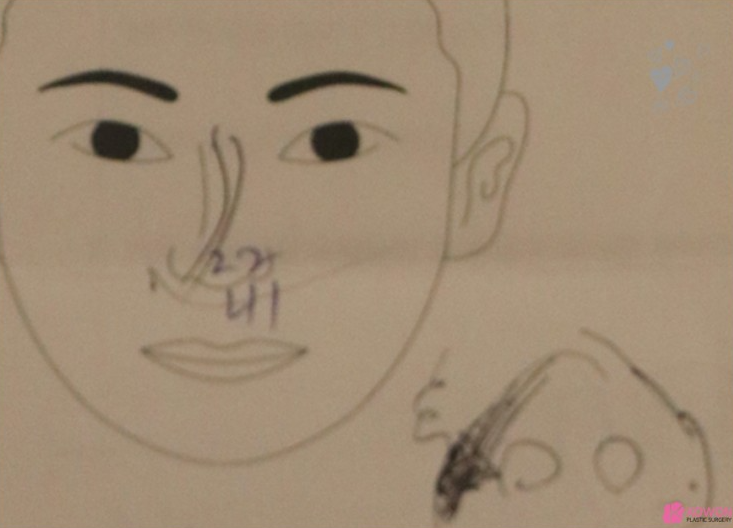
The alar shape was finely adjusted through an external incision to achieve balance. Along with reducing the alar base, the muscle that pulls the nasal tip downward was also refined so that the overall nose line would connect more naturally.
 This image was used with the model’s consent.
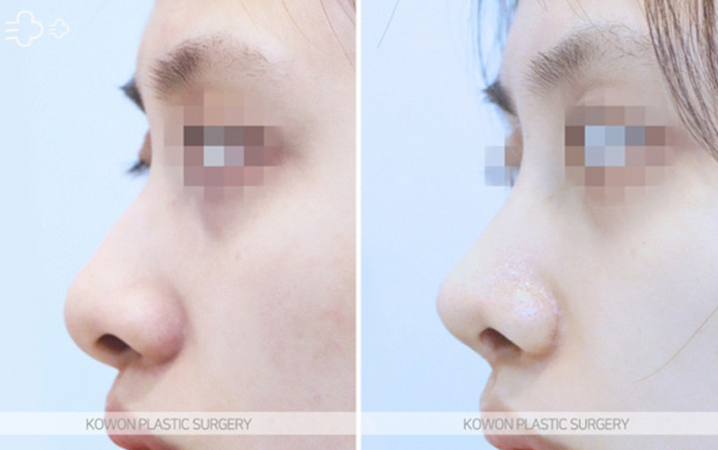
In side-view photos, people often worry about marks after an external incision, but if the design is made to blend naturally with the crease beside the nose, there are cases where the change does not stand out much.
 This image was used with the model’s consent.
By using septal cartilage to reinforce the nasal tip and performing nasal width reduction at the same time, the nasal tip was refined into a shape that is higher and more gathered. The mild hump on the bridge was gently smoothed so that the overall line would flow more smoothly, and as a result, the face gained more dimension.
 This image was used with the model’s consent.
When viewed from the front, you can see that the nostril shape that had been noticeable before has been refined into a more balanced appearance. This concludes the case review focusing on the process of refining the nasal tip cartilage and adjusting the alar base.
A post worth referencing for concerns about alar reduction
"Q. Before-and-after changes in bulbous nose surgery and whether it is possible to undergo nose surgery without an implant."