Is it swelling or blood accumulation after rhinoplasty? Checking whether revision surgery is needed

The changes that appear soon after nose surgery can feel much bigger than expected. In particular, swelling and a firm feeling can be confusing because it is easy to wonder whether they are part of the natural healing process.
Understanding the recovery process properly is important for reducing anxiety. In this post, I will briefly organize what to check along with the rhinoplasty recovery period.

Q.
It has been about ten days since I had nose surgery. The problem is that the area from my forehead and glabella down to my nose is swollen and feels hard overall, so it looks like an “avatar nose.” During surgery, 4.5 mm of Gore-Tex was used for the nasal bridge, and the rest was done with septal cartilage.
I heard that swelling after rhinoplasty goes down with time, but when I touch it, it feels less like simple swelling and more like blood has pooled inside, so I’m worried. Personally, I’m also anxious because it feels like this may not be a normal part of rhinoplasty recovery, but rather a problem.
The current condition is causing me a lot of stress, so I am even considering nasal bridge revision surgery. I want to lower the Gore-Tex position a little, and I’m wondering when revision surgery on the nasal bridge would be possible.
A.
If about 10 days have passed since surgery, you are still in the rhinoplasty recovery period, and it is natural for swelling to remain. In some cases, blood accumulation and similar changes may also occur together, making the swelling feel even firmer. These can also be one of the changes seen during the rhinoplasty recovery period.
In particular, if the material used is relatively thick, the area between the eyes and brows may still look somewhat puffy even after the swelling goes down. In the case of nasal bridge revision surgery, it is generally often considered after enough rhinoplasty recovery time has passed, usually around 6 months later. However, if the condition is severe enough to cause major discomfort in daily life, adjustment may sometimes be done earlier.
At this point, it is still too early to judge the result, so it is necessary to first watch the changes in swelling. After that, whether to proceed with nasal bridge revision surgery should be decided carefully after thoroughly checking the condition.
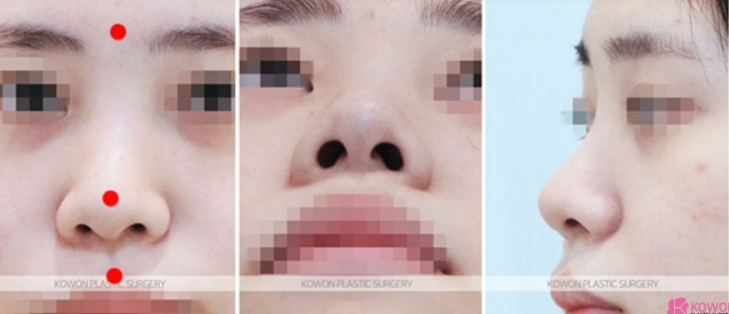 This image was used with the model’s consent.
Looking at the photo, you can see that the marked points are not aligned in a straight line and are偏 toward one side. This means the nose is tilted in a particular direction. In such cases, septal extension surgery is often considered along with bulbous nose surgery.
Because the nasal tip is short and broad, the soft tissue is first refined, and then septal extension surgery is used to adjust the length and direction of the nasal tip. In particular, the widening of the nose caused by nose filler spreading made the nasal tip look even broader.
 This image was used with the model’s consent.
Previously, filler had been used to compensate for a low nasal bridge, and later the person decided to plan nose revision surgery to improve the shape. When height is supplemented with filler, it can sometimes create a broader impression, like a bulbous nose.
In such cases, it is necessary to first clear out the filler before proceeding with revision surgery. In general, if nose revision surgery is performed after removing the filler, a more stable shape can be expected.
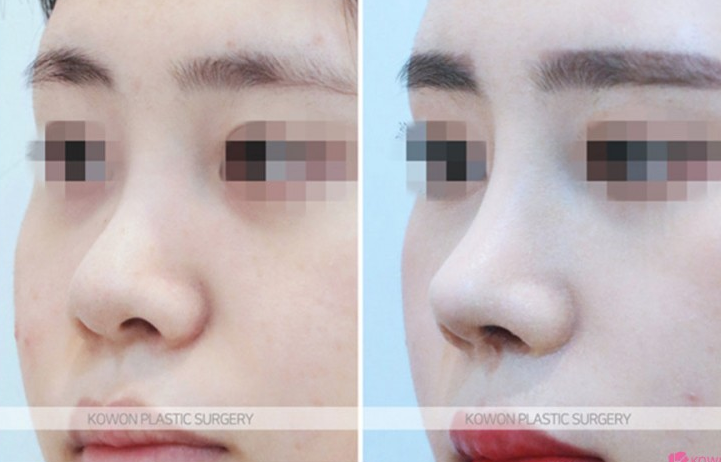 This image was used with the model’s consent.
Next is a before-and-after comparison of the surgery. The photo on the right shows the condition about 2 weeks after surgery. The short nasal tip was adjusted in length and direction through septal extension surgery, and the nasolabial angle was also improved.
As part of the bulbous nose surgery performed after clearing the filler, the nose-filler spreading was eased, and the facial three-dimensionality became more defined.
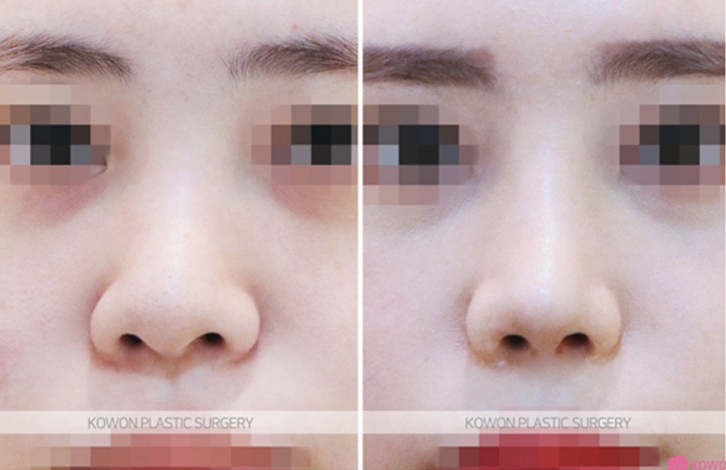 This image was used with the model’s consent.
From the front, you can also see that the nose line, which previously looked偏, has been organized more stably. This change is a characteristic result of performing bulbous nose surgery together with structural correction.
However, since the structure of the nose can change over time, it is important to observe the healing period for a certain length of time even after revision surgery.
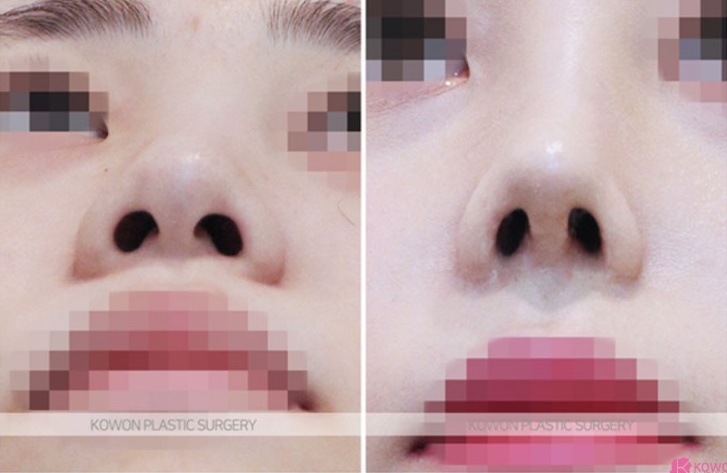 This image was used with the model’s consent.
Changes can also be seen from the bottom view. After surgery, the shape of the nostrils was organized more evenly, and the nose-filler spreading was also eased.
As a result, the overall nose line became more refined, creating a clearer impression. These changes are often seen when the nasal tip structure is stably supported through septal extension surgery.
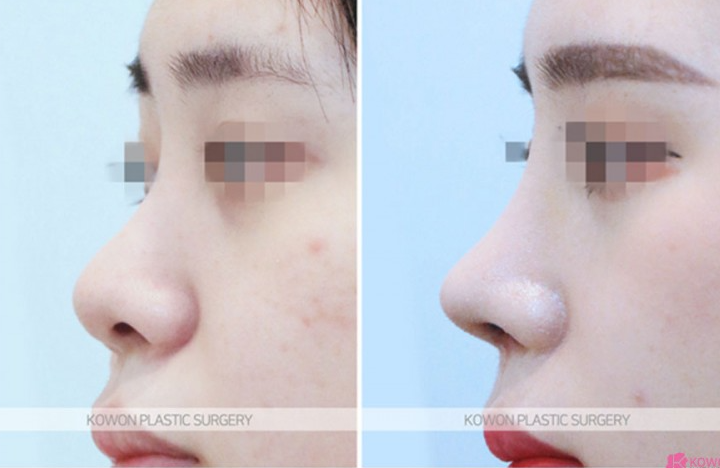 This image was used with the model’s consent.
Finally, here is a side-view before-and-after comparison. In the course of revision surgery performed after clearing the filler, the short septal structure was improved, and the nasal tip line also changed into a more refined shape.
By applying bulbous nose surgery and septal extension surgery together, the overall nose shape was balanced more harmoniously, and you can see that the facial impression also became softer than before.
A post worth 참고ing for rhinoplasty concerns
"Q. Concerns one week after nose surgery: swelling changes and silicone removal".