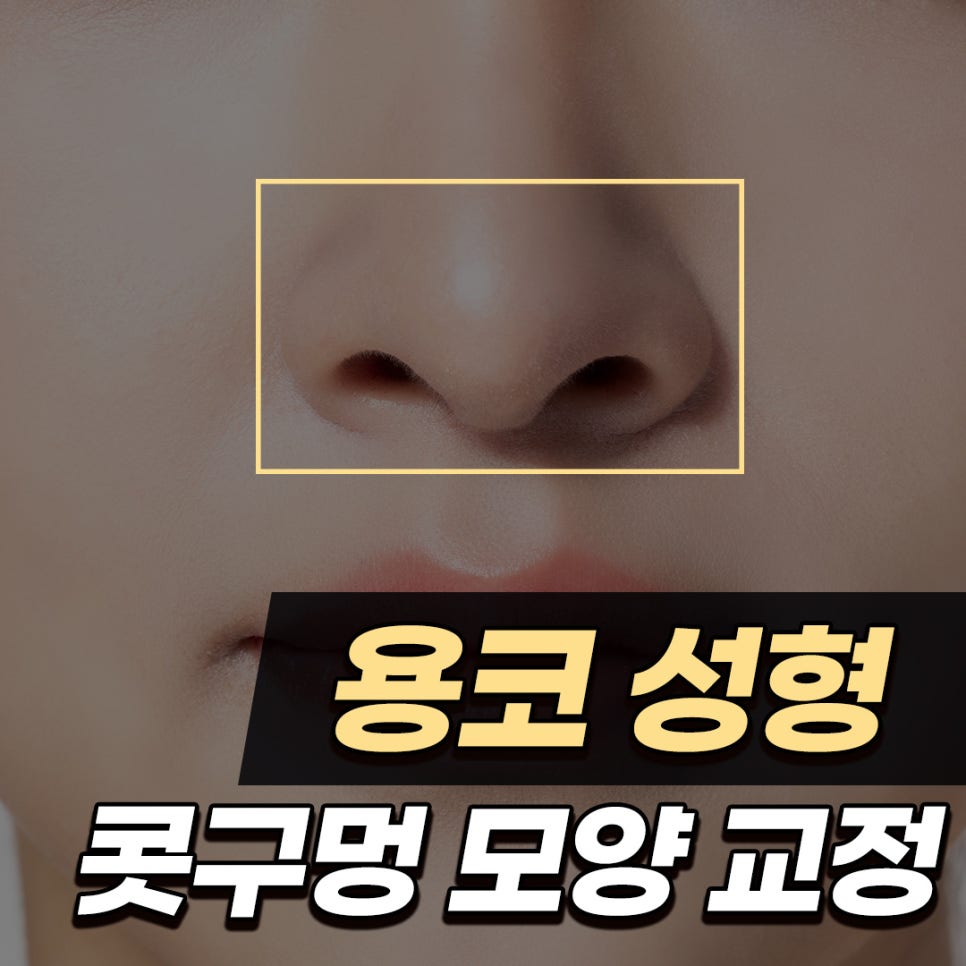
After nose surgery, the frontal view may sometimes feel different from what was expected. In particular, the shape of the nostrils can stand out significantly even with small differences.
At this stage, it can be difficult to tell whether the change is part of the healing process or a problem, which can make the concern grow. In this post, I’ll briefly organize the criteria to check when you are considering this type of nose surgery.

Q.
It has been about 3 weeks since I had nose surgery. I’m satisfied with the other parts, but the frontal view feels awkward.
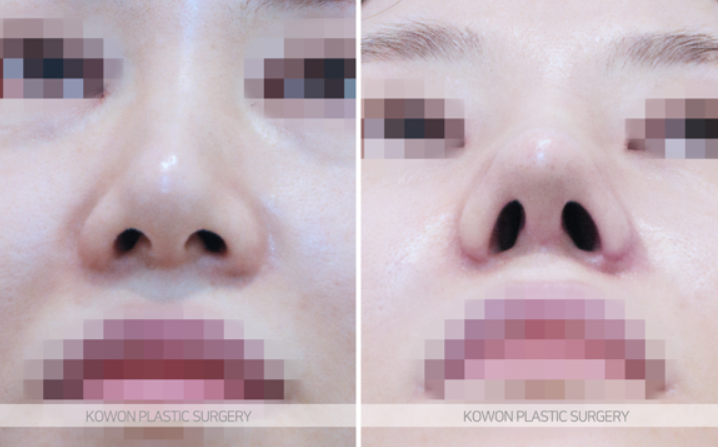
I’m not sure of the exact cause, but the nostril shape is what I’m most concerned about, and overall it feels like it looks like an animal nose, which is stressful. I’m wondering whether I’m in a state that commonly calls for alar base surgery. When viewed from below, the nostril shape also seems pronounced, and because it looks indented toward the philtrum, I feel like it stands out even more.
Alar correction has already been performed together, and I plan to look at the condition again at the next follow-up. Still, I’m curious whether this is a situation where alar base surgery should be considered. I’d also like to know whether nostril-width adjustment is possible using a trapezoid-shaped incision rather than a typical incision method. I also want to know whether this kind of approach can affect the ratio around the philtrum.
If this condition is actually not a major issue and I’m worrying too much, I’d like to know that honestly as well.
A.
As you mentioned in your question, there is a real method in which a specific area is excised and sutured to adjust the width of the nose, and it is often performed in the direction of reducing nasal width. This kind of approach is sometimes also linked to concerns about alar base surgery. However, based on the current condition, it is worth carefully considering whether alar base surgery is truly necessary.
Even when the nose itself does not look particularly awkward, the frontal impression or nostril shape can temporarily feel exaggerated, and at this stage it is important to observe the healing process rather than deciding on alar base surgery right away. Especially at around 3 weeks after surgery, the tissue is still settling, so the nostril shape or angle may still change naturally over time.
The incision method you mentioned can also be applied, but it is necessary to think carefully about whether the change expected from surgery will match the actual result. Therefore, at this stage, it is preferable not to decide immediately whether to have surgery, but to observe the changes while checking progress at around one month. After that, it is better to consider additional correction only if needed.
#Kowon Plastic Surgery
This image was used with the model’s consent.
In this post, we will look at the change process centered on a case involving concerns about bulbous nose. In this case, the expectations were relatively high, and among people who come in for consultations to improve a bulbous nose, there are quite a few who think the nose will become very small and sharp after surgery.
However, in reality, changes are made based on the person’s existing underlying condition, so it is important to first understand that it is difficult to completely transform it into a different shape.
This image was used with the model’s consent.
In particular, when considering bulbous nose surgery, the skin is often thick or there is a lot of soft tissue, so there are limits to how much it can be changed into a very thin and small shape.
In this case as well, looking at the preoperative photo, you can see the thickness of the skin and the amount of tissue in the nasal tip area.
This image was used with the model’s consent.
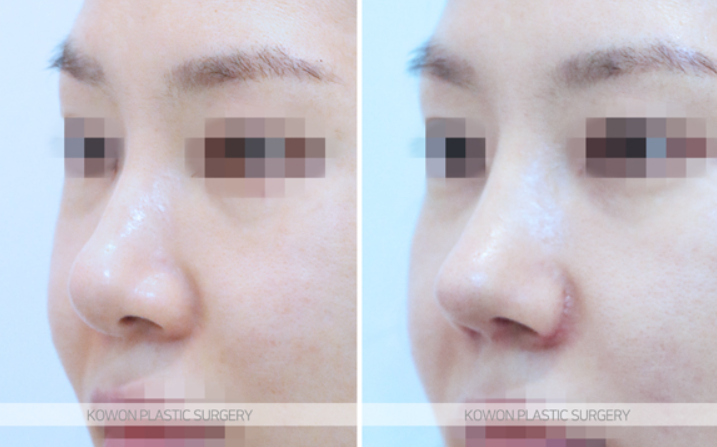
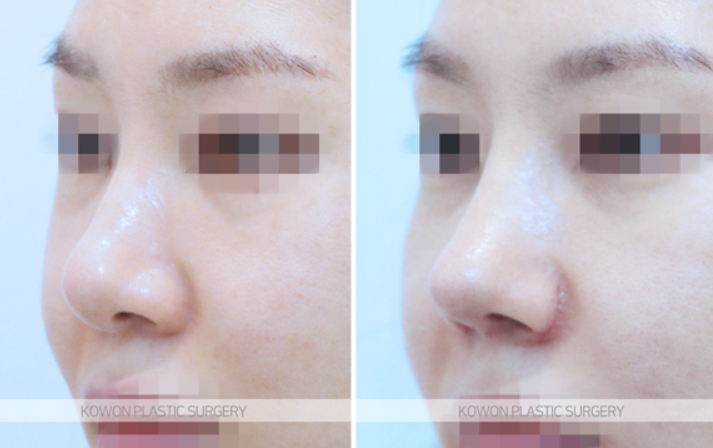
This is a 45-degree photo taken about 2 weeks after surgery. The bluntness of the nasal tip has been softened, and overall you can see that the tip has been refined.
However, because it is still the early recovery stage, the marks at the area where the alar sides were adjusted are still relatively visible.
Previous image
Next image
This image was used with the model’s consent.
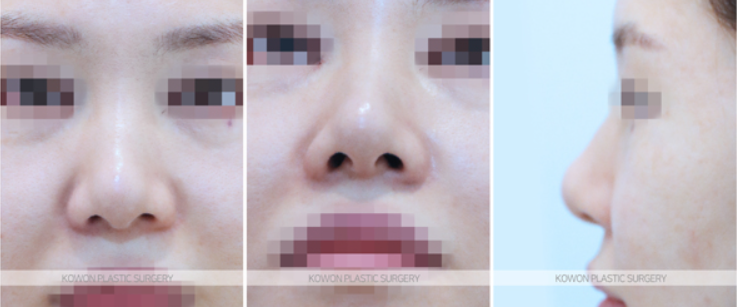
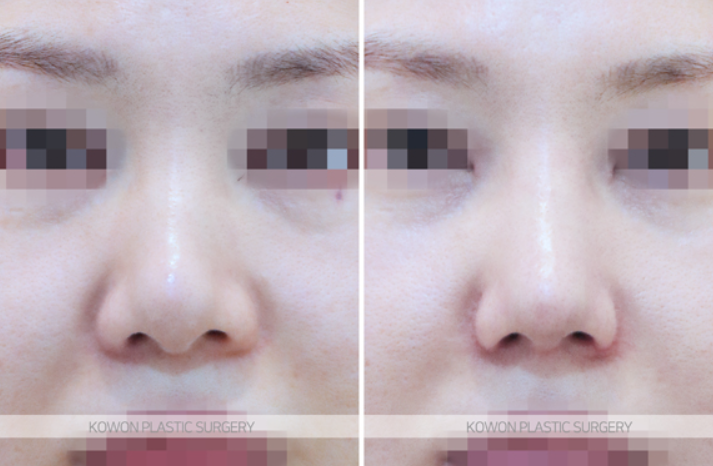
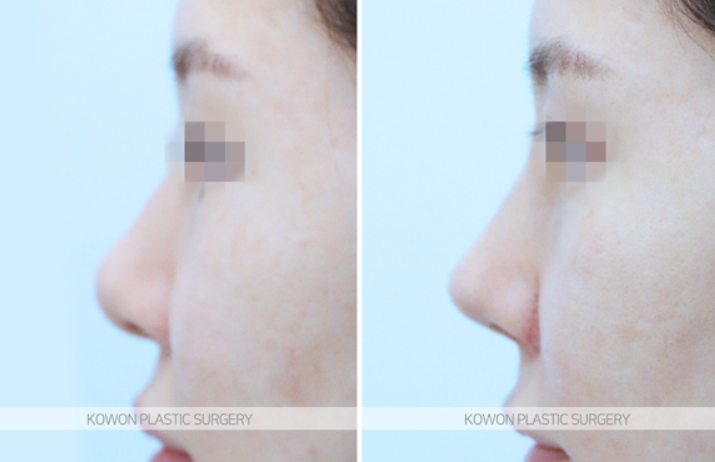
Overall, you can see that the nose has become smaller and has changed into a more refined line. However, compared with a naturally small nose, it does not change to the same extent, and rather than setting an unrealistic goal, it is important to plan in a way that harmonizes with your own face.
In fact, excessive change can instead harm the overall balance and harmony, so it is preferable to approach it within a natural range.