Let's take a look at the change process for a bulbous and crooked nose together

If the nasal tip appears broad or the center is misaligned, it can be difficult to expect satisfactory results from a simple change in height alone. In such cases, it is important to consider alar reduction and cartilage suturing together to create structural balance.
In particular, adjusting the volume and direction of the nasal tip at the same time helps the overall impression look more naturally refined. In this post, we will look at the flow of changes with a focus on the alar reduction process.
Hello, I’m Dr. Kim Hyung-taek from Kowon Plastic Surgery.
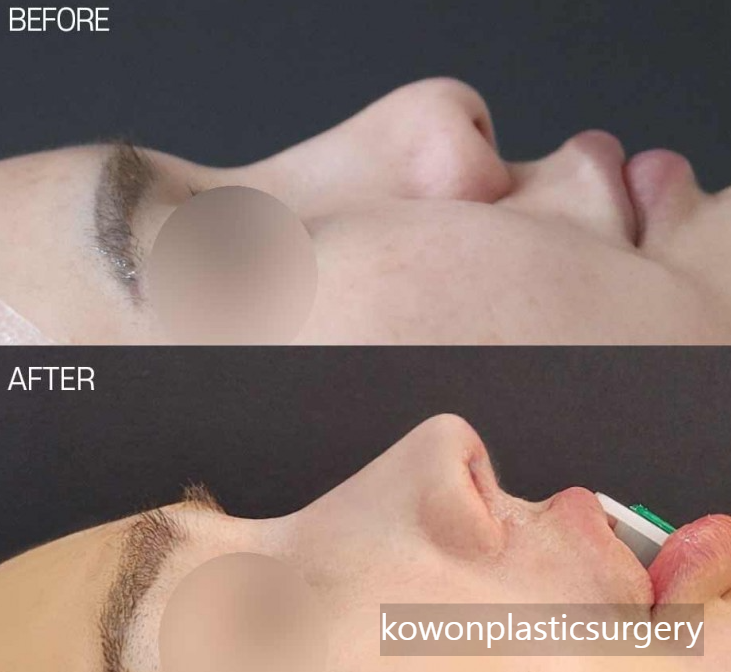
This case involved a bulbous nose that looked broad, along with a crooked nose in which the nasal bridge was偏向 one side, and overall it had asymmetry with a nasal tip that looked wide and blunt. In this kind of structure, it is important to straighten the center and balance the nasal tip and nasal bridge at the same time rather than simply adjusting the height.
The broad bulbous tip was refined by organizing the soft tissue at the nasal tip and shaping it through cartilage suturing, while alar reduction was performed at the same time to reduce the overall width and create a more neat impression. By applying alar reduction and cartilage suturing together, the volume of the broad, blunt-looking nasal tip was reduced, and the center of the crooked bridge was corrected to improve overall balance.
The volume and left-right balance of the nasal tip were finely adjusted, and the bridge line was aligned with the facial midline to create a stable flow in both frontal and side views. In addition, during the alar reduction and cartilage suturing process, the connection among the columella, nasolabial angle, and philtrum line was also considered so that it would sit naturally at the center. Since there had been a previous nose surgery using threads, residual threads were removed while revision nose surgery was performed to improve structural stability.

Immediately after surgery is the stage before swelling fully develops, and it is a point at which the line of the bridge and nasal tip formed through alar reduction and cartilage suturing, as well as the overall structure, can be seen relatively clearly. In the early stage, the flow of the lines and structural changes appear distinctly, and then gradually settle into a softer form during recovery.
The overall change was carried out in a direction that preserved naturalness while emphasizing detail, and the result of balancing the nose through alar reduction and cartilage suturing becomes more stable over time. Since the before-and-after results of nose surgery can vary depending on the individual's skin condition and structure, it is important to check the final shape after 충분한 recovery time.
 This image was used with the model’s consent.
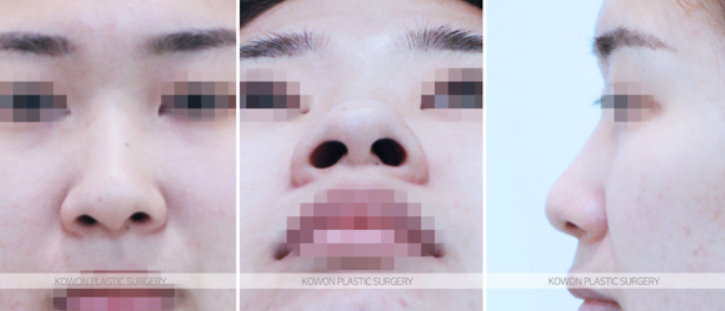
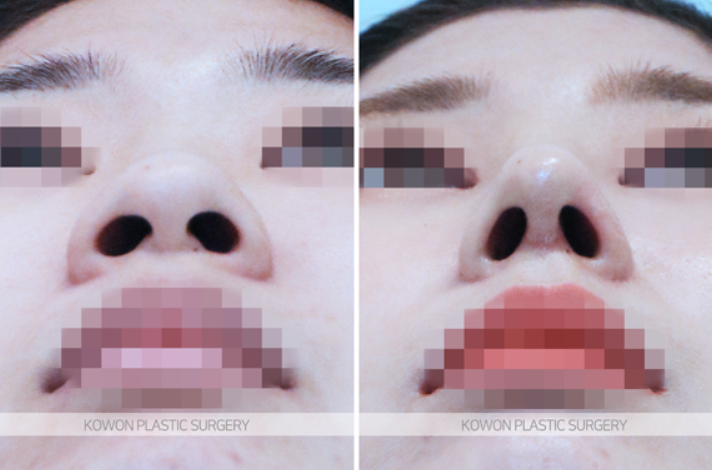
The nasal tip cartilage is spread out, and in the photo taken from below, you can see the nostrils opening outward as if lying to the left and right. Since this was a case where a natural change was desired, the nasal tip was refined through cartilage suturing while gently supplementing the height.
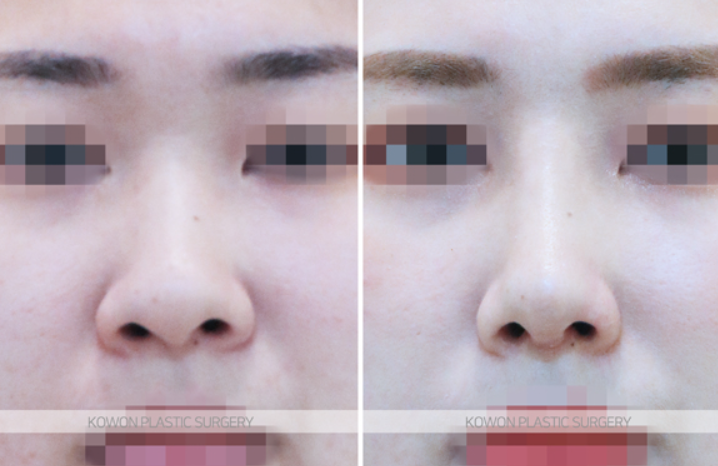
In the frontal photo, the low nasal bridge is not very noticeable, but the septum is observed to be偏向 one side. This can be seen as a mild form of septal deviation, and it needs to be adjusted together during the surgical process. When the nasal bridge is low, it may not stand out much, but once height is created, the crooked part may appear more pronounced.
 This image was used with the model’s consent.
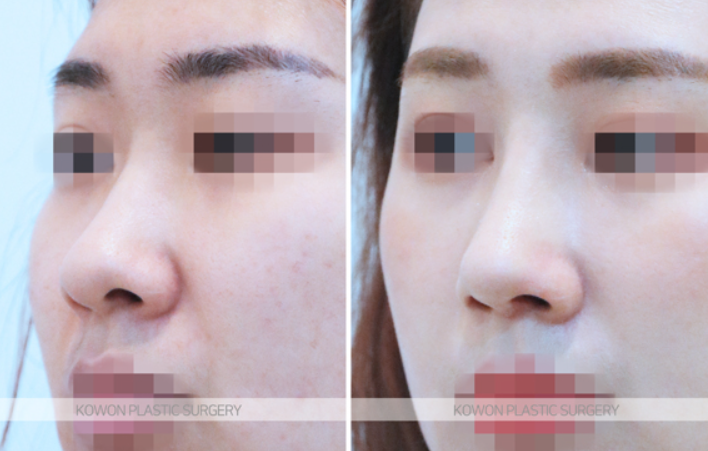
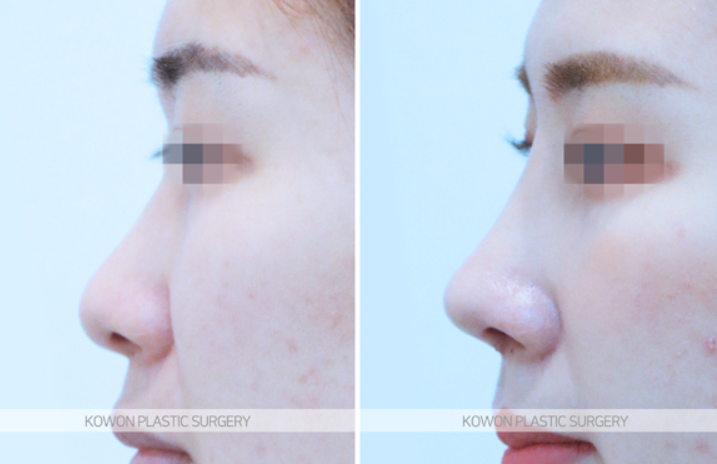
For the nasal bridge, a silicone implant of about 4 mm was used to achieve a natural height without overdoing it. Because the nose was small and low, septal cartilage alone was not sufficient for reinforcement, so ear cartilage was additionally used to support the structure.
 This image was used with the model’s consent.
In addition to the spread-out nasal tip cartilage, the alar area was also broadly widened left and right, so non-incisional alar reduction was performed as well.
 This image was used with the model’s consent.
Comparing the front view, you can see that the broad-looking nose has been more neatly refined and changed into a slimmer impression.
 This image was used with the model’s consent.
In general, when improving a bulbous nose, many people think that alar reduction must always be performed, but depending on the situation, there are cases in which cartilage suturing alone can sufficiently improve it.
However, some people worry that alar reduction may make smiling expressions look awkward or leave marks on the alar area. In addition to incisional methods, there are non-incisional methods that can reduce the 부담. Also, even when an incisional method is chosen, there are many cases where the result is finished naturally depending on the design, so there is no need to worry too much.
A post worth referring to for concerns about a bulbous nose
"A Natural Nose Line Improvement Process Seen Through Before-and-After Changes from Nasal Tip Cartilage Suturing."