It is important to understand the swelling period after nose surgery by separating the stage where the initial shape can be checked from the point at which the result looks naturally complete. Right after surgery, the line appears more defined, and then it gradually settles into a softer shape. In general, daily life is possible in 2 to 3 weeks, and the nose naturally settles over 1 to 3 months.

Q. What is the condition right after nose surgery?
A. Right after surgery is the stage before swelling fully develops, when the bridge line, tip line, and overall structure can be seen relatively clearly. At this time, the changed shape is distinctly visible, and as the nose surgery swelling period passes, it gradually settles into a softer appearance.
Q. How do changes progress during the nose surgery swelling period?
A. At Kone Plastic Surgery, the focus is on a natural flow while also considering the continuity of the lines and the details. In the beginning, the lines may look sharp, but as time passes and the tissue stabilizes, the nose gradually takes on a natural finished look during the nose surgery swelling period.
Q. How long is the recovery period?
1st week: Swelling appears and the shape may look quite defined
2 to 3 weeks: Swelling subsides and daily life becomes possible
1 to 3 months: The tissue stabilizes and settles into a natural shape
Q. When can the final result be seen?
A. Results before and after nose surgery may vary depending on the individual's skin condition and structure, and it is appropriate to check them after 충분한 recovery time. In particular, once the nose surgery swelling period has passed and the tissue has stabilized, a more natural shape can be seen.
The nose surgery swelling period is a stage where it is easy to check the lines at first, and over time it is gradually refined into a natural shape.
 This image was used with the model's consent.
Hello, I am Director Kim Hyung-taek of Kone Plastic Surgery.
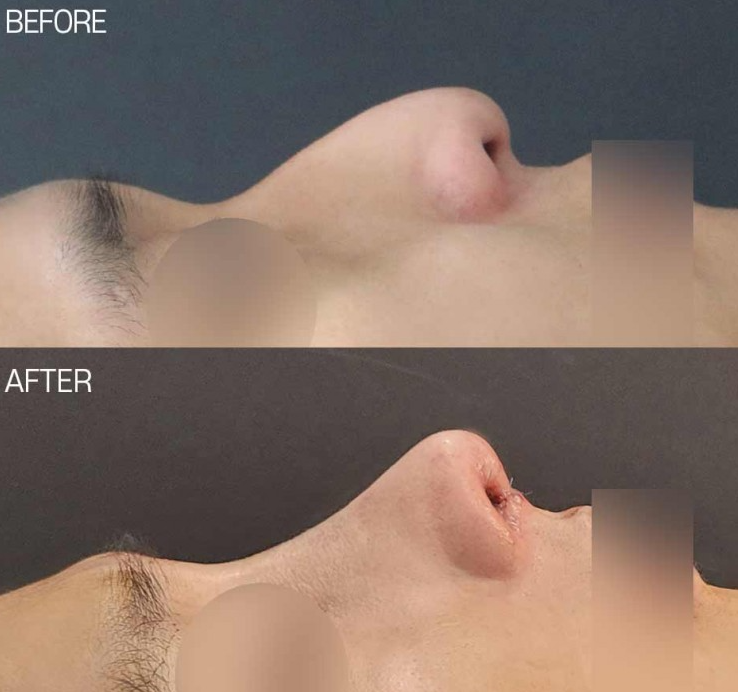
This case involved a man's nose with a protruding hump and an uneven bridge line that created a strong impression. In addition, the tip was pointing downward, giving the face a somewhat heavy and older look.
In such cases, simply smoothing the hump area alone is not enough; it is important to adjust both the overall bridge flow and the direction of the tip. By refining the hump area to gently correct the irregular bridge line, we designed the nose so that, while reflecting the characteristics of a man's nose, a straight-centered line would connect naturally without being excessive.
Overall, we based it on a straight nose shape, but we balanced it so that a slight soft curve would feel natural to match the requested image. By adjusting the height and angle of the tip together, we softened the strong impression while also considering the overall proportions so that the masculine image could be maintained.
We also adjusted the connection of the columella, nasolabial angle, and philtrum line together so that, from the side as well, the flow from the bridge to the tip would connect naturally.
See the director's blog with more surgery records
 This image was used with the model's consent.
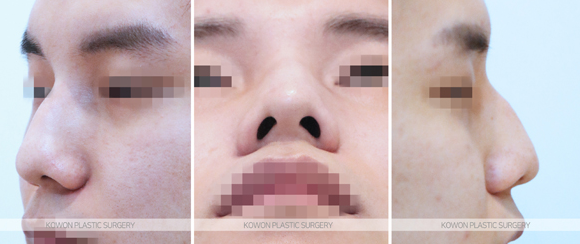
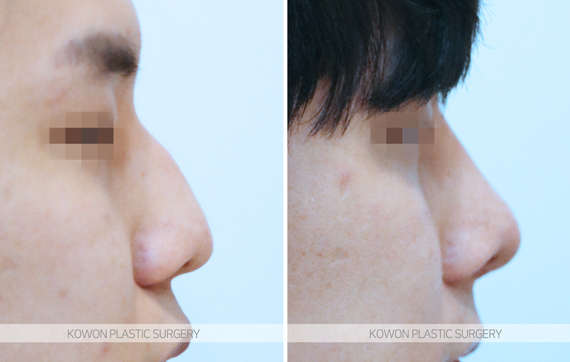
The protruding hump area was corrected with osteotomy to remove the raised section, and the bridge, which had looked wide, was narrowed through osteotomy to refine the overall line. In addition, the tip height was adjusted using the septum to improve balance.
 This image was used with the model's consent.
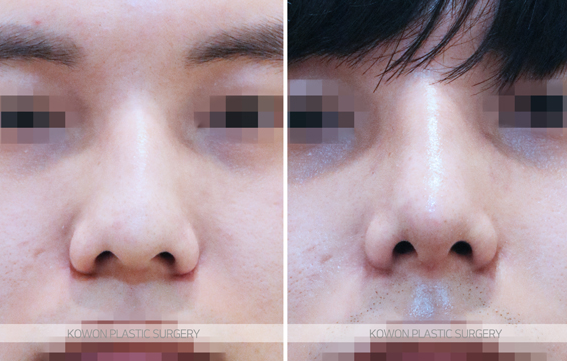
From the front, you can see that the nasal bone line seems to lean to one side overall. In such cases, correction is performed within a possible range, but because some return over time may occur, sufficient explanation beforehand is necessary.
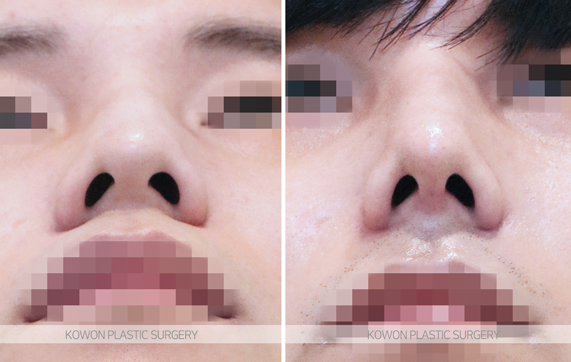
From the bottom view, the same direction of curvature can also be seen, and in fact the degree of deviation is relatively significant.
 This image was used with the model's consent.
After correction, the previously visible curved flow can be seen to have been significantly softened overall.
 This image was used with the model's consent.
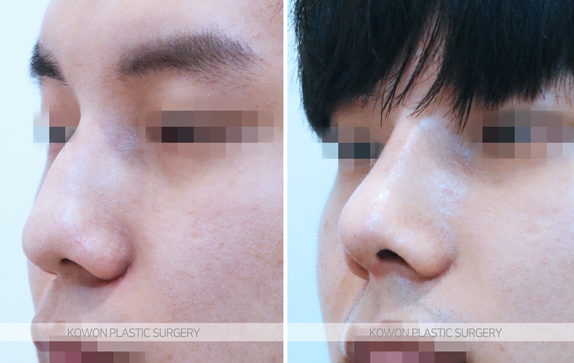
From a 45-degree angle, you can see that the direction of the downward-pointing tip has been adjusted, resulting in a more refined overall impression.
 This image was used with the model's consent.
As the protruding hump on the bridge was refined, you can see that the overall line now connects more smoothly.