Crooked nose surgery needs to address both the bridge center and the nose tip structure for the changes to appear naturally. When a bulbous nose and asymmetry are present at the same time, the overall line becomes clearer and the change in impression is more noticeable. Recovery generally allows daily life in about 2 to 3 weeks, with stable settling over 1 to 3 months.
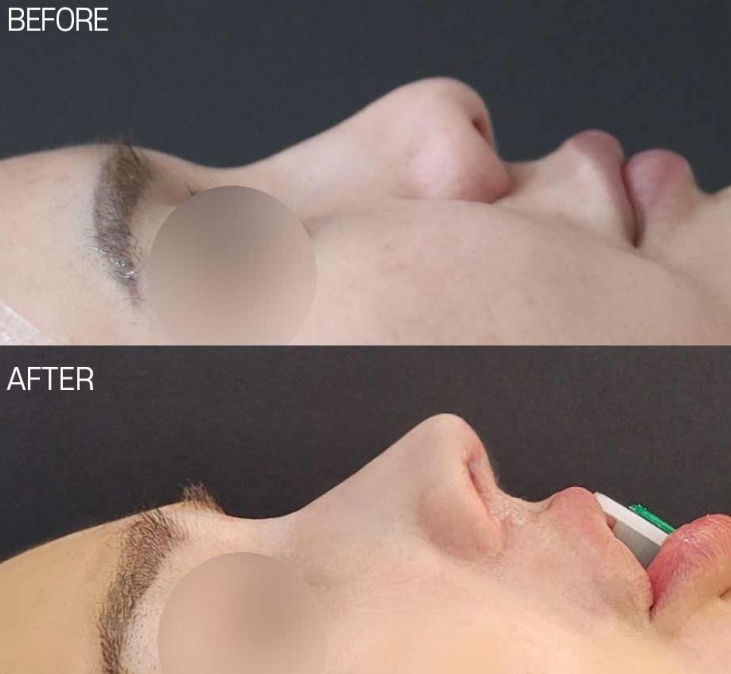 This image was used with the model’s consent.
Hello, I’m Dr. Kim Hyung-taek of Kwonwon Plastic Surgery Clinic.
This case involved a bulbous nose that looked spread out, along with a bridge that appeared shifted to one side. Overall, the left-right balance was uneven, and the nose tip looked wide and blunt. Since this structure has limitations if only the tip is refined or only the height is adjusted, crooked nose surgery requires a process that corrects the center and balances the nose tip and bridge together.
The spread-out nose tip was shaped by organizing the surrounding tissue and bringing the cartilage together, while also creating a supportive structure at the tip to add stability. Through this, the volume that made the tip look wide and blunt was reduced, and the center of the bridge was corrected during the crooked nose surgery process to organize the overall proportions.
The volume and left-right balance of the nose tip were adjusted in detail, and the bridge line was aligned with the facial center line so that a stable flow could be maintained from both the front and the side.
In addition, the connection of the columella, nasolabial angle, and philtrum line was also considered so that the nose would sit naturally at the center of the face. Since there was a previous history of a thread-based procedure, the surgery was performed together with revision surgery while also removing the remaining threads.
 Q. Why is correction needed when a bulbous nose and a crooked nose are present together?
A. When the nose tip is spread out and the bridge is shifted to one side, it is difficult to achieve balance by adjusting only one part. If the center line is off, the flow of the nose tip and bridge is mismatched, so an approach that organizes the overall structure together is important.
Q. How is crooked nose surgery performed?
A. Crooked nose surgery is performed by correcting the center of the bridge while also organizing the nose tip structure. The spread-out nose tip is shaped by organizing the tissue and bringing the cartilage together, and at the same time a supporting structure is formed so that the shape can remain stable.
Q. How is bulbous nose improvement achieved?
A. A nose tip that looks wide and blunt is approached by organizing unnecessary tissue and bringing the cartilage together to reduce volume. Through this, the nose tip changes into a more refined shape, creating a line that connects naturally with the bridge.
Q. How is asymmetry corrected?
A. The bridge line is aligned with the facial center line, and the left-right balance of the nose tip is finely adjusted as part of the process. The key is to design the result so that a stable flow is maintained from both the front and the side.
Q. How does the side profile change?
A. The connection of the columella, nasolabial angle, and philtrum line is also considered so that the bridge and nose tip are organized into a naturally connected shape. In this process, the overall balance is adjusted and the impression becomes softer.
Q. Can it still be done if there was a previous procedure?
A. If there was a prior thread-based procedure, it may be approached by first organizing the remaining structures and then performing revision surgery together. Depending on the condition, a process to reconstruct the structure may be necessary.
Crooked nose surgery is a process that improves a bulbous nose and asymmetry at the same time by organizing both the bridge center and the nose tip structure, and over time it shows a natural tendency toward balance.
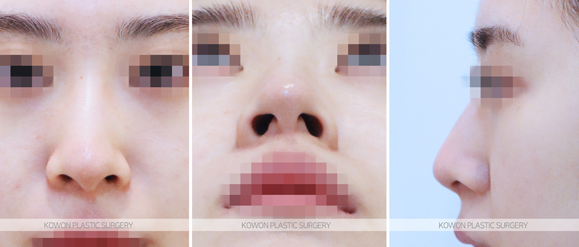 This image was used with the model’s consent.
Looking at the image, you can see that the bridge is shifted toward the right. To correct this structure, we planned to perform osteotomy as well. The nose tip is not thick, but from the lower angle it can be seen as spread out, which is because the nasal tip cartilages are separated.
In such cases, organizing the shape by bringing the nasal tip cartilages together can help soften the spread-out impression. The part that looked as if the nose tip extended downward when viewed from the front was also improved by adjusting the direction of the nose tip. Since the bridge height itself was sufficient, the plan was designed to proceed without an implant.
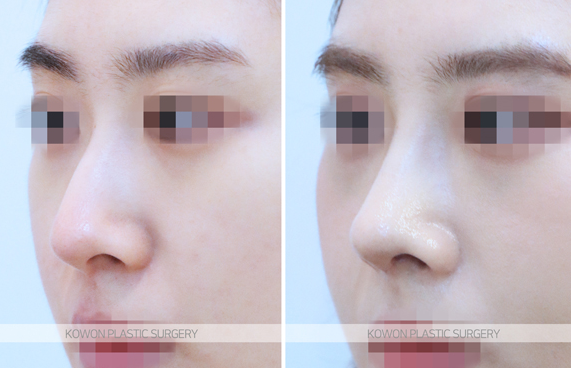 This image was used with the model’s consent.
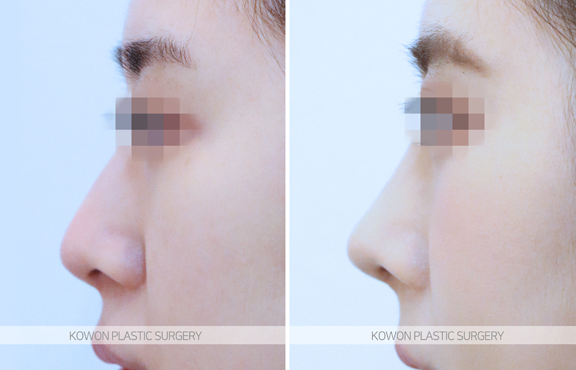
From the side, you can see that the bridge line flows smoothly, and the overall impression has changed into a softer mood.
 This image was used with the model’s consent.
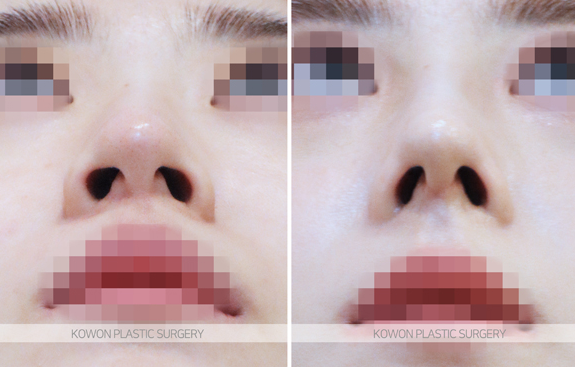
As the height of the nose tip was adjusted, you can see that it was organized into a clearer shape than before.
 This image was used with the model’s consent.
When the nostrils look spread out, it is not always necessary to reduce the nostrils, and in some cases the shape can improve just by organizing the nose tip structure. In this case as well, you can see the line becoming more refined by bringing the nose tip cartilages together.
 This image was used with the model’s consent.
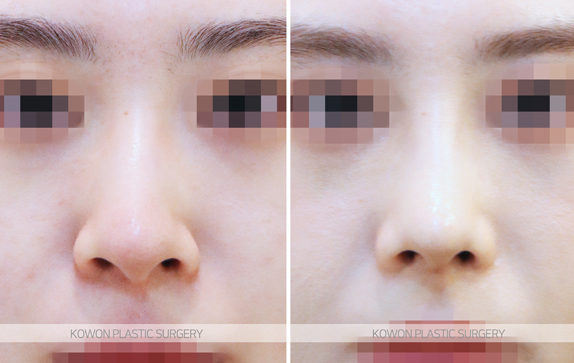
From the front, you can see that the crooked bridge line has been aligned with the center, changing into a more stable shape.
For more surgical case logs, please check the doctor’s blog
A post worth referring to for crooked nose concerns
It is "The process of changing a bulbous nose and crooked nose completed with nostril reduction and cartilage stitching together."