
Bulbous nose reduction surgery is a process that organizes the structure of a nose tip that appears wide and blunt, creating a clearer line. Once the center of the nose tip is defined, the previously heavy-looking impression can become more refined, and the overall facial balance may also change naturally. Recovery typically allows daily life after about 2 to 3 weeks, with the result settling naturally over 1 to 3 months.
A nose’s impression is determined not only by height, but also by the size and spread of the tip, as well as the flow connecting to the bridge. In particular, because a bulbous nose shape depends greatly on the structure of the tip and the condition of the surrounding tissue, an approach that considers the overall balance is needed rather than a simple change in height.
In this post, we will look at the before-and-after results of bulbous nose reduction surgery and summarize what kinds of changes appear and how the recovery process progresses.
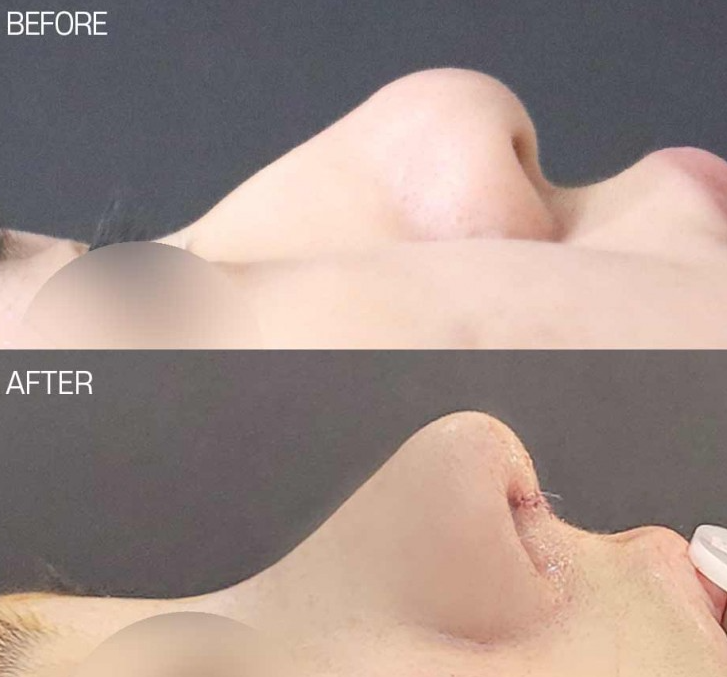 This image was used with the model’s consent.
Hello, I’m Dr. Kim Hyung-taek of Kowon Plastic Surgery Clinic.
This case involved a bulbous nose shape in which the nose tip appeared broadly spread out and the blunt feeling was emphasized, making the nose seem buried toward the center of the face and giving a stuffy impression. In such cases, rather than simply adjusting the height, it is important to organize the structure of the tip, define the center, and reduce volume.
In the process of refining the bulbous nose that looked spread out, some of the tissue around the tip was trimmed to reduce unnecessary thickness, and the widely separated lower lateral cartilages were brought together to refine the shape. When comparing before and after alar reduction surgery, these changes can lead to a clearer nose-tip line.
In addition, a support structure was formed at the tip so that it would not spread again over time, and the overall volume was reduced to create a slimmer, more refined shape. The connection between the bridge and the tip was also considered, with an emphasis on creating a natural flow.
By balancing the columella, nasolabial angle, and philtrum line together, the mouth appeared slightly more recessed, and you can see that the stuffy impression seen from both the front and the side became more organized. In actual before-and-after changes after alar reduction surgery, once the center of the nose tip is established, the overall facial balance often flows more naturally.
Before-and-after changes from alar reduction surgery are not simply about reducing width; when the structure of the nose tip and the flow of the overall line are considered together, the result can be more natural.
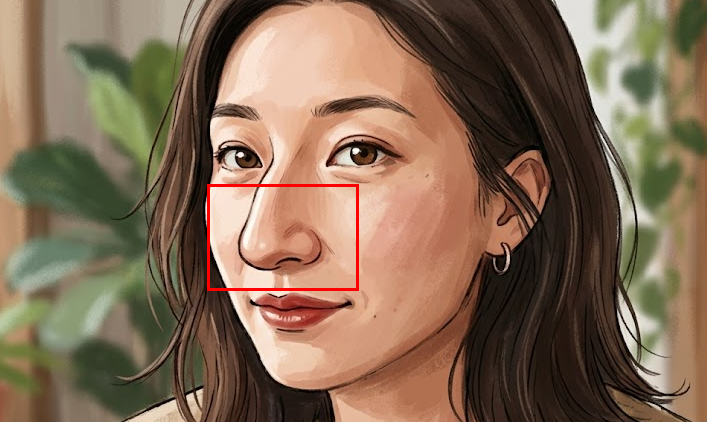
Q. In what cases is bulbous nose reduction surgery needed?
A. Bulbous nose reduction surgery is often considered when the nose tip appears wide and bluntly spread out, or when the nose seems buried toward the center of the face. Rather than a method that simply changes the height, the process of organizing the nose tip structure and setting the center is important, and the approach is made while also considering the condition of the lower lateral cartilage and surrounding tissue.
Q. How long is the recovery period after bulbous nose reduction surgery?
A.
Week 1: This is the period when swelling is most noticeable, and the nose-tip shape may feel somewhat firm.
Weeks 2 to 3: The major swelling gradually subsides, and daily life becomes possible.
1 to 3 months: As the tissue stabilizes, the nose-tip line settles naturally.
Q. Can the nose tip spread again after bulbous nose reduction surgery?
A. If the structure of the nose tip is not stabilized, the spreading appearance can return over time. That is why it is important to approach the surgery by forming a support structure along with bringing the lower lateral cartilages together so the shape can be maintained.
#알라리덕션수술전후 #코원성형외과
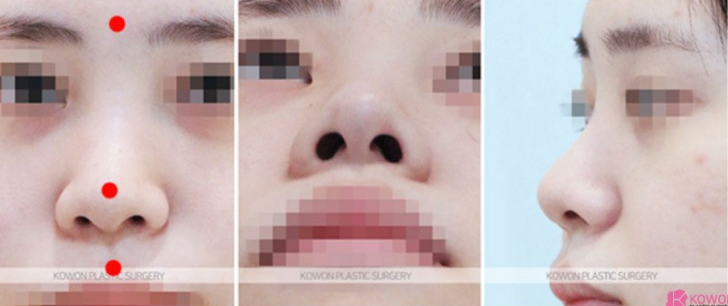 This image was used with the model’s consent.
Looking at the point marked in the photo, you can see a flow that is not aligned with the vertical line. This means the center of the nose appears to be偏 toward one side. In cases like this, septal extension surgery is often considered together with bulbous nose surgery.
Because the nose tip was short and spread out, we first organized the surrounding tissue and then adjusted the length and direction of the nose tip through septal extension surgery. In particular, the state was such that the spreading caused by nose filler made the tip look even wider.
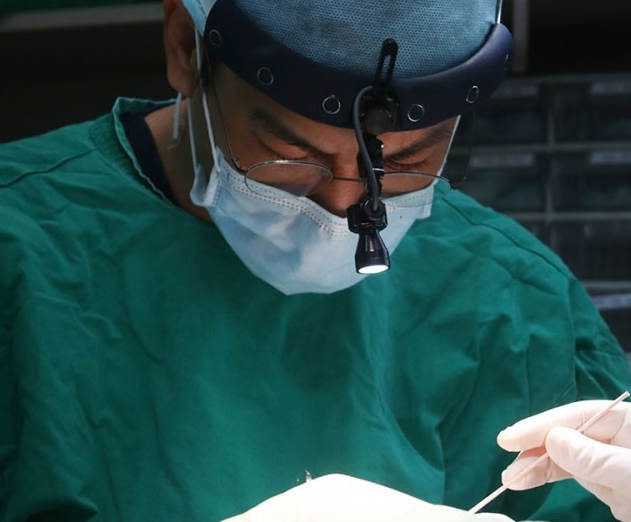 This image was used with the model’s consent.
In the past, filler had been used to compensate for a low nasal bridge, and later the person planned revision rhinoplasty. In some cases, the process of using filler to improve height can create an impression that looks wider, like a bulbous nose.
In such cases, the filler is first addressed before revision rhinoplasty, and then the structure is rebuilt in a way that helps create a more stable shape.
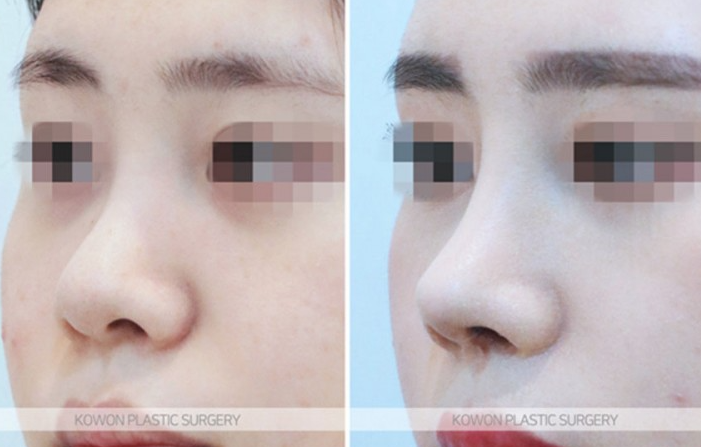 This image was used with the model’s consent.
The following is a before-and-after comparison image, and the image on the right is from about two weeks later. The short nose tip was adjusted in length and direction through septal extension surgery, and you can also see that the nasolabial angle changed as well.
Also, after organizing the filler and performing bulbous nose surgery, the spreading caused by nose filler was alleviated, making the three-dimensional shape of the center of the face look clearer.
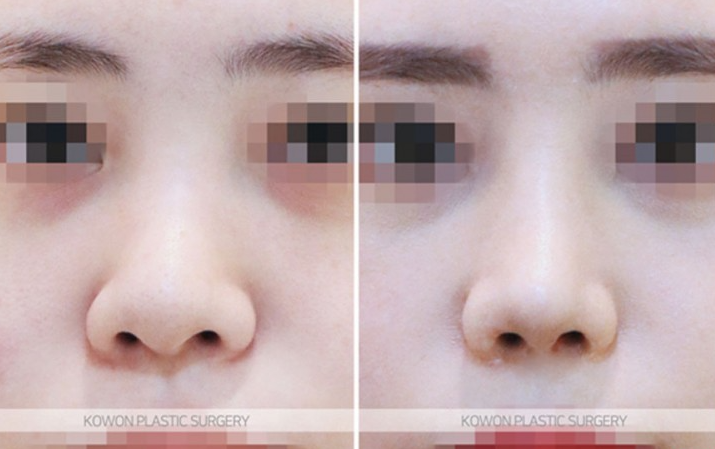 This image was used with the model’s consent.
When compared from the front, you can see that the previously偏 toward one side nose line has been refined into a more stable flow. This kind of change is one of the features seen when bulbous nose surgery and structural correction are performed together.
However, because the nose structure can change during recovery, it is necessary to observe the progress for a certain period even after revision rhinoplasty.
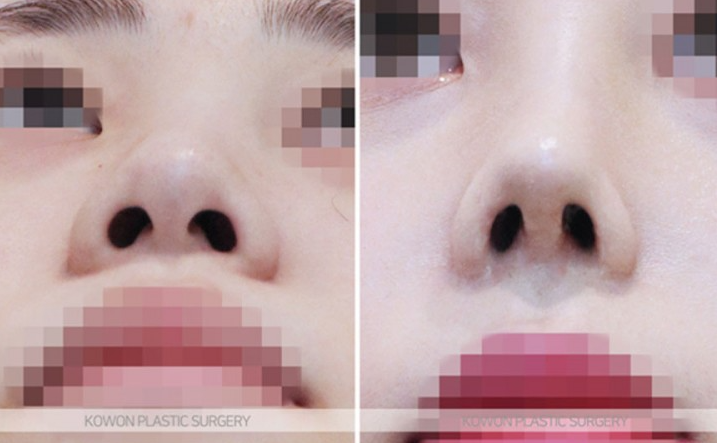 This image was used with the model’s consent.
Changes can also be seen from the lower angle. After surgery, the shape of the nostrils became more balanced, and the spreading caused by nose filler appears to have improved compared with before.
As a result, the overall nose line became more organized, leading to a clearer impression. These changes are often seen when the nose tip structure is stabilized through septal extension surgery.
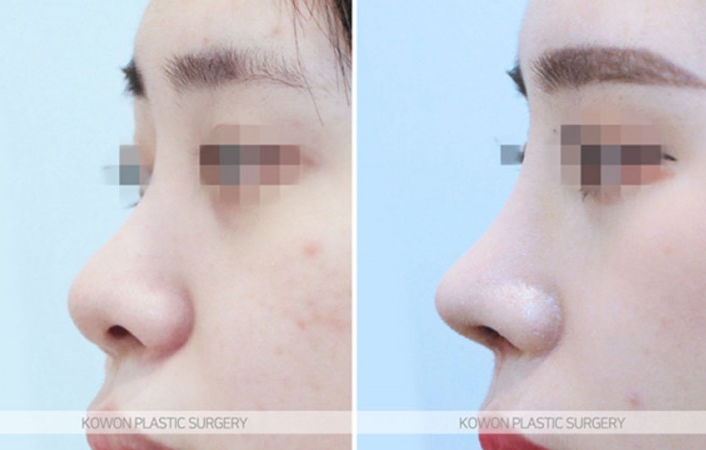 This image was used with the model’s consent.
The final image is a side-by-side comparison from the side. In the revision rhinoplasty performed after addressing the filler, the short septal structure was corrected and the nose-tip line was refined to look slimmer.
In addition, by applying bulbous nose surgery and septal extension surgery together, the overall balance of the nose shape was adjusted, and the facial impression also changed to look softer than before.