When a hump nose, a bulbous nose, and wide nostrils appear together, the overall nose line can look congested and heavy. In particular, when the proportions of the columella and alar lobes are also affected, the impression can feel awkward from both the front and the side.
In cases like this, rather than adjusting only one area, it is important to approach hump nose surgery by considering the balance of the nasal bridge, tip, and nostrils together. In this case, we will look at the changes made to naturally organize the overall flow.
This image was used with the model’s consent.
Hello, I’m Director Kim Hyung-taek of Kwon Plastic Surgery Clinic.
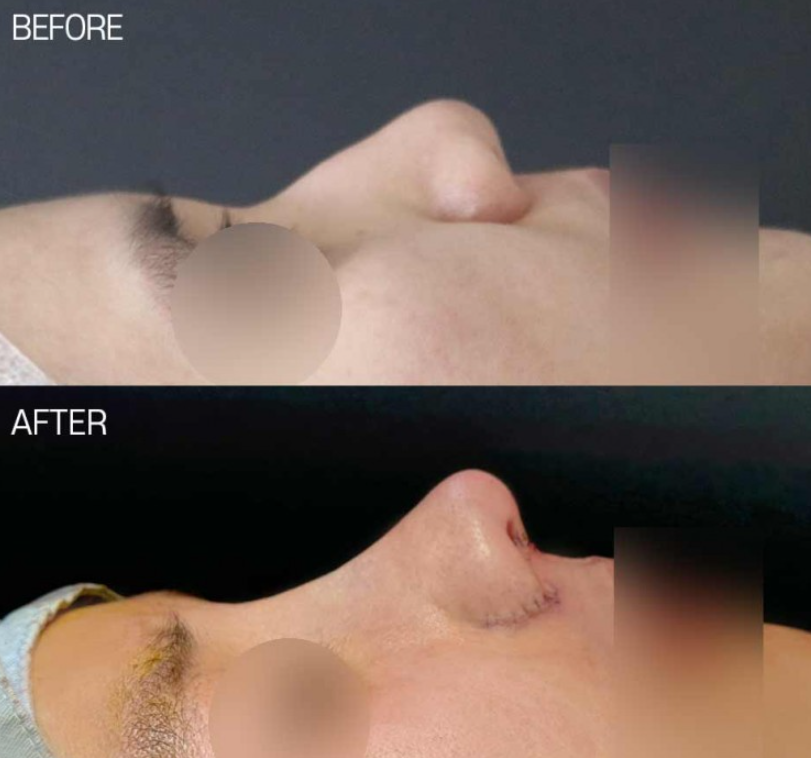
This case involved a protruding, uneven hump along with a bulbous nose that made the tip look spread out and wide nostrils, giving the nose an overall congested and unrefined appearance. In particular, the columella felt flat while the alar lobes appeared relatively more prominent, so during the hump nose surgery process we planned the procedure with the overall balance in mind.
In such cases, hump nose surgery is more than simply correcting one area; it is important to adjust the nasal bridge, tip, nostrils, columella, and alar lobes together to create harmony. The uneven hump was refined to soften the bridge line, and the broad, blunt-looking tip was reshaped by organizing its structure so it would look more natural. In addition, nostril reduction was performed together to balance the left and right width.
We also supplemented the volume of the previously flat columella and applied alar base lift so that the alar lobes would not appear excessively prominent, allowing the lower portion of the nose to connect more naturally. In this way, during hump nose surgery, it is important to create continuity so that the line from the bridge to the tip and nostrils does not look separated. By considering the balance of the columella, nasolabial angle, and philtrum line as well, the congested impression from both the front and side was eased, and the overall balance of the face also changed into a more refined atmosphere.

Q1. How long is the recovery period after hump nose surgery?
A. After hump nose surgery, major swelling usually subsides within about 1 to 2 weeks. After that, residual swelling and the tissue stabilization process continue, and the line gradually settles into a more natural shape. Although this varies depending on individual skin thickness and structure, the overall recovery period is often considered to be several months.
Q2. Can hump nose surgery make the nasal bridge look too high or unnatural?
A. Hump nose surgery is often performed not by simply refining the protruding area, but by considering the flow of the bridge and tip together. During the recovery period, the swelling may make the nose seem higher, but over time it often settles into a softer and more natural look.
Q3. During recovery after hump nose surgery, can the tip feel hard or tight?
A. After hump nose surgery, as the tissue settles, the tip may feel firm or tight. This is a common change during the recovery period and often gradually eases over time. However, if other changes such as redness or warmth occur together, it is advisable to check the condition.
This image was used with the model’s consent.
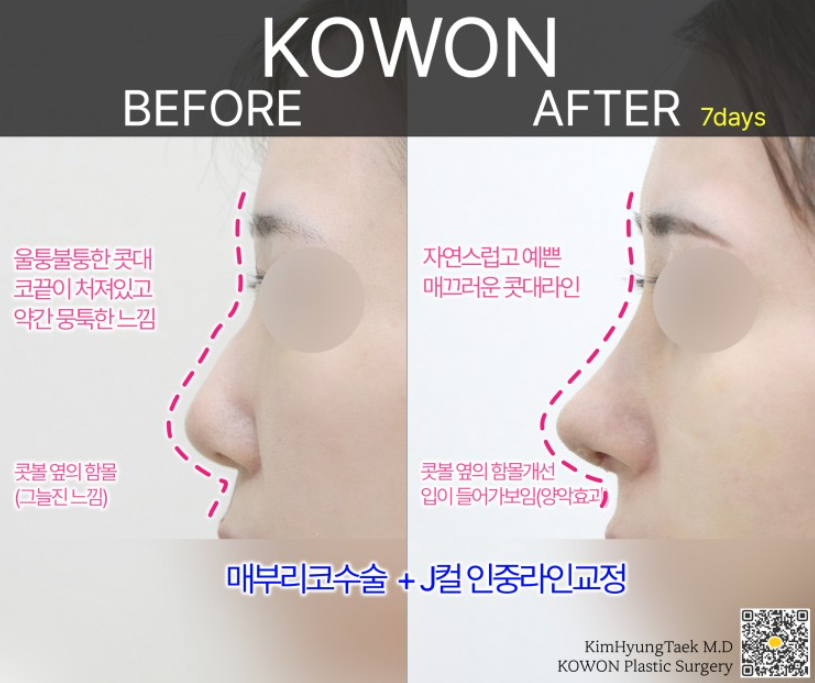
Because the nasal tip cartilage was significantly spread apart, we brought the cartilage together and established a supporting structure at the tip to create sufficient height and direction. In addition, since the columella was set inward and the overall nasal balance was off, we moved the columella forward naturally to restore balance.
This image was used with the model’s consent.
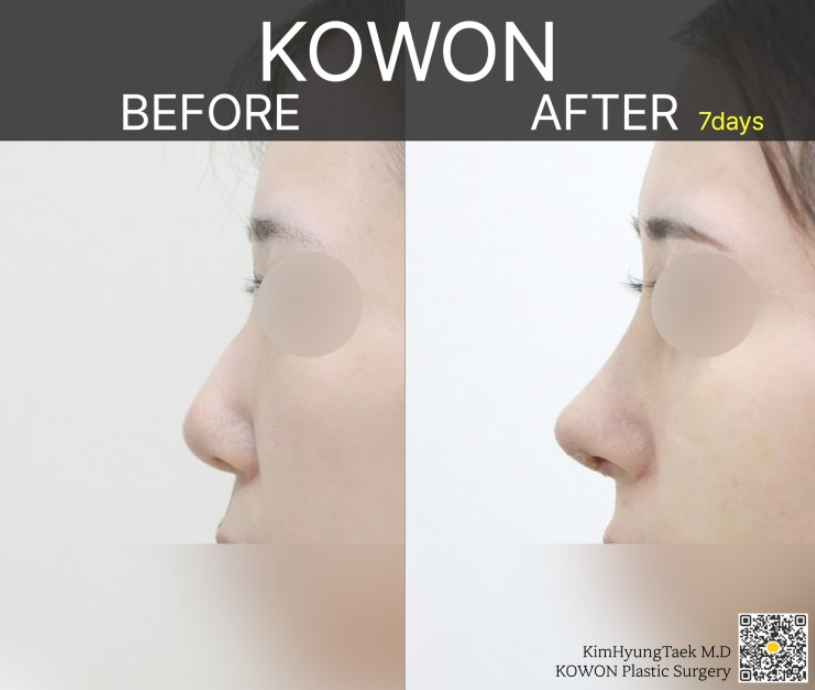
The lower end of the columella was also set inward, making the philtrum look longer and the mouth appear protruded. Accordingly, we advanced the columella and corrected the J-line philtrum line, which eased the impression of the mouth protruding overall, and especially made the side profile line look more natural.
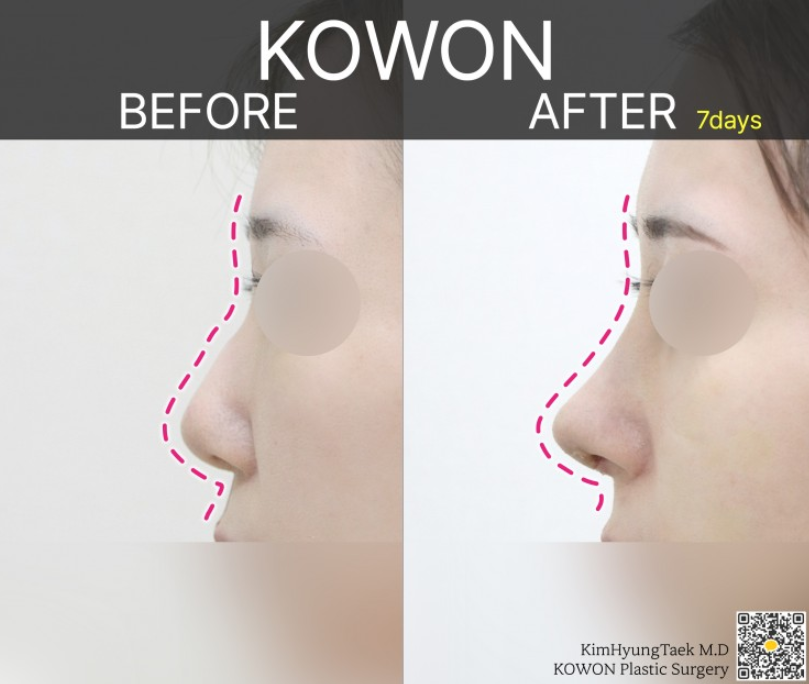
This image was used with the model’s consent.
There was a hump shape, but the protrusion was not severe, while the glabella looked sunken. So, to balance the overall height, we used silicone to refine the bridge line and adjusted it so that a smoother and softer flow would continue.
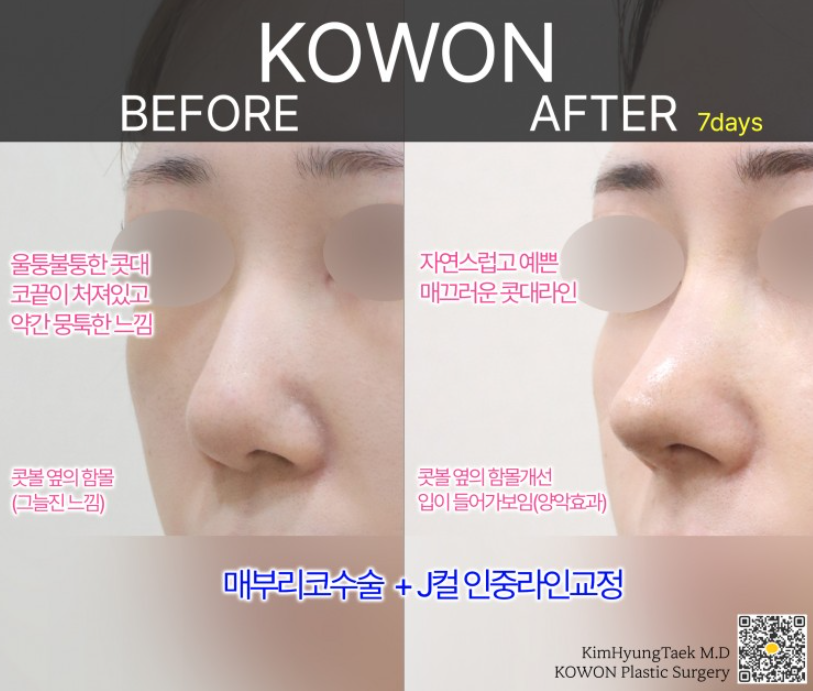
This image was used with the model’s consent.
From the side, the overall impression was flat, and the nasal tip also felt round and blunt. Afterward, you can see that the nose line changed into a more feminine and refined look.
See more surgical records