If the nasal tip looks broad or the bridge is low, it is often difficult to achieve the desired change by simply adding height. In particular, when the nasal tip structure is wide and bluntly spread out, the process of stably defining the center of the tip becomes important.
Nasal tip cartilage repositioning is a method that helps organize a spread-out nasal tip structure and create support so it can lead to a slimmer, more natural line. If the balance of the columella, nasolabial angle, and philtrum line is also considered together, the center of the face can appear more three-dimensional.
In this article, we will take a detailed look at the changes that can appear, as well as the recovery process and line changes.
 This image was used with the model’s consent.
Hello, I’m Dr. Kim Hyung-taek of Kowon Plastic Surgery.
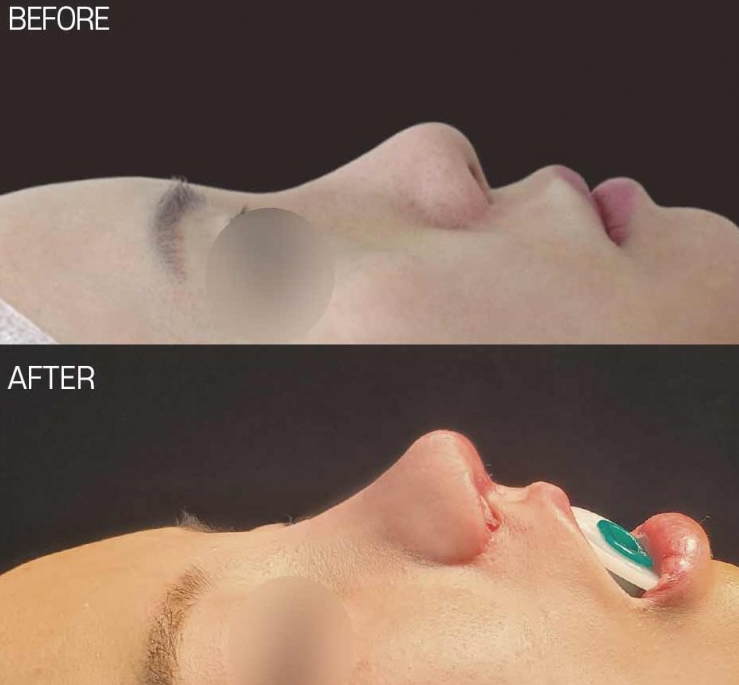
This case had a generally low bridge height, and the nasal tip looked spread out, making the whole nose feel wide and blunt. In such cases, there are limits to simply adding height, so it is important to organize the nasal tip structure together and define the center.
The bridge was made naturally higher in proportion to the face, and the nasal tip was approached by organizing the structure through nasal tip cartilage repositioning. At the same time, we brought the cartilage together and organized the surrounding tissue to reduce the spread-out volume and guide it toward a more refined shape.
In addition, a support structure was created between the nasal tip cartilages so that it would not start to spread out again over time, and balance was adjusted with the focus on creating a natural connection between the bridge and the tip during the nasal tip cartilage repositioning process.
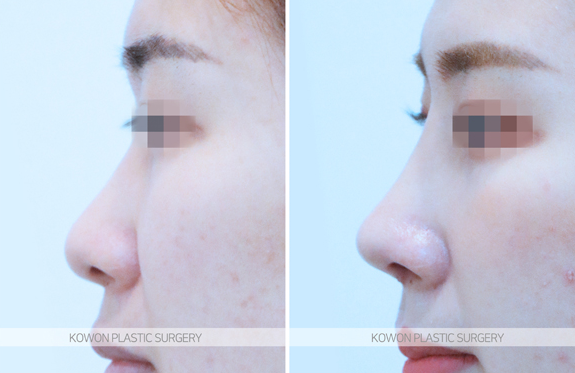
The connection among the columella, nasolabial angle, and philtrum line was also considered, so that there would be no awkwardness from either the front or the side. The protrusion of the mouth, which had looked more prominent due to the recessed nasolabial angle and philtrum area, was also improved. Through this, the center of the face was made to appear more three-dimensional.
In particular, the procedure was performed without an implant, while still allowing a naturally formed nasolabial angle, so that the overall impression could appear more refined. This is one of the features that can appear when the nasal tip structure and center are stably defined through nasal tip cartilage repositioning.
Compared with before surgery, the mouth appeared more recessed, and the overall facial impression also changed to look more organized and refined. By organizing the center and line of the nasal tip through nasal tip cartilage repositioning, we aimed to create a smoother, more natural result.
 Nasal Tip Cartilage Repositioning Q&A
Q. In what cases is nasal tip cartilage repositioning performed?
A. Surgery is often considered when the nasal tip looks broad or blunt, or when the direction and height balance of the tip is not aligned. The key is not simply creating height, but organizing the nasal tip structure itself to define the center.
Q. Can the nasal tip spread out again after surgery?
A. If the nasal tip structure is not stably supported, it may start to look spread out again over time. That is why, during nasal tip cartilage repositioning, it is important to both organize the cartilage and create a support structure so stability can be maintained.
Q. How long is the recovery period?
A.
Week 1: Swelling appears, and the shape of the nasal tip may be relatively distinct.
Weeks 2–3: Major swelling subsides, and daily life becomes possible.
1–3 months: As the tissue stabilizes, the nasal tip line settles into a natural shape.
Check more surgery logs
 This image was used with the model’s consent.
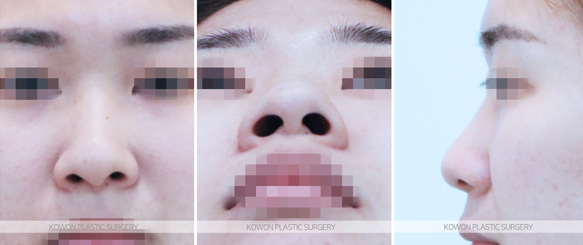
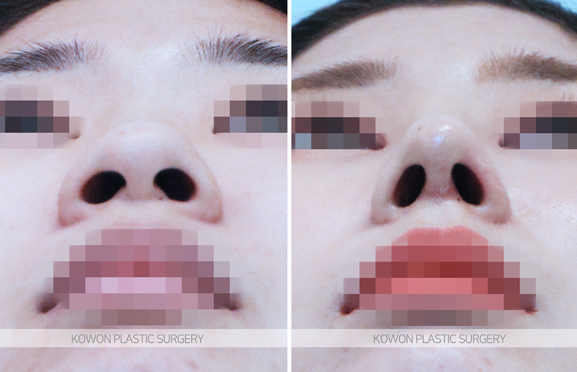
The nasal tip cartilage is spread out to both sides, so when viewed from below, the nostrils appear to be lying sideways. Since the goal was to create a natural change, the height and shape of the nasal tip were organized by bringing the cartilage together. From the front, the bridge was on the lower side, so it was not very noticeable, but a deviation of the septum to one side was also identified.
Because there was a mild septal deviation, the correction was performed together during surgery. In particular, when the nose is low, the bend may not stand out much, but after adding height, it can become more noticeable, so it is important to correct the structure in advance.
 This image was used with the model’s consent.
The implant was planned at a modest height of about 4 mm, without making it overly high. Because the overall nose was small and low, septal cartilage alone was not enough, so ear cartilage was additionally used to reinforce the structure.
 This image was used with the model’s consent.
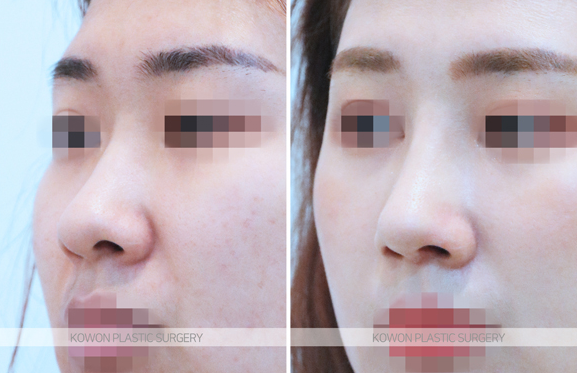
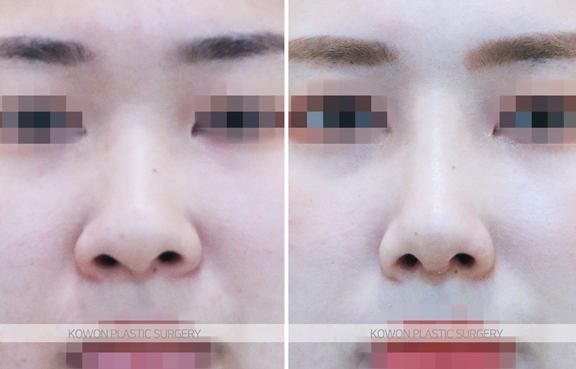
Not only was the spread-out nasal tip cartilage addressed, but the alar base itself was also broadly spread sideways, so non-incisional alar base reduction was performed together. This was arranged so that the overall nose line could be refined more naturally.
 This image was used with the model’s consent.
When comparing the front view, it can be seen that the previously wider-looking nose width has decreased, creating a more organized overall impression.
 This image was used with the model’s consent.
Having a bulbous nose shape does not necessarily mean that alar base reduction must be performed as well. Depending on the case, simply bringing the nasal tip cartilage together may improve the spread-out appearance. However, if the width of the alar base itself is broad, alar base reduction may also be considered.
Many people worry that alar base reduction will make smiling feel awkward or leave scars, but incisional methods are not the only option. A relatively natural non-incisional approach with less burden can also be used, and even incisional methods often heal naturally depending on the condition, so there is no need to feel overly burdened.