A low bridge and a tip that looks spread out can make the entire face appear flat and heavy. In particular, when the midface lacks volume, the difference in three-dimensionality from the glabella can stand out even more, making the balance feel awkward.
In such cases, low nose rhinoplasty is not just about increasing height; it is also important to consider the nose tip structure and facial proportions together. In this case, we will look at the process of improving the overall impression into something more three-dimensional and natural by refining both the tip and the bridge line.
 This image was used with the model’s consent.
Hello, I’m Director Kim Hyung-taek of Kowon Plastic Surgery.
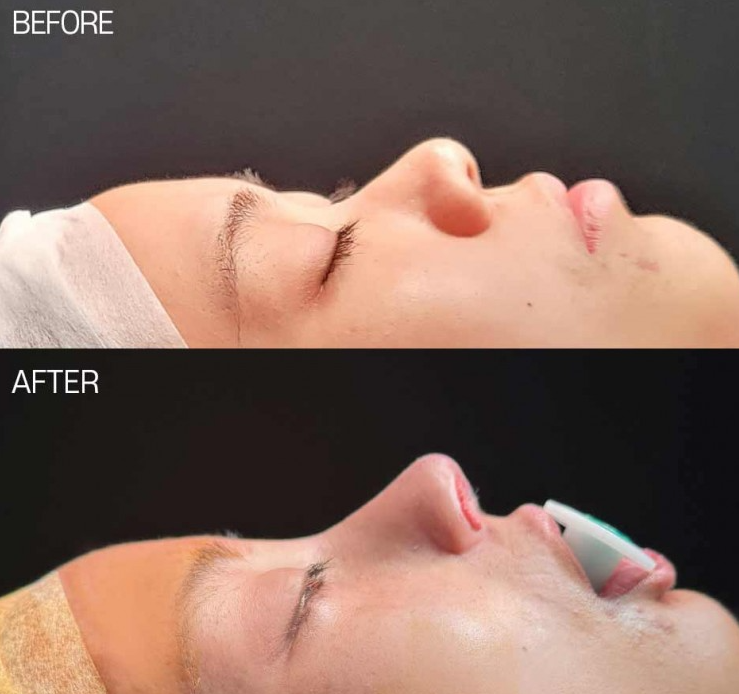
The patient had a relatively low nasal bridge overall, and the nose tip looked spread out, giving the entire nose a wide and blunt appearance. In addition, the midface lacked volume, so the face generally appeared flat, which is one of the features often seen in people considering low nose rhinoplasty.
In particular, compared with the recessed midface, the glabella height was relatively high, so the difference in three-dimensionality between the upper and lower parts of the face stood out even more. In such cases, low nose rhinoplasty is not simply about raising the bridge; it is important to adjust the tip structure and the overall flow together to create balance.
The 부족했던 bridge height was naturally supplemented to match the facial proportions and glabella height, and the spread-out nose tip was refined through tip cartilage repositioning and tip cartilage suturing. In addition, tip soft tissue removal was performed to reduce unnecessary volume and create a more tidy line. To stably maintain the direction and height of the nose tip during the low nose rhinoplasty process, a support structure was placed between the cartilages to keep the overall center in place.
In addition, the overall line from the bridge to the tip was carefully adjusted so that it would connect naturally with the glabella, and the columella, nasolabial angle, and philtrum line were also considered together to design a more three-dimensional midface. As a result, the flat impression seen from both the front and side improved, and looking at the post-surgery side view, you can confirm that the facial contours themselves became much more defined. In particular, the fact that the mouth appeared relatively set back, making the face look smaller and more refined, is also one of the characteristic changes of low nose rhinoplasty.
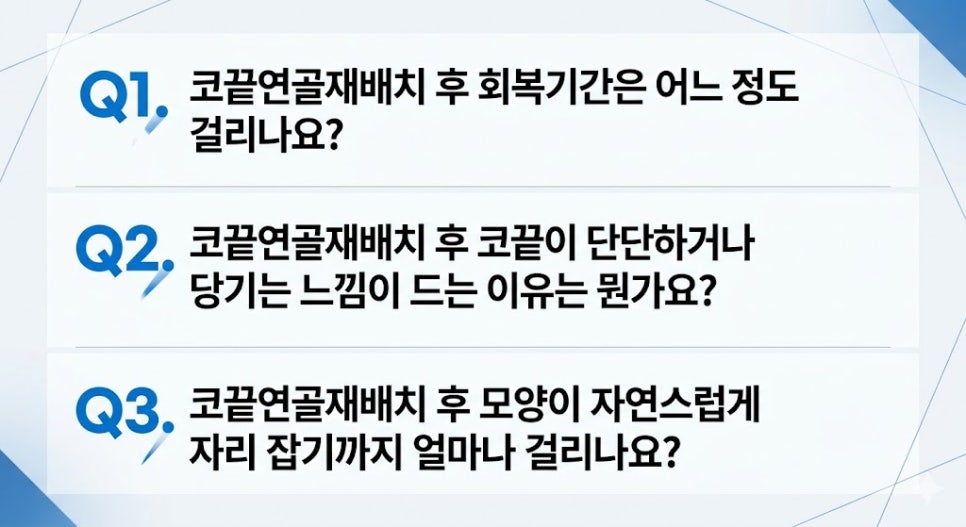 Q1. How long is the recovery period after tip cartilage repositioning?
A. After tip cartilage repositioning, most of the major swelling usually settles significantly within 1 to 2 weeks. However, because the tissue at the nose tip heals relatively slowly, residual swelling and tissue stabilization may take several months. During the recovery period, it is best to avoid touching the nose tip firmly or applying irritation.
Q2. Why does the nose tip feel hard or tight after tip cartilage repositioning?
A. Tip cartilage repositioning includes adjusting the cartilage position and forming a support structure, so in the early recovery period the nose tip may feel hard or tight. This is a common change while the tissue settles, and in many cases it gradually eases naturally over time.
Q3. How long does it take for the shape to settle naturally after tip cartilage repositioning?
A. Immediately after tip cartilage repositioning, swelling may make the nose tip feel high or awkward. However, as the recovery period passes and the tissue and skin gradually stabilize, it often settles into a softer and more natural line. Recovery speed may vary depending on an individual’s skin thickness and cartilage structure.
 This image was used with the model’s consent.
I am Director Kim Hyung-taek, the representative doctor at Kowon Plastic Surgery, where I consistently introduce cases and consultations related to crooked nose rhinoplasty in Gangnam. Through various nose surgery cases so far, I have considered different directions together with people who had different concerns and discomforts.
This time, I will especially explain a case involving a female patient who had concerns about both a crooked nose and a broad bulbous tip. The patient was dealing not only with a crooked nose but also with a nose tip that looked widely spread, which made her very concerned about her overall impression. After consultation, we planned a direction that included tip cartilage suturing to refine the shape of the nose tip.
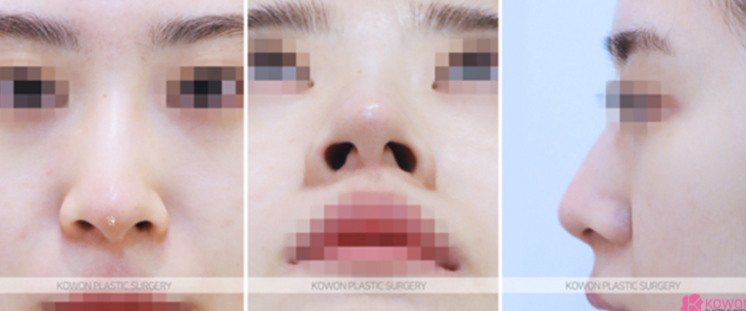 This image was used with the model’s consent.
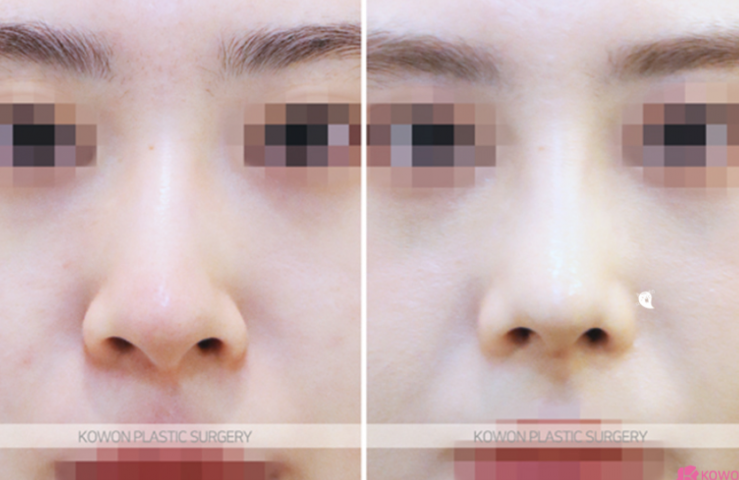
First, we took photographs from multiple angles to accurately check the current condition. In the front view, it was relatively clear that the center of the nasal bridge was shifted toward the right.
This type of shape is one of the representative cases considered for crooked nose rhinoplasty. The patient also said that this was the part she was most concerned about every time she looked in the mirror, and after a long period of 고민, she came in person to a place with extensive experience in crooked nose rhinoplasty.
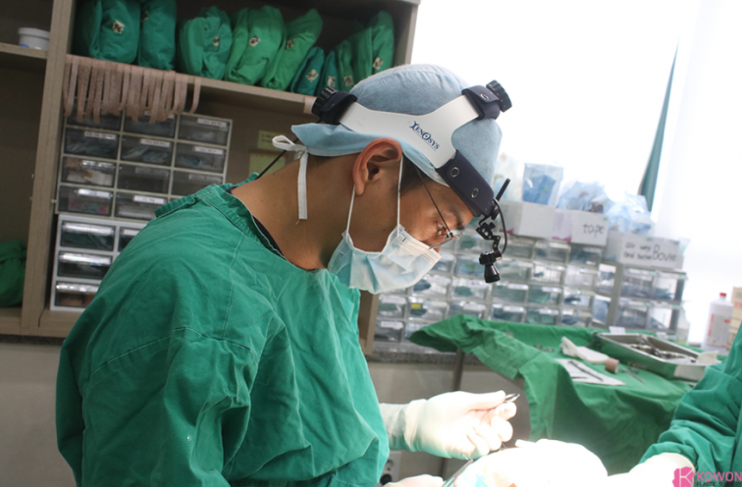 This image was used with the model’s consent.
The nose tip also needed to be refined. It was not overly thick, but because the tip cartilages were spread apart, the nose tip had a wide and spread-out appearance. To improve this, we planned to bring together the spread cartilages through tip cartilage suturing and osteotomy, creating a more orderly nose tip line.
In addition, the impression of the nose tip sagging downward was adjusted by refining the depressor muscle of the nose tip. Since the existing bridge height was already somewhat adequate, we decided to proceed without an implant, which was a suitable approach for those seeking a natural flow.
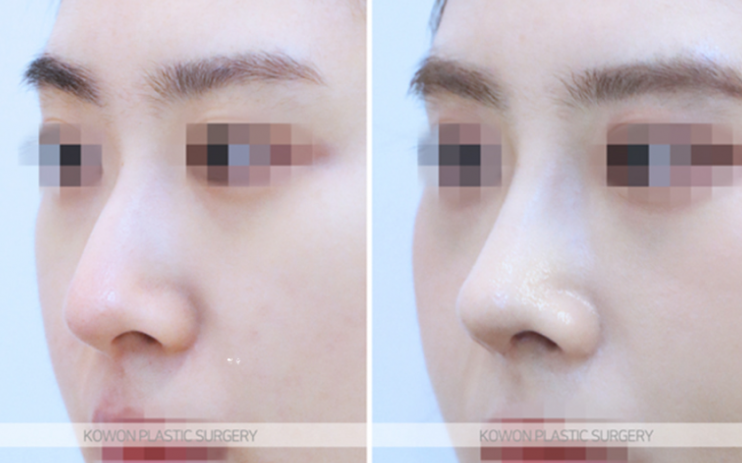 This image was used with the model’s consent.
Comparing the before-and-after photos, the overall change becomes much more evident. The nasal bridge line, which previously felt uneven, was refined into a softer and smoother line, and the overall impression also changed more clearly.
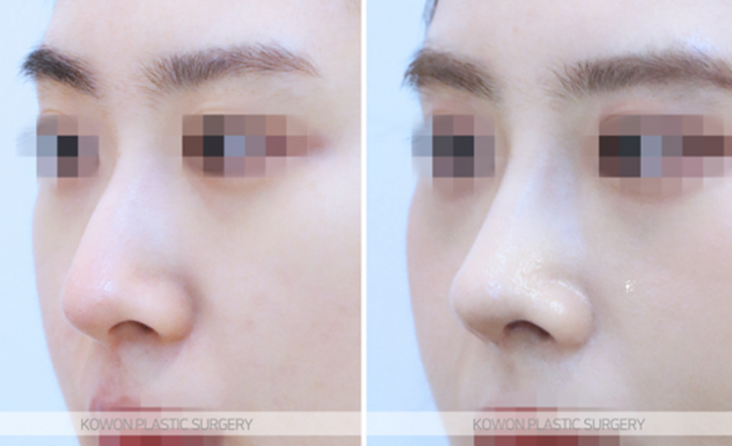 This image was used with the model’s consent.
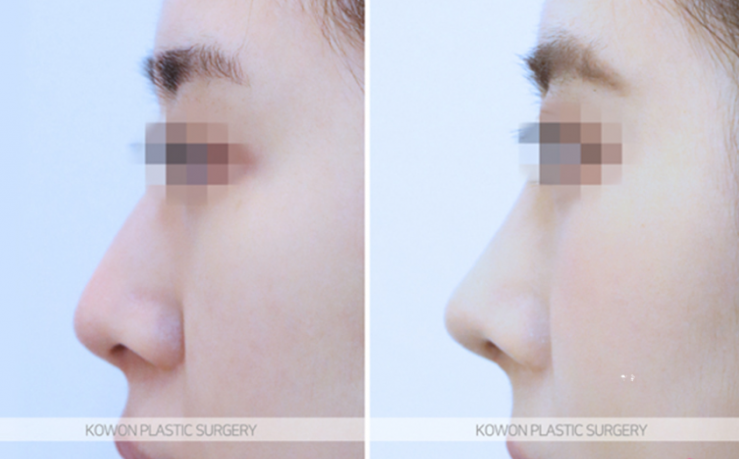
The change is also naturally visible in the 45-degree side view. Compared with before, the nostril and nose tip lines have taken on a more feminine and tidy appearance, and the patient also expressed satisfaction with the changed look. In this way, bulbous nose surgery can affect not only the shape of the nose but also the overall balance and mood of the face.
 This image was used with the model’s consent.
The change felt even more distinct from the side. Whereas before the mouth had seemed relatively protruded, after surgery the nasal line was refined in a stable way, creating a more balanced appearance with the lip line as well. Because the nose is located at the center of the face, even a small change can alter the overall harmony.
 This image was used with the model’s consent.
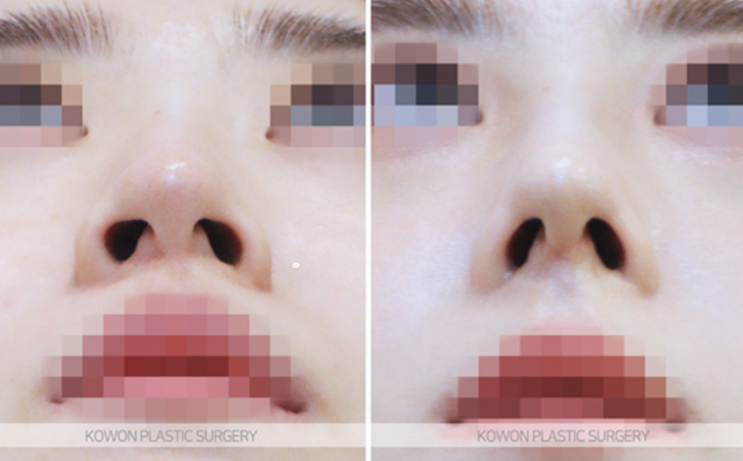
Many people think that if the nostrils are wide, nostril reduction is always necessary, but that is not always the case. As in this case, there are shapes that can be sufficiently improved with tip cartilage suturing alone, so it is important to confirm the direction that matches your own structure through thorough consultation.
The patient was also satisfied not only with the crooked nose rhinoplasty result, which refined the crooked nasal line, but also with the improvement in the bulbous nose impression that had looked spread out. Above all, she was pleased with the naturally refined result of the tip cartilage suturing.
A post worth looking at for reference if you are concerned about a low nose
"What changes appear with tip cartilage repositioning? A summary of the process for improving bulbous nose lines"