
�
A low glabella and a drooping nasal tip can weaken the three-dimensional impression of the center of the face and create an overall heavy look. In particular, when the direction of the nasal tip and the starting point of the bridge are not balanced, it is important to consider the overall flow rather than simply adjusting the height.
�
In this case, we will look at the process of creating a naturally connected line from the glabella to the nasal tip through autologous rib cartilage nose surgery, resulting in a more refined and lighter impression.
�
�
�
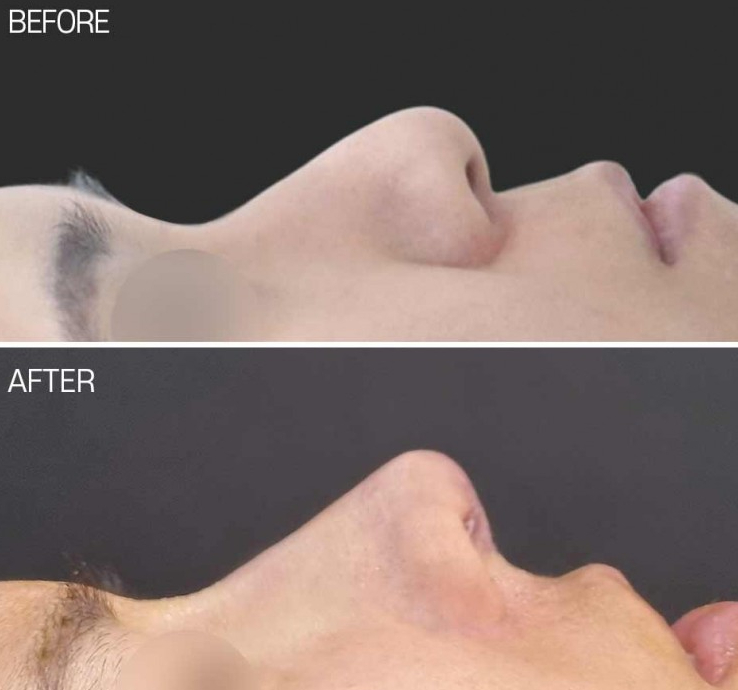 This image was used with the model's consent.
�
Hello, I am Director Kim Hyung-taek of KOWON Plastic Surgery.
�
This patient had a nasal tip that appeared to droop downward, giving a heavy and stuffy impression from both the front and the side, and in particular, the glabella area lacked height, making the bridge's starting point feel weak. In such cases, rather than simply lifting the tip or adjusting only part of the bridge, it is important to form the overall flow from the glabella to the tip.
�
In this autologous rib cartilage nose surgery, the downward drooping nasal tip was refined upward through nasal tip cartilage repositioning and nasal tip cartilage suture techniques, and a stable support structure was formed between the cartilages so that the feeling of drooping would not recur over time.
�
For the bridge, Rib Fit was used to create a height that flows naturally from the glabella, and the overall bridge line was adjusted so that it connects smoothly in a way that suits the facial proportions. Rib Fit used in autologous rib cartilage nose surgery is a custom-formed structure made based on autologous rib cartilage, and it is characterized by allowing more detailed adjustments according to the individual's bone structure and skin condition.
�
Conventional off-the-shelf implants can have limitations when it comes to finely adjusting the height from the starting point of the glabella, but Rib Fit, in autologous rib cartilage nose surgery, can naturally form the overall flow of the bridge from the glabella to match the individual's structure. In addition, it is designed to adhere closely without a feeling of looseness between the skin and the structure, helping to create a more stable line.
�
In particular, autologous tissue-based autologous rib cartilage nose surgery tends to have strong structural adaptability, and it is also one of the methods considered when the goal is to reduce concerns about foreign-body sensation or the burden of ongoing care. In the case of existing autologous dermal nose augmentation, rib particle nose augmentation, or implant-free nose augmentation, some absorption may occur during the engraftment process, so the initial line may feel somewhat thick.
�
On the other hand, Rib Fit used in this autologous rib cartilage nose surgery uses a custom-pressed autologous tissue structure, allowing the bridge line to be formed more clearly and precisely. As shown in the photos, it has the advantage of maintaining a sharp flow while the shape changes relatively stably.
�
In addition, the balance of the columella, nasolabial angle, and philtrum line was also considered so that the nasal tip would not appear overly upturned, and the overall design was intended to create a lighter and more refined impression.
�
�
�
 Q. In what cases is autologous rib nose surgery often considered?
�
A. Autologous rib nose surgery is often considered when both the bridge and nasal tip need to be supported in a stable way, or when structural reinforcement is needed after a previous surgery. In particular, when the skin is thin or the nasal tip lacks support, it may be performed in the direction of autologous rib nose surgery to create a more stable structure. The application method may vary depending on the individual's nasal structure and skin condition.
�
Q. How long is the recovery period for autologous rib nose surgery?
�
A. After autologous rib nose surgery, major swelling usually subsides significantly within about 1 to 2 weeks, and the process of residual swelling and tissue stabilization can continue over several months. In the early stage, the nasal tip may feel firm or tight, but over time it gradually settles into a more natural shape. During recovery, it is important to avoid strong stimulation or excessive pressure.
�
Q. Won't autologous rib nose surgery make the line look too thick?
�
A. Because autologous rib nose surgery is performed in a custom shape while considering the individual's facial proportions and skin thickness, it is often approached in a way that creates a natural flow rather than an overly thick appearance. However, during the early recovery period, it may feel somewhat thick due to swelling, and over time the line gradually becomes more refined.
�
�
�
See more surgery logs
�
�
�
�
�
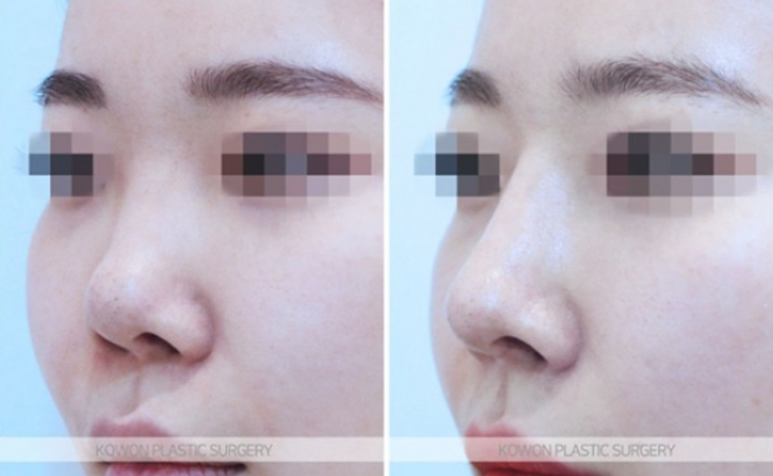 This image was used with the model's consent.
�
About 7 years ago, there was a history of surgery using donated rib cartilage, ear cartilage, and silicone, and additional revision surgery was also performed afterward. However, because the result still differed from what was desired, consultation was arranged in the direction of autologous rib nose surgery after looking through various revision nose surgery reviews.
�
During the previous surgery process, the hump on the bridge had been shaved down, but the bridge line had not been fully smoothed out, and overall the nose length still felt somewhat short. To address these issues, a comprehensive reshaping, including hump nose correction, was necessary.
�
�
�
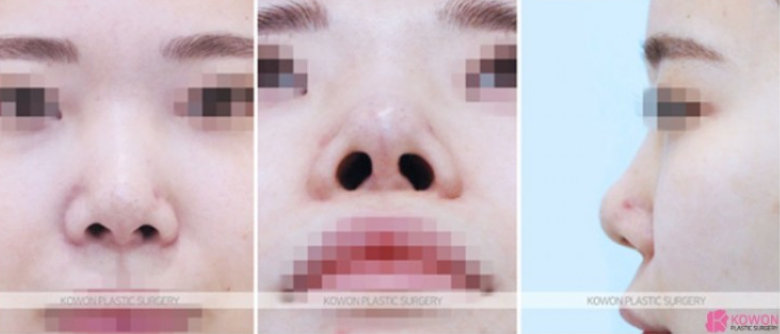 This image was used with the model's consent.
�
There were still irregularities in the middle of the bridge, making the line feel as though it did not flow naturally, and on closer inspection, slight asymmetry of the nostrils was also visible. Since this was already the third surgery, autologous rib nose surgery was chosen in consideration of a more stable approach, and at the same time, the plan was to refine the width of the nose to achieve a clearer and more refined image.
�
For hump nose correction, the uneven bridge and hump area were refined through osteotomy, and the bridge was formed with rib particles instead of a separate implant to create a more naturally connected flow. This approach is also one of the methods often mentioned in actual revision nose surgery reviews.
�
�
�
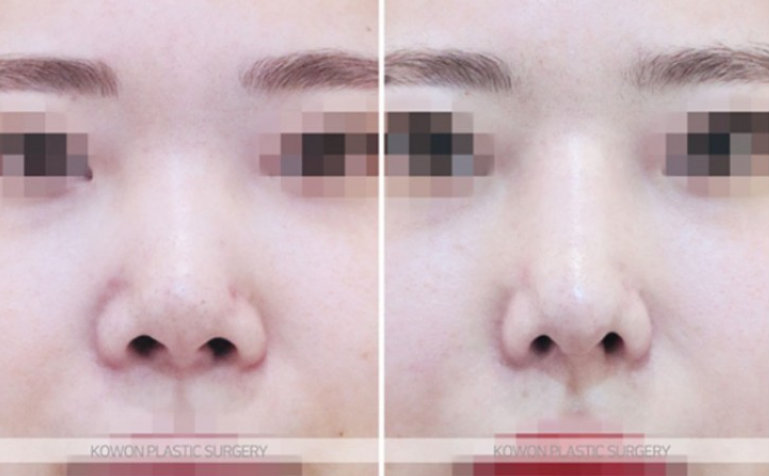 This image was used with the model's consent.
�
This is a before-and-after comparison photo from revision nose surgery performed using autologous rib nose surgery. From the front, the width of the bridge appears much more refined than before, and the nasal tip line can also be seen as more slender. As the overall proportions became more organized, the result after hump nose correction also created a sharper impression.
�
�
�
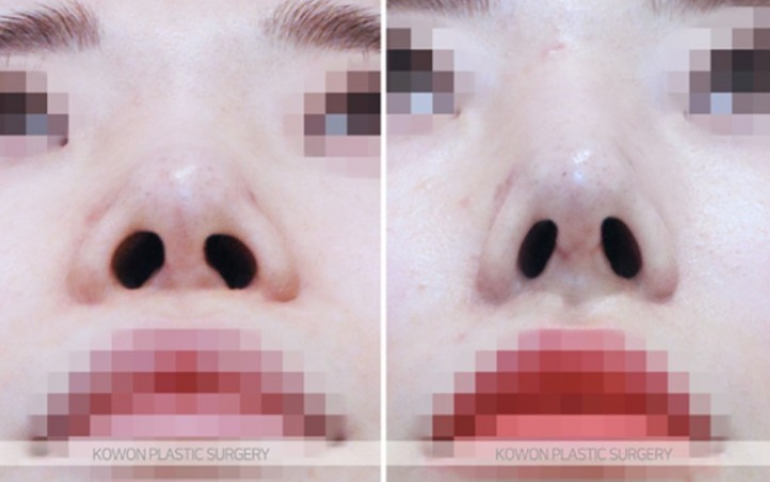 This image was used with the model's consent.
�
The line from the glabella to the nasal tip became much more natural and stable than before. The previously sunken-looking middle section of the bridge was also smoothly connected, and from the side, the flow of the nasolabial angle was refined into a more balanced shape.
�
Because autologous rib nose surgery has the characteristic of some absorption over time, the line is often designed slightly higher at the beginning. In general, the line is set with about 10 to 20% possible change in mind, and this feature is also frequently discussed in actual revision nose surgery reviews.
�
�
�
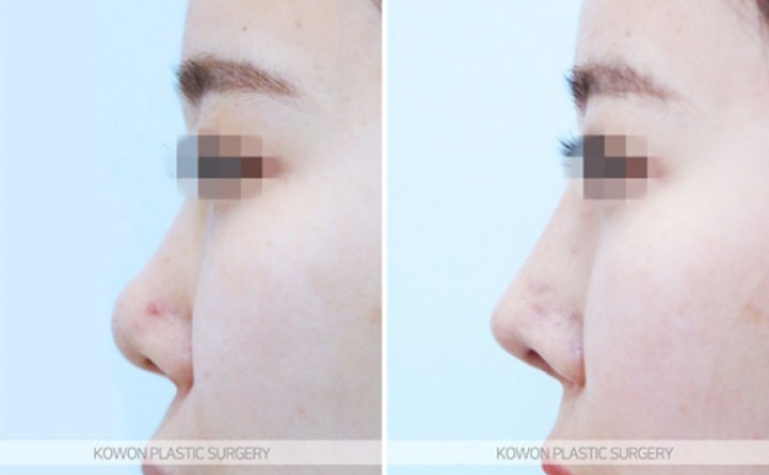 This image was used with the model's consent.
�
This photo shows the condition about one month after surgery. As time passes, the tissue gradually stabilizes and settles naturally, and due to the characteristics of autologous rib nose surgery, the overall line is completed with a smoother flow.
�
Also, since hump nose correction was performed together, the overall bridge line shows a more refined impression than before.
�
�
�
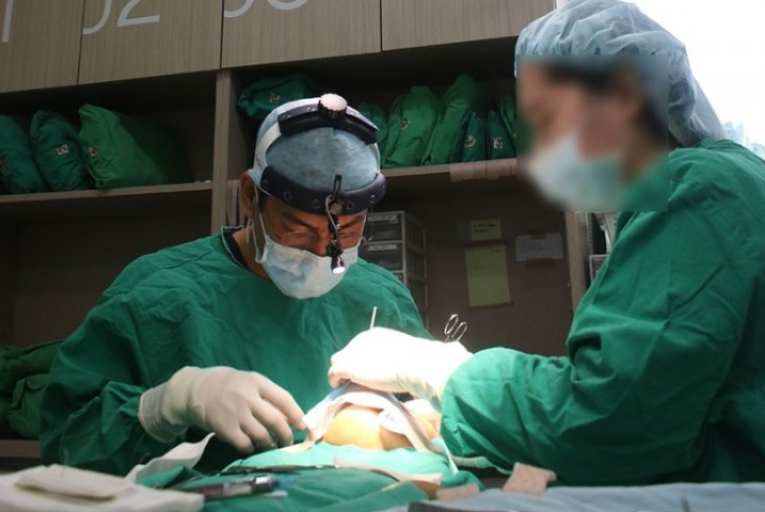 This image was used with the model's consent.
�
In this case, we looked at the changes with a focus on the revision nose surgery process using autologous rib nose surgery. If you want to reorganize the overall nose line together with hump nose correction, or if you are considering the direction after multiple surgeries, comparing various cases thoroughly may also be helpful.
�
�
�
 �
�