[Summary]
A prominent hump, a drooping nasal tip, and a nose that appears long can make the entire face look heavier and more intense. In this case, the plan focused on refining the bridge line while adjusting the direction and length of the nasal tip, taking the characteristics of a male hump nose into account and balancing the central structure of the nose as well.
As a result, a more stable and refined flow was created from both the front and side views, allowing for a natural change that also took functional aspects into consideration.
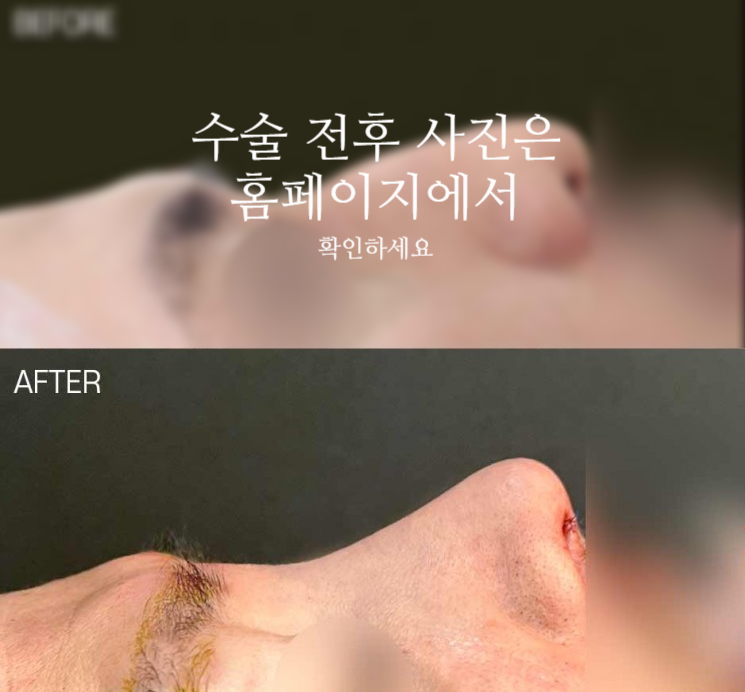
This image was used with the model’s consent.
Hello, I am Dr. Hyung-taek Kim of Kowon Plastic Surgery.
In this case, the prominent nasal bridge characteristic of a male hump nose made the line appear uneven. The nasal tip also drooped downward, emphasizing the nose’s length and creating an overall strong and heavy impression.
A deviated nose and deviated septum were also observed, making the center line of the nose appear shifted to one side. Therefore, both functional discomfort and appearance had to be considered. With this type of male hump nose, it is important not simply to refine the hump but also to correct the center of the nose while adjusting its length and direction.
First, the prominent hump was refined so that the bridge line could continue more smoothly. Taking the characteristics of a male hump nose into account, the shape was adjusted to maintain a natural, relatively straight line rather than an excessively curved one. The drooping nasal tip was repositioned more naturally upward through nasal tip cartilage repositioning and nasal tip cartilage suturing. A supporting structure was also created between the cartilages to help maintain a stable shape over time.
The proportions of the nose, which had appeared long, were also adjusted appropriately so that the overall balance could flow naturally. The center line of the nose was refined more stably while also considering the deviated septum. Because the balance between the direction of the nasal tip and the bridge line is particularly important in a male hump nose, the columella, nasolabial angle, and philtrum line were also considered when planning the procedure to create a stable and refined shape from both the front and side views.
For more of the doctor’s surgical case notes
Q1. In what cases is hump nose surgery commonly considered?
A. Hump nose surgery is often considered when the middle of the nasal bridge protrudes and appears uneven, or when the nasal tip droops downward and creates a strong, heavy impression. It is important to plan the procedure by considering not only the protruding area but also the balance between the bridge and nasal tip, as well as the proportions of the entire face.
Q2. Could the nose look too low after hump nose surgery?
A. Hump nose surgery is not simply a process of removing the protruding area; it is performed with the goal of naturally refining the overall bridge line. Because the height and flow are considered together in relation to the proportions of the face, the result is often a smoother, more balanced line rather than an appearance that is unconditionally lower.
Q3. How long is the recovery period after hump nose surgery?
A. Significant swelling generally subsides considerably within one to two weeks, while residual swelling and tissue stabilization may continue over several months. During the early stages, the nasal tip or bridge may feel firm, but in many cases the nose gradually settles into a more natural shape over time.
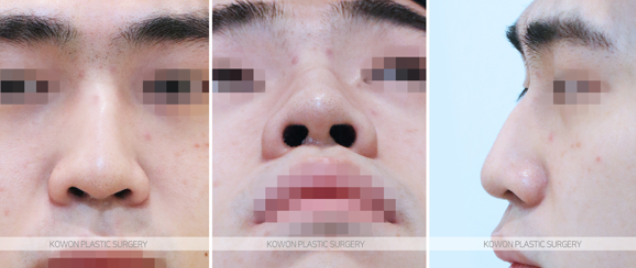
This image was used with the model’s consent.
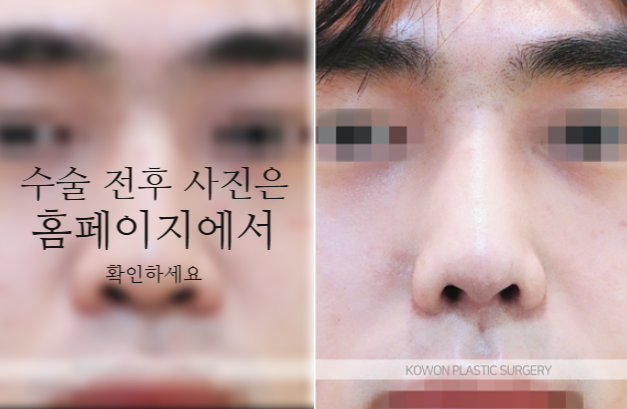
From the front, the nasal bridge can be seen to be significantly shifted toward one side. A deviated nose such as this is corrected during surgery with the goal of aligning it as centrally as possible. However, due to the structural characteristics, it may not be perfectly aligned, and some changes may appear over time, making ongoing follow-up important.
This image was used with the model’s consent.
From the front after surgery, the previously tilted bridge line can be seen to have been refined closer to the center. Overall balance was restored, creating a more stable impression.
This image was used with the model’s consent.
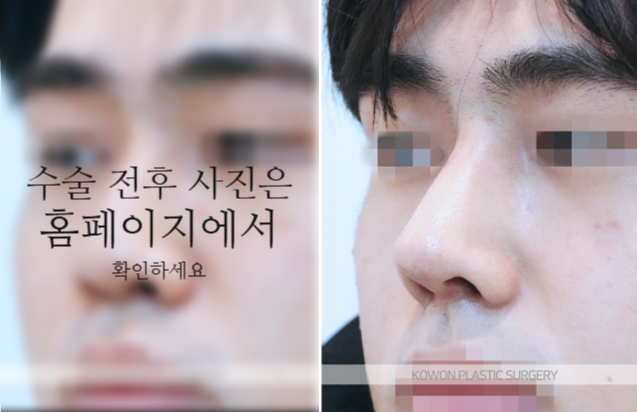
This is a view taken from a 45-degree angle. The hump that had protruded from the center of the nasal bridge was naturally refined to create a smoother line, and the uneven flow was also made more streamlined.
This image was used with the model’s consent.
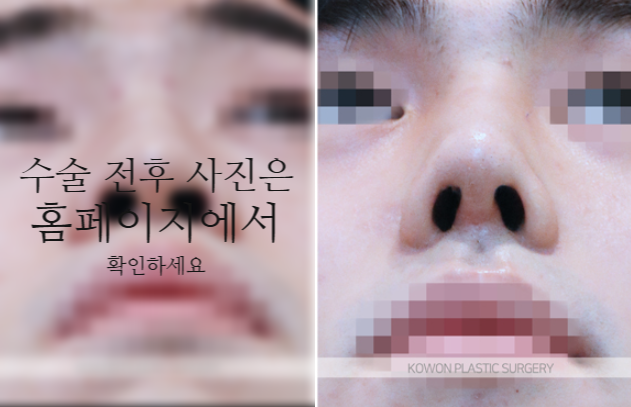
The nasal tip cartilages, which had spread apart to both sides, were brought together through nasal tip cartilage suturing. Septal cartilage was then used to supplement the height of the nasal tip, creating a natural and stable tip line.
This image was used with the model’s consent.
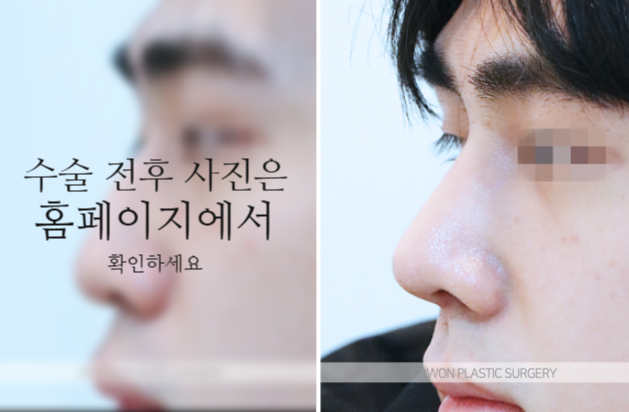
The area between the eyes had been relatively low compared with the existing height of the nasal bridge, so previously harvested cartilage tissue was used to supplement the volume. As a result, the flow from the area between the eyes to the nasal tip was connected more smoothly and naturally, while the nasal tip was also refined to a more balanced height.