[Summary]
A bumpy nasal bridge caused by a dorsal hump and a blunt-looking nasal tip can make the overall impression appear heavy and strong.
In this case, we considered nasolabial angle correction along with the shape of the nasal tip and bridge, planning to naturally refine the flow extending from the nasal tip to the philtrum.
As a result, a soft and sophisticated impression was created, and the overall balance was naturally improved through nasolabial angle correction.
This image was used with the model’s consent.
Hello, I am Dr. Kim Hyeong-taek of Cowon Plastic Surgery.
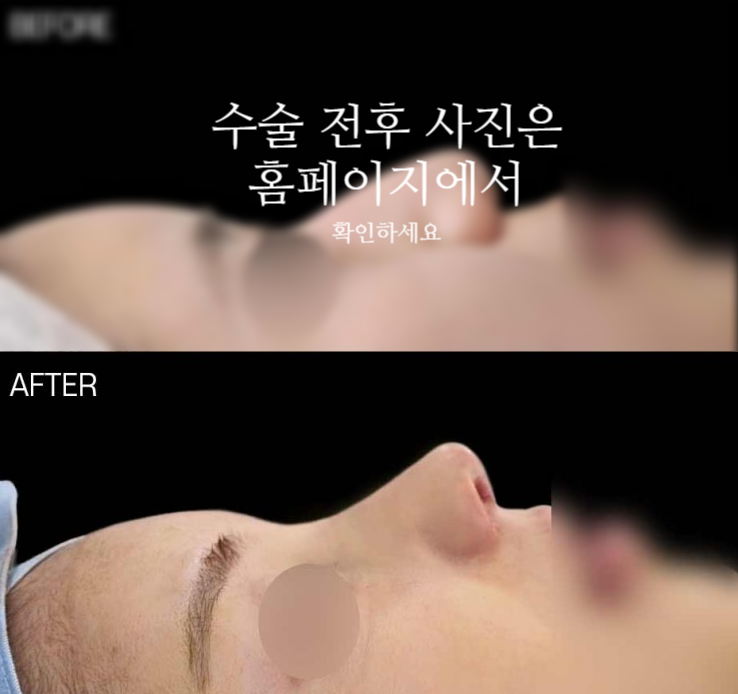
In this case, the nasal bridge appeared unevenly raised due to a dorsal hump, while the nasal tip was round and voluminous, creating an overall heavy and strong impression. In addition, the harmony between the nasolabial angle and the philtrum line was lacking, giving the impression that the mouth protruded forward. The overall appearance also seemed somewhat heavy.
In such cases, rather than simply raising the nasal bridge or adjusting the size of the nose, it is important to consider the flow extending from the nasal tip to the philtrum, including nasolabial angle correction.
First, the dorsal hump was refined so that the nasal bridge line could continue more smoothly. The nasal tip was also reshaped into a more refined form with reduced volume through repositioning of the tip cartilages, tip cartilage suturing, and removal of excess soft tissue from the nasal tip. In addition, a supporting structure was formed between the tip cartilages so that a stable shape could be maintained over time.
Nasolabial angle correction was also performed to create a natural connection between the columella and philtrum, while reducing the impression that the mouth appeared relatively protruding. In particular, during the nasolabial angle correction, the angle extending from the nasal tip to the philtrum was carefully considered to create a softer and more natural flow.
As a result, the nasal bridge, nasal tip, and philtrum line were naturally connected through nasolabial angle correction, creating a feminine, sophisticated, and natural impression without appearing excessive.
More surgical case logs by the doctor

Q1. In what cases is nasolabial angle surgery considered?
A.
Nasolabial angle correction is often considered when the angle between the nasal tip and upper lip is narrow, making the mouth appear protruding, or when the nasal tip appears drooping. Rather than simply changing the shape of the nose, it is important to consider the balance extending from the nasal tip to the philtrum and the area around the mouth.
Q2. Can nasolabial angle surgery make the mouth appear less protruding?
A.
Nasolabial angle correction does not actually change the position of the teeth or jaw. However, by adjusting the angle between the nasal tip and philtrum, it may make the mouth appear relatively less protruding. As a result, the overall side profile often appears softer and more refined.
Q3. How long does it take for the nose to settle naturally after nasolabial angle surgery?
A.
Significant swelling generally subsides considerably within one to two weeks. As the tissues stabilize afterward, the nasolabial angle and nasal tip gradually settle into a more natural appearance. Although there are individual differences, the final shape often becomes more defined gradually over the course of several months.
This image was used with the model’s consent.
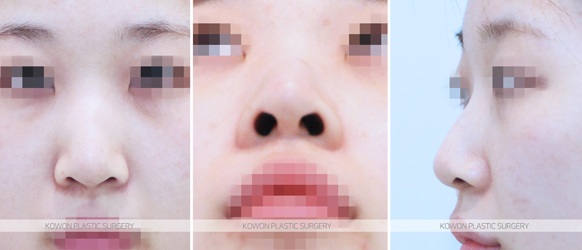
Because the nasal tip pointed downward, the depressor septi nasi muscle was removed to reduce the force pulling the nasal tip downward. In addition, the tip cartilages were spread apart laterally, so tip cartilage suturing was performed as well to create a more defined and stable nasal tip.
The area between the eyes also appeared somewhat sunken compared with the nasal bridge, so cartilage was used to naturally supplement the volume. A mild dorsal hump was observed on the nasal bridge, and this was refined as part of the procedure.
This image was used with the model’s consent.
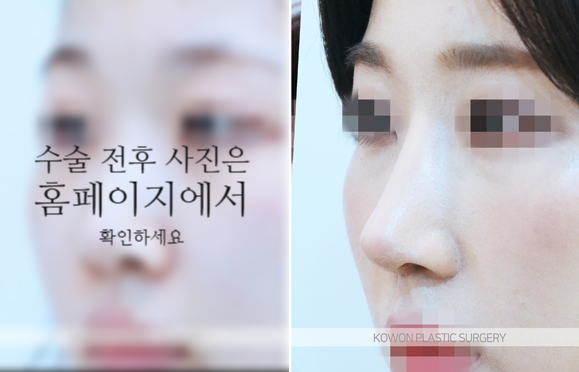
After surgery, the nasal line became more defined than before, with a natural height and contour. Overall, this case demonstrates a slimmer and more sophisticated impression.
This image was used with the model’s consent.
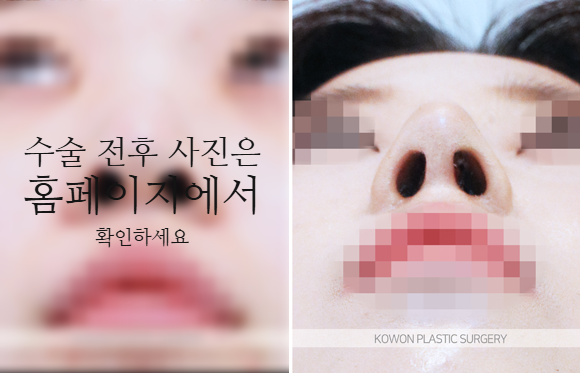
The nasal tip, which had appeared widely spread, was refined through tip cartilage suturing, and the shape of the nostrils also became more balanced. As the height and direction of the nasal tip were stabilized, the nose also gained greater definition.
This image was used with the model’s consent.
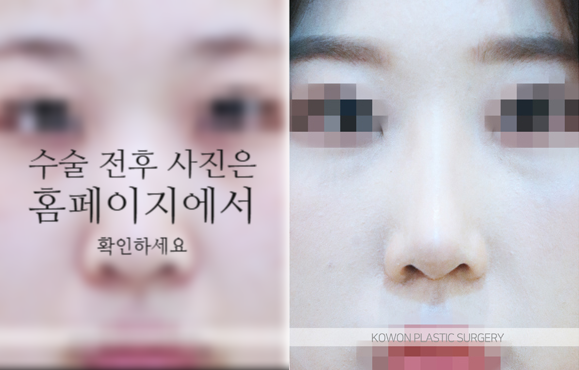
From the front, the previously broad appearance was reduced, and the central line of the nose became more refined.
This image was used with the model’s consent.
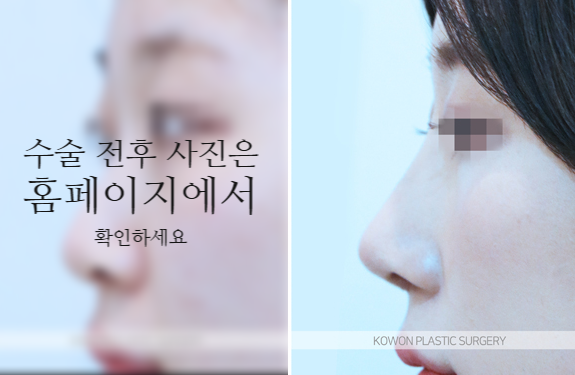
Although there were concerns about scarring due to the skin’s characteristics, the recovery progressed relatively smoothly. In cases where the nasal tip appears too long, appropriately adjusting the angle of the tip alone may help create a shorter and softer impression.
Compared with before surgery, the overall feminine and sophisticated impression was maintained, while the elongated appearance was reduced.