[Summary]
When both the bridge and tip of the nose are low and the nose is small, it is important to consider the balance and details of the entire face rather than focusing only on adding height.
In this case, the proportions of the bridge and tip were harmonized with a focus on tip cartilage repositioning, while the nasolabial angle and philtrum line were also refined to create natural dimension.
As a result, the patient maintained her existing cute appearance while gaining a more defined and sophisticated look.
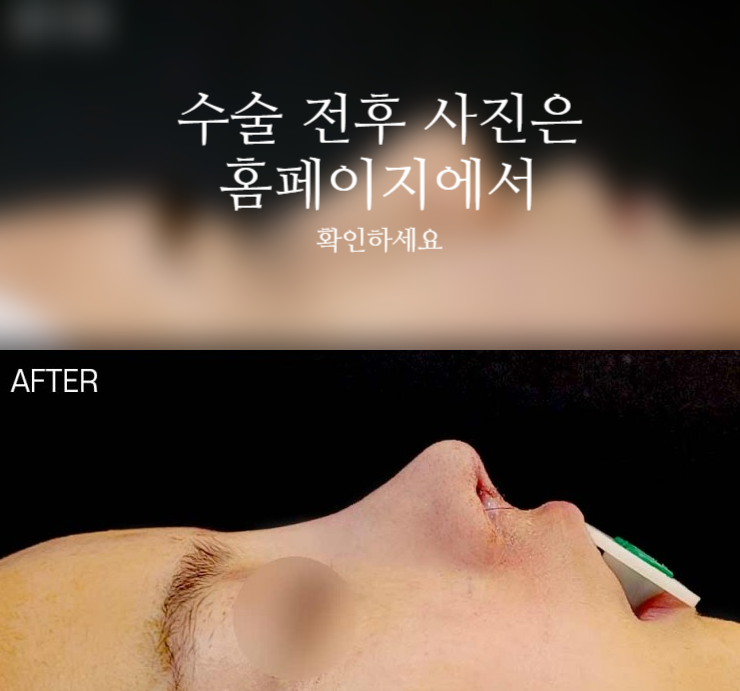
This image was used with the model’s consent.
Hello, I am Dr. Hyung-taek Kim of Kowon Plastic Surgery.
In this case, the bridge and tip of the nose were generally low, and the nose was also small, giving the face an overall cute and youthful appearance. However, the lack of dimension at the center of the face also made it appear somewhat flat.
Recently, many people prefer a natural, refined nose with well-defined details while maintaining a natural overall appearance, rather than simply emphasizing height. Therefore, it is important to consider both structure and proportions so that the nose has an appropriate presence within the face.
In this case, the bridge was shaped naturally to suit the facial proportions, while the height and direction of the tip were stabilized and refined with a focus on tip cartilage repositioning. Tip cartilage suturing was also performed, and a supporting structure was formed between the cartilages so that the shape could remain stable over time.
In particular, tip cartilage repositioning is not simply a process of raising the tip. It also adjusts the direction and dimension of the tip and plays an important role in creating a natural line that harmonizes with the entire face.
The patient’s small and cute appearance was preserved, while the details of the tip were further enhanced through tip cartilage repositioning. The nose was shaped into a sophisticated and well-balanced form rather than one that was simply made higher.
The columella, nasolabial angle, and philtrum line were also adjusted to create a natural transition from the tip of the nose to the mouth. Through tip cartilage repositioning, the plan was to preserve the patient’s existing cute image while creating a more defined and feminine appearance.

Q1. When is tip cartilage repositioning considered?
A.
It is often considered when the tip of the nose is low or short and appears to lack dimension, or when a more natural direction for the tip is desired. It is important to plan the procedure while considering not only the height of the tip but also the overall balance.
Q2. Will tip cartilage repositioning make the tip look too high?
A.
Tip cartilage repositioning is not a process that unconditionally creates height. It adjusts the direction and volume of the tip to suit the proportions of the face. Therefore, the focus is often on creating a natural and harmonious line rather than an excessive appearance.
Q3. How long is the recovery period after tip cartilage repositioning?
A.
Significant swelling generally subsides considerably within one to two weeks, while residual swelling and tissue stabilization may continue over several months. The final line of the tip gradually settles into a natural shape over time.
This image was used with the model’s consent.
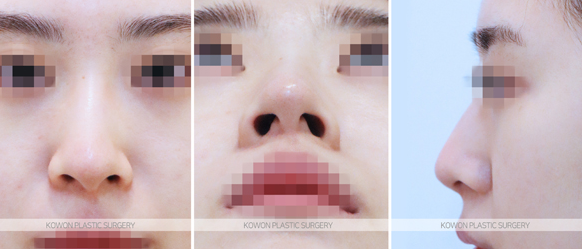
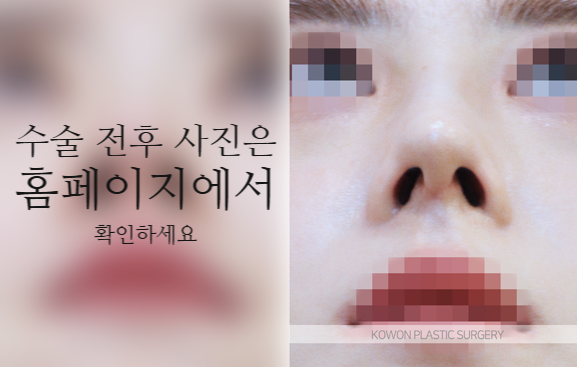
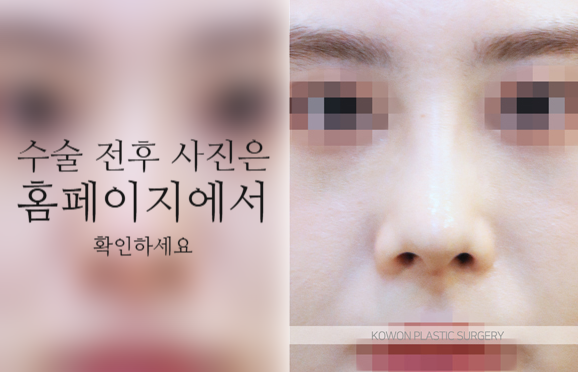
The photos show that the bridge of the nose was deviated to one side. To correct this shape, the plan included osteotomy to refine the central line. Although the tip was not excessively thick, the cartilages spread apart toward both sides when viewed from below, making the tip appear wide.
In this situation, bringing the tip together through tip cartilage suturing may help reduce the appearance of a tip that spreads like a bulbous nose. The part of the tip that appeared to extend downward when viewed from the front was also refined in a more natural direction by adjusting the depressor septi nasi muscle. Since the bridge already had sufficient height, the procedure was performed as implant-free rhinoplasty without using a separate implant.
This image was used with the model’s consent.
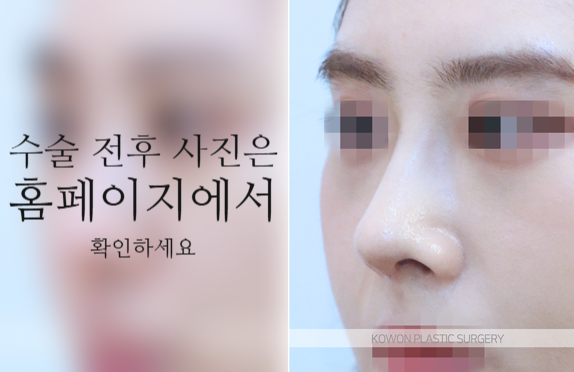
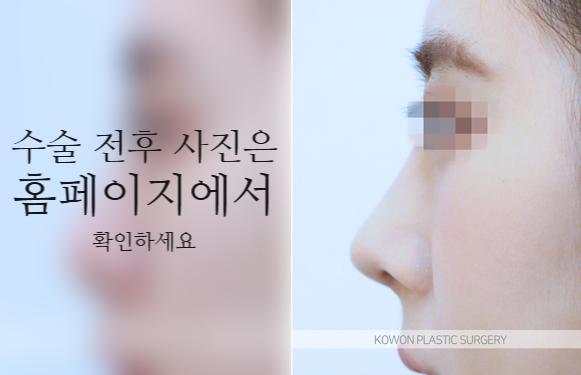
When comparing the side views, the bridge and tip connect more smoothly than before, and the overall line appears more refined. A feminine and natural appearance was created overall.
This image was used with the model’s consent.
After surgery, the height and direction of the tip were naturally refined, resulting in a more defined and dimensional shape than before.
This image was used with the model’s consent.
Just because the nostrils appear wide does not necessarily mean that nostril reduction must be performed. If the cartilages are spread apart, tip cartilage suturing alone can bring the tip together and naturally reduce the overall appearance of width in many cases.
This image was used with the model’s consent.
From the front, the previously deviated nose also showed a more stable central line and a more balanced shape than before.
A related post worth referring to is:
“Low Nose Rhinoplasty for a More Dimensional Appearance: 3 Questions About Tip Cartilage Repositioning.”