[Summary]
When a hump nose and a bulbous nose appear together, the bridge and tip may each look prominent, making the overall impression appear heavy.
In this case, considering the characteristics of a female hump nose, we focused on refining both the protruding bridge and the thick nasal tip to create a contour that blended naturally with the face.
As a result, the smooth bridge and slim nasal tip came into harmony, creating a lighter and more refined overall appearance.
This image was used with the model’s consent.
Hello, I am Dr. Hyung-taek Kim of Kowon Plastic Surgery.
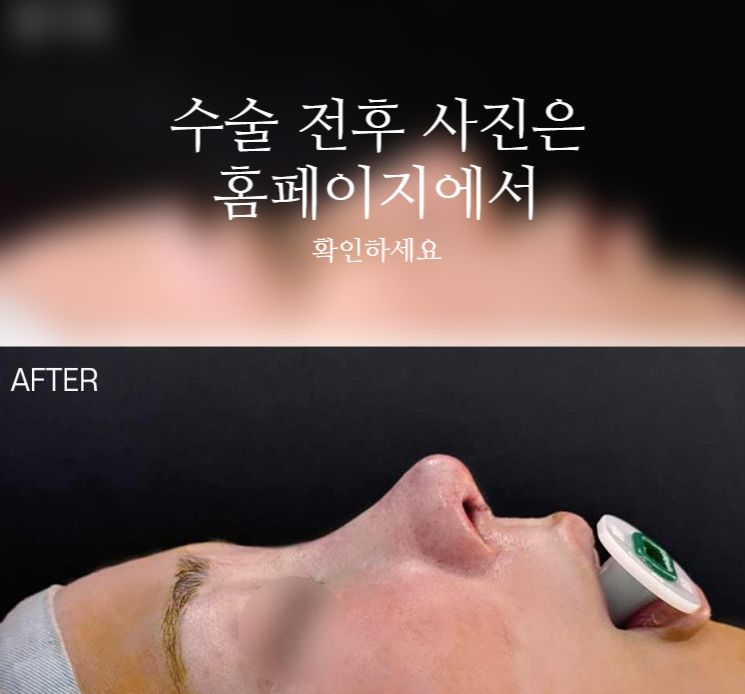
A female hump nose is characterized by a protrusion in the middle of the nasal bridge, causing the bridge line to appear bent rather than flowing smoothly. From the side, this shape can create a strong or somewhat sharp impression and may also make the entire face look rougher.
Because treatment for a female hump nose often involves refining the protruding area and adjusting the overall contour, some cases can be adequately improved without an implant, depending on the height and structure of the nose. However, additional correction may be necessary depending on the height of the bridge and the proportions of the face, so it is important to carefully consider each individual’s anatomy.
In this case, the patient had a bulbous nose with a large, spread-out nasal tip in addition to a female hump nose, giving the entire nose a large and heavy appearance.
When a hump nose and a bulbous nose occur together, it can be difficult to achieve balance by refining only the protruding area or only the nasal tip. The bridge and tip need to be planned together in harmony to achieve a more natural result.
First, the protruding hump was refined so that the bridge could flow smoothly. The nasal tip, which had appeared spread out and thick, was made slimmer through tip cartilage repositioning, tip cartilage suturing, and removal of excess soft tissue at the tip.
A supporting structure was also formed between the tip cartilages to help maintain a stable shape over time. The overall contour was carefully refined so that the bridge and tip would flow together as one natural line.
As a result, the uneven bridge characteristic of a female hump nose was smoothly refined, while the prominent tip volume caused by the bulbous nose was naturally reduced, creating a lighter and more sophisticated overall impression.

Q1. Is it possible to correct a female hump nose without an implant?
A.
In some cases, a natural contour can be created simply by refining the protruding bridge of a female hump nose. However, additional augmentation may be needed depending on the height of the bridge and the proportions of the face, so it is important to first examine the current nasal structure carefully before planning treatment.
Q2. How is treatment performed when a hump nose and a bulbous nose occur together?
A.
It may be difficult to achieve overall balance by refining only the hump or only the nasal tip. In many cases, the plan involves adjusting the bridge and tip together to create a contour that blends naturally with the entire face.
Q3. How long is the recovery period after correction of a female hump nose?
A.
Significant swelling generally subsides considerably within one to two weeks, while residual swelling and tissue stabilization may continue for several months. The final contour gradually settles into a more natural appearance over time, and the recovery period may vary depending on the individual’s condition.
This image was used with the model’s consent.
Hello. I am Dr. Hyung-taek Kim of Kowon Plastic Surgery.
Today, I would like to introduce a case in which a hump nose and a bulbous nose appeared together.
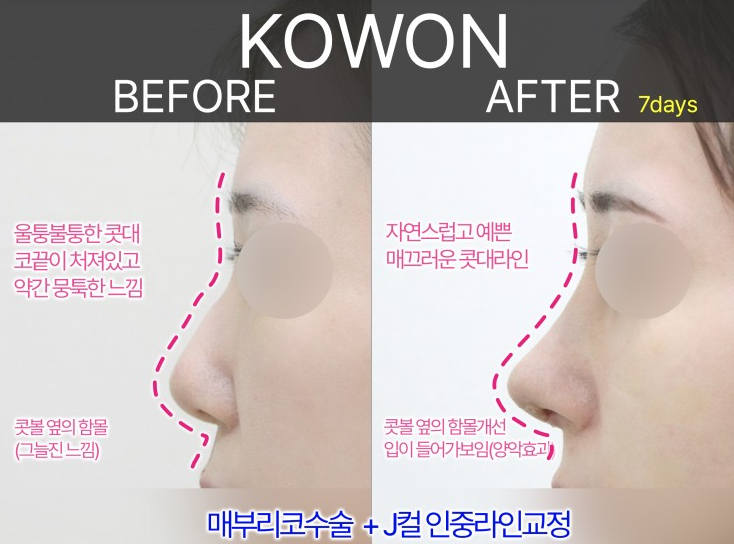
In general, a hump-shaped nose is often long, with the tip pointing downward. In this case, however, the patient also had characteristics of a bulbous nose, with a short nasal tip that appeared round and spread out.
Because the tip cartilages were widely separated, tip cartilage suturing and a supporting structure for the nasal tip were formed together to stabilize the tip’s height and direction. The inwardly retracted columella was also appropriately corrected so that the overall balance could flow naturally.
This image was used with the model’s consent.
When the lower part of the columella is retracted inward, it can make the philtrum appear longer or create the impression that the mouth projects forward. To address this, the columella was naturally brought forward, and the J-shaped philtrum line was adjusted as well, allowing the side profile to flow more smoothly and evenly.
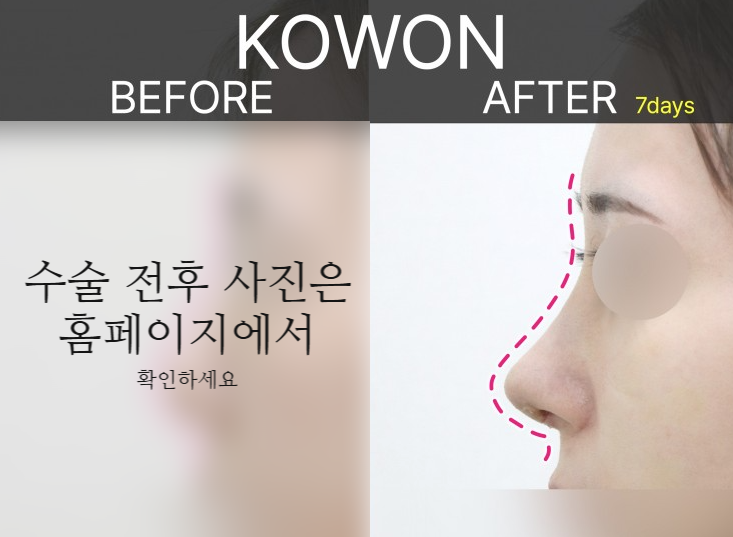
This image was used with the model’s consent.
Although the hump was not severe, the area between the eyebrows was relatively low, so the height of the nasal bridge was naturally supplemented to suit the facial proportions. This made it possible to create a smooth line flowing from the bridge to the tip.
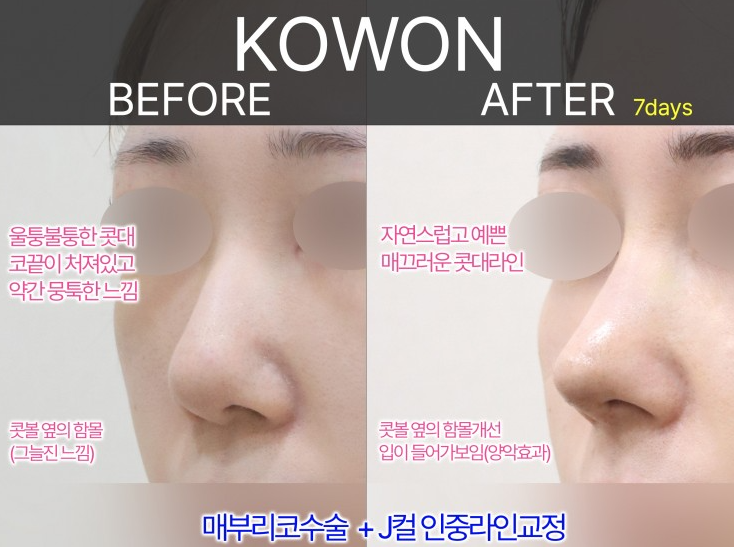
This image was used with the model’s consent.
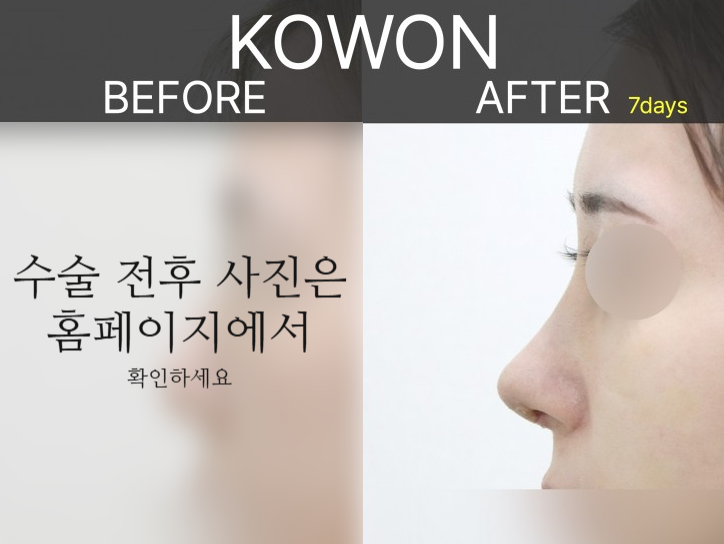
From the side, the nose appeared generally flat, while the tip looked round and somewhat congested. After surgery, the direction and contour of the tip were naturally refined, creating a feminine, sophisticated, and natural-looking nasal profile.
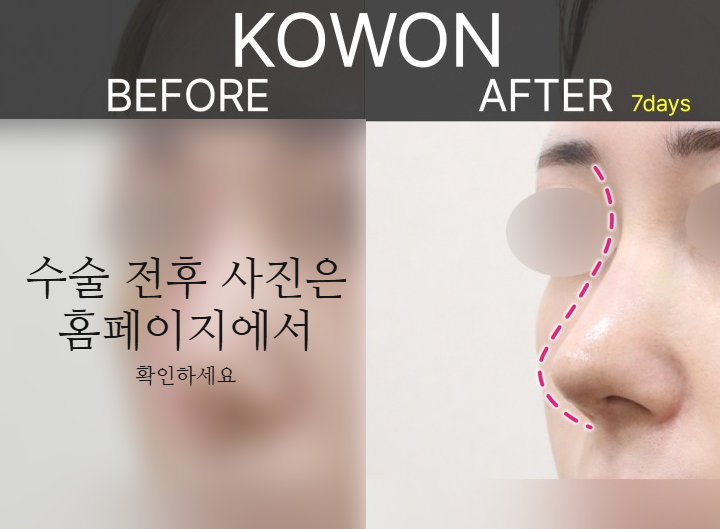
This image was used with the model’s consent.
Compared with before surgery, the height between the eyebrows was naturally supplemented, and the overall bridge and tip contour became slimmer and straighter. The impression created by the combination of the hump nose and bulbous nose was softened, resulting in a natural nasal contour that harmonized with the face.