[Summary]
When the tip of the nose drops or the overall nasal line becomes disrupted over time after an initial rhinoplasty, it is important to assess structural stability rather than simply increasing the height.
In this case, the plan focused on autologous rib rhinoplasty to rebuild support for the nasal tip and reinforce weakened structures, allowing the nose to maintain a stable shape over time.
As a result, the drooping nasal tip was naturally refined, creating a more balanced and stable nasal line.
This image was used with the model’s consent.
Hello, I am Dr. Kim Hyeong-taek of 코원성형외과.
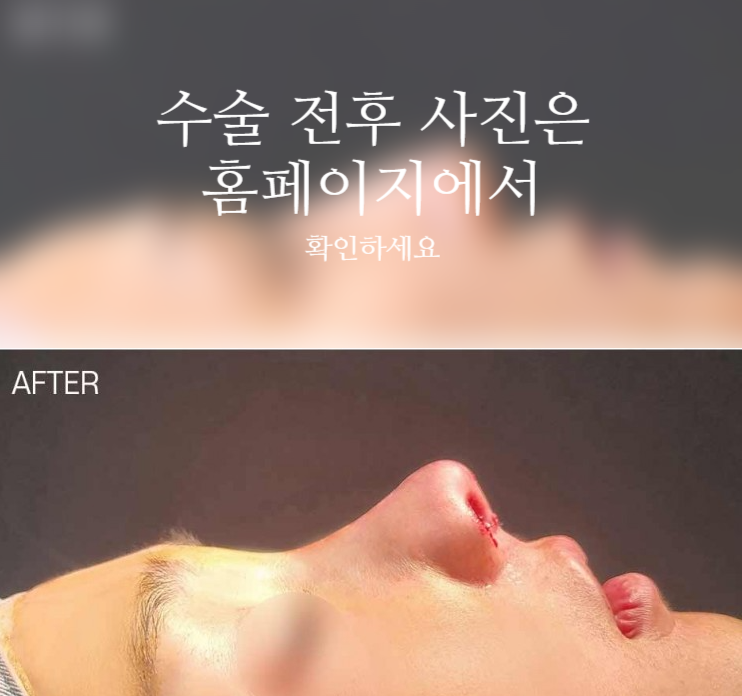
In this case, the patient visited us after the tip of the nose had gradually dropped over time following an initial rhinoplasty, causing the overall nasal line to appear as though it had collapsed and disrupting facial balance.
There can be various reasons why the nasal tip droops after rhinoplasty. If the structures supporting the tip are insufficient, the cartilage fixation is weak, or the weight of the skin and soft tissue has not been adequately considered, the tip may gradually move downward over time.
In particular, when the support structure is insufficient compared with the elasticity or thickness of the cartilage, the nose may initially appear stable but later develop a drooping tip or other changes in shape. In such cases, structural reinforcement through autologous rib rhinoplasty is often considered.
For patients who have undergone repeated surgeries, the existing cartilage may become weakened and its supporting capacity may decrease, further reducing structural stability. Therefore, rather than simply readjusting the height of the nasal tip, it is important to take an approach that forms a new overall support structure.
In this case, the existing scar tissue was thoroughly整理ed, after which the shape of the nasal tip was reconstructed through repositioning and securing the tip cartilages. A support structure was then created between the cartilages to improve stability and prevent the tip from easily dropping over time.
In revision surgery, the choice of material that can keep the nasal tip stable over a long period is also very important. Autologous rib cartilage can provide sufficient length and strength for creating a support structure and is often used to reinforce weakened existing structures.
In particular, when nasal tip drooping has recurred or there is a history of multiple surgeries, autologous rib rhinoplasty is often considered to create a more stable structure. This allows the position of the nasal tip to be maintained naturally while also taking long-term stability into account.
Ultimately, this case of autologous rib rhinoplasty was planned to naturally refine the drooping nasal tip while securing sufficient structural support so that the stable nasal line could be maintained over time.
View more surgical journals by the doctor

Q1. When is autologous rib rhinoplasty considered?
A.
Autologous rib rhinoplasty is often considered when the nasal tip repeatedly droops, revision surgery is needed, or it is difficult to create sufficient structural support using the existing cartilage alone. It is important to determine the appropriate method after examining the current nasal structure and tissue condition together.
Q2. What is important to prevent the nasal tip from drooping again?
A.
Forming a stable support structure is more important than simply raising the nasal tip. The structure should be planned by considering the strength of the cartilage, the condition of the skin, and the forces placed on the nasal tip, which may help maintain a stable shape over the long term.
Q3. How long does recovery take after revision rhinoplasty?
A.
Significant swelling generally subsides considerably within one to two weeks, while residual swelling and tissue stabilization may continue over several months. The final nasal line gradually settles into a more natural shape over time, and the recovery period may vary depending on the individual’s tissue condition and the extent of the surgery.
This image was used with the model’s consent.
This time, I would like to introduce a case involving rhinoplasty performed after double-jaw surgery.
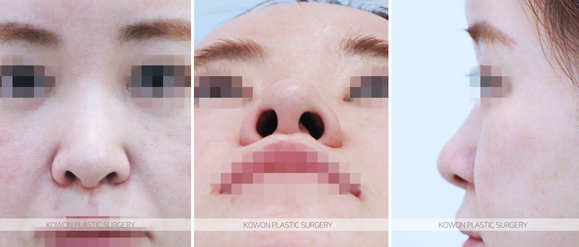
Many people wonder how the shape of the nose changes after double-jaw surgery. In this case, the patient had previously undergone a procedure to narrow and secure the nasal tip cartilages, but the nasal tip was neither severely upturned nor widely spread. However, the entire nose was tilted asymmetrically, and the bridge was generally insufficiently elevated.
This image was used with the model’s consent.
Because the patient did not want an implant, the procedure was planned using rib cartilage and an autologous particulate implant.
Many people feel uncomfortable with the use of silicone, and an autologous particulate implant is one possible alternative. One advantage is that its relatively low absorption rate may help maintain the shape planned during surgery more consistently.
By contrast, some materials that were commonly used in the past could be absorbed over time, resulting in decreased height or changes that made the nasal tip appear blunt again.
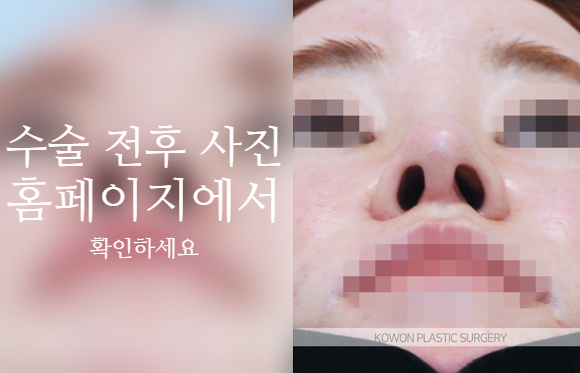
This image was used with the model’s consent.
Although the patient had previously undergone a procedure to narrow and secure the nasal tip cartilages, the cartilages had not been sufficiently brought together. Since an ideal nostril shape is close to a slender oval, the area was reopened to secure the cartilages firmly and refine both the height and direction of the nasal tip.
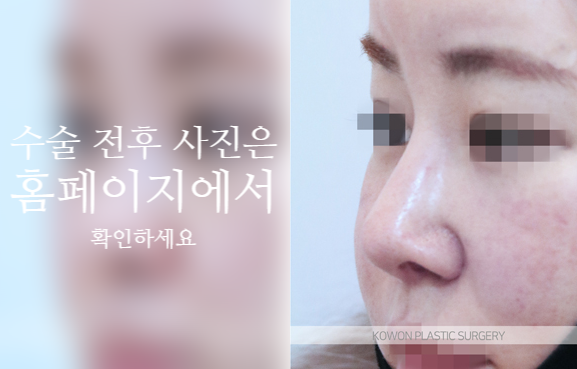
This image was used with the model’s consent.
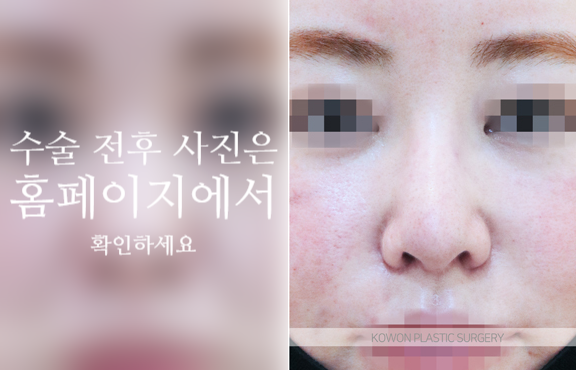
Rib cartilage was used for the nasal tip, while an autologous particulate implant was used for the bridge instead of silicone. Although some swelling remained at the time of the photographs, the overall line appeared natural and softly formed.
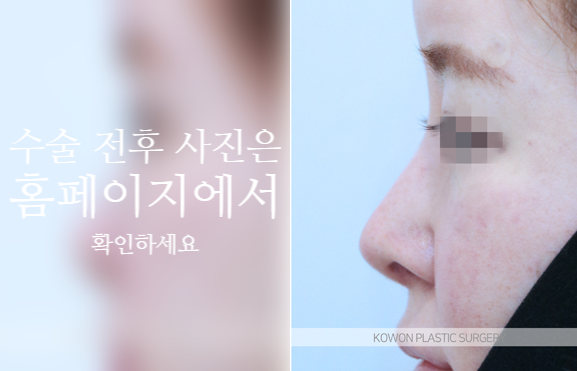
This image was used with the model’s consent.
After surgery, the balance of the nose was improved, which also reduced the impression that the mouth appeared relatively prominent. The overall profile line also became noticeably more natural.
A post worth reviewing in relation to the content above
“3 Reasons Why the Nasolabial Angle and Nasal Tip Balance Should Be Considered in Revision Rhinoplasty”