[Introduction]
Hello. I am Dr. Hyung-taek Kim, director of Kowon Plastic Surgery.
People who visit us because they are concerned that their nostrils are highly visible from the front generally describe their concerns in similar ways.
They say their nose looks short, the center of their face appears less defined, and their nostrils are the first thing they notice when taking photos.
When planning upturned nose surgery, the important point is not simply to reduce the visible area of the nostrils. First, we need to examine why the nasal tip is directed upward and how the columella and alar wings are related to each other.
“Isn’t it enough just to make the nostrils less visible?”
In reality, it is difficult to approach the issue that simply.
The position of the nasal tip cartilage, the supporting strength of the nasal tip, the length and angle of the columella, and the degree to which the alar wings are lifted usually work together to create the amount of frontal exposure.
During consultations, some people think the issue can be resolved by reducing the width of the nostrils. However, if the nasal tip continues to point upward, the nostril exposure may not be sufficiently corrected, or the lower part of the nose may instead look constricted.
The standard I consider important is determining in which direction the nasal tip should move to look natural.
Rather than forcibly lowering the nasal tip, we need to check the range in which it can be lowered stably within the existing structure and whether adequate support can be maintained.
That is how we can create a flow that does not look awkward from the front, side, or 45-degree angle.
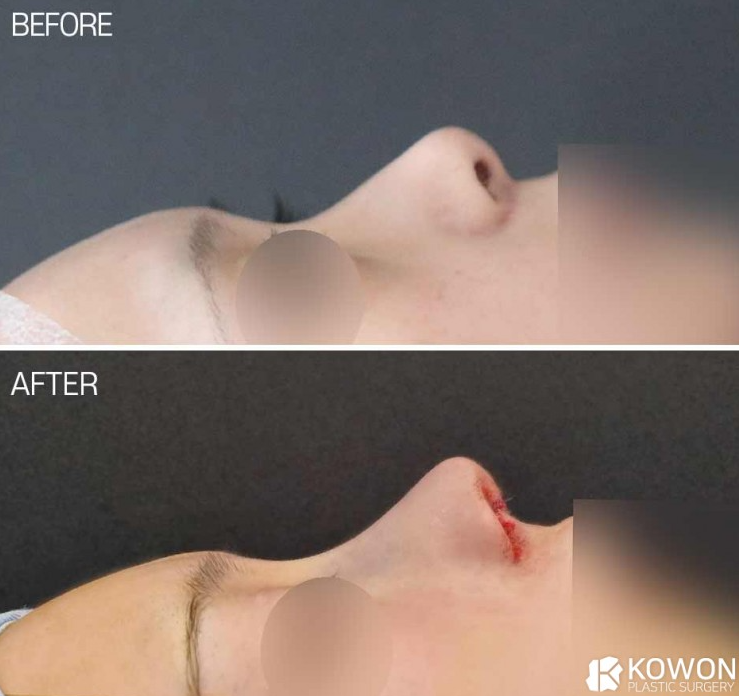
Photographs used with the model’s consent.
A case of an upturned nose in which the nostrils were highly visible from the front
This surgical case involved a nasal tip that pointed upward, making the nostrils highly visible from the front, along with a short and lifted nasal tip.
Overall, the alar wings appeared spread out, exposing the underside of the nose. As a result, the facial impression appeared light and somewhat unnatural.
“I feel uncomfortable taking photos because my nostrils are too visible from the front.”
In cases like this, we do not plan surgery simply by reducing the nostrils or narrowing the width of the alar base.
In reality, the overall balance can only be achieved by adjusting the direction and structure of the nasal tip together.
In this case, the lifted nasal tip structure was refined through repositioning and reshaping the nasal tip cartilage, and a support strut was placed between the nasal tip cartilages to provide sufficient support for the tip to remain stably directed downward.
When the nasal tip becomes stably positioned downward after upturned nose surgery, excessive nostril exposure from the front naturally decreases.
At this point, we examine not only the nasal tip but also the columella and nasolabial angle.
If the columella is short or flat, the alar wings may appear relatively more prominent. Therefore, the shape of the nostrils can be refined more smoothly only when the structures beneath the nose are also addressed.
In this case as well, the length of the nasal tip and the columella were improved together so that the nostril shape would transition more naturally. The areas where the alar wings appeared spread out were also adjusted in the same direction.
Generally, bringing the nasal tip structures together and providing support can also narrow the alar width. However, if the alar wings themselves are shaped so that they lift outward, separate alar correction may be considered.
Photographs taken immediately after surgery show the stage before swelling has fully developed, so the nasal bridge and tip lines created during surgery, as well as the direction of the structures beneath the nose, can be seen relatively clearly.
As swelling subsides and the tissues stabilize during recovery, the lines become somewhat softer. The final appearance may vary depending on each person’s skin condition and structural characteristics.
[Case Reference]
Source
https://kowonps.com/bbs/board.php?bo_table=6sub05&wr_id=73
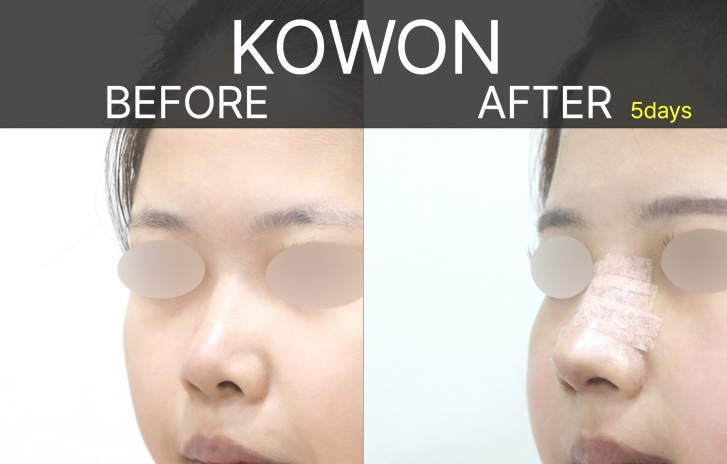
Photographs used with the model’s consent.
Why nasal tip lengthening is important for a small, upturned nose
Let me also show you a reference case.
Here, too, the nose was generally short, and the nasal tip was lifted, making the nostrils visible from the front.
When a bulbous appearance and the characteristics of a small nose are also present, how much additional length can be achieved at the nasal tip becomes an important factor in determining the overall line.
In general, the smaller the nose, the less likely it is that a sufficient amount of septal cartilage will be available. Therefore, both securing surgical materials and designing the supporting structure must be considered together.
When I conduct consultations for upturned nose surgery,
I place more importance on “how stably the lowered nasal tip can be maintained” than on “how far the nasal tip can be lowered.”
With a short nose, if the nasal tip is forcibly lowered on its own, we must consider the possibility that it may appear lifted again over time. Therefore, we review the option of constructing a supporting structure using the necessary materials, such as rib cartilage or ear cartilage.
“Is it difficult to lower the nasal tip sufficiently if my nose is small?”
In reality, not every small nose requires the same surgical plan.
We need to comprehensively consider the skin’s available flexibility, the size of the cartilage, the condition of the septum, and the degree to which the nasal tip is lifted. Securing an appropriate amount of length without going too far within the possible range leads to a natural result.
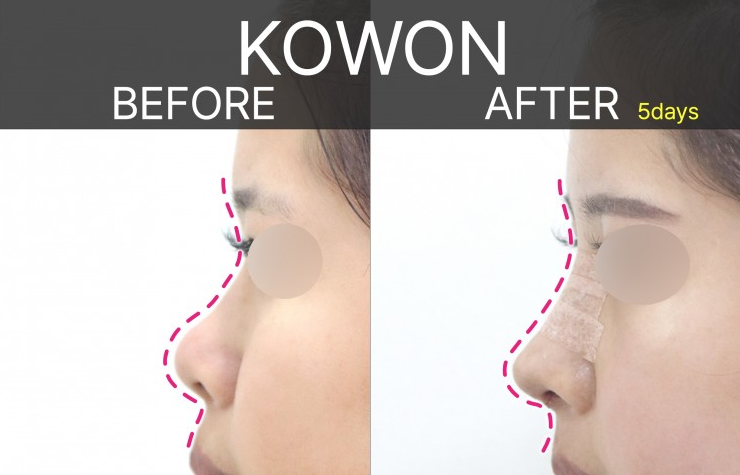
Photographs used with the model’s consent.
Why the columella and nasal tip structure must be examined together
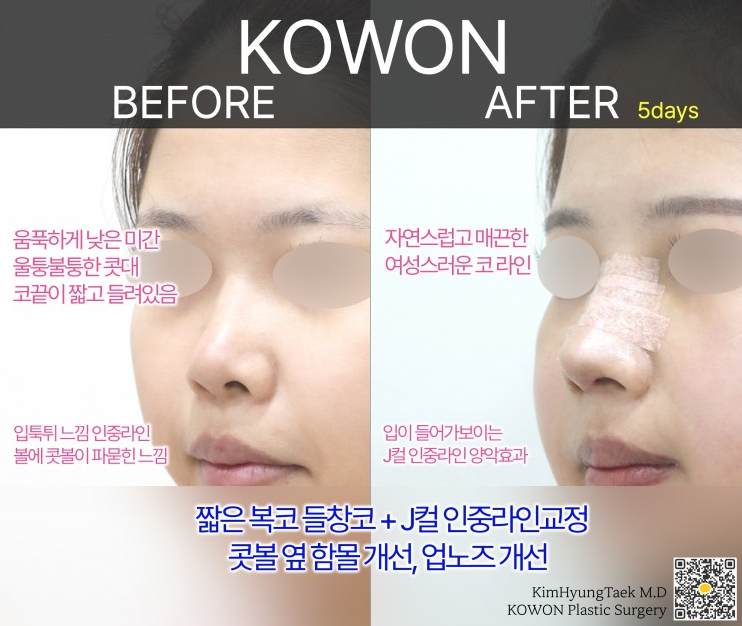
In the side-view photographs of this case, the alar wing appeared to be sunken into the cheek area.
As the nasal tip and columella were pulled forward and the structures beneath the nose were refined, the previously sunken alar wing became more clearly defined, and the area beneath the nose appeared less constricted.
During consultations, some people initially visit because of nostril exposure alone, but the diagnostic process may reveal that the columella is short or that the nasal tip lacks sufficient support.
In such cases, it is important to stabilize the direction of the nasal tip while adjusting the columella and nasolabial angle. The nasal tip should not simply be raised forward; it should be appropriately lowered and refined within a flow that connects naturally with the lower part of the face.
The goal of upturned nose surgery is not to make the nose unconditionally longer.
In my view, it is more important that the nostrils are less visible from the front while the relationship between the lips and nasal tip flows naturally from the side.
When the overall volume of the nose is appropriately restored, as in the reference case, the impression of the mouth having previously appeared relatively prominent may also look more balanced.
Photographs used with the model’s consent.
Designing with both natural changes and the original impression in mind
The key point is that the round, blunt-looking nasal line before surgery was refined into a natural yet smooth nasal contour.
It is also important that the design did not completely eliminate the person’s original round appearance. Since the nose forms the center of the face, even a clearer line can significantly change the overall impression. However, if it does not harmonize with the existing atmosphere, it may feel awkward.
“Will correcting an upturned nose make my overall impression look too strong?”
This is a perfectly understandable concern.
In my experience, with a short, upturned nose, the direction and smoothness of the curve have a greater effect than the amount by which the nasal tip is lowered.
When viewed at a 45-degree angle, if the overall volume of the nose is restored and the nasal tip is stabilized, the face can look more balanced while retaining its original cute or gentle impression.
A comparison of records taken immediately before and after surgery shows that the bulbous and upturned appearance had been softened even while swelling was still present.
Generally, we do not determine the final appearance based solely on photographs taken immediately after surgery. We also take into account the process through which the tissues stabilize during recovery. Therefore, when explaining the expected outcome, I discuss not only the immediate changes but also the possibility that the appearance will settle naturally over time.
Photographs used with the model’s consent.
[From the Director]
“Upturned nose surgery requires examining the entire structure, not just the nasal tip.”
A nose with highly visible nostrils from the front may appear to be a simple issue of exposure, but in reality, the direction of the nasal tip, columella length, nasolabial angle, and alar shape are often interconnected.
When planning upturned nose surgery, deciding first only how much to reduce the nostrils may result in an imbalanced overall flow.
For this reason, I consider it important to examine the structures beneath the nose from multiple angles.
Thank you.
More surgical case records from the director