
[Introduction]
Hello. I am Director Kim Hyung-taek of Kowon.
When consulting with patients, I sometimes hear similar opening questions from people who visit because their nostrils appear wide.
"Will my nose look smaller if I only reduce the width of my nostrils?"
This is a natural question that often comes up during consultations.
However, in my view, rather than assessing the width of the nostrils separately, it is important to examine how widely the nasal tip is spread, whether the columella appears short, and whether the alae are drooping. This helps determine the appropriate approach.
When looking at before-and-after results of alar reduction surgery, focusing only on whether the width from side to side has decreased can cause you to miss the essence of the change.
In many cases, the reason the nostrils appear wide is closely connected with the soft tissue of the nasal tip, the position of the alae, and the length of the columella.
This article summarizes cases in which reducing the width alone was not sufficient, based on a surgical record involving a low nasal bridge and a bulbous nose, drooping alae, and a short, flat-looking columella.
Rather than focusing on dramatic changes, I hope you will consider which areas need to be adjusted together to create a naturally refined appearance within the patient’s existing structure.
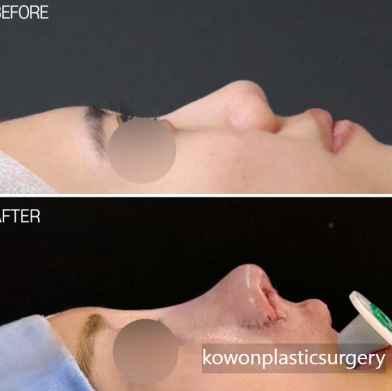
These photos were used with the model’s consent.
In this case, the low nasal bridge made the center of the face appear less defined, and the nasal tip also appeared broad and bulbous.
In addition, the alae appeared to descend, while the columella was relatively short and flat, making the alae appear even more prominent.
In cases like this, simply raising the nasal bridge slightly or refining only the nasal tip may not be enough to achieve overall balance. During consultations, rather than viewing the structures beneath the nose separately, I first examine the relationship among the nasal tip, columella, and alae.
"If my nasal bridge is low and my nostrils are wide, can the issue be resolved with just one procedure?"
In reality, changing only one element can make another area appear more prominent.
Therefore, in this case, the plan was to establish the center of the nasal bridge in proportion to the face and reduce the volume that made the tip appear broad through nasal tip cartilage repositioning, nasal tip cartilage suturing, and soft-tissue refinement.
A supporting structure was placed between the nasal tip cartilages to add stability and help prevent the refined shape from appearing spread out again.
The supporting structure of the columella was reinforced to reduce the short and flat appearance, while adjusting the balance between the nasal tip and alae so that it would not look awkward.
In particular, the downward-drooping alae were refined through alar lifting while adjusting their relationship with the columella.
These steps needed to be performed together to soften the congested appearance of the lower nose and reduce the broad look seen from the front in a more balanced way.
The wide nostrils were reduced evenly from side to side through incision-based alar reduction.
With the incision-based method, the skin and soft tissue can be reduced directly, allowing the direction of width reduction to be established relatively clearly. However, early scar and swelling management must be monitored carefully according to each individual’s skin characteristics.
An important point when viewing before-and-after results of alar reduction surgery is not simply the reduction in width, but whether the reduced width connects naturally with the contours of the nasal tip, columella, and alae.
The key in this case was likewise to refine the lower nasal structure as the previously low and broad appearance was softened.
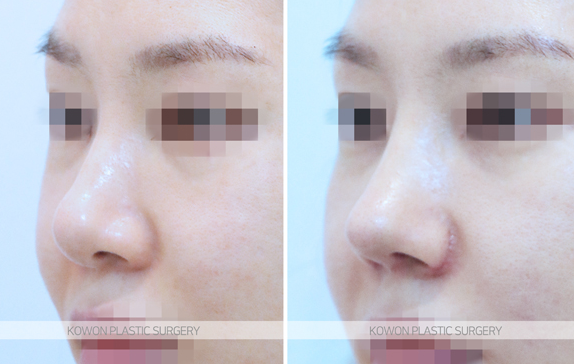
These photos were used with the model’s consent.
[Reference Case]
The reason nasal tip refinement was also performed in the low nasal bridge and bulbous nose case discussed above lies here.
In actual consultations, some people who feel that their nostrils are wide have a nasal tip that appears broadly spread, which contributes more to the impression than the width of the nostrils themselves.
"If my nostrils are reduced but my nasal tip remains the same, will the change look minimal?"
That can happen in such cases.
Even if the width of the nostrils is reduced from side to side, the front-facing impression may still feel blunt if the center of the nasal tip remains wide and heavy. Therefore, the position of the nasal tip cartilage may be refined, the cartilage sutured to bring the center together, and soft tissue reduced when necessary.
In the reference case, the heavy appearance of the nasal tip was reduced at a 45-degree angle after surgery, and the tip appeared more defined.
However, because this was an early stage of approximately two weeks after surgery, the scar at the site where the ala had been excised could appear dark. This area should be observed calmly during the initial recovery process.
When viewing before-and-after photos of alar reduction surgery, it is also important to distinguish between the final result and the early recovery period.
Swelling, scar color, and skin reactions progress differently for each person. Rather than drawing conclusions about the entire result within a short period, it is more realistic to first look at the direction in which the structures have been refined.
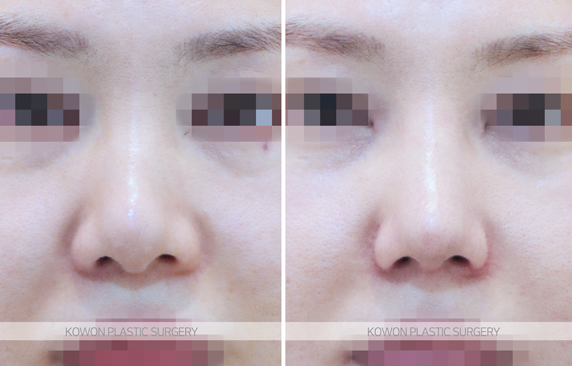
These photos were used with the model’s consent.
People concerned about a bulbous nose and wide nostrils generally expect a nose that is “definitely smaller.”
Of course, it is possible for the nose to look more refined and slimmer after surgery. However, what I consider important is not the size of the change, but whether the change suits the individual’s face.
In the reference case, the nose changed to look smaller and more refined than before, but the goal was not to make it identical to the shape of someone who naturally has a very small, narrow nose.
In fact, reducing it too much can make it look unnatural if it no longer matches the proportions of the midface and area around the mouth or the contours of the face.
"I want to reduce it as much as possible. Wouldn’t that make it look prettier?"
I fully understand this feeling when it comes up during consultations.
However, in such cases, it is important to explain both how much can be reduced and what proportions will remain after the reduction.
If only the width of the nostrils is reduced aggressively without adequately considering the nasal tip, columella, or drooping alae, the before-and-after change may look disconnected in some way.
What determines satisfaction with before-and-after results of alar reduction surgery is not only the reduction in width visible in numbers.
When the nasal tip is refined, the columella does not appear too short, and the congested appearance caused by downward-drooping alae is softened, the overall impression flows together more naturally.
Ultimately, it is more important to first identify why the nose appears wide than to focus on how much the width has been reduced.
In such cases, I examine the flow of the nasal tip and alae from the front, at a 45-degree angle, and from the side, then establish a range that will not look awkward in relation to the face as a whole.

These photos were used with the model’s consent.
[Conclusion]
Although the concern that the nostrils appear wide may seem simple on the surface, the underlying causes are often divided into several layers when examined closely.
The center of the face may appear less defined because of a low nasal bridge, the nostrils may feel wider because the nasal tip is spread out, or the lower nose may look congested because the columella is short or the alae are drooping.
In my view, the most important standard when assessing this issue is not how noticeable the reduction is, but whether the overall contours have been refined.
There are times when reducing the width through an incision is necessary, but that decision should be made after examining the nasal tip, columella, and position of the alae together.
It is important for surgery to be performed naturally, within the possible range and in accordance with the individual’s existing features and facial proportions.
This does not mean lowering your expectations. Rather, it means that setting goals after fully understanding the realistic structure can help you accept the result more steadily.
When consulting with patients, instead of reaching a conclusion based only on the width visible in photographs, I try to take time to examine the impression the nose creates on the actual face.
After thorough consultation and assessment of the individual’s condition, finding an approach that creates natural balance rather than excessive reduction is the standard I consider most important when planning this type of surgery.
A related post you may wish to refer to is:
"How Much Will Alar Reduction Surgery Change? A Summary of the Bulbous Nose Line Transformation Process."