Hello. I am Dr. Hyung-taek Kim, director of Cowon Plastic Surgery.
When consulting with patients who have low, wide, bulbous noses, quite a few are concerned about the swelling seen during recovery, just as much as the changes brought about by surgery. Usually, the elevated nasal bridge is the first change people notice, while the nasal tip may look blunt for some time because of the thickness of the skin and the soft tissue.
"My nasal bridge looks higher, but is it okay that only the tip still looks blunt?"
This is actually a fairly common concern during recovery after bulbous nose surgery.
Even when both the nasal bridge and tip are adjusted, swelling in a low, wide nose does not subside at the same rate in every area. In particular, after the tip cartilage is brought together and the supporting structure is established, the skin needs time to adapt to its new shape. As a result, the desired contour may not be immediately visible in the early stages.
When I consult with patients, I focus on whether the width can be reduced through tip cartilage suturing alone, or whether balance requires consideration of the nasal bridge height, tip support, and skin thickness together.
In these cases, rather than judging the final result based only on photos taken immediately after surgery, it is important to distinguish which areas still have swelling.�
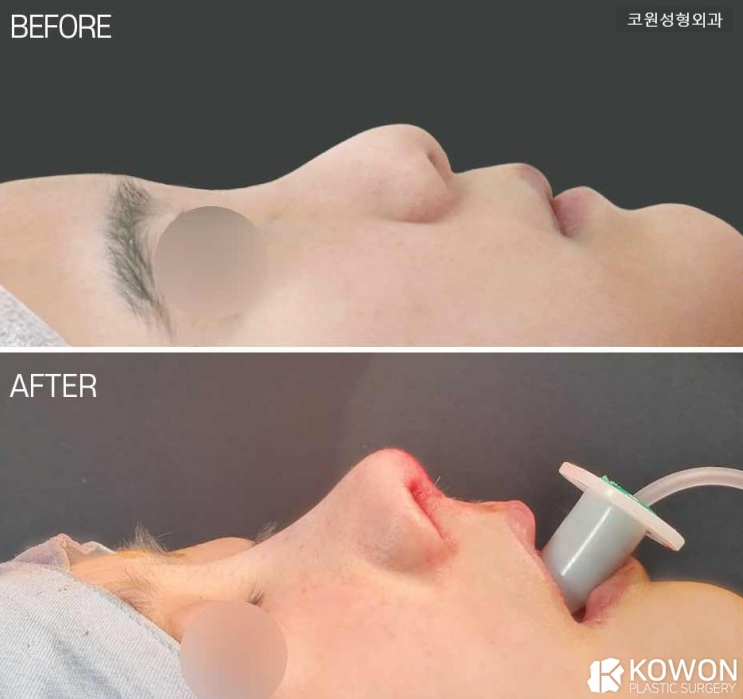
Photos used with the model's consent
Tip Cartilage Suturing Swelling
The subject of this surgical case had a bulbous nose with a wide, spreading tip, along with a low nasal bridge that made the center of the nose appear less defined.
Overall, the nose looked wide and blunt. The before-and-after photos taken immediately after surgery show the direction of the changes and how the structure was refined.
In my view, with this type of nose, it is important not to pursue an excessively large change, but to refine the structure within the range that the skin can accommodate.
When the nasal skin is not excessively thick, the nasal bridge is not extremely low, and the nasal tip is spread out, bringing the tip together can be expected to naturally reduce its width.
In this case, it was necessary to adjust the nasal bridge and tip together to achieve overall balance, rather than refining the tip alone.
The tip was treated with a combination of tip cartilage repositioning, tip cartilage suturing, and tip soft-tissue removal to reduce the volume that made it appear spread out. A supporting structure was established between the tip cartilages, with a focus on reducing the forces that could cause them to spread again.
The nasal bridge was formed at a height suited to the proportions of the face, helping define the center of the midface and creating a contour that connected naturally with the nasal tip.
In cases like this, proceeding with a non-implant method that refines only the tip may make the change appear somewhat limited. Depending on the individual's condition, appropriately supplementing the height of the nasal bridge may provide a more balanced approach.
As a result, the previously wide and blunt impression was refined, and the center of the nose became more defined, creating an overall natural and clearer contour.
However, these photos were taken immediately after surgery, so it is also necessary to consider the subsequent process in which swelling in the tip and nasal bridge subsides at different rates and the contour becomes more refined.
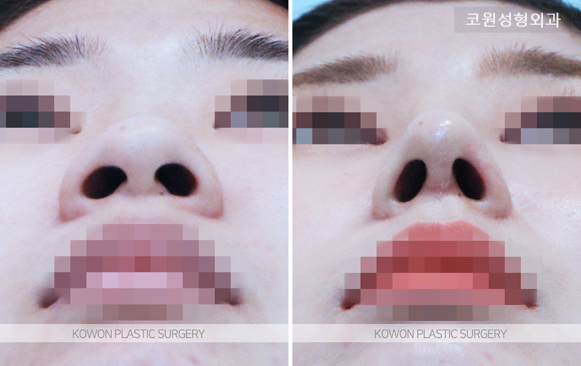
Photos used with the model's consent
Tip Cartilage Suturing Swelling
[Introduction to a Reference Case]
The reference case also showed the typical features of an East Asian nose: an overall low and small nose with a blunt, spread-out tip.
Seen from below, the tip cartilages spread outward on both sides, making the nostrils appear horizontally oriented. Since the patient wanted a natural change, it was important to bring the spread cartilages together rather than raising the tip excessively.
"Can a bulbous nose look even larger during the early period after surgery?"
Immediately after the tip tissue is refined and the supporting structure is established, the added swelling can make the tip temporarily look firm and round.
Even when tip cartilage suturing sets the cartilages in a direction that brings them together, it takes time for the skin and soft tissue to settle into that shape. Therefore, it is difficult to determine the result based only on the blunt appearance in the early stages.
The standard I consider important is whether the width of the tip only appears swollen, or whether the original cartilage and alar structure are inherently broad.
In such cases, it is not simply a matter of waiting for postoperative swelling to subside. The separation of the tip cartilages, skin thickness, and width of the nasal alae must all be assessed during the initial planning stage to create a natural-looking change.
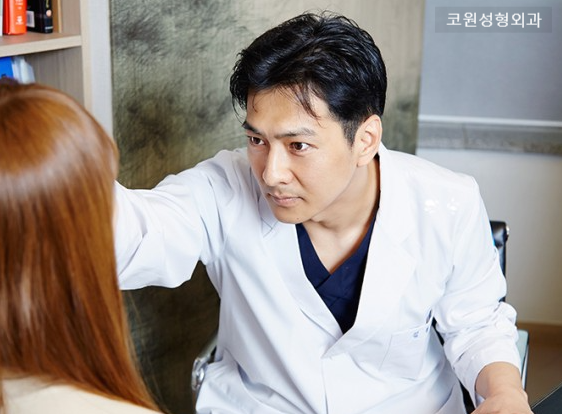
[The Director's Note]
After surgery for a low, wide, bulbous nose, there are cases in which the change in the nasal bridge is visible first, while the tip takes a little longer to become defined.
In consultations, I often meet patients who are worried because the tip still looks round immediately after surgery or during the early recovery period. In many cases, the contour gradually becomes smoother as the swelling subsides and the skin adapts to the new structure.
Of course, I do not mean that every case can simply be resolved by waiting.
The first thing I check during an examination is whether the current bluntness is swelling from the normal recovery process, or whether it is a structural issue requiring a reassessment of the initial plan for tip support, alar width, or nasal bridge height. Tip cartilage suturing alone is clearly sufficient in some cases, while other cases require additional adjustments.
"So, would my nose need work on the tip alone, or should the nasal bridge be considered as well?"
Usually, the direction of treatment can be determined only after examining the shape of the tip from the front, side, and underside, along with the skin thickness, cartilage strength, and overall facial proportions.
With a low, wide nose, the goal is not simply to make the tip smaller. More important is whether the flow from the nasal bridge to the tip looks natural within the face.
Postoperative swelling can feel unsettling, but at times it is also a passing stage before the result settles into place. During consultations, I try to explain as realistically as possible what changes can be expected and how long it may be necessary to wait.
I believe that making only the adjustments that are needed based on a thorough diagnosis, and deciding on the approach after understanding the recovery process as well, is the way to achieve a natural-looking nasal contour.
#TipCartilageSuturingSwelling