All posts are written personally by Director Oh Jung-min of 닥터오의원.
Hello. I’m Director Oh Jung-min of 닥터오의원, where we put sincerity into everything we do.
There is something I emphasize and recommend every summer.
It is lowering your skin temperature.
Why should you lower your skin temperature?
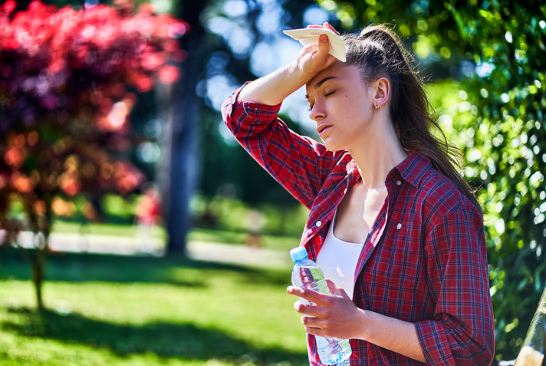
In summer, skin does not simply sweat more.
As the temperature of the skin’s surface rises,
sebum production increases, making pores look more prominent,
while redness, heat sensations, and swelling may develop,
which can easily
lead to a decline in overall skin condition.
Several studies have examined the relationship between skin temperature and sebum. There was a significant relationship between localized changes in skin temperature and the sebum excretion rate, and the sebum excretion rate has been reported to vary by approximately 10% per 1℃ depending on whether the skin temperature is heated or cooled.
Repeated heat stress can also affect skin aging. Exposure to heat or infrared radiation may be associated with increased MMPs, infiltration of inflammatory cells, and changes in the dermal extracellular matrix, which can reduce skin elasticity.
A recent randomized crossover trial also found that exposure to an environment at 32℃ made the skin feel oilier and stickier than exposure to 22℃, while actual sebum secretion and inflammation-related markers such as IL-1α increased.
However, exposure to temperatures that are too low can instead cause skin tightness, dryness, and a weakened skin barrier.
The important point is to return overheated skin to a stable temperature.
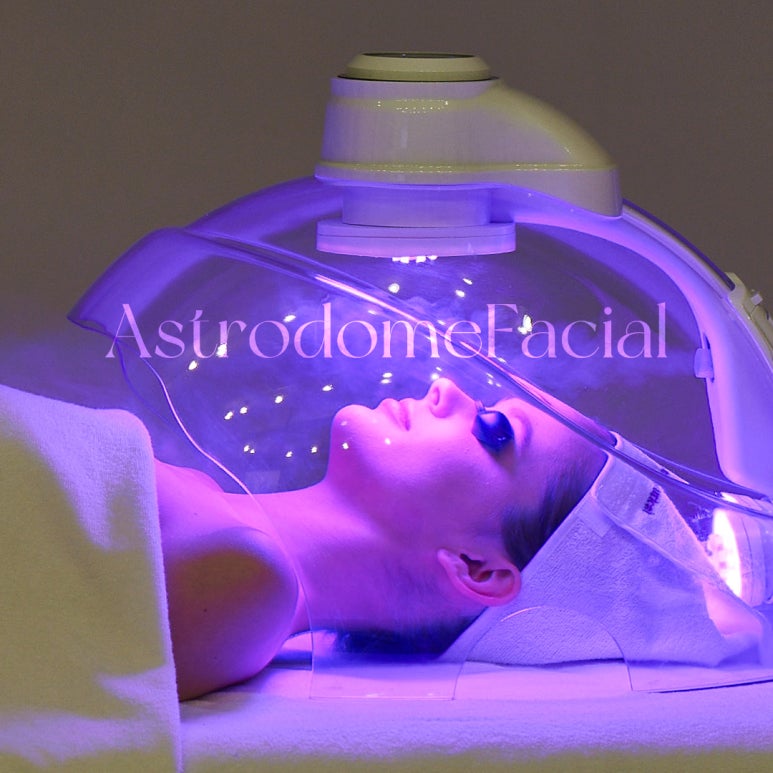
What is the Astro Dome Facial—also called Astronaut Toning—which I recommend and offer as a seasonal program every summer?
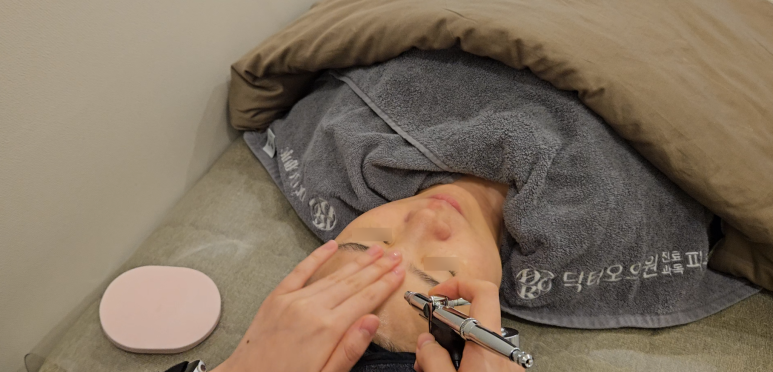
First, it uses an oxygen and negative-ion mist.
As the mist sprayed from the device comes into contact with the skin’s surface, it helps reduce the sensation of heat and provides moisture to skin that has become sensitive due to hot weather or a treatment.
One advantage is that it can be applied to the face and scalp at the same time.
Second, it uses photobiomodulation based on near-infrared light.
NIR (near-infrared light) is involved in mitochondrial pathways, inflammatory signaling, and recovery responses in skin cells. Reductions in wrinkles, increased elasticity, and increases in collagen and elastic fibers have been reported.
Third, it provides a dome-shaped, non-contact care environment.
Because mist and light energy are applied simultaneously inside a dome structure that surrounds the entire face, it causes less irritation than care involving rubbing or pressure by hand and can help soothe skin irritated by hot weather, lasers, peels, or skin boosters.
So, what benefits can you expect from Astro Dome Facial care?
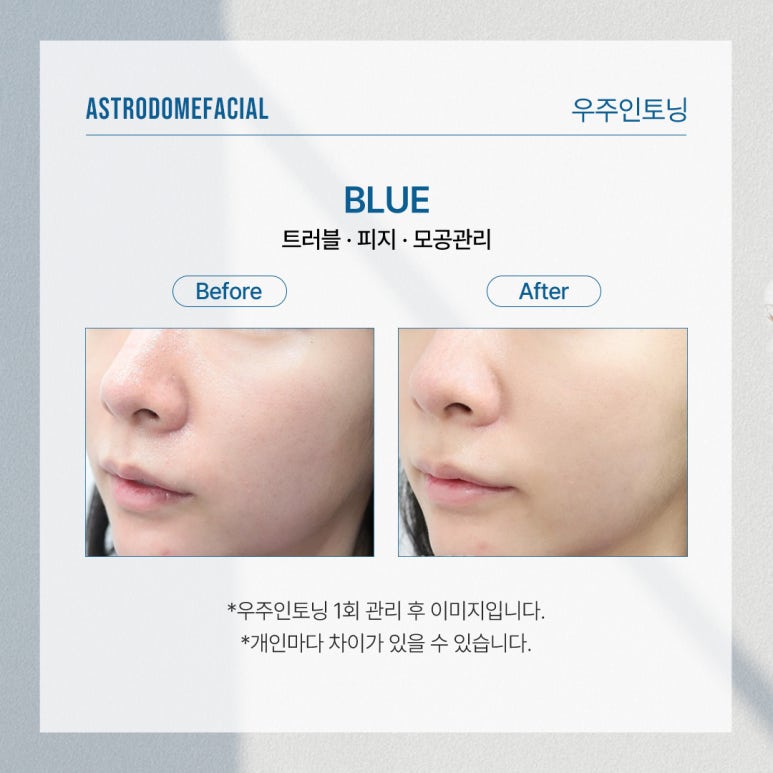
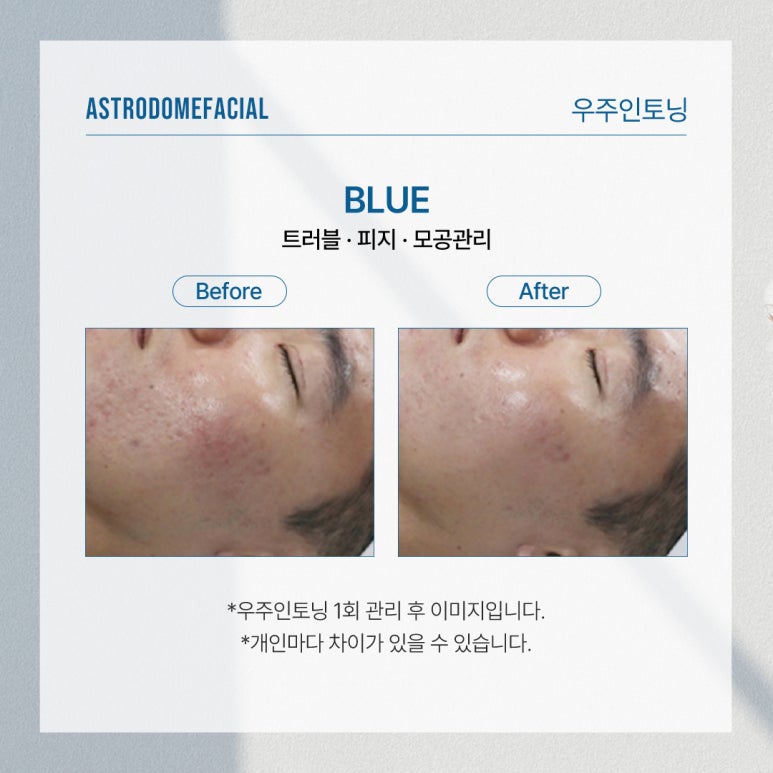
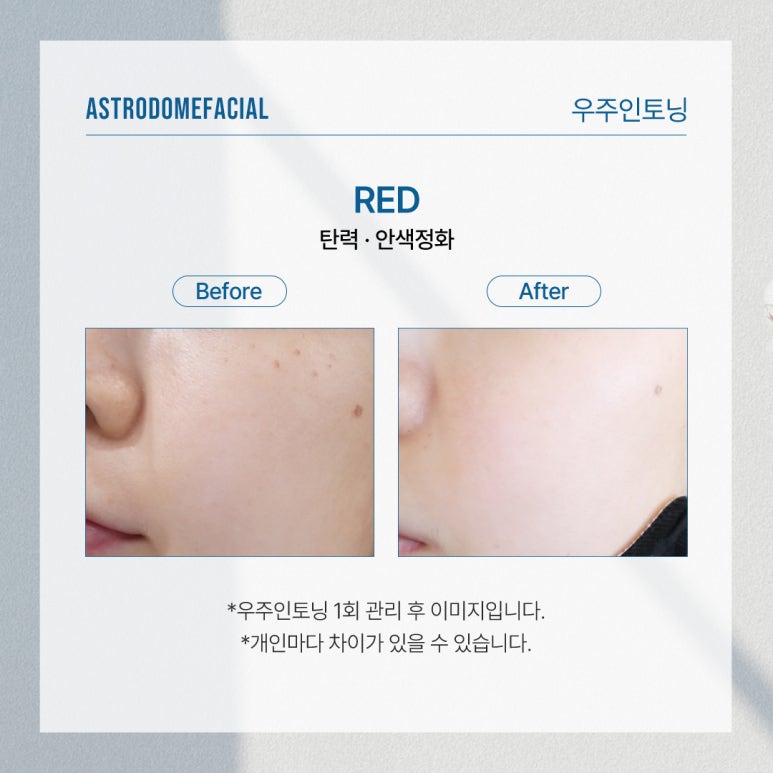
Through the relief of heat sensations and its cooling effect, it helps lower skin temperature, reduce redness, and increase skin moisture.
By soothing this overheated skin environment, it helps prevent sebum and shine from becoming more noticeable.
It is also important because lowering skin temperature and reducing inflammatory stress can help create a foundation for preventing a decline in elasticity.
Previous image
Next image
Astro Dome Facial care is not simply a treatment that cools the skin.
It can be described as a summer skin recovery program that helps regulate skin temperature, moisture, sebum, and soothing balance together.
If you are concerned about skin that easily heats up in summer, increasing sebum, or a weakening skin barrier,
visit 닥터오의원, a dermatology clinic in Yeongdeungpo,
and manage your summer skin condition more steadily with Astro Dome Facial care.
Why not start your cooling care to protect your skin this summer?
Thank you.
#YeongdeungpoDermatology #MullaeDermatology #닥터오의원 #AstroDomeFacial #AstronautToning #SkinTemperature #Cooling #Acne
닥터오의원, 7 minutes on foot from Exit 3 of Mullae Station
On the fourth floor of the Olive Young building at Starbucks Intersection
02.2632.5553
References
-
Cunliffe WJ, Burton JL, Shuster S. The effect of local temperature variations on the sebum excretion rate. British Journal of Dermatology. 1970;83(6):650-654. doi:10.1111/j.1365-2133.1970.tb15759.x
-
Zhu X, Zhou L, Du X, et al. Acute effects of temperature fluctuations on skin health: A randomized, crossover trial. Environmental Research. 2026;289:123376. doi:10.1016/j.envres.2025.123376
-
Seo JY, Chung JH. Thermal aging: A new concept of skin aging. Journal of Dermatological Science Supplement. 2006;2(1):S13-S22. doi:10.1016/j.descs.2006.08.002
-
Lee SY, Park KH, Choi JW, et al. A prospective, randomized, placebo-controlled, double-blinded, and split-face clinical study on LED phototherapy for skin rejuvenation. Journal of Photochemistry and Photobiology B: Biology. 2007;88(1):51-67. doi:10.1016/j.jphotobiol.2007.04.008
-
Jagdeo J, Austin E, Mamalis A, Wong C, Ho D, Siegel DM. Light-emitting diodes in dermatology: A systematic review of randomized controlled trials. Lasers in Surgery and Medicine. 2018;50(6):613-628. doi:10.1002/lsm.22791