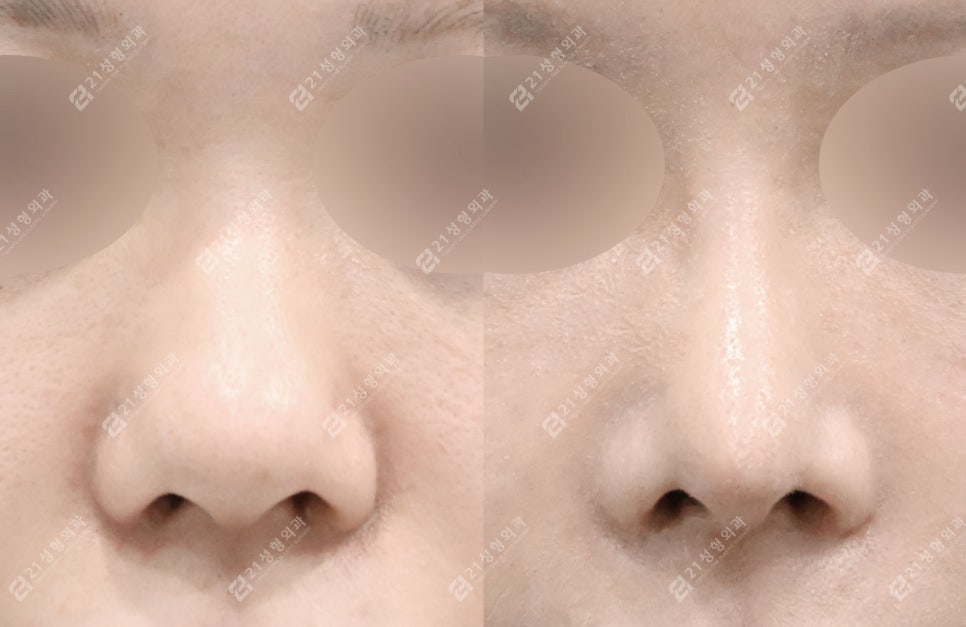
Before surgery / 8 months after
For patients considering rhinoplasty,
the real concern is not simply a “pretty nose.”
The goal is a “healthy nose” that does not lose its shape over time
and remains stable without side effects.
One of the most common questions I hear during consultations is:
“Should I use autologous rib cartilage or donor rib cartilage?”
At first, this may sound unfamiliar,
but this choice is a key factor
that determines the surgical result!!!
Especially in revision surgery or cases where the existing nasal bridge has collapsed,
the result can change completely depending on which cartilage is used.
Today, through a case of an actual autologous rib rhinoplasty patient at 21 Plastic Surgery,
we’ll look at the difference between autologous rib cartilage and donor rib cartilage
from a specialist’s perspective^^
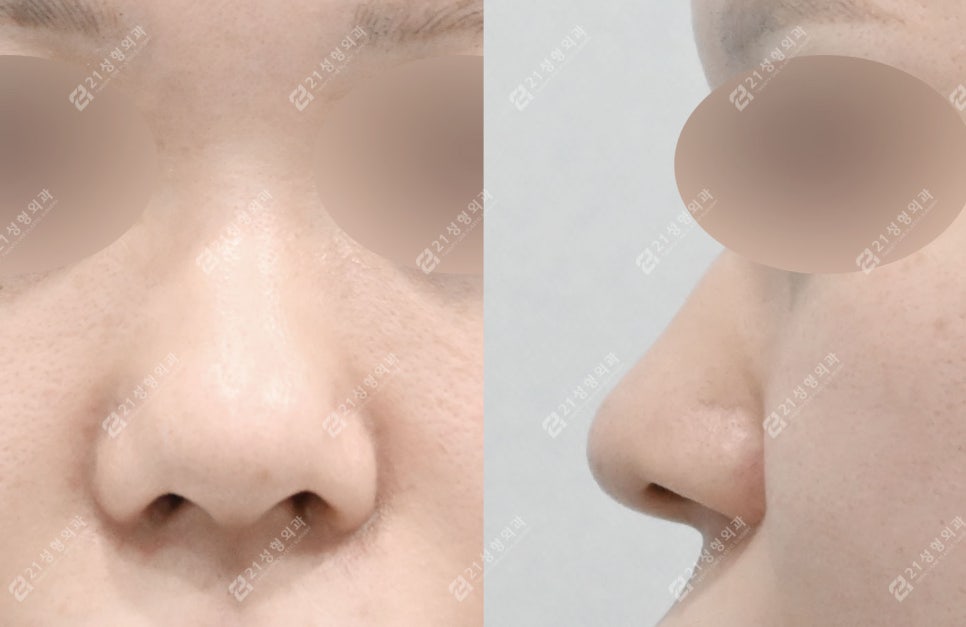
Front/side views before surgery
This patient was a woman in her mid-20s.
She had a dull nasal tip and a low nasal bridge,
which made the center of her face look indistinct.
From the side, the nasolabial angle was narrow,
making the line connecting the nose and mouth look blunt...
In addition, her skin thickness was moderate to somewhat thick,
so we determined that a nasal tip structure based on autologous rib cartilage with sufficient support
would be necessary to keep the shape from collapsing over time.
So the surgical plan was set as follows.
Surgical plan
Silicone + autologous rib cartilage + ear cartilage + bulbous nose correction
- hump removal + nasolabial angle correction
Before surgery / 1 week after surgery
One week after surgery,
a swelling still remained throughout the nose,
but the contour of the nasal tip had begun to emerge.
The nasal bridge line had settled stably,
and the angle of the nasal tip was maintained naturally.^^
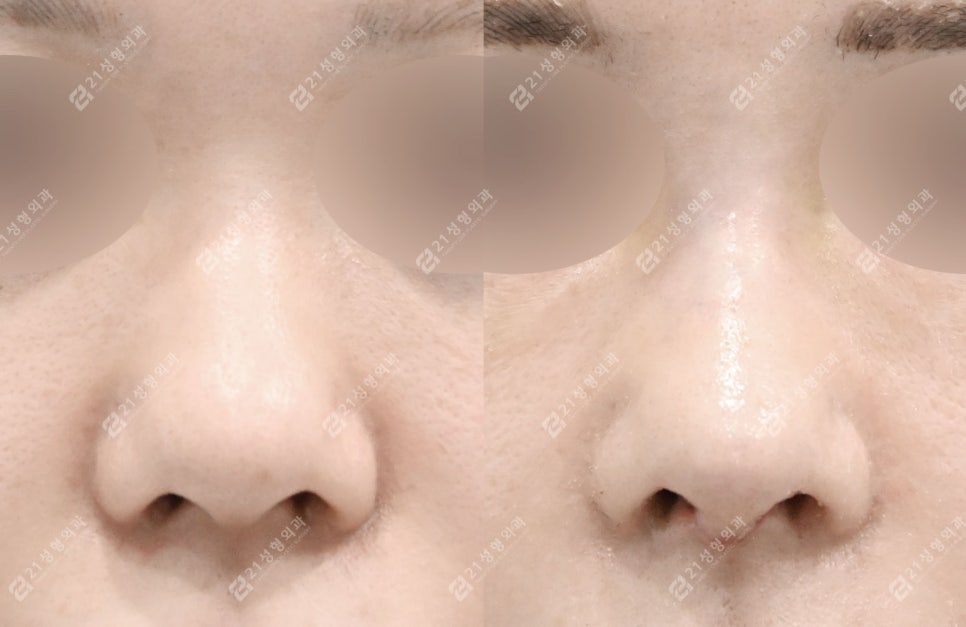
Before surgery / 2 weeks after surgery
Two weeks after surgery,
most of the swelling had gone down,
and the nasal tip had returned naturally.
The bridge was smooth and straight,
and the angle of the nasal tip remained stable,
changing the whole face into a more refined and neat impression.
In particular, can you see how the bulbous nose correction area settled well,
making the nasal tip look sharper and more defined~^^
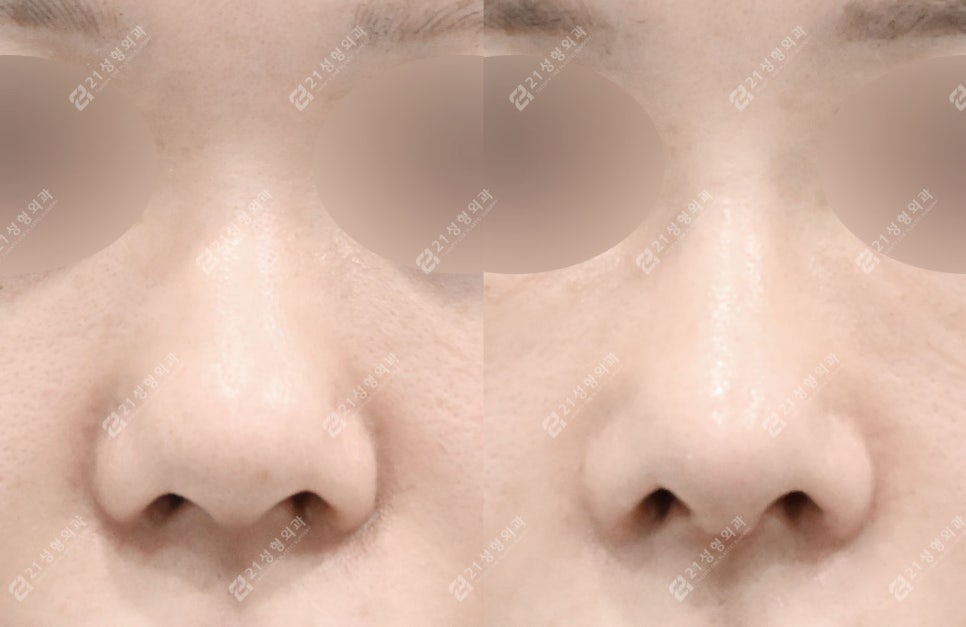
Before surgery / 8 months after surgery
Eight months after surgery,
the autologous rib cartilage has blended naturally with the patient’s own tissue,
remaining firm without shape distortion,
and the line connecting the bridge and tip is smooth,
so it looks natural even when smiling or making expressions.
With correction of the nasolabial angle, the line between the nose and upper lip opens up,
and you can see that the entire face has become brighter and looks younger.^^
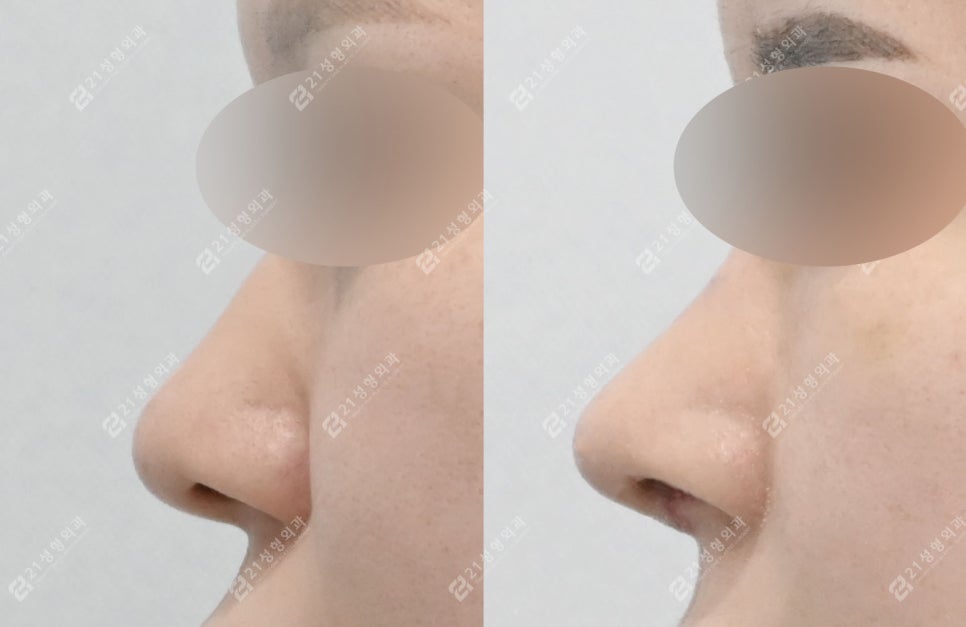
Before surgery / 1 week after surgery
Donor rib cartilage and autologous rib cartilage each have their own advantages.
Donor rib cartilage has the benefit of no harvesting burden
and a shorter surgery time,
but autologous rib cartilage is the patient’s own tissue,
so the tissue response is more natural and the shape retention is excellent,
allowing for stable results even over time.
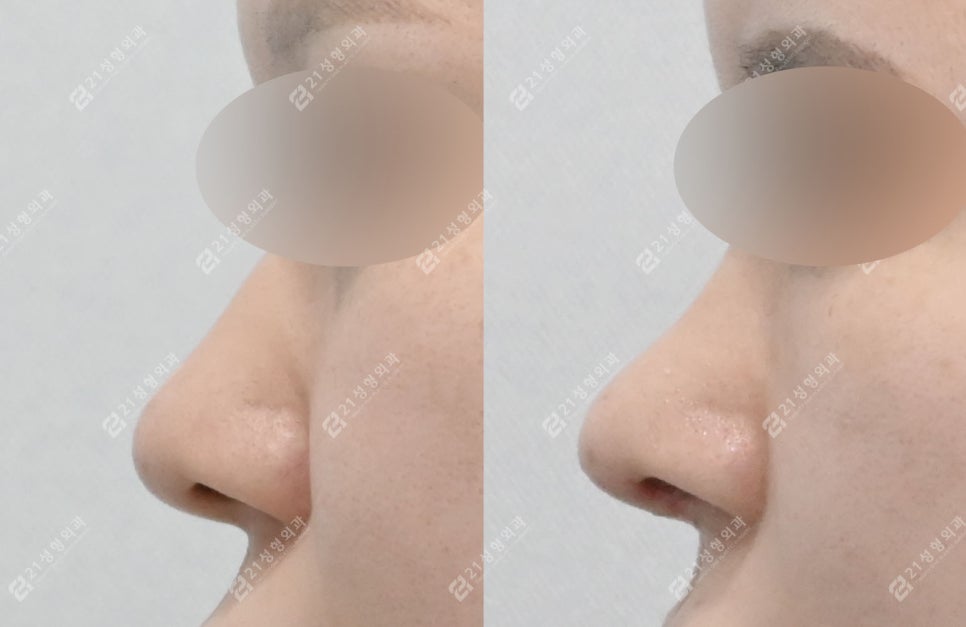
Before surgery / 2 weeks after surgery
Selecting the appropriate material according to the patient’s body type, skin thickness, previous surgical history,
and desired nose shape is the role of the specialist.
At 21 Plastic Surgery,
we carefully analyze each individual’s condition,
and a specialist directly plans and carries out every step,
from autologous rib harvest to structural design and scar management.
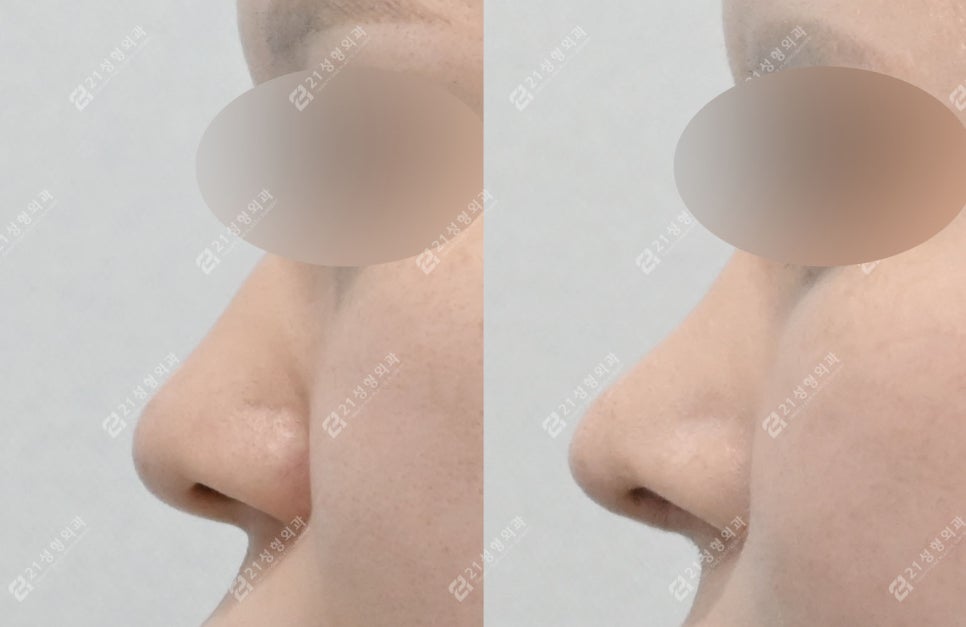
Before surgery / 8 months after surgery
The nose is the center of the face and the axis that determines the overall impression.
Not simply a pretty nose,
but making a nose that does not collapse over time—
that is the philosophy of 21 Plastic Surgery.
If you have any questions, you are always welcome to consult with us.
My biggest goal is to help patients regain their natural beauty.
Thank you^^


#21성형외과 #21 #이원원장님 #박종현원장님 #코수술 #코성형 #첫코성형 #귀연골 #귀연골코수술
#코끝 #자늑코수술 #자려코성형 #화려코성형 #코끝수술후기 #코끝수술 #이원 #박종현
#코성형재료 #자가늑 # #코수술전후 #코수술전후사진 #코수술후기 #코재수술 #코재수술후기
#전후사진 #후기 #이벤트 #리얼모델 #리얼모델모집