Hello.
I am Lee Won, the chief director of 21 Plastic Surgery.
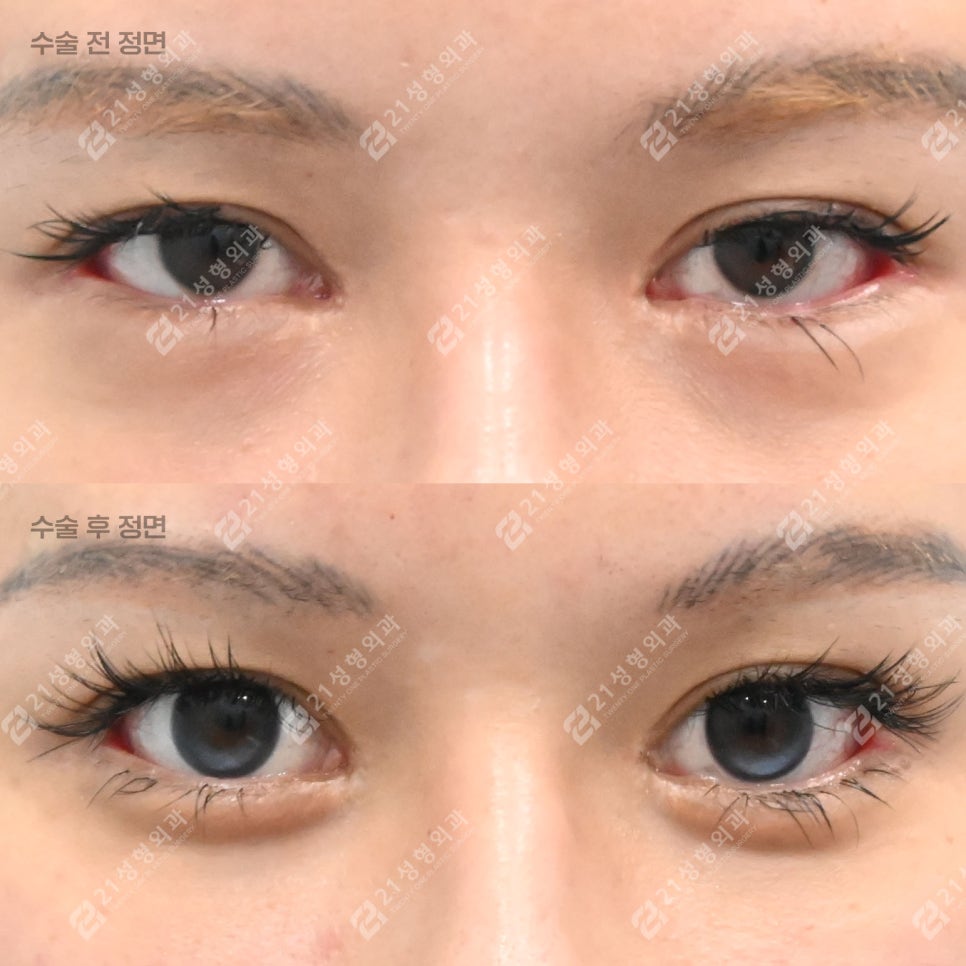
When the area under the eyes looks bulging and protruded,
or dark circles appear prominent,
it is easy to think that the problem is simply caused by excess fat.
However, when we actually look at the structure under the eyes,
the protruding fat, the tear trough hollowing,
and the location of the volume in the aegyo-sal area often work together
to create the contour under the eyes.
In this case,
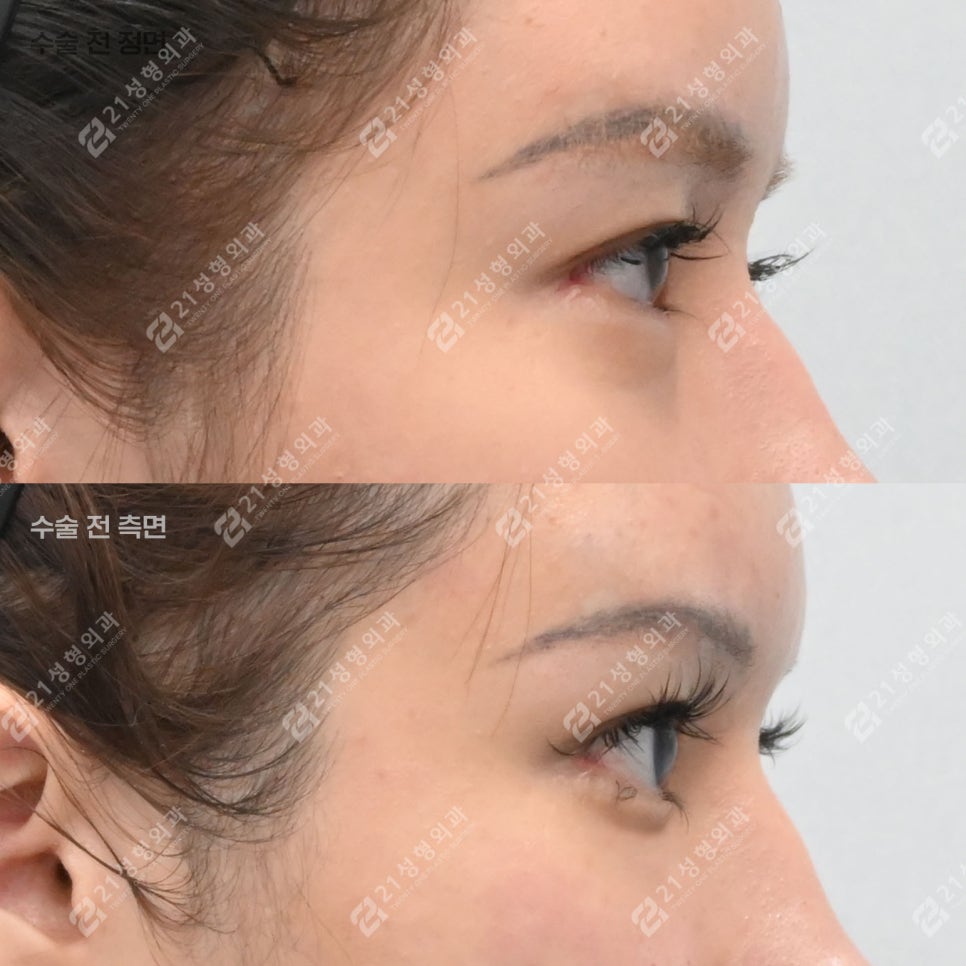
the patient had previously received aegyo-sal filler treatment,
and the protrusion of lower eyelid fat and hollowing of the tear trough appeared together,
making the boundary between the aegyo-sal and the under-eye area look unclear
and the under-eye contour less attractive.
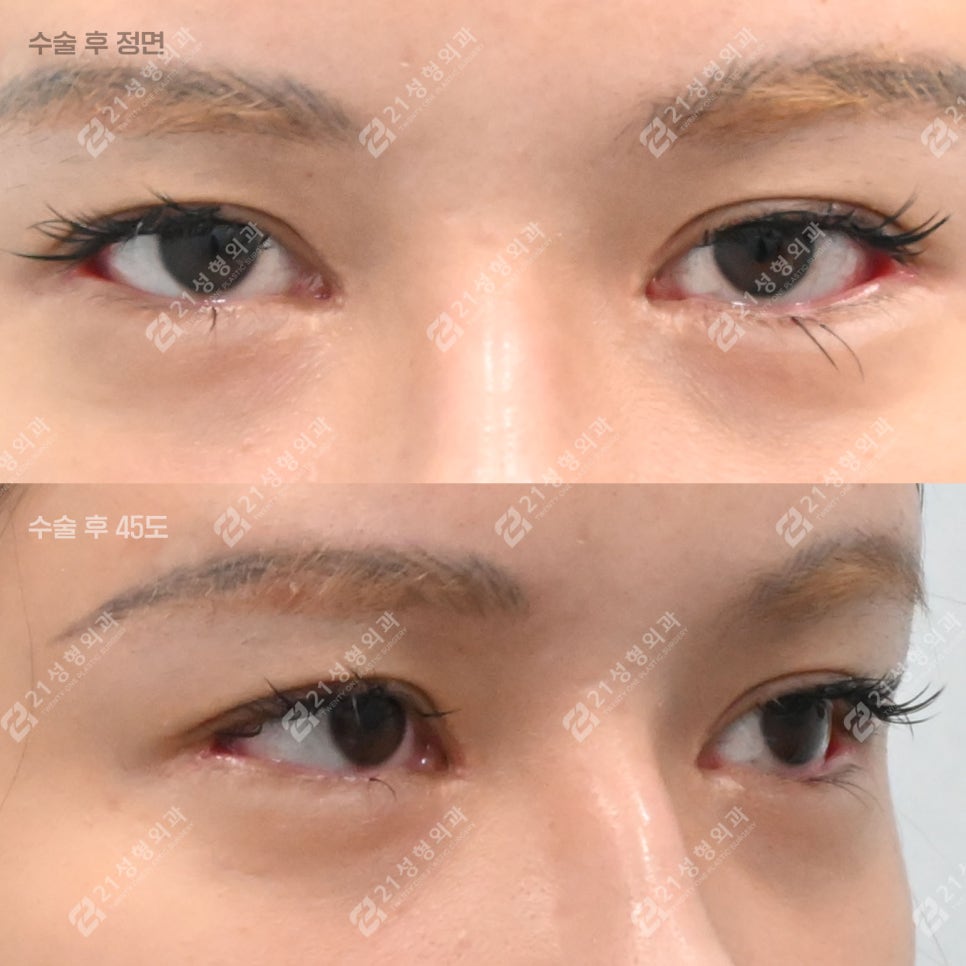
Before surgery,
looking at the under-eye structure,
the lower eyelid fat was protruding forward,
and shadows had formed in the tear trough area below it,
and the volume of the aegyo-sal area and the protrusion of the lower eyelid fat
were not naturally connected,
resulting in an unclear, blended boundary.
In a structure like this,
if you simply approach it by removing the protruding fat,
the area under the eyes may end up looking sunken,
or the aegyo-sal and under-eye line may look unnatural.
So the surgical plan was decided as follows^^
[Operation Plan]
Lower eyelid fat repositioning and aegyo-sal, under-eye nano fat grafting
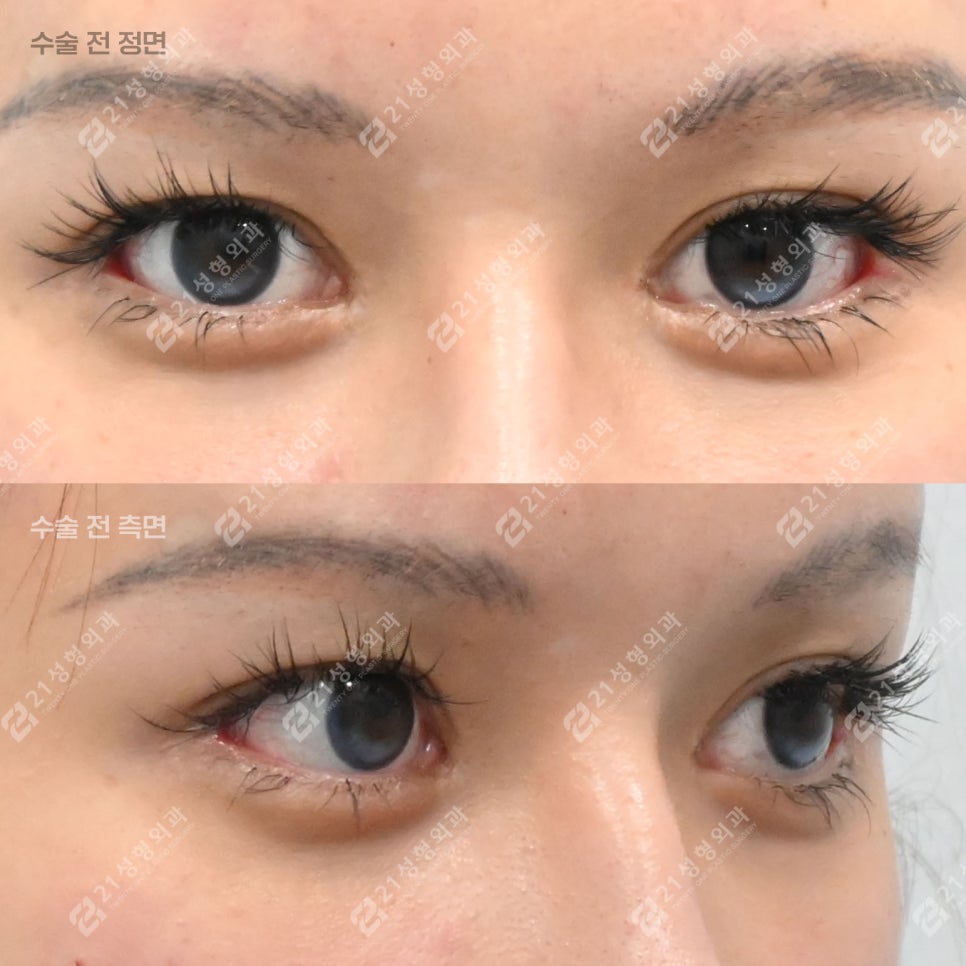
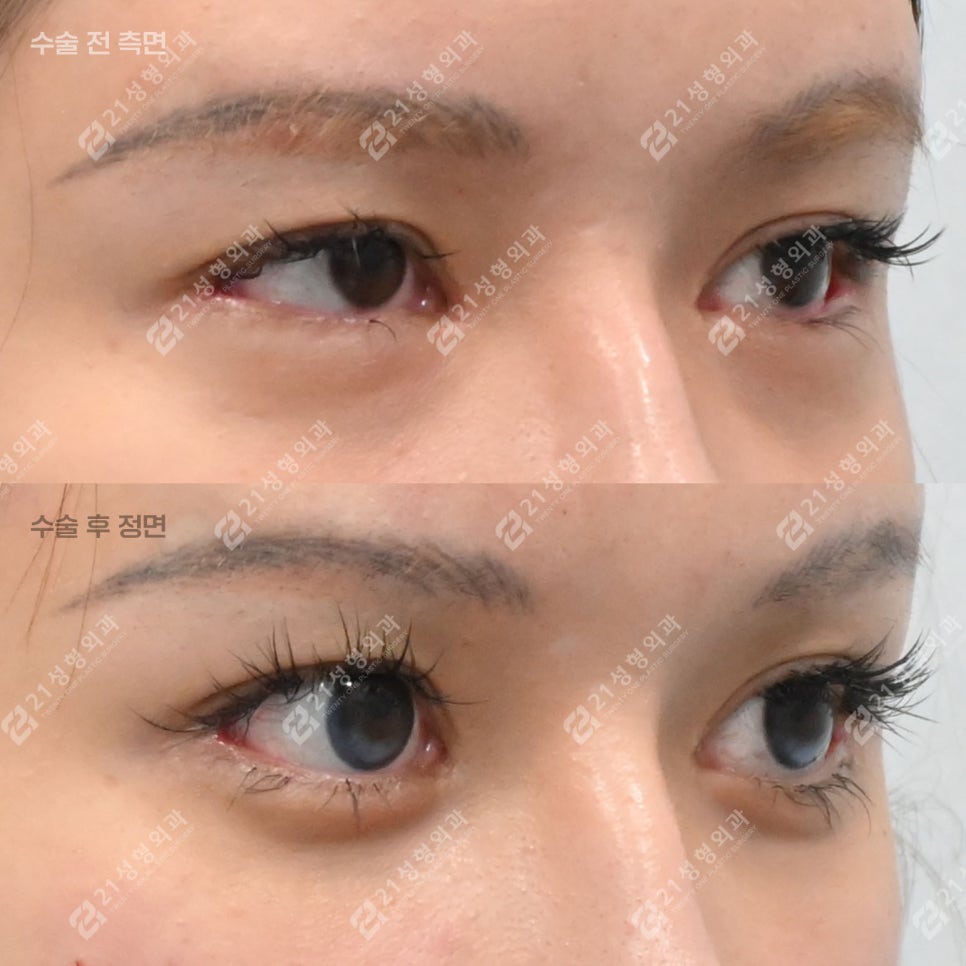
After surgery,
as the lower eyelid fat that had been protruding forward was adjusted,
the unclear boundary of the aegyo-sal line became more defined.
The contour that had made the under-eye area look bulging was softened,
and the line extending from under the eyes to the upper cheek looks more naturally refined.
In this way, lower eyelid fat repositioning is
not simply a surgery that reduces lower eyelid fat,
but a surgery that turns the contour under the eyes into an attractive line.
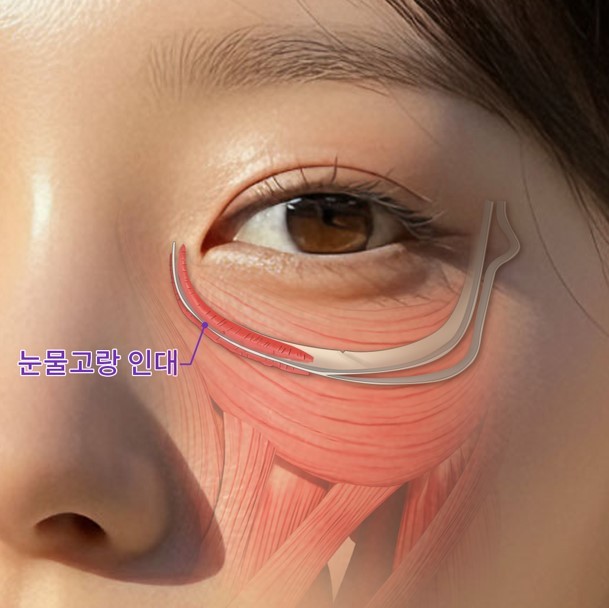
The reason lower eyelid fat protrudes is
that the orbital septum surrounding the lower eyelid fat
weakens or stretches as we age,
allowing the fat to be pushed forward.
When the lower eyelid fat comes forward in this way,
the tear trough area below it
appears relatively hollow.
As a result, the under-eye area looks bulging,
and shadow forms below it,
creating the characteristic contour under the eyes.
In lower eyelid fat repositioning surgery,
this protruding fat is moved
below the tear trough to fill the hollow area.
And, most importantly, the septum surrounding the fat is utilized
to strengthen the septum and help prevent recurrence.
Through this,
both the under-eye protrusion and tear trough hollowing
can be improved at the same time.
In summary, this is not a surgery that simply removes protruding fat,
but a surgery that naturally refines the under-eye contour
by adjusting the position of the lower eyelid fat and aegyo-sal volume.
Accurately understanding the under-eye structure
and creating a surgical plan tailored to the individual’s condition
can lead to natural and stable results.
At 21 Plastic Surgery,
we plan surgery by analyzing not only the degree of lower eyelid fat protrusion
and the tear trough,
but also the aegyo-sal structure.
Thank you.



#21 #21PlasticSurgery #DirectorLeeWon #DirectorParkJonghyun #LeeWon #ParkJonghyun #undereye #lowereyelidfatrepositioning #lowereyelidfatrepositioningreview #undereye-review #undereyeeffect #undereyesideeffects #undereyescars #undereyeplasticsurgery #undereye #realundereye-review #aegyosalfatgrafting #aegyosal #fatgrafting #nanofat #nanofatgrafting #recommendedaegyosalfatgrafting #recommendedfatgrafting #aegyosalfatgraftingeffect #event #realmodel #recruitingrealmodels