Hello, I am the director of 21 Plastic Surgery.
There are more people than you might think who believe,
“Having a long philtrum runs in the family,
so there is nothing I can do about it.”
When I speak with patients during consultations, I often meet people who have simply stopped paying attention to it, thinking, “It has been this way since I was young, so what can I possibly do about it now?”
Then, after someone makes a comment, they start thinking about it again, look into various options, and eventually come in for a consultation.
It is true that this is an area influenced by genetics, but that does not mean improvement is impossible.
When I listen carefully to why someone is concerned about their philtrum, the reasons generally fall into three categories.
“It is too long,” “It looks flat and lacks definition,” or “The corners of my mouth also droop, making it look even more downturned.”
However, each of these three concerns can be approached with a different procedure, so there is no need to give up by lumping everything together and saying, “That is just how my philtrum naturally is.”
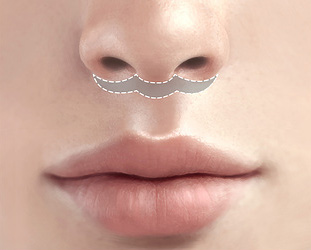
Philtrum reduction surgery involves making an incision along the natural shadow line beneath the nose and carefully suturing the area to reduce the vertical distance between the base of the nose and the upper lip.
Philtrum groove surgery creates a natural-looking depression in the central groove of the philtrum ridges.
When these two procedures are performed together, both the length and definition of the philtrum can be refined at once.
Adding mouth-corner surgery can make the difference even more noticeable.
Mouth-corner surgery involves repositioning the muscles at the corners of the mouth that have drooped, gently lifting them upward.
At 21 Plastic Surgery, the key is creating a natural, continuous line connecting the philtrum, lips, and corners of the mouth.
[Surgical Plan]
Philtrum reduction + philtrum groove surgery + mouth-corner surgery
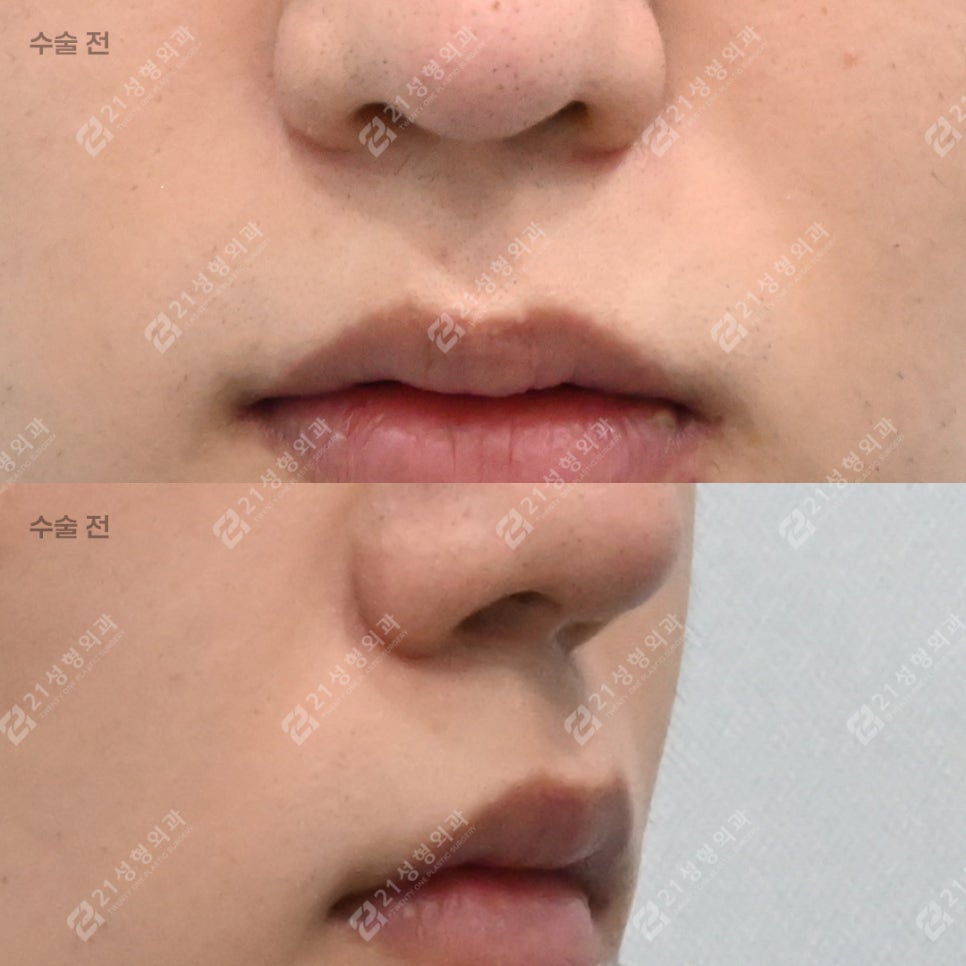
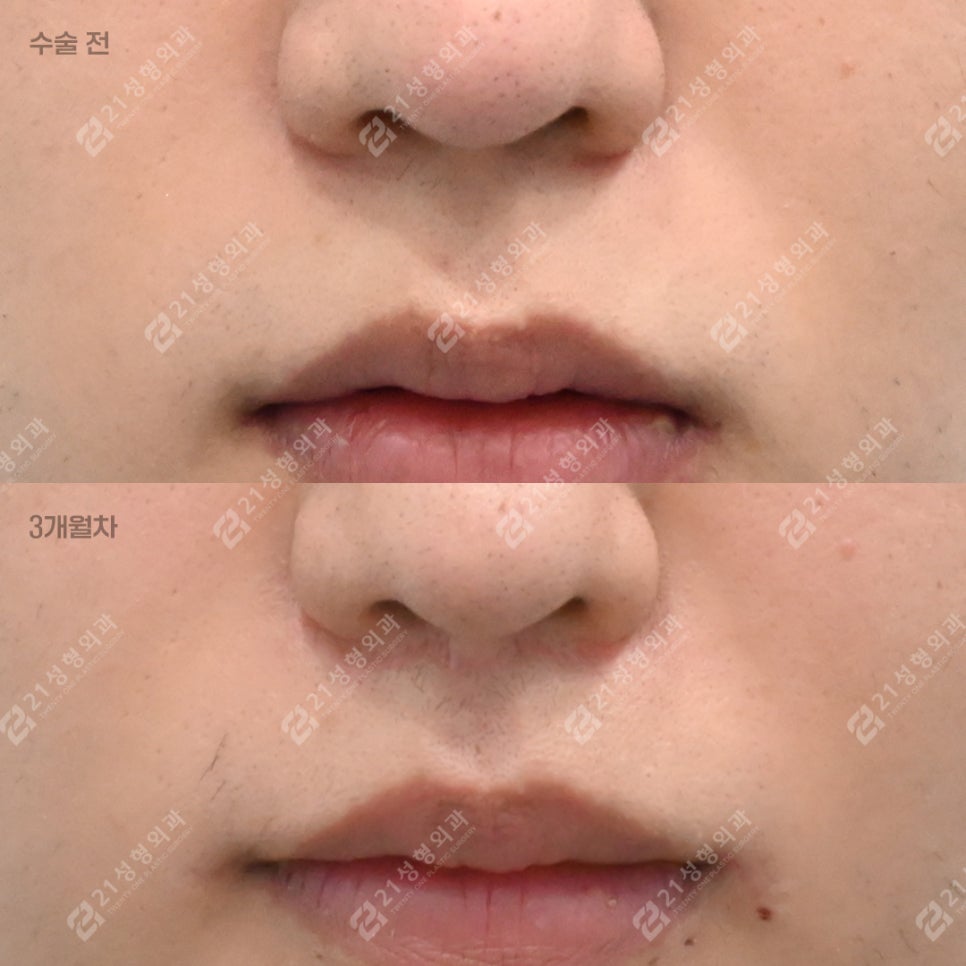
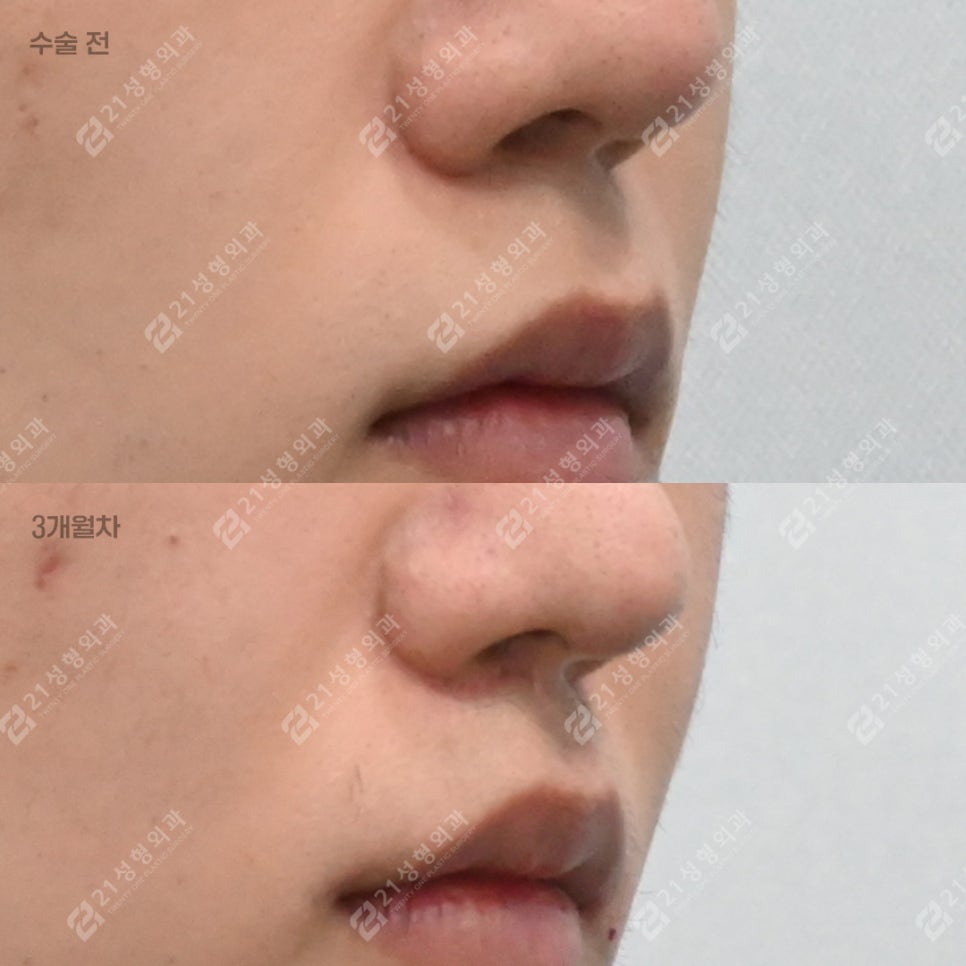
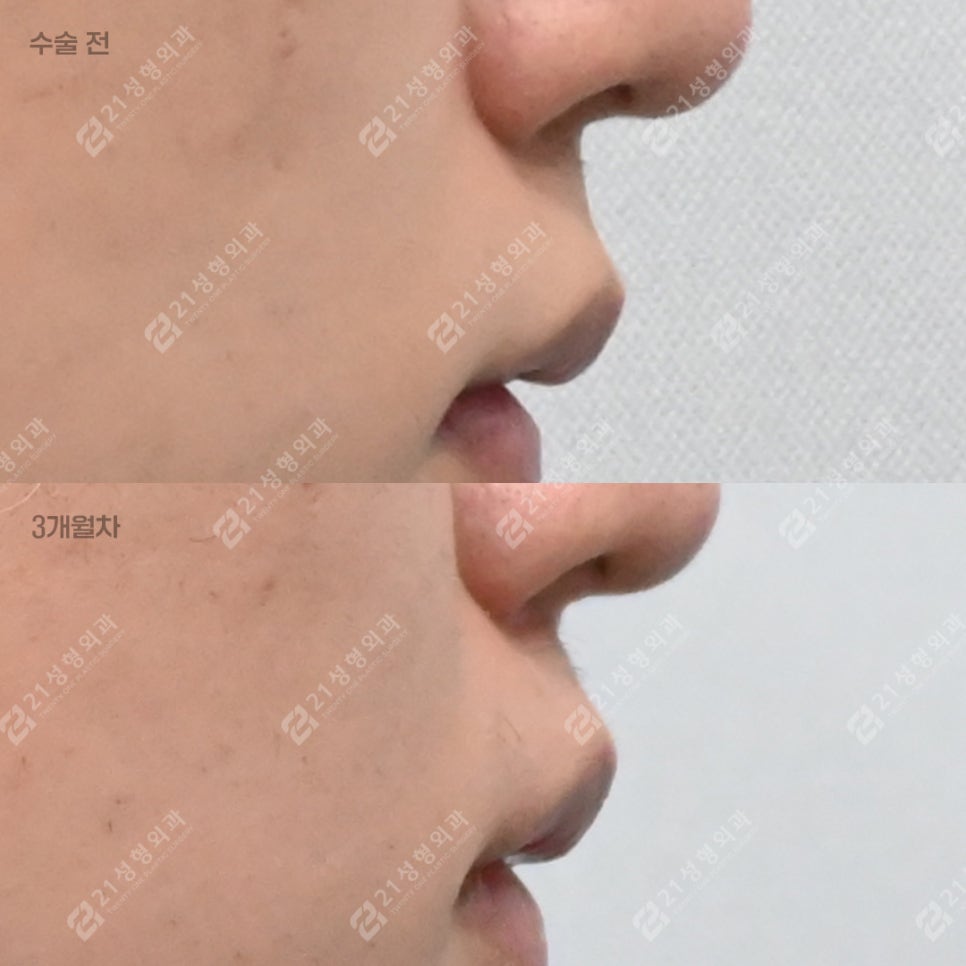
In this patient’s case, the philtrum was relatively long, and the philtrum ridges were not clearly defined, giving it a flat appearance. The corners of the mouth also drooped, creating a somewhat sharp and tired impression when the face was expressionless.
An incision was made along the base of the nose to shorten the philtrum, and the central groove of the philtrum was naturally defined, refining both its length and contours.
The drooping corners of the mouth were then gently lifted, resulting in a softer and more comfortable impression even when the face was expressionless.
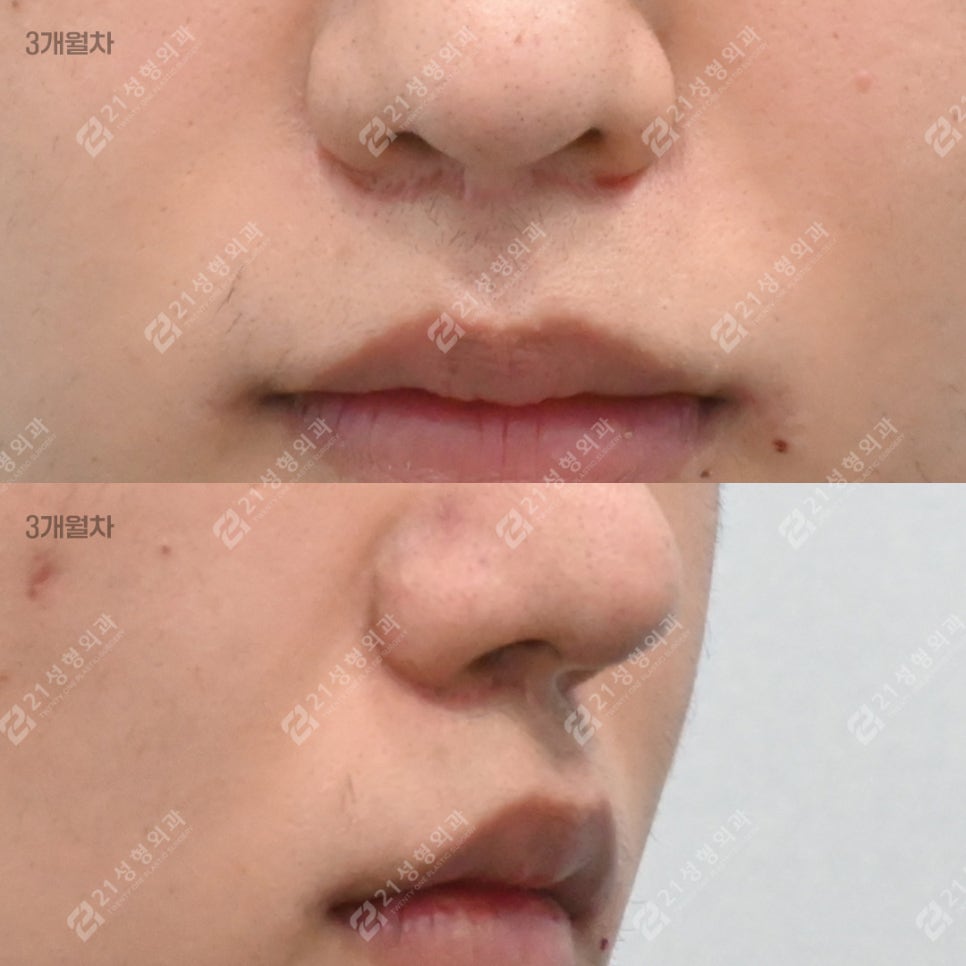
Until the stitches are removed after surgery, apply a thin layer of ointment to the scar area 3–4 times a day. Continue applying it for about two additional days after the stitches are removed.
Swelling is usually at its worst on days 3–4 after surgery. This is a natural part of the process, so there is no need to worry.
During this period, gently move around rather than staying in bed, and keep your head elevated with a higher pillow while sleeping.
You may wash your face after the stitches have been removed.
Please avoid hot packs, saunas, alcohol, and smoking for one month.
If you have been concerned for a long time because of a long or flat philtrum, please feel free to schedule a consultation.
Thank you.



#21 #21PlasticSurgery #DrLeeWon #DrParkJongHyun #DrKimDoWon #philtrum #philtrumreduction #philtrumreductionsurgery #revisionphiltrumreduction #philtrumreductionscar #philtrumcontouring #philtrumsurgery #philtrumlength #philtrumreductionreview #philtrumgroovesurgery #philtrumgroovesurgeryscar #philtrumgroove #philtrumgroovesurgeryreview #LeeWon #mouthcornersurgery #mouthcorners #mouthcornerlift #saggingmouthcorners #downturnedmouthcorners #realpatientreview #review #beforeandafter #event #realmodel #realmodelrecruitment #Gangnam #Sinnonhyeon #plasticsurgery #Gangnamplasticsurgery #Sinnonhyeonplasticsurgery