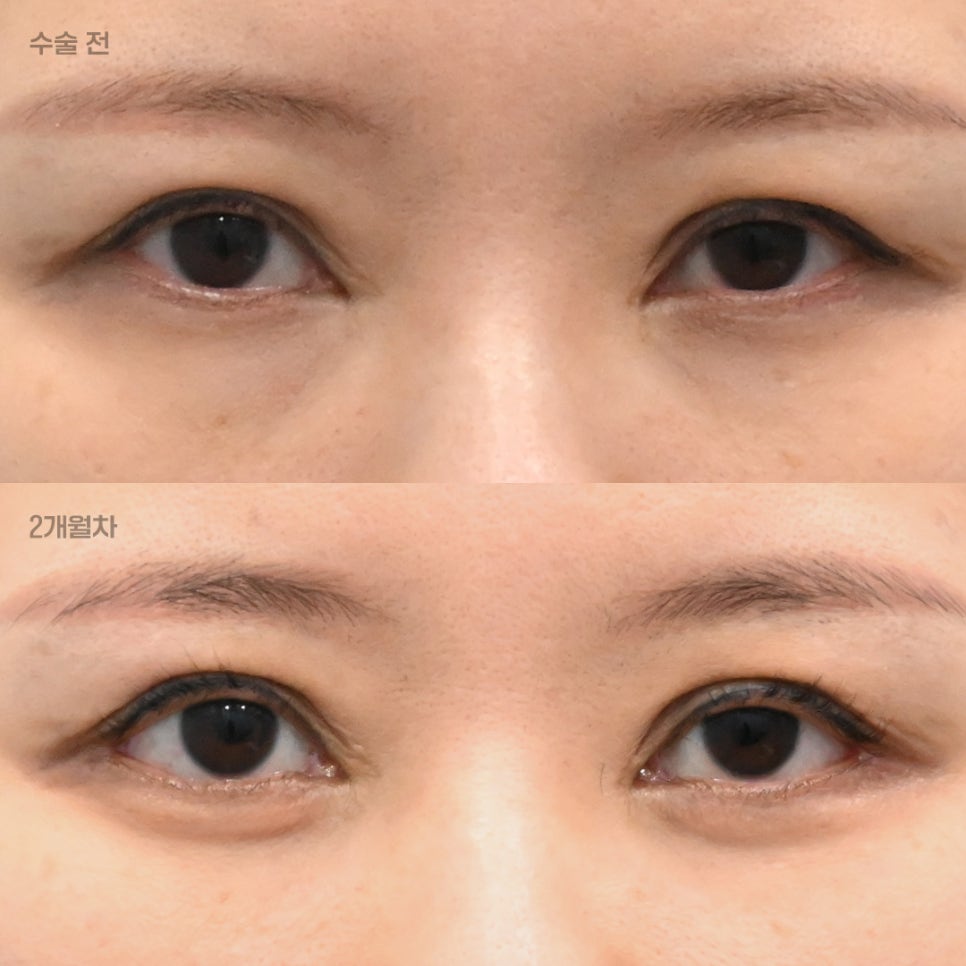
Lower Eyelid Fat Repositioning + Fat Grafting (Under-Eye Fullness, Under-Eye Area) + Lateral and Lower Canthoplasty
Hello, I am the director of 21 Plastic Surgery.
Among those who visit 21 Plastic Surgery, located between Gangnam Station and Sinnonhyeon Station,
many express concerns about under-eye fullness and under-eye fat,
while also saying that their eyes look constricted.
In such cases, undergoing lower eyelid fat repositioning and
lateral and lower canthoplasty together may be considered.
This article summarizes the advantages of undergoing the two procedures together,
the recovery process, and the points to check during consultation.
If you are considering improving the appearance of your eyes, please use this information as a reference.
In particular, if you would like to improve both under-eye fullness and the eye contour,
it may be helpful to check in advance whether the two procedures can be performed together.
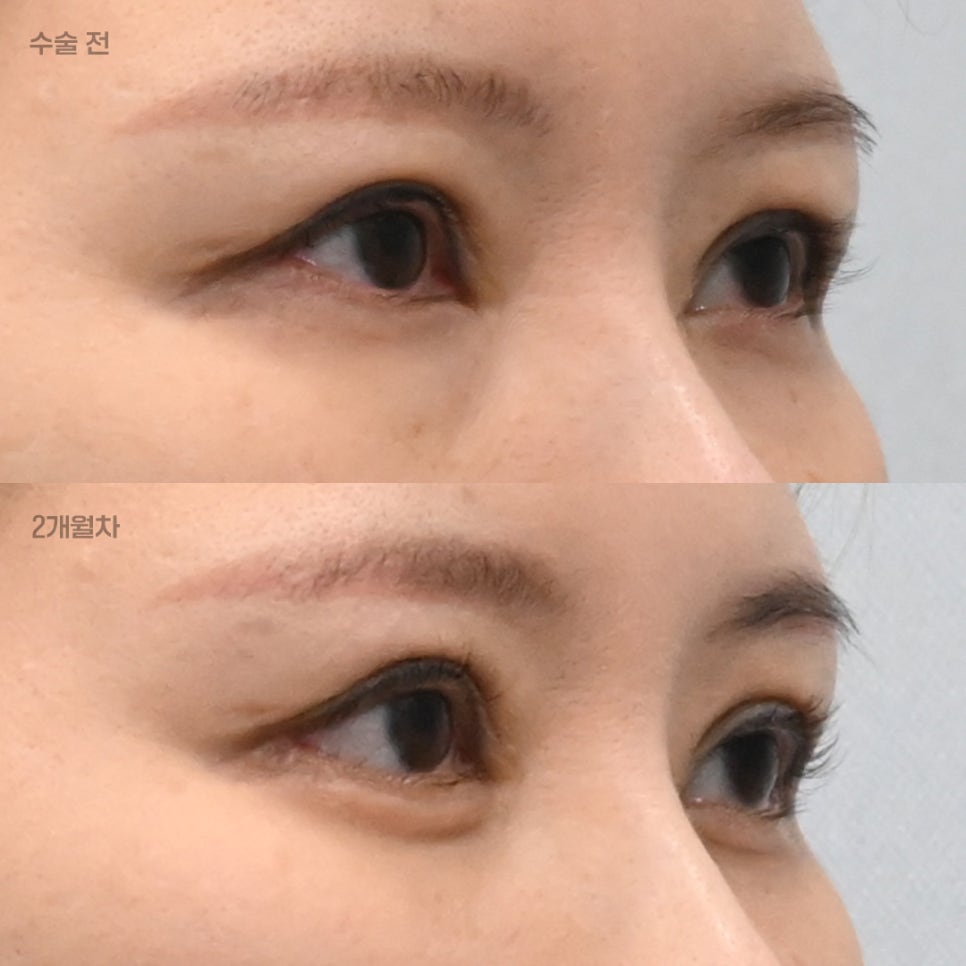
The Concept and Characteristics of Lower Eyelid Fat Repositioning
Lower eyelid fat repositioning is a procedure that repositions fat in the under-eye area and the area of under-eye fullness.
It may be considered when prominent under-eye fat makes the area look like dark circles,
or when insufficient under-eye fullness makes the facial impression appear sharp.
For example, if your under-eye fullness is not very visible when you smile,
or if you are often told that you look tired because of bulging under-eye areas,
you can have the condition of the fat assessed during a consultation.
Rather than removing excessive amounts of fat,
the procedure repositions it to create natural-looking volume.
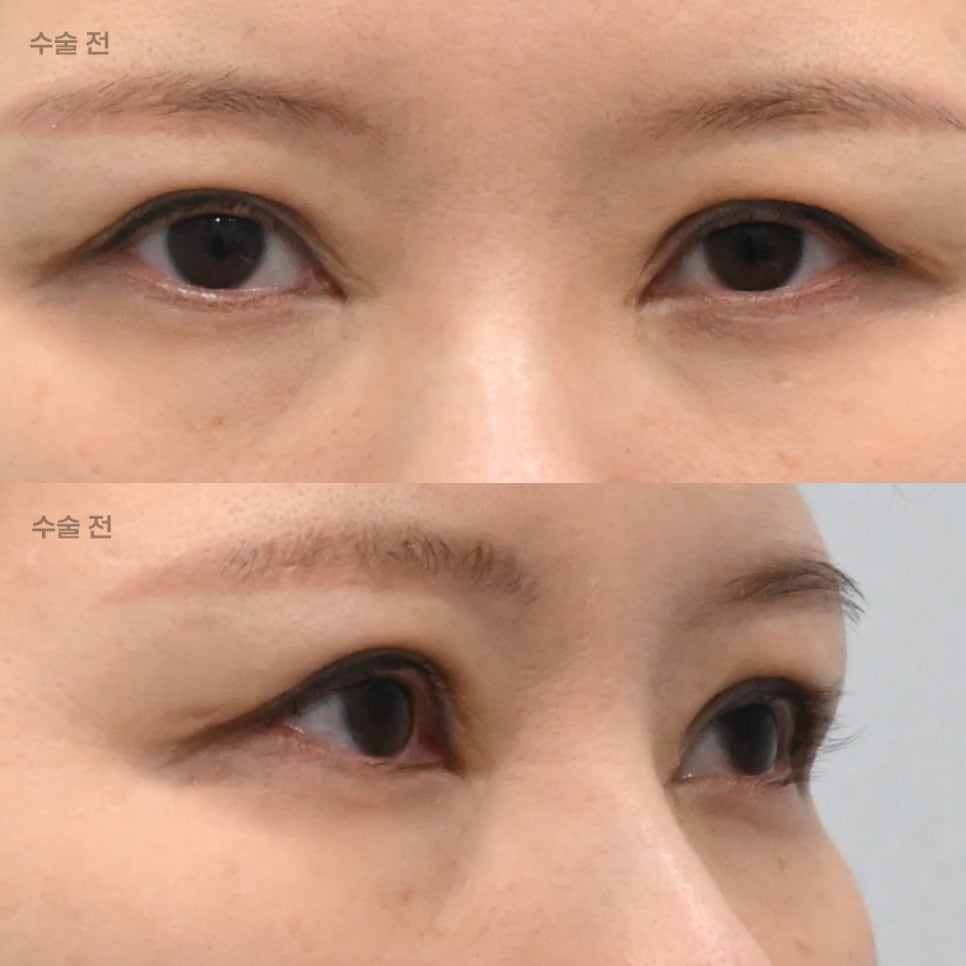
Why Is It Beneficial to Combine Lower Eyelid Fat Repositioning with Lateral and Lower Canthoplasty?
To explain the key point first,
one advantage is that lower eyelid fat repositioning and lateral and lower canthoplasty
can make effective use of the same incision site.
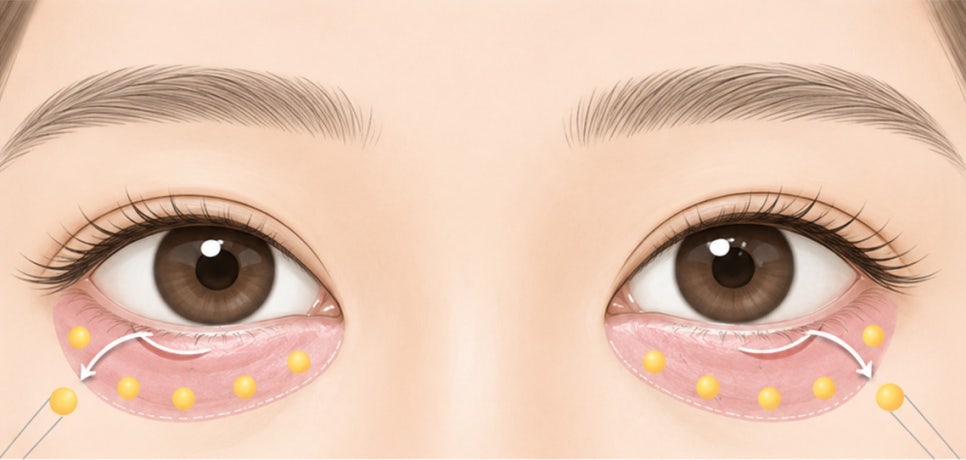
Lateral and lower canthoplasty is a procedure that slightly widens the eye horizontally
by making an incision in the lower conjunctiva at the outer corner of the eye.
Lower eyelid fat repositioning is also often performed
through an incision on the inner side of the conjunctiva,
so the same incision opening may be used.
This means that the number of incision sites does not increase,
which may help reduce the burden of swelling and recovery.
It is also efficient because consultation and surgery scheduling can be handled at once.
However, whether the two procedures can be performed together
depends on the structure of the eyes and the condition of the fat,
so a preliminary consultation is essential.
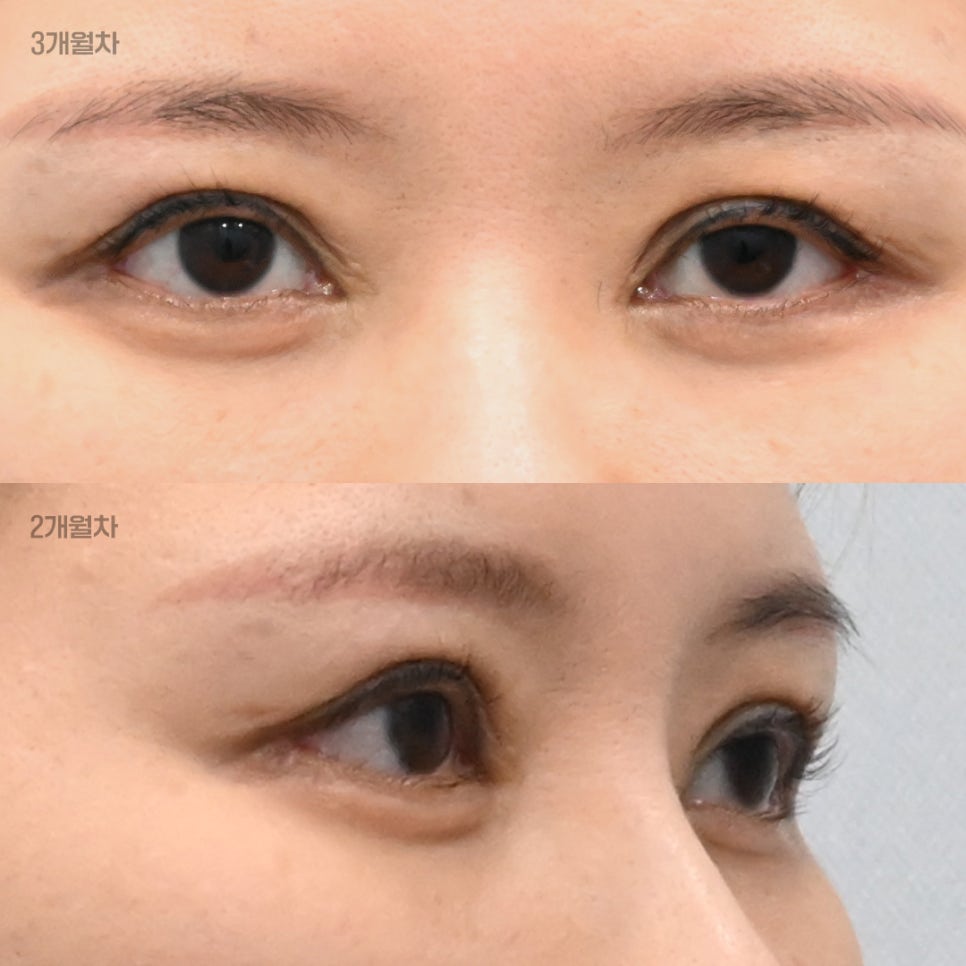
How Long Does the Recovery Period Take?
The conjunctival incision method has the characteristic of leaving no visible external scar.
Although swelling varies from person to person,
it commonly subsides within approximately one to two weeks.
The approximate stages of recovery are summarized in the table below.
| Period | Progress |
|---|
| Day of surgery to day 3 | The period when swelling and redness are most noticeable |
| Days 4 to 1 week | Swelling gradually decreases |
| 2 to 4 weeks | The natural eye contour can be assessed |
Points to Check During Your Consultation
-
Whether the amount of under-eye fullness and under-eye fat is suitable for lower eyelid fat repositioning
-
Whether the structure of your eyes allows lateral and lower canthoplasty to be performed at the same time
-
Whether the incision sites can be shared or whether a separate incision is necessary
-
The expected duration of swelling and when you can return to your daily activities
-
Pre- and postoperative care methods, such as cold compresses and the use of eye drops
-
The schedule for regular postoperative checkups and how to respond to unusual reactions
After surgery, getting enough rest, applying cold compresses,
and attending regular follow-up appointments can help with recovery.
Results and recovery speed may vary depending on the individual structure of the eyes,
the amount of fat, and skin elasticity.
Therefore, it is important to receive an accurate assessment through consultation.
To summarize,
lower eyelid fat repositioning and lateral and lower canthoplasty
are a combination worth considering because they may share the same incision opening.
However, as with all procedures,
the appropriate method may differ depending on each individual’s eye condition.
We recommend finding the method that is right for you
through a thorough consultation.
Thank you.



#21 #21PlasticSurgery #21PlasticSurgeryClinic #DrLeeWon #DrParkJongHyun #LeeWon #ParkJongHyun #RealModel #RealModelRecruitment #GangnamStation #GangnamPlasticSurgery #SinnonhyeonStation #PlasticSurgery #EyeSurgery #LowerEyelidFat #LowerEyelidFatRepositioning #LowerEyelidFatRepositioningReview #LowerEyelidFatReview #LowerEyelidFatResults #LowerEyelidFatSideEffects #LowerEyelidFatScars #LowerEyelidSurgery #UnderEyeArea #LowerEyelidFatRealReview #UnderEyeFat #UnderEyeFatGrafting #UnderEyeFullnessFatGrafting #UnderEyeFullness #FatGrafting #Canthoplasty #LateralCanthoplasty #LowerCanthoplasty #CanthoplastySurgery #NonIncisionalDoubleEyelidSurgery #EyeShapeCorrection #CanthoplastyRevision #RevisionSurgery