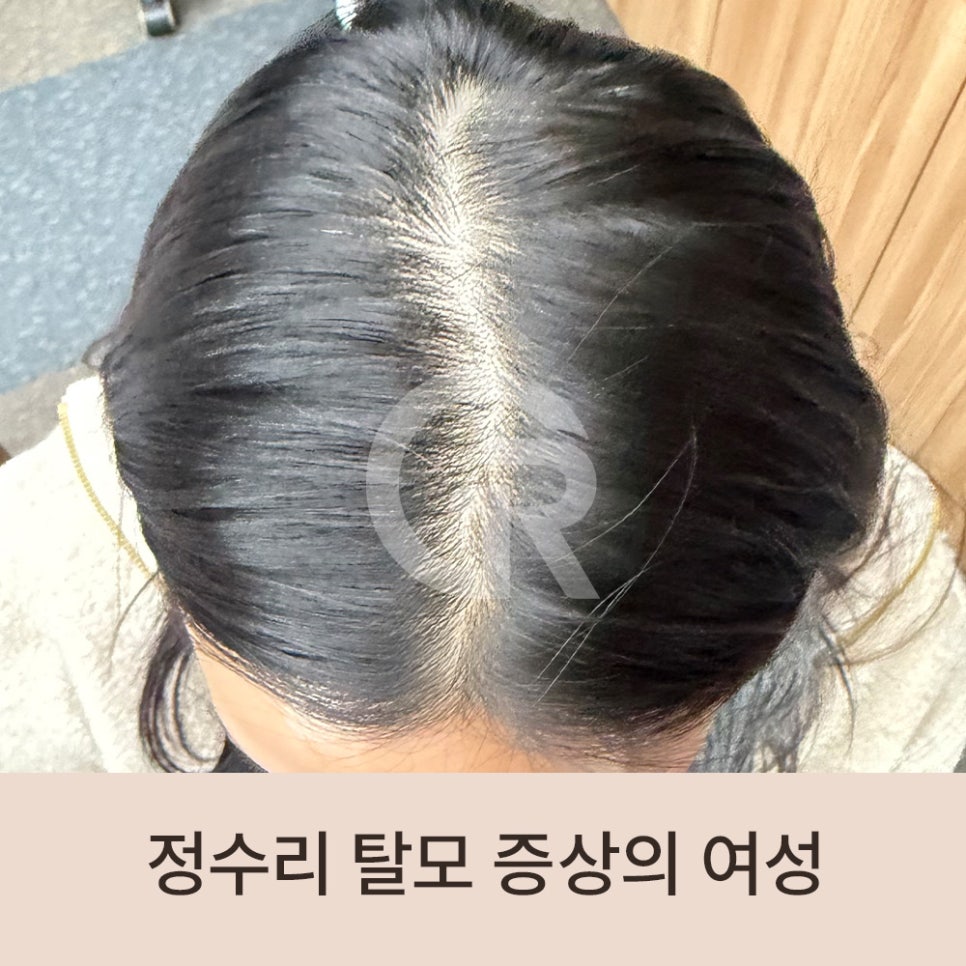
A patient who visited Kirin Plastic Surgery with concerns about a sparse part line and the crown
People often worry only about hair falling out, but in fact, a damaged scalp environment is the main cause of hair loss. The scalp is not just ordinary skin; it is a structure where hair follicles, the organs that produce hair, are located. As a result, when the scalp becomes unhealthy, the hair weakens. Hair loss does not appear all at once. It develops gradually, and the symptoms usually include thinning hair, reduced volume, a wider-looking part line, and the feeling that the hair is growing less.
A celebrity who visited Kirin Plastic Surgery also felt the seriousness of this issue and began scalp stem cell injection treatment. Why does hair become thinner and seem to grow less? Hair does not simply grow from the scalp; it is created through cell division inside the hair follicle. Normally, this process consists of the anagen phase, when hair grows; the catagen phase, when growth stops; and the telogen phase, when it rests. As we age, this balance breaks down.
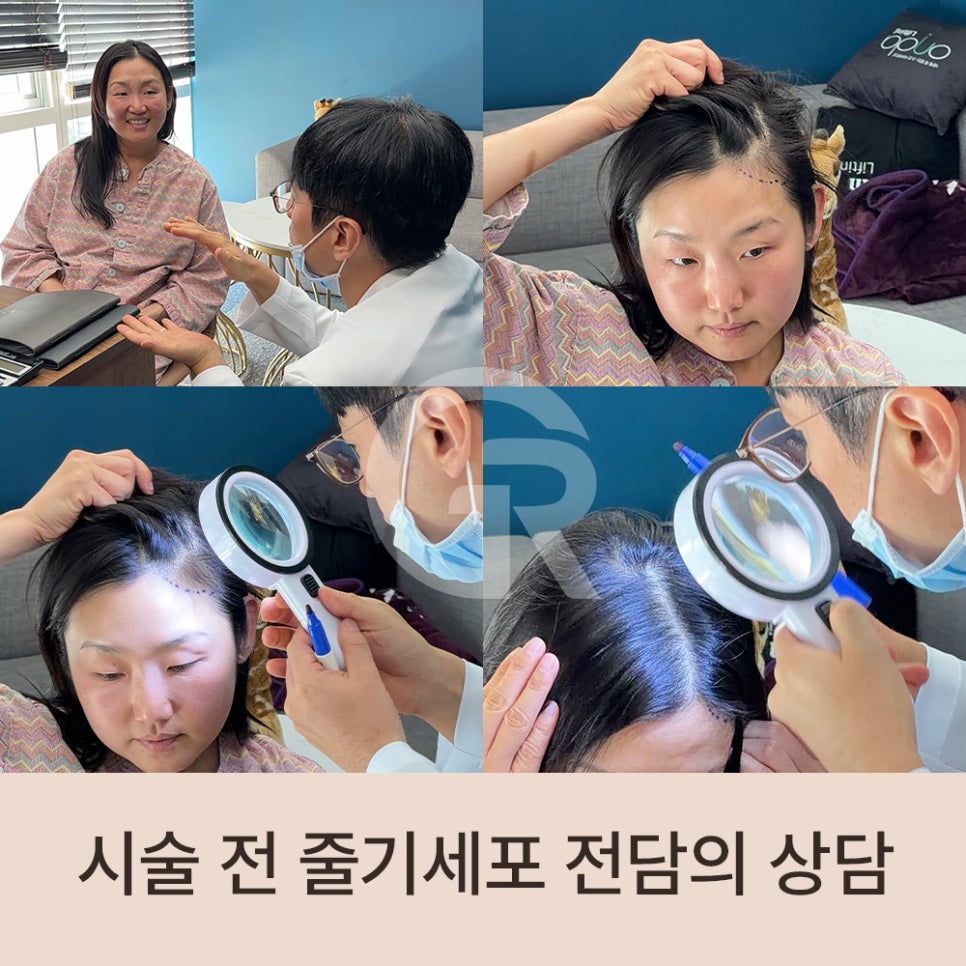
Overall consultation on the areas needing treatment and the areas of concern
Because the scalp is more affected by sebum secretion and blood flow than the face, aging changes can appear more quickly. As blood flow and collagen decrease with age, and the tissue around the hair follicles weakens, the environment for hair growth becomes less favorable. In the end, the problem is not just the hair itself, but that the environment needed for it to grow is no longer supported. As a result, the growth phase gradually shortens and the resting phase lengthens, and the same follicles produce increasingly thinner and weaker hair.
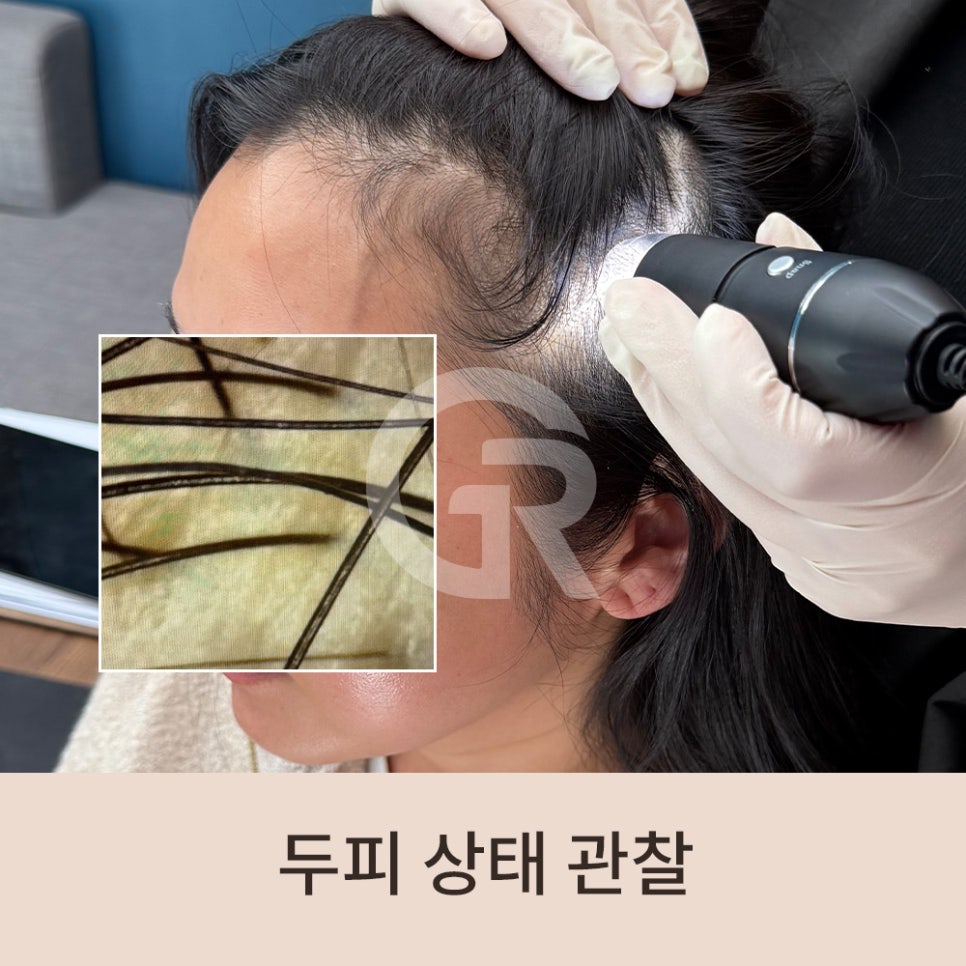
Observing the scalp and hair follicle condition through a microscope
How adipose stem cells work Of course, supplements, shampoos, and home care can help. However, there are limits to reversing an already aged scalp environment. At this point, adipose stem cells can be recommended as a treatment that regenerates the scalp itself. It is easy to misunderstand and think that the injected cells create new hair, but the actual mechanism is different. Stem cells extracted from fat (SVF) contain various growth factors and signaling substances.
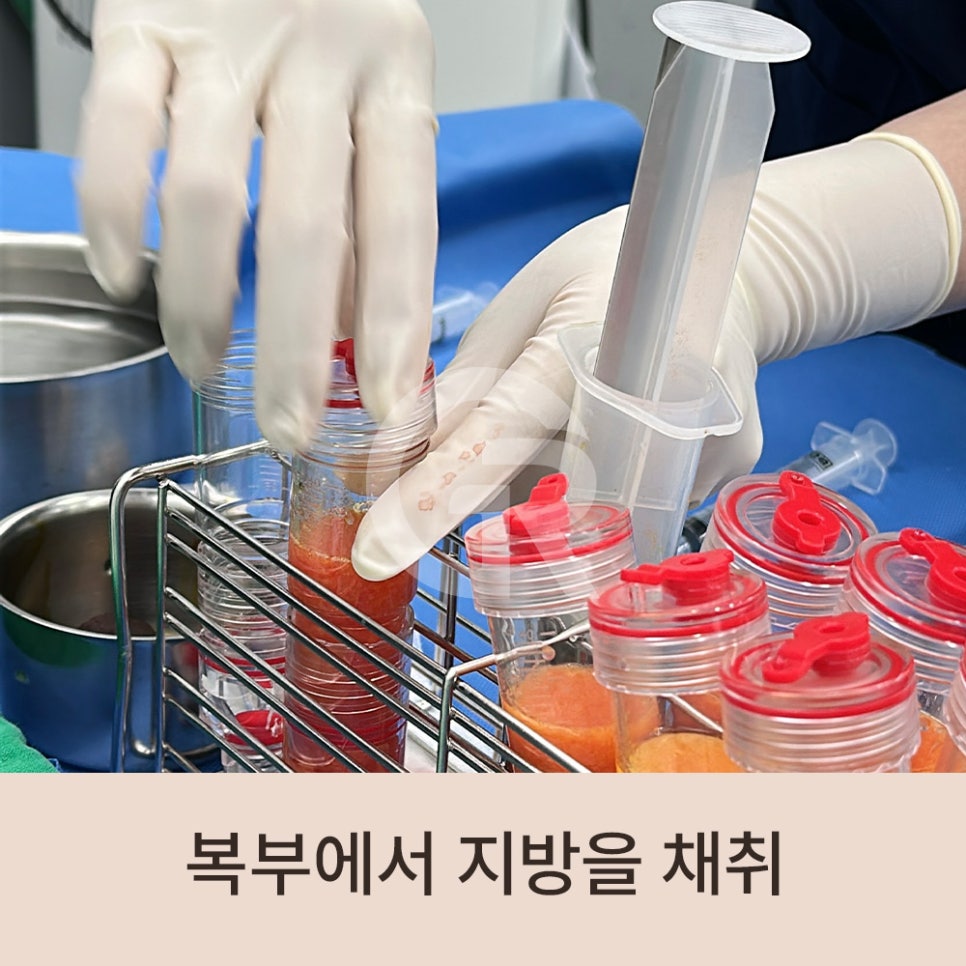
Harvesting fat for adipose stem cell extraction
When these components are injected into the scalp, they help induce recovery in the surrounding tissue. In simple terms, stem cells are closer to "repairing" the function of the tissue rather than "replacing" it. In this process, microcirculation around the hair follicles improves and cellular activity is activated, creating conditions that allow follicles that had remained in the resting phase for a long time to transition back into the growth phase.
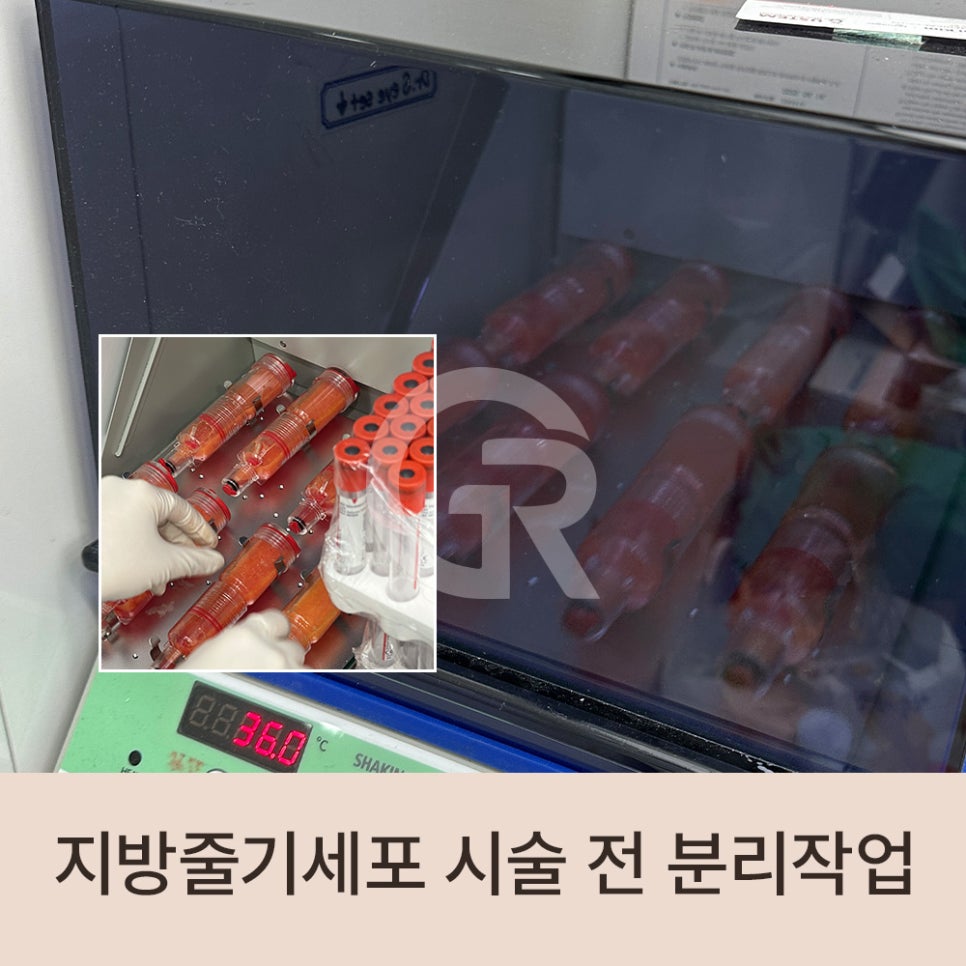
Separation process for stem cell purification
A real case of adipose stem cell scalp injections The celebrity, who is active on various social media platforms, had already experienced a blood-based stem cell procedure before. At that time, she received a skin treatment and was very satisfied with the results. However, due to noticeably reduced hair volume and a sparse part line, hair loss was suspected, so she visited the clinic and we examined the scalp together. What stood out visually was the sagging and thinning hair, along with a widened crown and part line.
When we observed between the hairs, the density was reduced, and through the magnified microscope, we could also confirm that some follicles had already been lost. Over time, she felt that hair growth had slowed, and this was indeed progressing. She also said she had noticed signs of aging such as decreased facial collagen and sagging under-eye fat. At the same time, she came to consider active regenerative treatment rather than simple care.
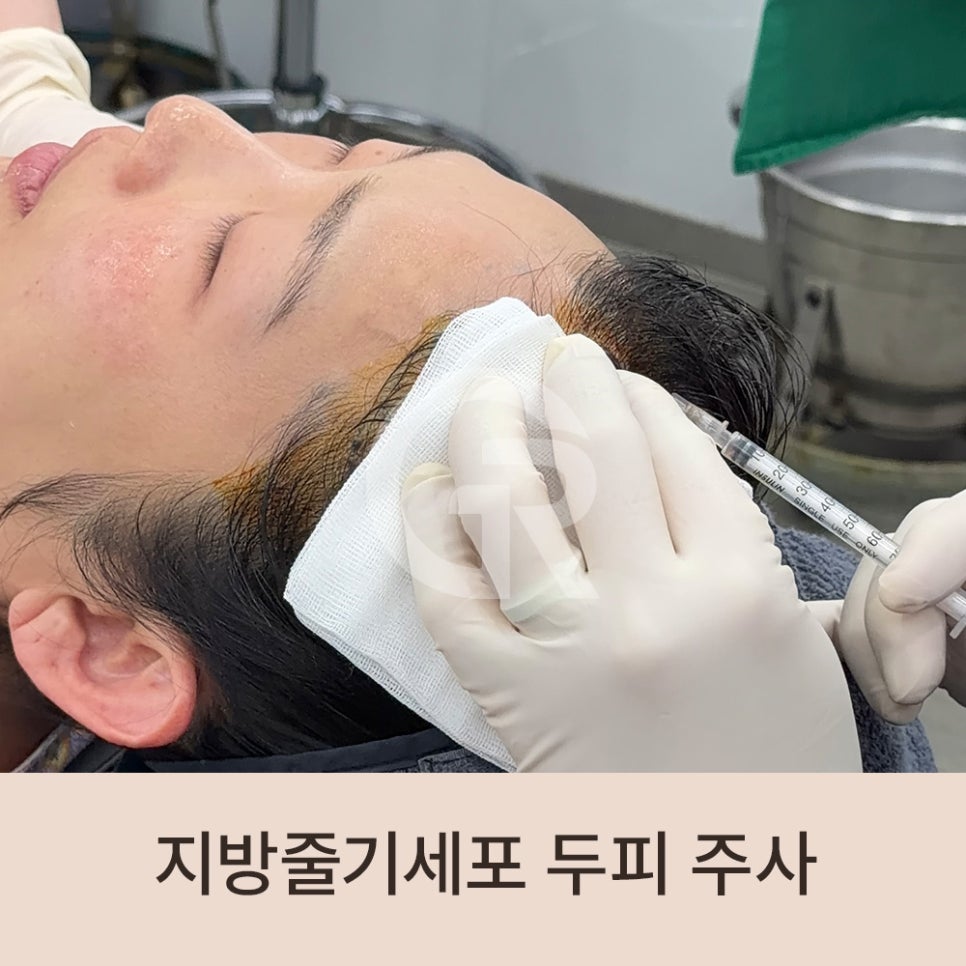
Kirin Plastic Surgery adipose stem cell scalp injection
However, for the under-eye area, we explained the limitations and determined that a surgical approach would be more helpful than recovery through adipose stem cell skin injections. Adipose stem cell injections can be expected to improve factors such as skin elasticity, fine wrinkles, and tissue density, but they are not a treatment that removes structurally protruding fat. Treatment method The procedure was carried out with both the scalp and skin in mind. Fat was harvested through a minimal incision (1–2 mm) in the panty line area, after which the fat was extracted, stem cells were separated, and the cells were purified. After that, 8 cc was injected into the scalp and 4 cc into the face. The injections were made directly into the areas that needed improvement, based on prior consultation and design.
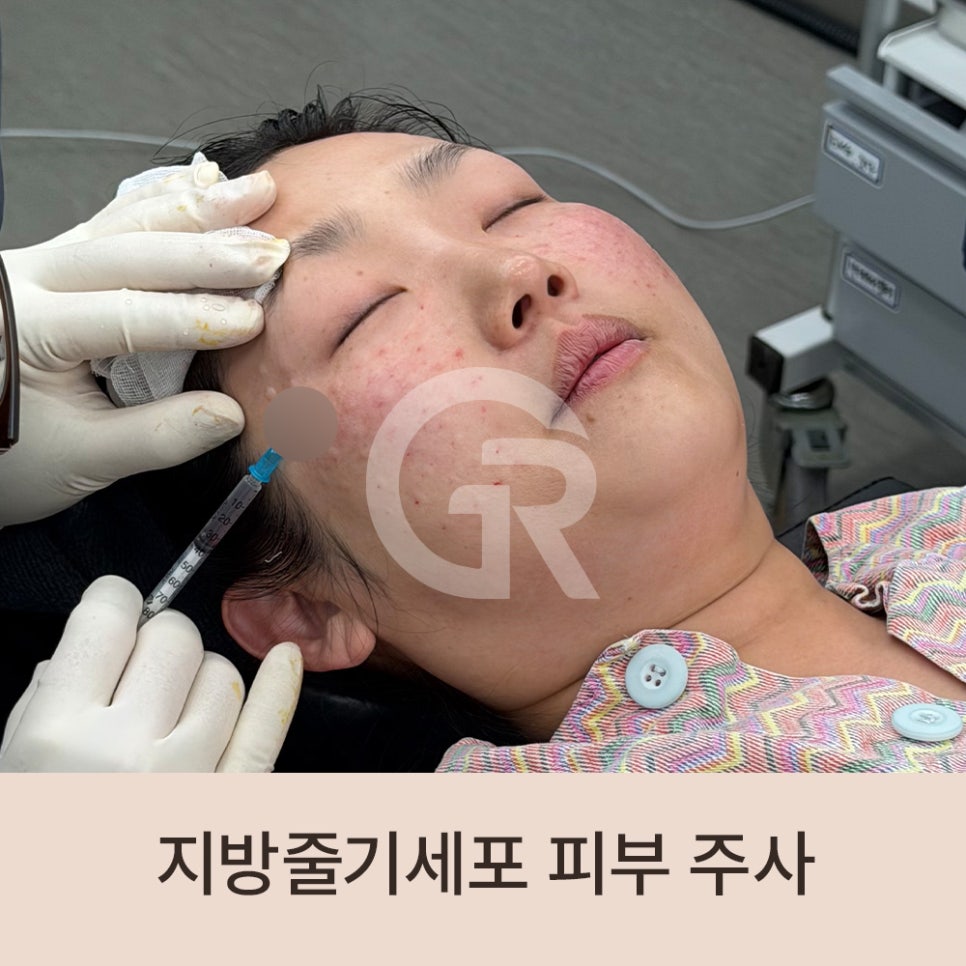
Kirin Plastic Surgery adipose stem cell skin injection
The stem cells injected in this way immediately secrete various growth factors and signaling substances, and these signals send a message to surrounding cells that "this is a state in which recovery is needed." This acts in a way that induces activity in the cells around the hair follicles. Through this, stem cells can help shift the course of aging, but rather than producing an immediate change, they create gradual changes through interaction with the tissue.
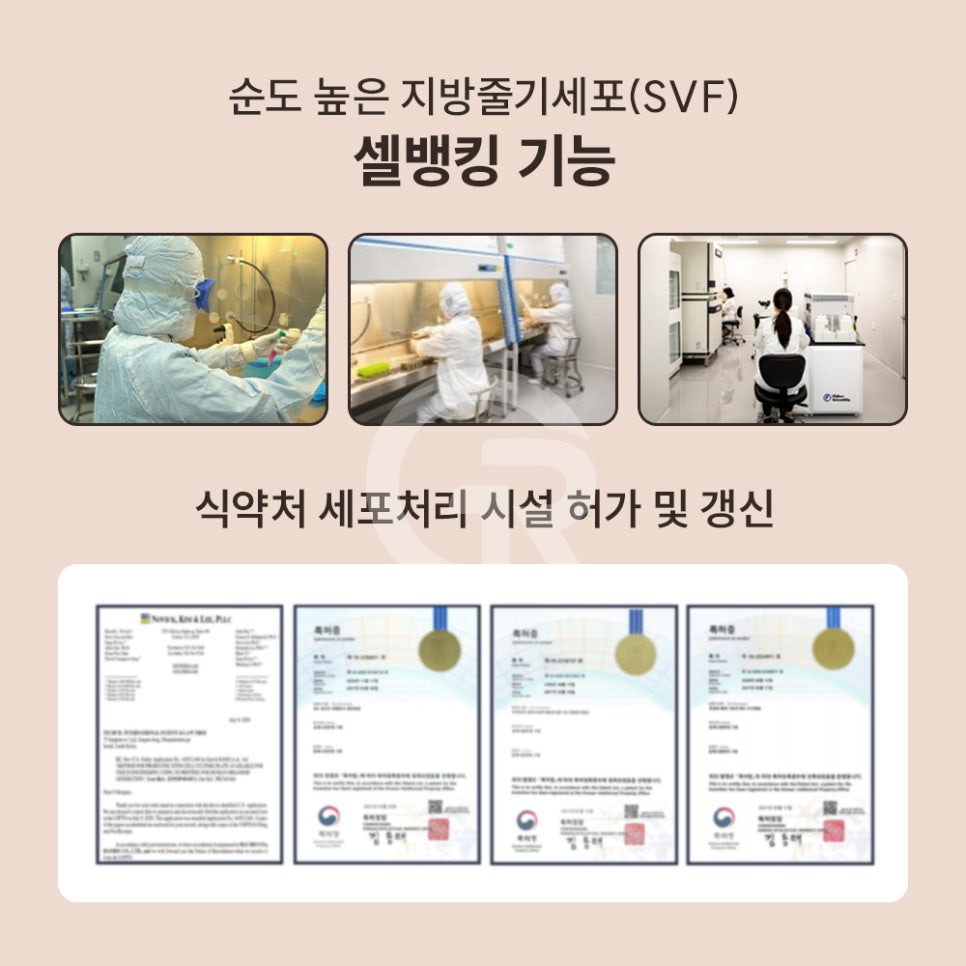
Kirin Plastic Surgery Cell Banking Service
Precautions after adipose stem cell injection After adipose stem cell injection, massage and heat-based procedures should be avoided. If petite procedures or massage are performed immediately, the effect will inevitably be reduced. This is because the stem cells will focus on relieving stimulation rather than concentrating on collagen regeneration. If treatments such as Ulthera or Thermage are combined, synergy may be greater, but when doing so, it is better to receive laser lifting first and then the adipose stem cell injection. This is because there is a risk of burns.

A stem cell specialty clinic near Gangnam Station
In addition, to maintain the effects for a longer time after the procedure, it is recommended to avoid irritating cosmetics such as retinol and vitamin C for about one week, and proper skin care such as 충분한 moisturizing and regenerative care is needed.