Summer is approaching, and dieting is in full swing. But if losing weight only makes your jawline look less defined and leaves a double chin behind, it may not be a simple fat issue.
“
I thought losing weight would bring back my jawline, but it actually became blurrier.
”
This is one of the most common things I hear in consultations. Among the reasons people decide to diet, there is not only the goal of losing weight, but also the hope of refining the facial line. When weight decreases, swelling often eases naturally and facial features can appear more defined. That is why people also expect the jawline to become clearer.
However, in actual treatment, there are quite a few patients who experience the exact opposite. They lose overall weight through running, weight training, and diet control, but because their face feels saggy, they look older and the double chin remains.
What defines a beautiful jawline

If you lost weight but your jawline looks blurrier, it may not be a simple weight issue.
In consultations, I hear “I want to make my face smaller” very often. But if you look a little deeper into that question, you can see that what patients really want is not simply a smaller face.
In many cases, “a small face” means a state where △ the jawline is clearly visible △ the face looks neat and organized △ the side profile looks sharp. In other words, it is less about size and more about how the face looks. A defined jawline does not simply mean having a sharp angle.
Usually, when people talk about a pretty jawline, they imagine a sharp, pointed shape. But in reality, a shape that is simply too angular can make it difficult to create a natural and balanced impression.
What matters more is a structure where the jaw and neck look naturally separated. From the side, if the area under the chin and the neck do not appear to flow together as one and the jawline is recognized as a single line, that is close to what we call an “organized jawline.” When this boundary breaks down, the face can look duller and heavier regardless of the actual size of the jaw.
The reason a face looks smaller lies in the degree to which its contours are organized, not in its actual size.
One common misconception patients have is that “to make the face smaller, the bone has to be reduced.” But in reality, even with the same face size, △ when the jawline is clearly visible, the face looks smaller △ when the jawline is blurred, the face looks larger. This difference is not simply a matter of size; it is determined by how the eye is guided.
If volume remains under the chin or the jawline is blurred, the gaze gets dispersed downward and the face appears wider. On the other hand, when the jawline is organized, the gaze naturally concentrates upward, giving the face a smaller and more refined impression. The difference in the jawline becomes even more noticeable from the side.
Recently, many people consider the side profile more important than the front view because photos and videos often expose the side. If the boundary between the jaw and neck is clearly separated from the side, the face gives a much sharper and more polished impression. Conversely, if the area under the chin does not slope down naturally and instead looks blunt and connected, the face appears larger than it really is, and the impression becomes more aged.
Because of this, even the same face can create a very different overall impression depending on the condition of the jawline. In the end, a “small face” means a structure that is well organized.
How is my jawline now? Self-check

When the jawline blurs, the face can look wider and duller than it really is.
-
Even after losing weight, there is little change in the jawline
-
In fact, the jawline became blurrier after losing weight
-
The side profile looks duller than the front view
-
When you pinch under the chin, the skin feels thin
-
The jawline changes when you push your chin forward
In cases like this, it may be difficult to expect enough improvement through methods that only reduce fat. Even if you feel that your jawline looks blurry, it is not easy to judge on your own what the actual problem is. That is why the first step in a consultation room is to objectively check the current condition. Through the methods below, you can simply check your current jawline and double chin condition.
- It is more accurate to check with “photos” rather than a mirror
First, it is a good idea to take both front and side photos. This is because the front view may look relatively normal, while the side view often reveals a blurred boundary between the jaw and neck. In particular, if there is no angle formed between the jaw and neck from the side and the line looks bluntly connected, it can be considered a blurred jawline. Also, if you slightly tilt your head down and the tissue folding under the chin becomes more noticeable, it may be an early sign of a double chin.
- You can distinguish “fat” from “sagging” by touching under the chin directly
Gently pinching the area under the chin with your fingers can also help. If the tissue you feel is thick and firm, it is more likely to be due to excess fat.
If it feels thin and easy to pinch, skin sagging or reduced elasticity may be influencing it. This difference is a very important criterion when deciding the direction of treatment.
- If the jawline changes when you move your head forward, structural factors are also involved
While looking in the mirror, try slightly pushing your chin forward and check how the line under the chin changes.
>If the jawline becomes relatively clearer at that time, the jaw structure or position may be affecting it.
>If there is little change, fat or soft tissue may have a larger influence.
- If the double chin decreases when your posture is corrected, habitual muscle use is influencing it
If you often keep your head pushed forward in daily life, the tissue under the chin can be compressed and the double chin may look more prominent.
If the double chin decreases when you straighten your back and slightly lift your chin, it may be influenced more by posture and habitual muscle use than by simple fat.
- It is also important to check the angle between the jaw and neck from the side line
From the side profile, you can objectively judge the current condition by looking at the angle where the jaw and neck meet.
A normally organized jawline shows a clear angle between the jaw and neck. When this angle becomes blunt or disappears, the jawline looks blurry.
I lost weight through running, but my face looks like it is sagging

The jawline is a structure created together by skin, fat, and muscle.
It is discouraging when the results do not match expectations, but the reason the jawline does not become clear even after dieting is more complicated than it seems. The jawline is not a structure that simply comes back by reducing fat alone. It is a contour formed by the balance of skin, muscle, and the soft tissue beneath them, from the cheeks to the chin and neck. When this balance is maintained, the boundary between the jaw and neck appears naturally. But if even one element collapses, the jawline easily becomes blurred.
The reason the jawline looks more collapsed after weight loss lies in changes to the soft tissue. The changes that occur after weight reduction do not end with a simple decrease in fat. The internal balance that maintained the shape of the face changes as well.
When volume decreases, the support underneath weakens, and the tissue covering it remains relatively in place. In this state, the area under the chin shifts downward and the boundary between the jaw and neck becomes blurred. Although the weight has clearly gone down, the face does not feel more organized, and especially in the side profile the jawline appears collapsed, which can cause significant stress because the impression becomes dull.
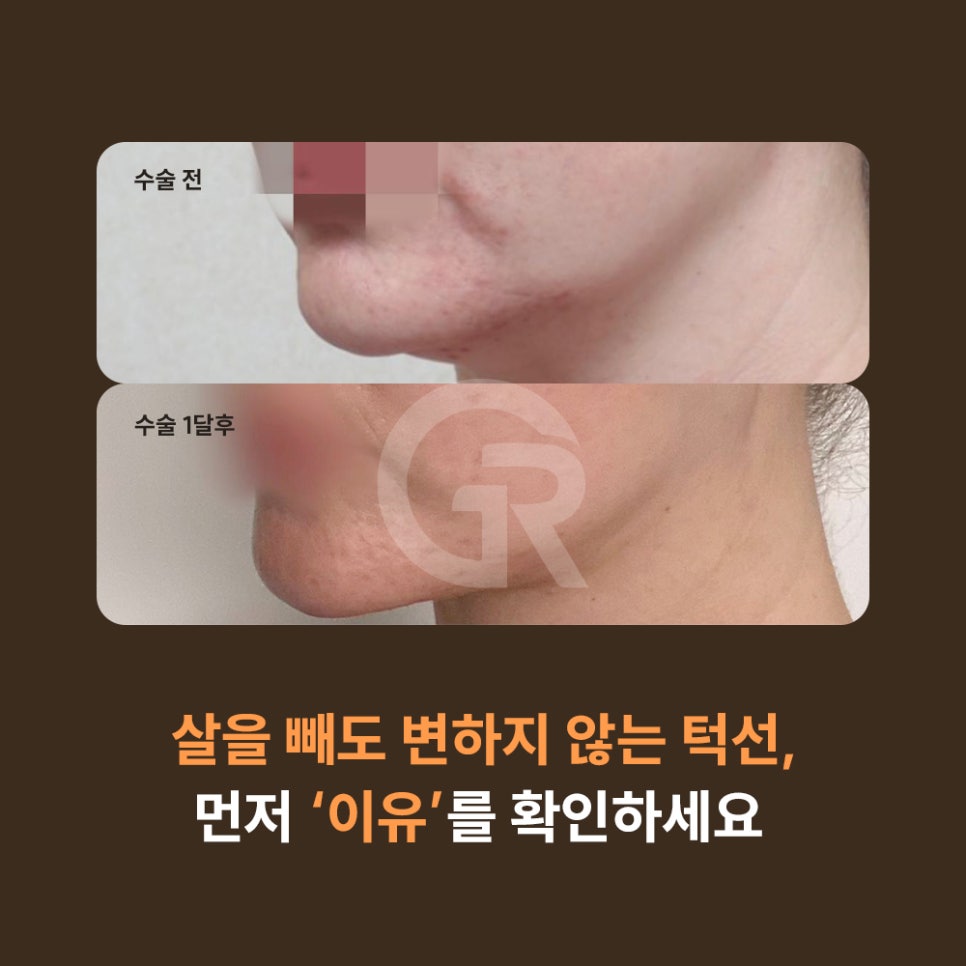
If the support structure weakens after weight loss, the tissue under the chin may look even more saggy.
In one actual case, a patient came to the clinic worried about sagging skin and a more noticeable double chin after dieting. Her face was actually small and her features were very pretty, but she felt that her face looked blurrier. The front view did not seem to have a major problem, but when the side profile was checked, it was confirmed that the boundary between the jaw and neck did not connect naturally and the area under the chin flowed bluntly. In particular, when taking photos, the deeply sunken nasolabial folds, double chin, and neck wrinkles were the biggest sources of stress.
What the diagnosis showed was that this was not simply a state with a lot of fat. While the upper facial volume had decreased, tissue still remained under the chin, and the muscles that should support it were also left stretched out. As a result, the upper part of the face became smaller while the lower part remained the same, breaking the balance and making the jawline look blurrier.
In such cases, simply removing fat alone is unlikely to produce sufficient results. If only the fat is reduced in this state, more excess skin may remain, so an approach that reorganizes the current structure is needed.
Criteria for choosing a treatment direction for facial sagging
In this patient’s case, the most important factor in deciding the treatment direction was not simply “how much remains,” but “which structure has collapsed.” Rather than first considering fat removal just because volume remains under the chin, it was necessary to distinguish where the cause of the blurred jawline was coming from. In the end, it was determined that this patient needed a treatment approach that would reorganize the structure under the chin rather than simply reduce it, so soft tissue contouring and double chin muscle plication were performed together.

Soft tissue contouring is intended to organize and design the line.
Soft tissue contouring is conceptually different from what is commonly thought of as liposuction. Liposuction is removal, but soft tissue contouring is closer to the process of recreating the jawline. Rather than simply reducing the amount of fat, it is a process of reorganizing the tissue remaining under the chin and recreating the line where the jawline forms. During the procedure, unnecessary fat and sagging tissue remaining under the skin are整理 and the structure is refined so that the jawline can connect naturally. When this process is performed, it does not simply reduce volume; it organizes the blurred boundary and reveals a clearer contour.
Double chin muscle plication is a structural approach that recreates the boundary between the jaw and neck.
Double chin muscle plication is a process of rebuilding the foundation that supports the jawline. This surgery is performed through a small incision under the chin. After accessing through the incision, the fat layer under the skin is organized, and then the platysma is identified underneath. The platysma is a muscle that plays an important role in maintaining the boundary between the jaw and neck. In a normal state, the two sides meet in the center to support the jawline, but over time or for structural reasons, the left and right sides often separate or sag. A double chin can be caused by fat-related sagging, but in many cases it is difficult to solve with ordinary fat-dissolving injections or facial liposuction because of this muscle sagging.
During surgery, the separated muscle is brought toward the center and firmly sutured to create a structure that can support the area under the chin again. Once this is done, the sagging tissue is organized, the boundary between the jaw and neck becomes clearer, and the collapsed line seen from the side improves more naturally. Unlike simple fat removal, this surgery restores the “foundation” that creates the jawline, which is why the results can differ greatly.
Why a full facelift is not recommended for younger patients
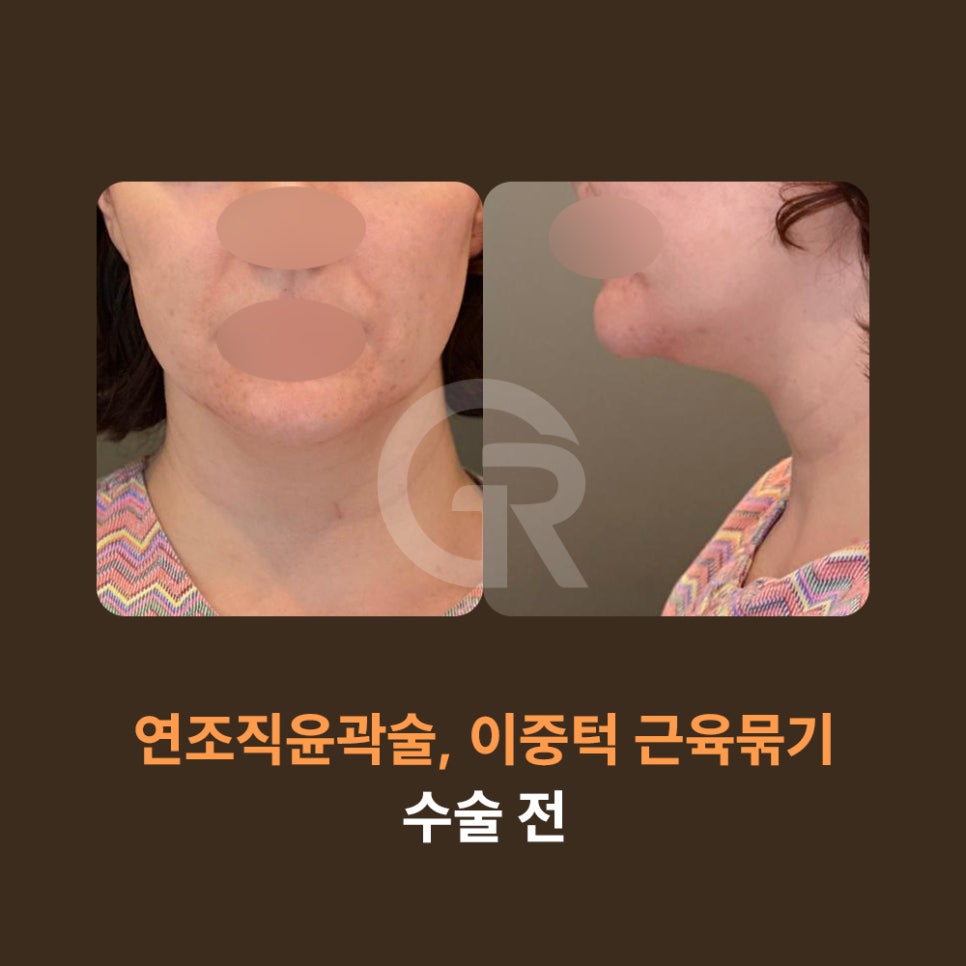
The unclear boundary between the jawline and neck is more apparent from the side profile.
The reason a full facelift was not chosen for a younger patient is also clear. In this case, the patient was relatively young, so it was judged that there was no need to proceed with a full facelift that lifts the entire face. A facelift is appropriate when skin sagging is severe overall or when lifting the entire face is needed. On the other hand, this patient had a localized problem under the chin that had disrupted the contour, so correcting only the necessary area could lead to a more natural result.
Rather than unnecessarily widening the surgical scope, choosing the right method for the current condition is important for both the quality of the result and recovery. There is a reason why the treatment method differs even for the same double chin. In consultations, even patients who visit with the same double chin concern often end up receiving different treatments.
For some patients, simply reducing fat is enough to achieve a meaningful change, but in other cases the jawline will not improve unless the muscles are also addressed. In still other cases, the skin condition must also be considered to expect a more stable result. What matters is not applying the same approach based only on what is visible, but accurately identifying the elements that make up the current condition.
Soft tissue contouring and double chin muscle plication results
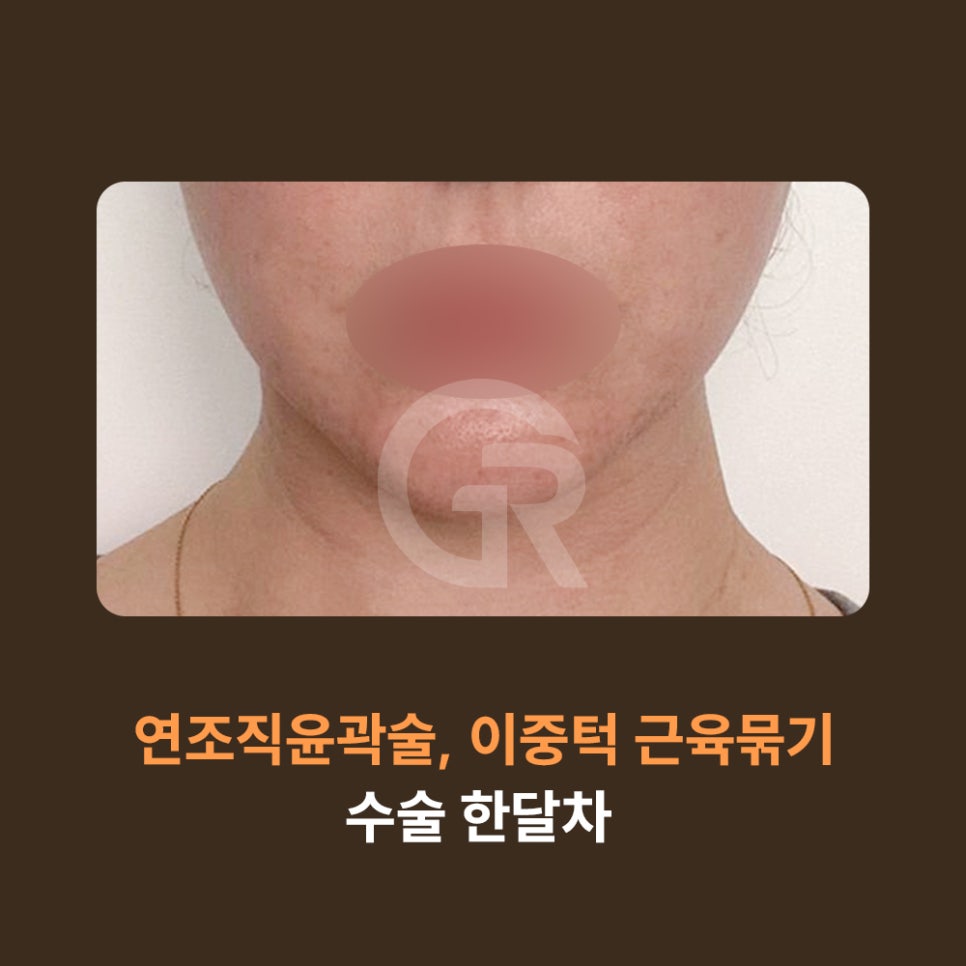
A clearer jawline even though swelling remains
The soft tissue of the sagging jawline was organized with soft tissue contouring. The nasolabial folds were quite sunken and the asymmetry between the right and left sides was significant, but a full facelift was not recommended. The patient wanted a natural change, and the most important factor was the patient’s age group. It was judged that improvement could be achieved sufficiently by addressing only the areas causing the most stress, and the patient agreed. When soft tissue contouring and double chin muscle plication are performed together, swelling becomes more pronounced for 48 hours and then gradually subsides over 2 to 4 weeks. Stitch removal is usually done between 7 and 9 days, and until stitches are removed, it is best to keep the surgical area dry and maintain cleanliness by wiping it with a wet towel.
Other postoperative precautions include avoiding direct sunlight for 3 months after surgery and applying sunscreen frequently with careful attention. Red scars may remain during the recovery process, but they improve after 6 months. Girin Plastic Surgery is a specialty clinic for stem cells with a hyperbaric oxygen chamber, and it is optimized for scar management.

Rather than deciding based only on the surgical result or price point, please fully consider your own concerns, how they are approached and resolved, and the opinions of each specialist. In addition, the surgical system and postoperative process are also items that must be checked, so please review them carefully.