Concerns and Aesthetic Goals Before Soft-Tissue Contouring Surgery
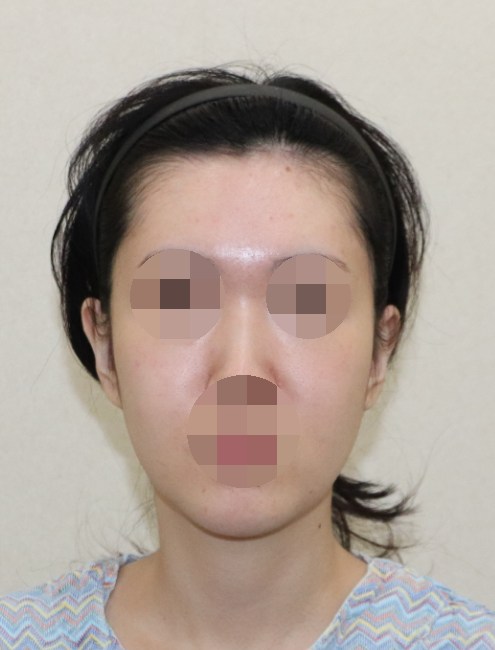
Front-facing photo before soft-tissue contouring surgery
Although the face appears to be a single structure, it is actually made up of layers of bone, muscle, fat, fat pads, retaining ligaments, and skin, which create a three-dimensional form. Therefore, even with the same skeletal structure, the impression of the face can change completely depending on the composition and direction of these soft tissues.
One thing I have noticed while consistently performing soft-tissue contouring surgery is that patients do not necessarily want an extremely small face. Among the people who are frequently cited as references, actress Go Youn-jung and aespa's Karina are particularly popular. This patient inquired about soft-tissue contouring surgery with expectations of achieving actress Go Youn-jung's small, defined facial contours, soft lines, and short midface.
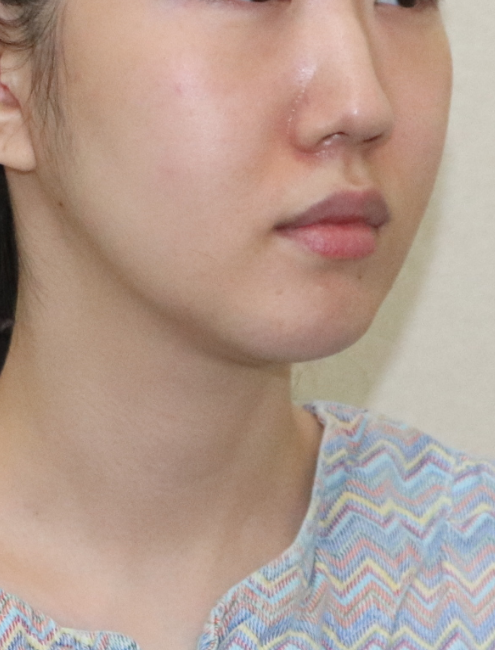
Before soft-tissue contouring surgery
The patient already had an attractive facial shape before the procedure. However, one area that could be improved was the sunken apple zone and the sagging fat below the cheekbones. As a result, the center of gravity shifted toward the lower face, making the face appear wider. Although the jawbone itself was not particularly broad, sagging was also present around the jawline.
In my view, the key feature of actress Go Youn-jung's facial shape is the exceptionally smooth flow of the soft tissues over the bones. Her cheekbones are not excessively prominent, yet her face is neither flat nor angular, creating soft, gentle curves. This allows a clear, dimensional quality to flow through the center of the face, aligning well with the aesthetic of the “natural beauty” look that many people favor today.
Changes in the Apple Zone and Midface After Soft-Tissue Contouring Surgery
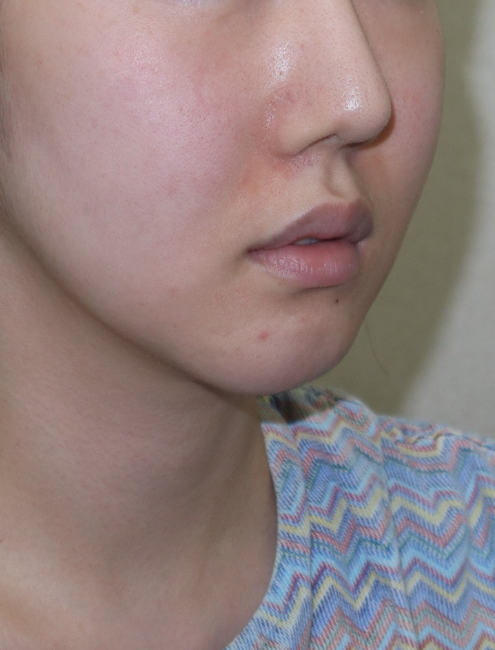
Two months after soft-tissue contouring surgery
Although more before-and-after photos are available, for this post I specifically included only 45-degree photos to highlight and compare the apple zone and the softness of the facial contours. In this patient’s case, it was not possible to create a face like actress Go Youn-jung’s simply by removing a large amount of facial fat. The goal was to distinguish between the volume that needed to be reduced and the areas that needed to be preserved, thereby refining the facial contours smoothly.
Because soft-tissue contouring surgery is not contouring surgery that reshapes the bones, there is no change to the cheekbones or jawbone themselves. However, it was possible to reduce the heaviness of the lower face by addressing the descent of the anterior cheek fat pad and the support of the midface.
One-Year Follow-Up
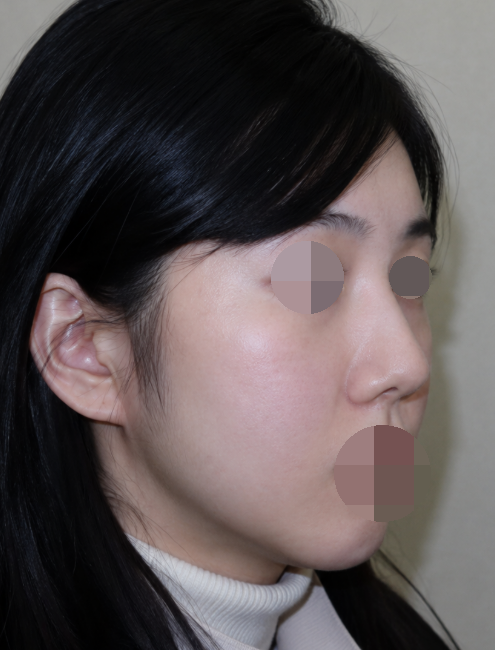
One-year follow-up after soft-tissue contouring surgery
These follow-up photos were taken at the patient’s request when she visited for a consultation about other procedures and surgeries after soft-tissue contouring surgery. The change I can speak about with the greatest confidence is the change in the position of the apple zone. This is an area that people interested in makeup can immediately recognize, as it is deliberately highlighted to create a shimmering effect. It is the area where the lateral cheekbone and anterior cheekbone meet. The volume in this specific area affects whether the face looks lively and youthful.
After soft-tissue contouring surgery, the patient continued to maintain her smooth facial contours through consistent care. She appeared bright and had regained her confidence with a more dimensional and smaller-looking face.
Soft-tissue contouring surgery is absolutely not a procedure that makes the facial bones smaller. The goal is not extreme reduction, but rather to leave smooth lines without hollowness, soft outer contours, and a lively apple zone. Removing too much unconditionally can create imbalance in the face.
I recommend receiving an accurate diagnosis so that surgery can be planned based on an understanding of your facial structure and the changes you specifically need.