When consulting with patients about cheekbone reduction, most concerns center on a face that looks wide, prominent cheekbones, or a strong-looking image. However, when examining patients’ facial shapes in person and reviewing their skeletal structure on CT scans, it becomes clear that different areas stand out in each case, including the front cheekbones, side cheekbones, and 45-degree cheekbones. In other words, having large cheekbones is not simply a matter of cheekbone size. Hollowing in the lower face, sagging cheeks, skin elasticity, and the proportions in relation to the jawline can also make the cheekbones appear more prominent.

Before cheekbone reduction surgery
The concerns are somewhat different for people who work as models, in particular. Although their faces may look very small and appear to have no issues in everyday life, their cheekbones can stand out strongly under camera lenses and lighting. In actual photographs, the face may look wider, or the shadow beneath the cheekbones may appear deep in three-quarter shots. The facial contours may also look uneven. While this can be an attractive feature for some people, it can become a source of stress when it is perceived as excess visual space.
Therefore, cheekbone reduction for models, actors, influencers, celebrities, and others who frequently appear in front of cameras should not be approached simply as surgery to make the face smaller (although many people do ask during consultations to make their face as small as possible). When someone is already loved for their distinctive image or atmosphere, the lovable individuality of the face should be preserved while the areas that stand out on screen are reduced as much as possible, refining the flow of the facial contours to create a softer and more sophisticated appearance.
The current model after cheekbone reduction surgery
Not every prominence in the cheekbone area can be resolved through bone surgery. In some cases, the cheekbones are genuinely prominent, while in others they only appear prominent because there is little cheek fat. There are also cases in which the midface has lost volume, creating deep shadows beneath the cheekbones. Conversely, if someone with significant cheek sagging undergoes excessive cheekbone reduction, the midface may look longer even if the facial width is reduced, producing an unfavorable result. Therefore, when a patient seeking cheekbone reduction visits, it is essential to comprehensively consider the facial bone structure, skin thickness, cheek volume, the degree of hollowing around the temples, the connection with the jawline, and the movement of the surrounding muscles. In particular, for professions such as modeling, where the face itself becomes part of one’s image, even a difference of just 1–2 mm can affect that image, making especially detailed planning necessary.

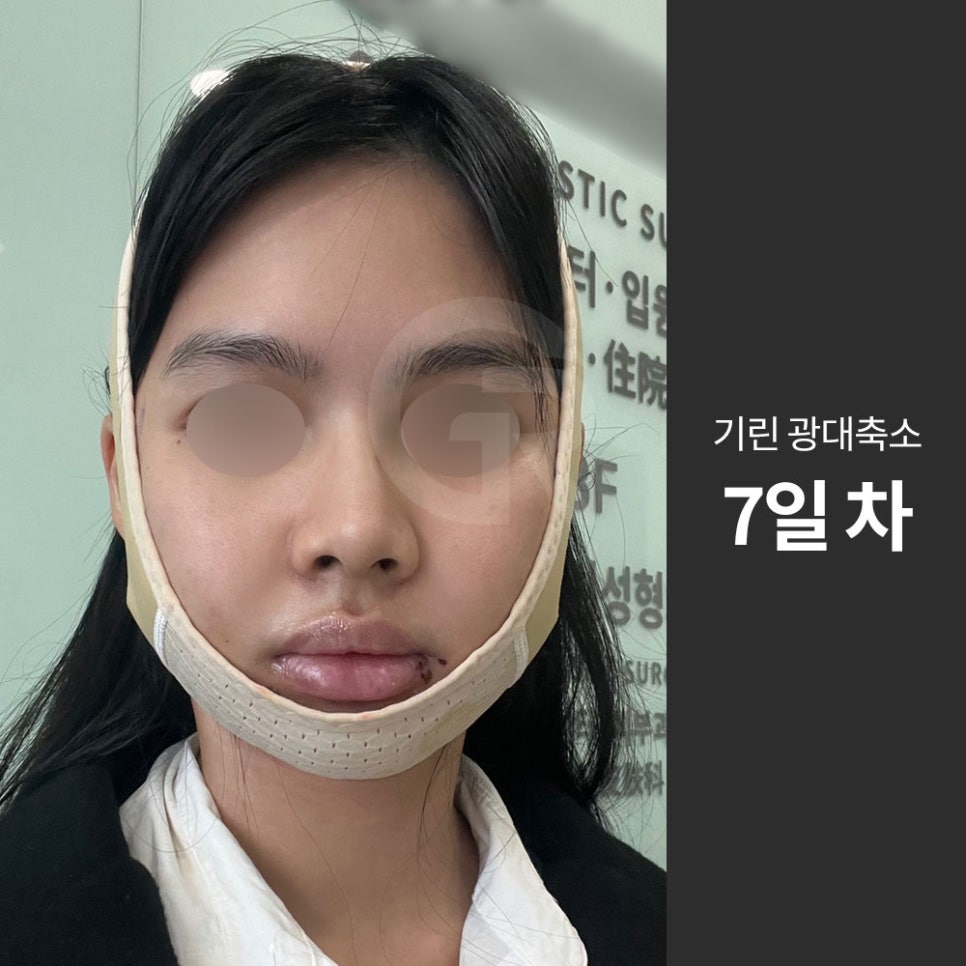
Two weeks after cheekbone surgery, with the swelling having moved downward
The model, who is actively working both domestically and internationally, had an overall impression of being tall, sophisticated, and possessing a distinctive aura. However, she shared that the blunt feeling around her cheekbones sometimes made her feel that her mood did not match when wearing clothing or jewelry. Her face was already small, with some cheek sagging, and she needed to continue her upcoming schedule immediately. She therefore considered a method that would cause less swelling. The surgery was performed using a fixation method that reduced the prominent cheekbone areas while lifting the midface so that the center of the face would not appear excessively hollow.

One month after surgery, after the major swelling had subsided
To minimize the burden of cheekbone reduction, it is advisable to check the fixation method and osteotomy locations in advance. In particular, an intraoral approach can be a significant advantage for people in professions with frequent facial exposure, such as models, actors, and influencers, because it places less burden on them in terms of visible scarring. By accessing the cheekbone area through the mouth, the necessary areas can be cut, repositioned, and fixed through minimal incisions. The degree of prominence of the side and 45-degree cheekbones can also be considered together to refine the flow of the central face.
However, this should not be misunderstood to mean that the surgery is minor. Cheekbone reduction is a facial contouring procedure involving bone, so preoperative CT analysis by a specialist, an understanding of the facial nerve and blood vessel structures, a sense of symmetry, and experience with fixation stability are important. Because precise manipulation is required within a limited field of view, the surgeon’s anatomical understanding and level of expertise are particularly important.

Giraffe Plastic Surgery’s cheekbone reduction is performed through an intraoral incision, so it leaves no external scar.
Although the absence of a visible external scar is a major advantage when cheekbone reduction is performed through an intraoral incision, it is equally important to follow all precautions carefully. First, thorough oral hygiene should be maintained for a certain period after surgery. During the early stages of recovery, it is advisable to avoid irritating or hard foods.
Swelling, bruising, and temporary reduced sensation may also occur. Since the cheekbone area is located in the center of the face, the swelling gradually moves downward. As a result, the shape around the mouth may temporarily look awkward during the recovery process. It generally settles gradually over time, but if you have a photo shoot or an important event scheduled, the recovery period should be taken into account.

A completed cheekbone line that suits the facial shape even better as the horizontal width narrows
Cheek sagging must also be carefully assessed. Reducing the cheekbones may refine the width of the face, but if the skin has low elasticity or there is already a significant amount of cheek fat, cheek sagging may become relatively more noticeable after surgery. Therefore, if you are preparing for cheekbone reduction, remember to confirm whether the diagnosis considers the skin and soft tissue as well. If necessary, the surgical method may be adjusted, or a separate plan may be established for lifting, fat, and volume, such as through soft-tissue contouring.

An appearance with moderate volume, closer to Jennie’s facial shape
The reduced cheekbone width has created a more balanced overall appearance. Viewed from the front, the facial width has been softened and reduced. Most importantly, the result was completed without compromising the patient’s existing individuality and atmosphere. Before surgery, the presence of the cheekbones attracted attention first; afterward, her large eyes, nose, and lips became more prominent. In this way, the key to modern facial contouring can be seen as refining the contours while preserving dimensionality, improving the impression in a softer way without leaving an unnatural, operated-on appearance.
Stability is also important. The cheekbones require repositioning and fixation after the bone is cut, and unstable fixation can cause problems such as nonunion, bone displacement, asymmetry, and sagging. The patient underwent a lifting fixation method. Unlike conventional cheekbone reduction, in which the bones are simply brought together and fixed, this method lifts and fixes them in the necessary direction while also considering the elasticity of the midface. In other words, it considers upward support at the same time as reduction.

With a small chin and abundant cheek volume, continued care is necessary.
A beautiful face is not beautiful simply because a particular area is small, but because the features connect naturally with one another. When the flow from the head shape, temples, cheekbones, front cheeks, nasolabial area, jawline, and chin is harmonious, the face can look sufficiently sophisticated without removing a large amount of bone. Therefore, it is essential to conduct a comprehensive analysis—not only of the degree of cheekbone prominence, but also of the role the cheekbones currently play in the patient’s face, the impression they create, and the expected result after surgery. Once cheekbone bone has been removed, it does not regenerate.

Before-and-after comparison of cheekbone reduction
If you are considering cheekbone reduction surgery, keep one thing in mind: how safely the cheekbones can be adjusted within the angles and range suited to your face. Seek an accurate diagnosis from a facial contouring specialist who can naturally preserve your face’s original strengths while creating harmonious facial lines from every angle.