
After contour surgery
Many people visit a clinic with concerns such as their face appearing wide, their jaw looking droopy, their cheek fat appearing saggy, or hollows appearing on the sides of their cheeks. As a result, it is also common for people to decide on a specific procedure before booking a consultation. However, when a patient's face is actually analyzed in the consultation room, the concern visible on the surface does not necessarily match the underlying cause. A detailed examination may show that sagging is caused not by fat or soft-tissue issues, but by facial skeletal asymmetry, the direction of the cheekbone projection, the angle of the jawline, or the widening of the lower jawline.
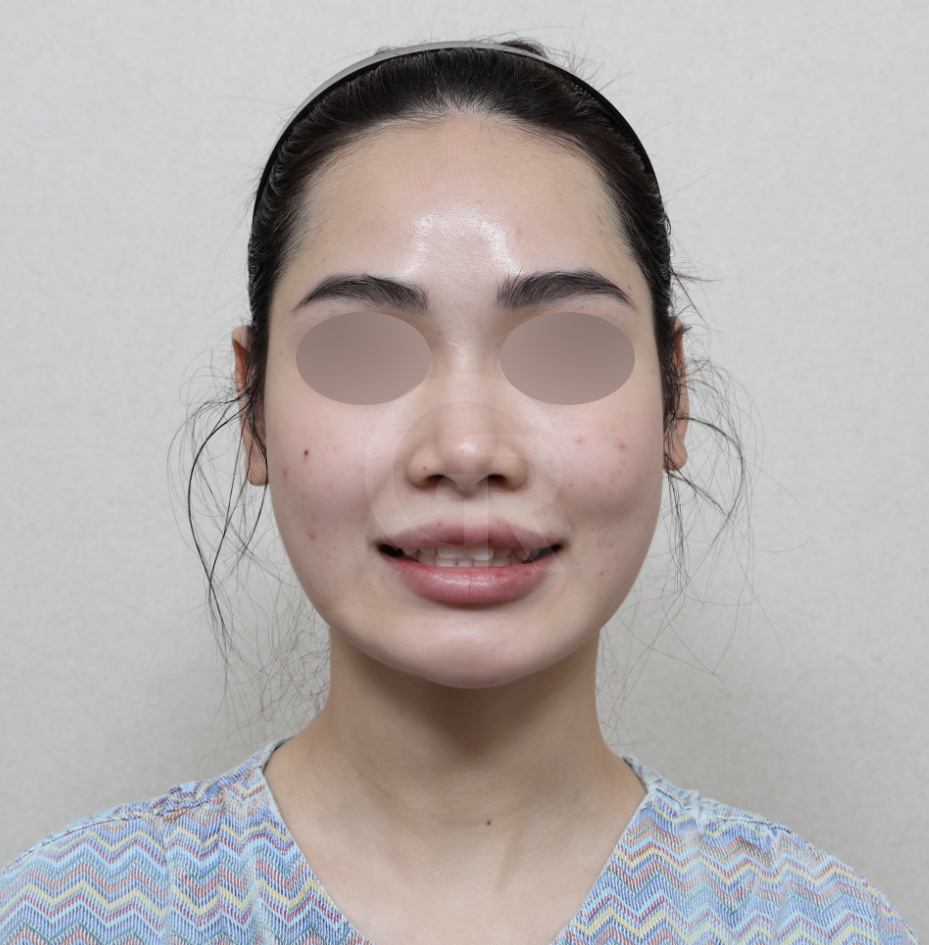
A patient who visited the clinic for soft-tissue contouring
The patient introduced here also initially visited the clinic for soft-tissue contouring, but ultimately underwent cheekbone reduction along with New V surgery, also known as long-curve resection. Her greatest concerns were sagging cheek fat around the corners of her mouth and a face that appeared wide. However, consultations, examinations, and 3D CT imaging showed that the key issue was the resulting facial asymmetry.
The asymmetry that began with the shape of the head disrupted the center of the face and affected the cheekbones and lower jawline. Therefore, the surgery focused on balancing the symmetry of the entire face.
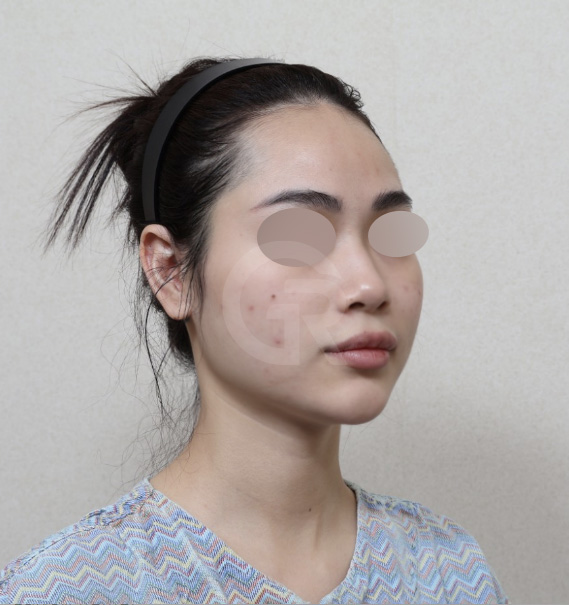
Contour surgery was planned because of facial contour asymmetry
First, in the cheekbone surgery, it was important to determine where to place the facial high point. The high point can be viewed as the central point that determines the face's three-dimensionality and firmness. Because this point had collapsed, causing the midface to appear saggy, we set it appropriately while reducing the excessively prominent width of the cheekbones. The goal was to create a smaller, more three-dimensional face with an appropriate amount of tension in the skin.
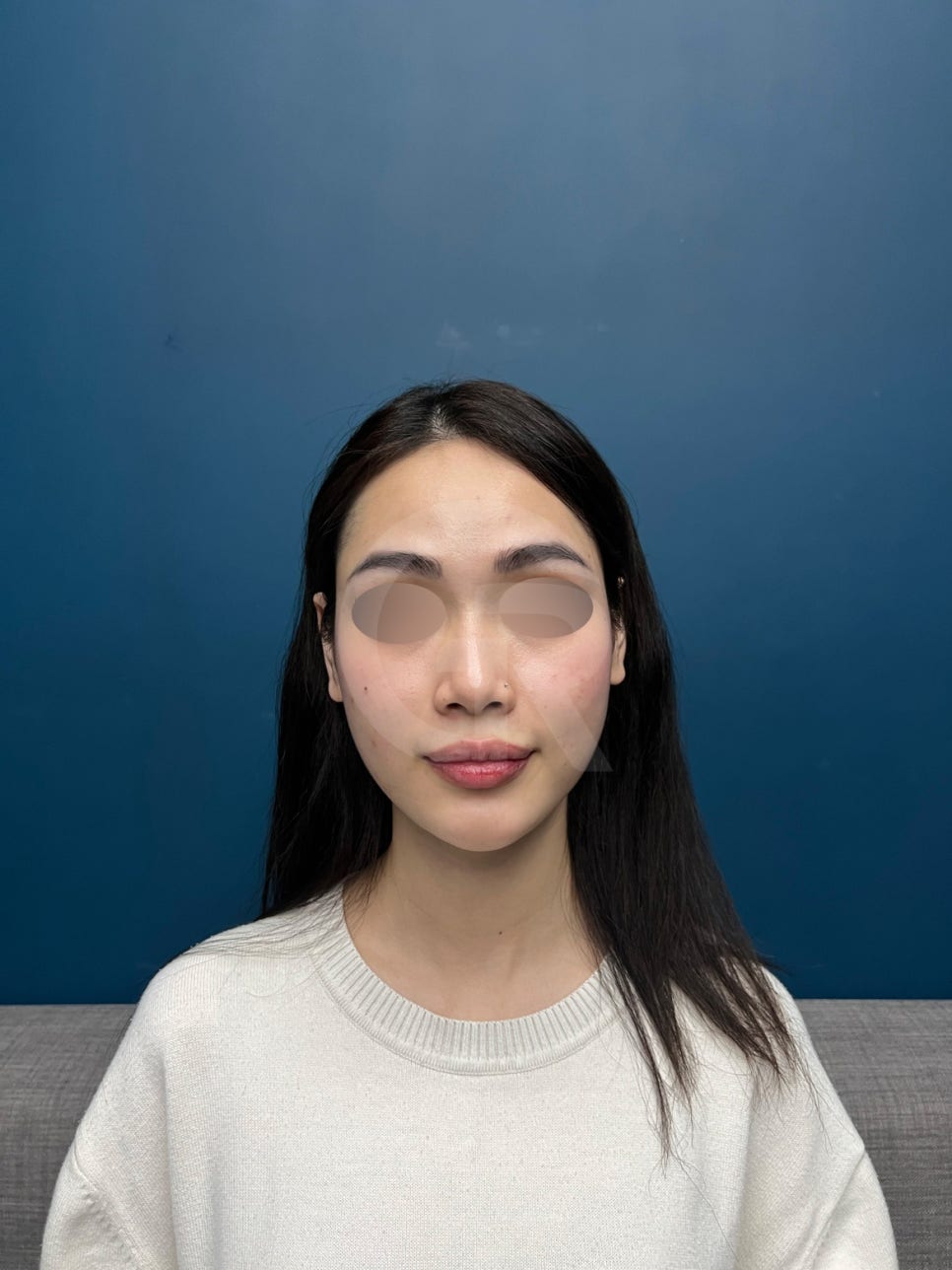
The concern that facial asymmetry could not be corrected even with photo retouching was caused by the skeletal structure
The patient also wanted a small, soft, and feminine face like actress Park Min-young, so long-curve resection was performed. Of course, it is neither possible nor desirable to create an exact copy of a particular celebrity's face. This is because each face has lines and angles that suit it best. However, through thorough consultation with the patient, we determined that what she ultimately wanted was not an excessively sharp V-line, but a narrower face, soft lines, and a balanced appearance.

The result of contour surgery rather than soft-tissue contouring
We refined the line extending from the angle below the ear to the jawline and considered the width of the jaw as seen from the front to find the most natural and stable contour. In particular, an asymmetrical face requires a different design for each side according to the shape, thickness, and direction of projection of the bones, rather than reducing both sides by the same amount. The surgery must also take the soft tissue into consideration so that the result can be adjusted in a stable manner.

A softer facial contour
For some patients, correcting the skeletal structure may be more important, while for others, the facial contour can be refined through soft-tissue contouring alone. This is because even concerns about excess facial width can have various causes, including fat, skin elasticity, muscles, salivary glands, the skeletal structure, and asymmetry. Therefore, it is essential to analyze the face from multiple angles and in three dimensions before surgery.

One year after surgery
More than a year has passed since the surgery, and she still has a beautiful, well-balanced face. Because she never expected to undergo contour surgery, it took her quite a long time to make the decision, but she said that she does not regret her choice at all.
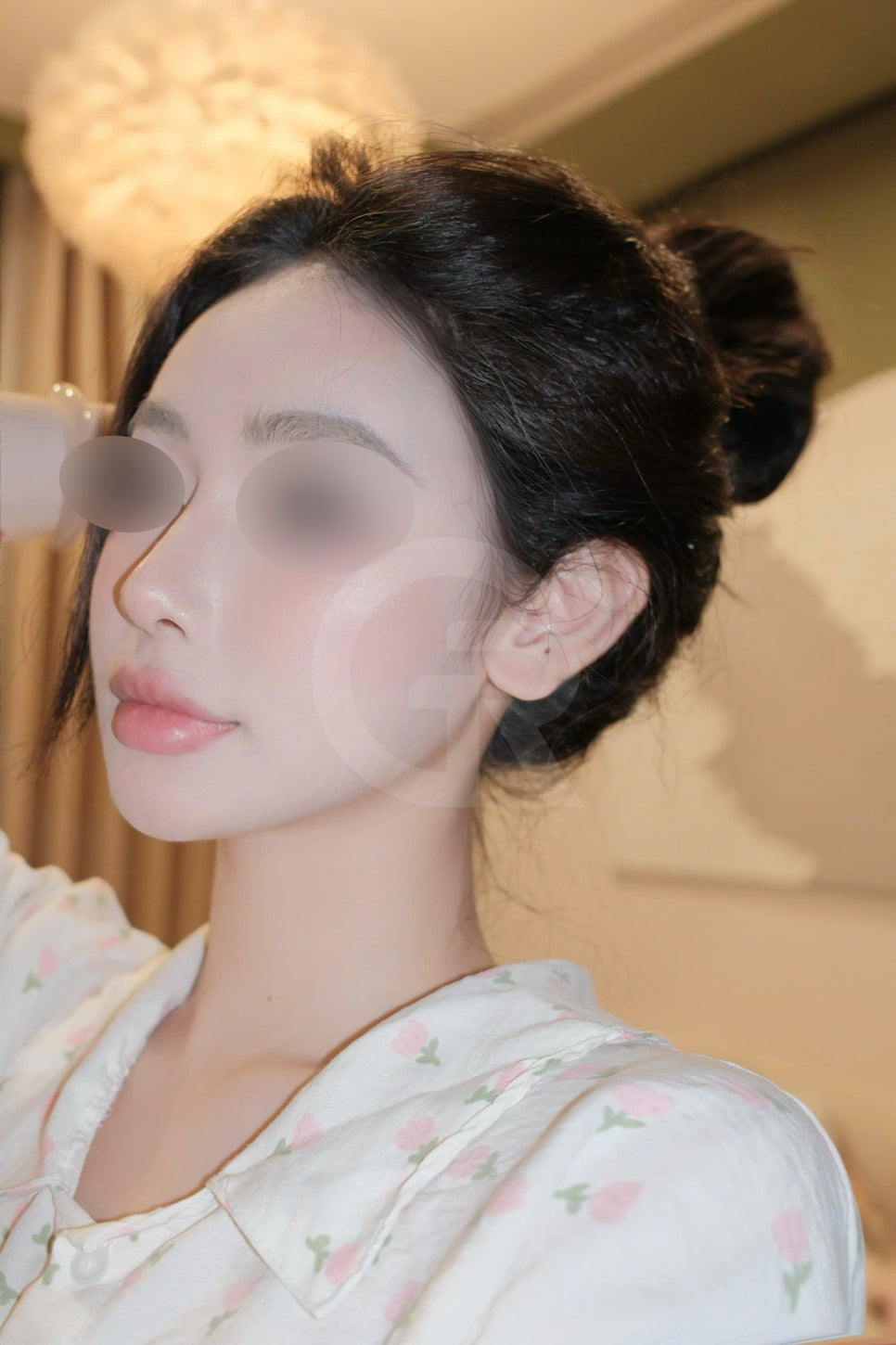
The hollows and sagging were reduced as the cheekbones found their appropriate position
If you are concerned about sagging or hollows in your face, we recommend receiving a detailed consultation about the direction of surgery rather than deciding on a specific surgical method in advance.