Hello.
This is 기린성형외과.
What is the first cause that comes to mind when you feel that your face looks large?
Many people first think of their facial bones, saying things like, “My cheekbones are large” or “My jawbone is wide.”
That is why quite a few people believe that the bones must be shaved to make the face look smaller.
However, the actual size and impression of the face are not determined by the facial bones alone.
This is because the soft tissues that make up the face, including the skin, fat, muscles, and SMAS, can also affect facial volume, facial contours,
and overall facial proportions.
Recently, more people have become interested in the concept of soft-tissue contouring with these factors in mind.
Today, we will look at what soft-tissue contouring is,
and why the soft tissues should also be examined when determining why a face looks large.
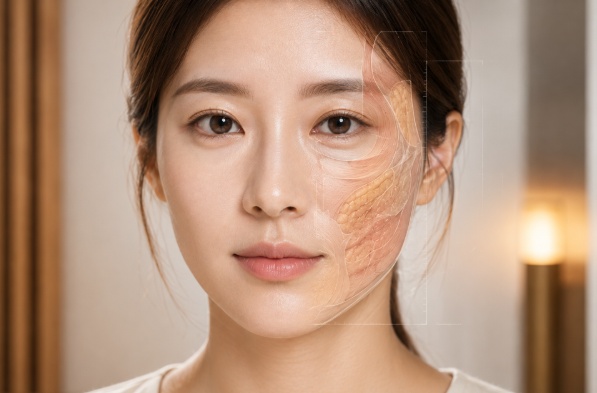
What Are Soft Tissues, and Why Are They Important?
What Are Soft Tissues, and Why Are They Important?
기린성형외과
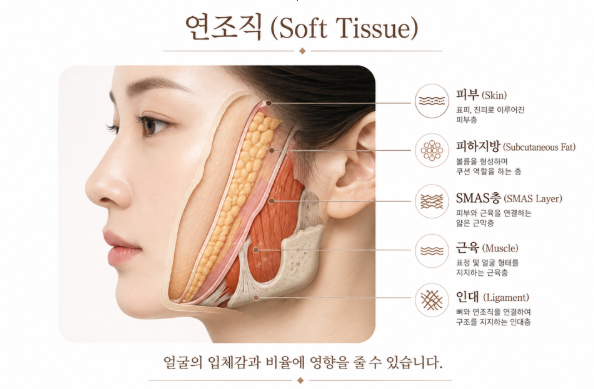
Soft tissues collectively refer to the skin, fat, muscles, SMAS, ligaments, and other tissues that make up the face.
Although it may appear that the facial bones create the shape of the face,
the contours we actually see are also influenced by the soft tissues.
For example, even people with the same skeletal structure may appear to have wider or slimmer faces depending on the thickness of their fat, the degree of muscle development,
and the extent of skin laxity.
In particular, the SMAS layer is an important tissue located between the skin and muscles,
and is known to be involved in facial movement and structural support.
In other words, to understand the impression of the face, it is important to examine not only the bones but also the soft tissues.
What Is the Concept Behind Soft-Tissue Contouring?
What Is the Concept Behind Soft-Tissue Contouring?
기린성형외과
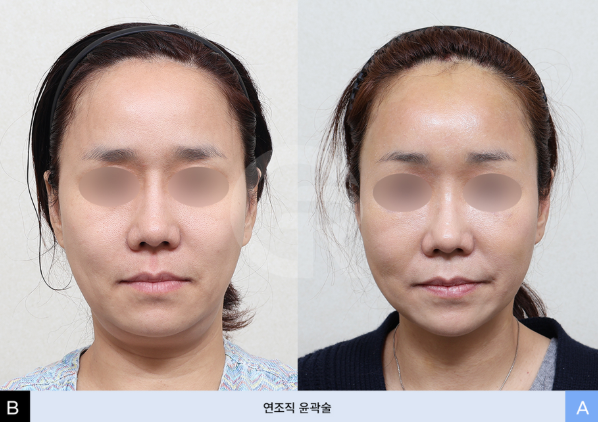
Soft-tissue contouring is not a surgery that removes or moves the facial bones.
Without removing the facial bones, it takes into account the position and volume of the soft tissues, including the skin, fat, muscles, and SMAS,
and is a comprehensive lifting concept designed to reduce facial volume and refine the facial contours.
In other words, its characteristic is that it considers the balance of the entire face rather than changing only one area.
The important point here is that the reason a face looks large is not necessarily found only in the bones.
Because the appearance of facial volume and contours can also vary depending on the condition of the soft tissues,
the process of accurately analyzing the cause must come first.
The reason a face looks large can differ from person to person
The reason a face looks large can differ from person to person
기린성형외과
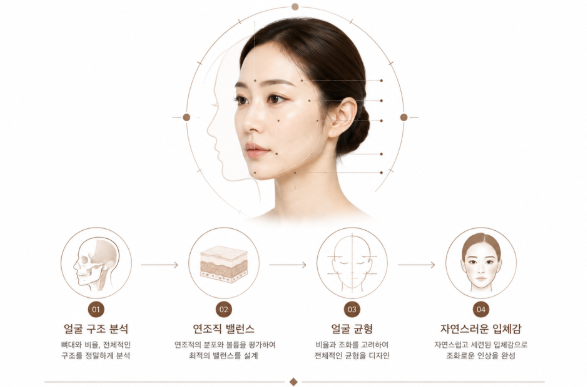
Even when people share the same concern—“My face looks large”—the causes are not necessarily the same.
For some people, the structure of the facial bones may be a contributing factor, while for others, the distribution of fat, muscle development,
or the volume of the soft tissues may influence the impression that the face looks large.
Therefore, soft-tissue contouring places importance on first analyzing the facial structure,
then examining the condition of the soft tissues and the facial proportions together.
A plan is then developed according to the individual’s facial structure and concerns.
Facial contours are all about “balance”
Facial contours are all about “balance”
기린성형외과

We spend more time looking at another person’s face from a 45-degree angle or from the side than straight on.
Therefore, the impression of the face can vary not only according to its width, but also according to how the facial contours flow
and where volume is formed.
When the soft tissues are distributed in balance, the facial contours may connect more naturally,
and the overall facial proportions may also appear harmonious.
Conversely, if the volume of the soft tissues in certain areas is relatively prominent,
it may create the impression that the face looks wider or larger.
In such cases, both the facial structure and soft tissues can be examined.
In such cases, both the facial structure and soft tissues can be examined.
기린성형외과
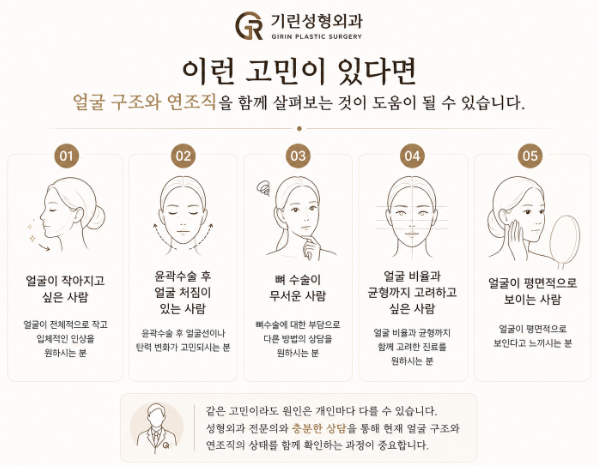
If you have any of the following concerns, it may be helpful to examine the condition of the soft tissues along with the facial bones.
-
If you want an overall smaller and more three-dimensional facial impression
-
If you are concerned about changes in facial firmness or volume after facial contouring surgery
-
If you would like to discuss other approaches before considering surgery involving the bones
-
If you want care that takes your facial proportions and balance into account together
-
If your face appears flat or you feel that it lacks dimension
-
However, even the same concern may have different causes from person to person,
so it is important to thoroughly consult with a board-certified plastic surgeon and examine the current facial structure and condition of the soft tissues together.
A board-certified plastic surgeon comprehensively analyzes the facial structure to develop an individualized plan.
A board-certified plastic surgeon comprehensively analyzes the facial structure to develop an individualized plan.
기린성형외과

Soft-tissue contouring begins with a comprehensive analysis of the structure and balance of the entire face rather than examining only one area.
During the consultation, a board-certified plastic surgeon directly examines the shape of the facial bones, the distribution of the soft tissues, facial proportions, and left-right balance together.
Because the facial structure and condition of the soft tissues differ from person to person even when they have the same concern,
it is important to comprehensively analyze these factors before developing a care plan suited to the individual.
At 기린성형외과, a board-certified plastic surgeon directly analyzes the facial structure
and develops a customized care plan that considers each person’s facial proportions and harmony.
Based on a thorough consultation and diagnosis, the current characteristics of the face are accurately identified, and an appropriate approach is planned together according to the individual’s characteristics.