Hello!
I’m Lee Juri, the chief director of Seoul Bardi Dental Clinic~!
Many patients think implants are invincible!
Because of that, many people misunderstand that they can be used for a lifetime..
In reality, that is absolutely not the case.
Even my own teeth can develop inflammation,
so wouldn’t implants be able to as well~
Symptoms of gum inflammation around implants, peri-implantitis, appear late.
Today, I’ll talk about "peri-implantitis," which can be left untreated until the implant may need to be removed!
What is peri-implantitis~?
Its symptoms are similar to gum inflammation.
The gum around the implant swells and bleeds,
and in severe cases, it can even cause bone loss.
If that happens, the implanted fixture may also need to be removedㅠㅠ
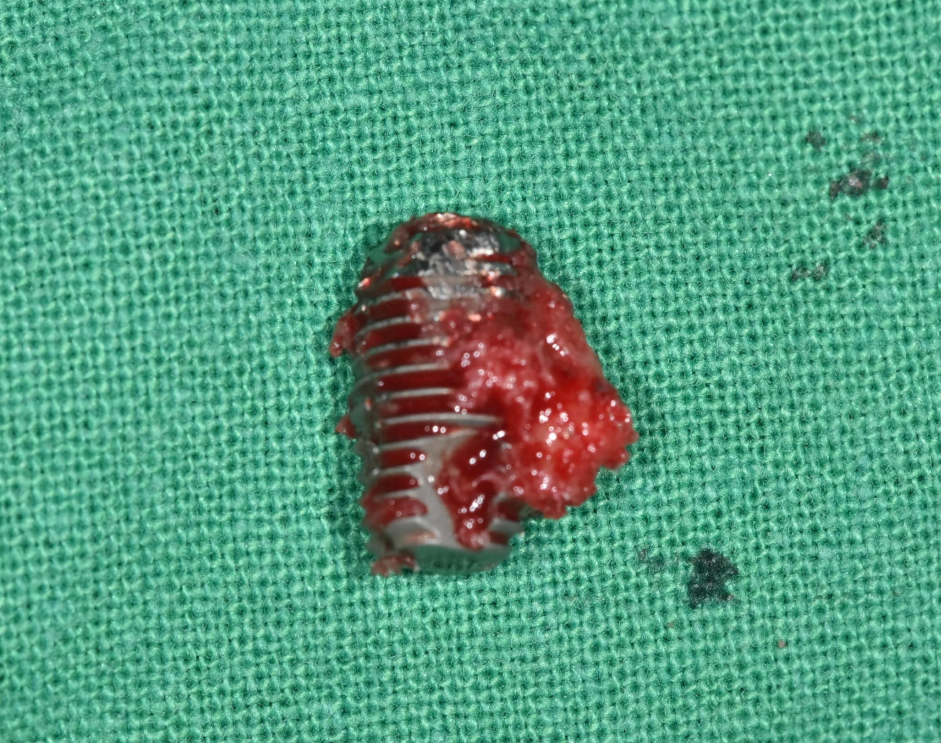
Removed implant due to peri-implantitis on 2024-08-16
In what cases does it occur???
Peri-implantitis can occur for a variety of reasons.
Rather than being caused by one single reason,
it develops from multiple factors~
The biggest reason is poor oral hygiene.
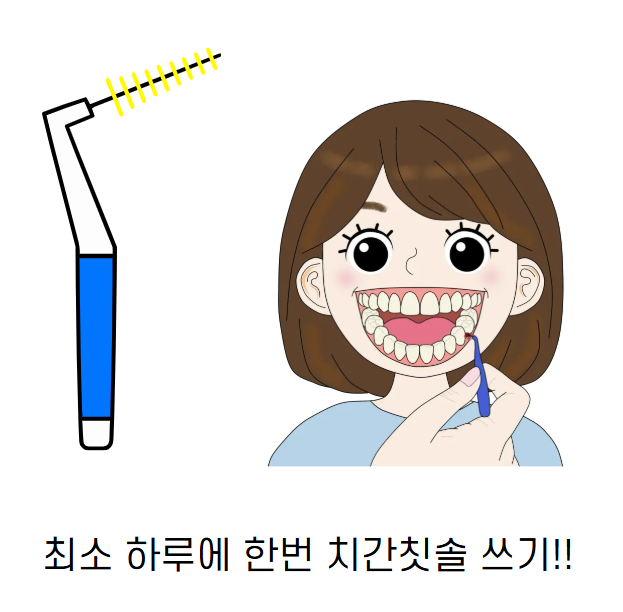
Many people only brush their teeth
and do not use interdental brushes or dental floss~
However, because the area around an implant is an environment where bacteria can easily accumulate,
it needs to be cleaned carefully with interdental brushes.
Not just with a toothbrush~
People in higher-risk groups for implant gum inflammation are
those who smoke and those with diabetes.
If you have a chronic condition such as diabetes,
your immune system is weaker
and infection occurs more easily, so the likelihood of inflammation is also higher.
Smoking interferes with blood circulation and increases the risk of inflammation.
Telling you to refrain from smoking for at least a week after surgery
is not something I say for no reason...
How is inflammation treated??
If peri-implantitis occurs, early treatment is very important.
That’s true for all dental treatments, but~
because it is gum inflammation, it is not very different from periodontal treatment.
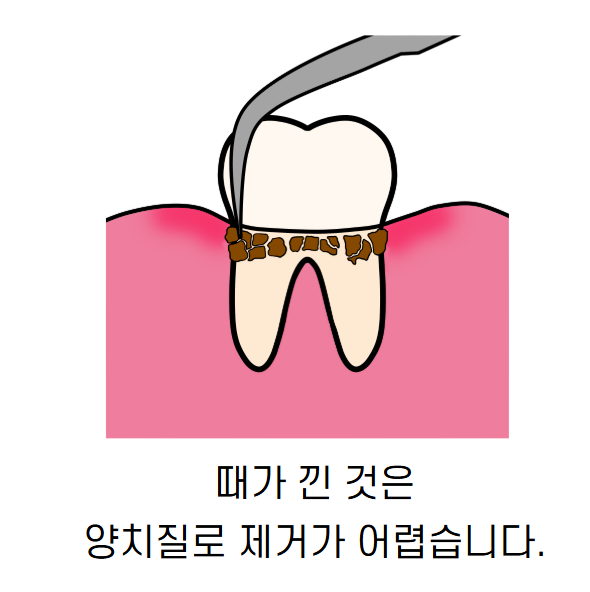
In the early stages, taking your medication properly~
and thoroughly cleaning the surrounding gums will settle most cases.
In cases where the implant inflammation has progressed,
surgical treatment to open the gum and remove the inflammation may also be necessary.
If the inflammation is really~ severe,
the implant may need to be removed and replaced with a new one.
(Repeat surgery....)
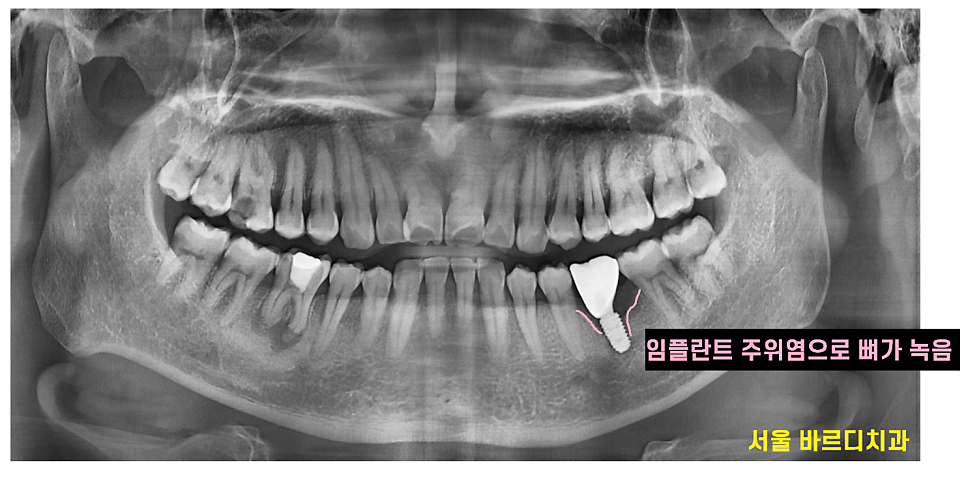
250304
Regular checkups are a must..!
The reason we schedule appointments every 6 months after treatment is completed
is to reduce the risk of inflammation
and to treat it early even if it does occur.
Today’s summary
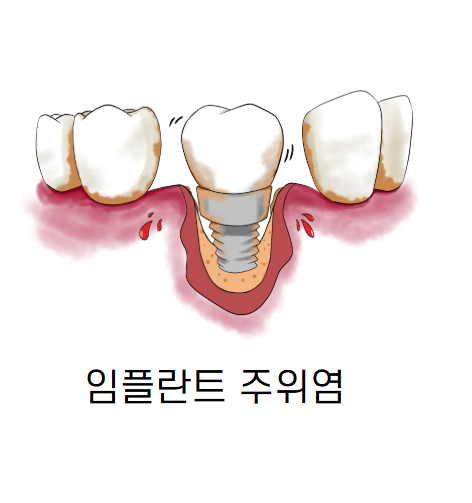
The gum bone has dissolved, so you can’t see it with the naked eye~
If the area around the implant is not cleaned well, inflammation around the implant gums can occur!
Depending on how it is managed,
an implant may last 10 years
or even 20 years.
(It depends on the patient’s will!)
Even if you only visit faithfully for regular checkups,
problems can be sufficiently prevented and managed.
Prevent it in advance with regular checkups and proper care!
| This post was written directly by Seoul Bardi Dental Clinic for the purpose of providing medical information and promoting the clinic in compliance with Article 56, Paragraph 1 of the Medical Advertising Act. The information provided is for reference only. For an accurate assessment of symptoms and proper management methods, please visit a medical institution and receive guidance from medical professionals. All procedures/surgeries performed at the dental clinic may involve risks depending on the individual (inflammation, bleeding, swelling, etc.). Please make decisions after sufficient consultation with medical staff in advance. The treatment cases in this post were photographed with the consent of patients who completed treatment at our clinic, and the before-and-after photos were taken under the same conditions. |
#ImplantGumInflammation #PeriImplantitis